

Pandemic alters drug trafficking methods, routes: UN

0

Restrictions imposed by the coronavirus pandemic have forced innovation across sectors, including the global drug market, which has turned to new routes, trafficking methods, and illegal substances, the UN warned in a report published Thursday.

The latest World Drug Report presents an increasingly complex situation with the use of traditional drugs like cocaine, heroin, and cannabis at an all-time high as well as the proliferation of synthetic substances, reports Efe news.

“Due to COVID-19, traffickers may have to find new routes and methods, and trafficking activities via the darknet and shipments by mail may increase, despite the international postal supply chain being disrupted,” the report said.

“The pandemic has also led to opioid shortages, which, in turn, may result in people seeking out more readily available substances such as alcohol, benzodiazepines or mixing with synthetic drugs. More harmful patterns of use may emerge as some users switch to injecting, or more frequent injecting.”

According to Ghada Waly, Executive Director for the UN Office on Drugs and Crime, there are more people using drugs, more substances, and more types of narcotics than ever.

The drug market is becoming increasingly complex, with the use of plant-based substances like cannabis, cocaine, and heroin as well as hundreds of synthetic drugs, many beyond international control, rising, the report said.

The UN has also registered a spike in the use of pharmaceutical drugs, in some cases counterfeits, for recreational purposes and without medical supervision, something that has caused tens of thousands of deaths in the US in recent years.

There were some 269 million drug users in the world in 2018, which amounts to 5.4 percent of the world’s adult population, one out of every 19 people on the planet, the report said.

The figure is 30 percent higher than in 2009, with more than 35 million people suffering from serious drug addiction disorders.

Experts believe 585,000 people will die from drug use, a figure mirrored in last year’s report on narcotics use in 2017.

Cannabis is still the most popular drug in the world with 192 million users, but opioids, like heroin and its analogs, are the most lethal and are behind two-thirds of deaths.

In the last decade, drug use has grown at a much faster rate in developing countries than in the industrialized world.

The UN has identified inequality as a deciding factor in drug use, with the most serious drug addiction problems recorded among the poorest in society.

“We need all governments to show greater solidarity and provide support, to developing countries most of all, to tackle illicit drug trafficking and offer evidence-based services for drug use disorders and related diseases, so we can achieve the Sustainable Development Goals, promote justice and leave no one behind,” Waly said.

As a result of coronavirus lockdowns, traffickers are identifying new routes and methods through the so-called deep web and postal mailing of drugs has also increased, the report added.

Air routes – important for trafficking of amphetamines and synthetic drugs – and land routes – essential for heroin trade – have had to be modified due to flight cancellations and the closure of borders.

The increase in cocaine seizings in European ports and the heroin loads seized on ships in the Indian Ocean, as an alternative to the Balkan road route, are indications of these changes.

The slowdown in international trade has also been noted in the shortage of chemical substances needed to produce heroin and cocaine, which has seen a decline in manufacturing volume.

The UN noted that increased border controls have resulted in less heroin trafficking from Mexico to the US, which has led to a shortage of the opioid. A drop in supply has also been detected in Europe.

The rise in prices of narcotics also points to a shortage of supply.

Restrictions on movement may have led to a provisional drop in the use of stimulants often consumed at music festivals and clubs.

The absence of opioids due to the restrictions has led to the search for substitutes, leading to a spike in the use of alcohol, benzodiazepines, and synthetic drugs, the UN warned.

Heroin users have also turned to more harmful substances produced locally, such as fentanyl which is 50 times more powerful than the opioid.

The emergence of more harmful consumption patterns via injectable substances have resulted in a higher risk of transmission of diseases like HIV or Hepatitis-c.

The economic crisis as a result of the pandemic will affect the most vulnerable in society due to a rise in unemployment and poverty, which could lead to an increase in drug use, illicit cultivation or drug trafficking to survive.
Statin therapy linked to lower death rate in corona patients

0

The use of cholesterol-lowering drugs called statins is associated with a lower death rate and a lesser incidence of mechanical ventilation in hospitalized COVID-19 patients, according to a study.

The findings, published in the journal Cell Metabolism, also showed that mortality risk and other negative outcomes were not increased by combination therapy consisting of statins and blood pressure-lowering drugs called angiotensin-converting enzyme (ACE) inhibitors and angiotensin II receptor blockers (ARBs).

“These results support the safety and potential benefits of statin therapy in hospitalized patients with COVID-19 and provide a rationale for prospective studies to determine whether statins confer protection against COVID-19-associated mortality,” said senior study author Hongliang Li of the Wuhan University in China.

Currently, there is no vaccine or specific antiviral drug approved to prevent or treat severe acute respiratory syndrome coronavirus 2 (SARS-CoV-2) infection, which causes COVID-19.

Because a vaccine or drugs for COVID-19 will likely not be available for months or even years, repurposing clinically approved therapies might be a more attractive option.

Statins may serve such a purpose because these drugs slow the progression of lung injury in animals, improve immune cell responses, and strongly reduce inflammation, which is likely responsible for severe COVID-19 complications such as organ damage.

Although statins generally have an excellent safety profile in humans, animal studies have shown that they increase the expression of angiotensin-converting enzyme II (ACE2) — the receptor that SARS-CoV-2 binds to and uses to enter host cells.

On the other hand, animal studies have also shown that ACE2 protects organs such as the lungs against virus-induced injury.

As a result, it has not been clear how clinical outcomes in patients with COVID-19 are affected by the use of statins, either alone or in combination with ACE inhibitors and ARBs, which are commonly prescribed with statins and also increase ACE2 expression in animals.

To address this gap in knowledge, Li and his collaborators carried out a retrospective study of 13,981 corona patients admitted to 21 hospitals in Hubei Province, China.

Among these patients, 1,219 used statins, primarily atorvastatin at an average dose of 20 mg per day.

Among patients with hypertension, 319 used statins combined with ACE inhibitors or ARBs, and 603 used statins combined with other antihypertensive drugs.

Over a 28-day follow-up period, statin use was associated with a lower death rate and a lower incidence of mechanical ventilation.

Statin use was associated with a 5.5 percent mortality rate, compared to 6.8 percent without statin use, representing a 19 percent decrease, said the study.

Treating kids with Covid a challenge

0

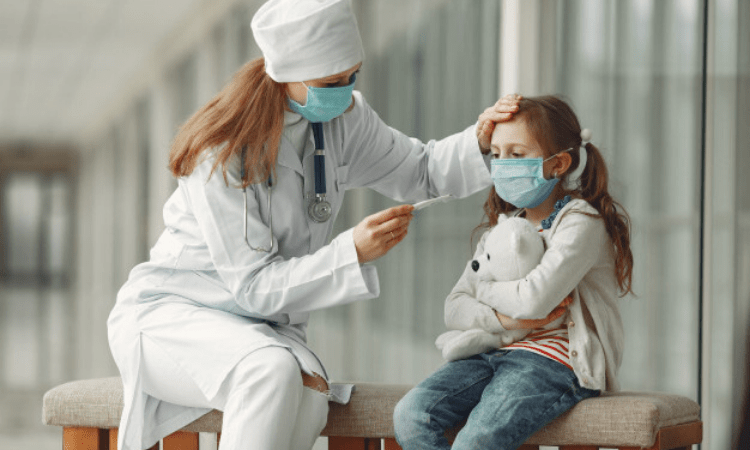
Children who got infected with the Coronavirus and have been admitted to COVID hospitals are posing a ‘clinical challenge’ to doctors and other health workers. Most of them complain of anxiety, distress, and fear. Petrified by the PPE suits. of health workers, they scream “shoot”.

Children cannot understand the need for isolation and hence, become irritable and do not cooperate with health workers.

“In many cases now, we are allowing one parent to remain with the child if the latter creates problems. The parent is required to adhere to all safety protocols including wearing PPE kits. However, some children get scared seeing us move around in PPE kits,” said a senior doctor at the KGMU.

According to a doctor in Prayagraj, most children admitted in COVID hospitals experience anxiety, loneliness, distress, and fear. Many of them get petrified seen people move around in PPE suits.

“They scream thinking that we are all ‘boot’. They also cannot understand why they cannot be with their family. The atmosphere in the isolation ward creates fear and loneliness. The absence of parents and siblings adds to the distress factor,” he said.

Citing the example of a four-year-boy who was admitted after testing Corona positive, the doctor said that the child developed fever within hours of being admitted to the hospital.

“We realized that he was deeply distressed in the atmosphere where everyone was moving around in PPE suits. We asked the nurse to attend to him to get him to make video calls to his parents and siblings as many times as he wanted. A day later, his fever came down and the child seemed more comfortable. We explained to him the need for remaining isolated due to the virus and he gradually accepted the situation,” the doctor said.

In another case — that of a three-year-old — the doctors had to allow the patient’s mother to remain with him because the child was inconsolable.

“The mother of the child was also a doctor and she understood the protocols,” the doctor said.

In at least two cases in Lucknow where the “little human” suffered trauma after being admitted, the doctors had to provide professional counseling.

Child counselors were called in and they interacted with the children for hours, trying to convince them about the need for isolation. It took almost two to three days to help the kids get rid of the distress factor.

Some hospitals in the state are now providing juvenile patients with toys, games, and even coloring books to keep them entertained.

Some NGOs have sent toys and hospital authorities are also requesting others to provide some games for children admitted inwards.

Australia to deploy 1,000 troops in COVID-19-hit state

0

The Australian government is set to deploy more than 1,000 soldiers in the state of Victoria to assist in containing a fresh COVID-19 outbreak in the second most populated state of the country, Defence Minister Linda Reynolds said on Thursday.

The Victoria government requested military support on Wednesday night after recording 13 to 25 novel coronavirus cases daily in the last week along with the announcement of the first COVID-19 death in the country in more than a month, reports Efe news.

The majority of these cases were community transmission.

Some 850 Australian Defense Force (ADF) personnel will provide monitoring support to hotel quarantine, where the travelers that land in the country are required to be in mandatory quarantine for a period of 14 days, while other 200 will provide logistical and medical support in initiatives to carry out COVID-19 tests, Reynolds said in a statement released.

In an interview with Australia’s Nine News, Reynolds said that the person will begin mobilization on Thursday and the deployment is expected to begin on Friday in Melbourne.

The capital of Victoria has six hotspot areas at present.

“The COVID-19 pandemic requires a proactive national response and Defence is well postured to provide scalable support to states and territories,” the Minister said in the statement.

Amid the crisis due to community transmission, the authorities of the state intend to carry out a large number of tests along with tracing the COVID-19 cases in the immigrant localities where the major number of infections have been reported.

During the outbreak, some 30 security personnel who were guarding the several hotels of Melbourne contracted the infection and later infected their families.

Health Minister Greg Hunt said that the quarantine system in the hotels of Victoria could be improved.

The novel coronavirus cases in the country have affected 7,500 people so far and have claimed 104 lives. The majority of these cases have been reported in the New South Wales region.

18K Covid tests conducted daily: Delhi govt to HC

0

The Aam Aadmi Party government on Thursday claimed that “approximately 18,000 tests are conducted daily” in the national capital.

“We are conducting around 18,000 tests daily. According to my information, on June 22 alone 21,121 samples were taken and a total of 22,634 tests were conducted on that day,” submitted Delhi government standing counsel Rahul Mehra before the Delhi High Court.

The submissions were made while the court was hearing a matter relating to the availability of beds for Covid-19 patients in the national capital.

“Now, there is no limit on testing, subject to the availability of test kits. We have also started conducting rapid tests. We have conducted 55,641 rapid antigen tests so far,” said Mehra.

The Delhi government has also informed the court that 430 ambulances are now available with the government of which 200 are of CATS (Centralized Ambulance Trauma Services).

It also told the court that facility called “Samvaad” in tie up with Institute of Human Behaviour and Allied Sciences (IHBAS) has begun for proper counselling of the front line workers if they are in stress and need help.

India records worst spike of 17K Covid cases

0

India witnessed the highest spike of almost 17,000 fresh COVID cases, with Maharashtra, Delhi, and Tamil Nadu contributing more than 62 percent of it in the past 24 hours taking the total in the country to 4.73 lakh, data from the Union Health and Family Welfare Ministry revealed on Thursday.

A total of 16,922 new cases egged the tally to 4,73,105 so far as India continued to be the fourth worst-hit country by the pandemic. According to the Health Ministry data, in the last 24 hours, 418 new deaths were reported taking the total tally of fatalities to 14,894 in the country.

Over 1,000 cases more were recorded in 24 hours than what we saw on Wednesday when 15,968 new COVID-19 cases were reported.

Maharashtra, Delhi and Tamil Nadu continued at the top contributing almost 62 percent of the total spike of the Covid-19 cases.

There are currently 1,86,514 active and 2,71,696 recoveries. The number of patients recovering from COVID-19 continues to rise. The recovery rate has further improved to almost 57.42 percent.

Maharashtra remained the worst-hit state in the country with total cases at 1,42,900, including 6,739 deaths. It recorded a spike of 3,890 fresh cases with 208 deaths in the last 24 hours.

Delhi has 70,390 cases and 2,365 deaths followed by Tamil Nadu with 67,468 cases with 866 deaths. Delhi witnessed the surge of 3,788 cases with 64 deaths and Tamil Nadu recorded 2,865 cases with 33 fatalities in the last 24 hours.

States with more than 10,000 cases include Gujarat with 28,943 cases and 1,735 deaths, Uttar Pradesh (19,557), Rajasthan (16,009), Madhya Pradesh (12,448), West Bengal (15,173), Haryana (12,010), Karnataka, (10,118), Andhra Pradesh (10,331) and Telangana (10,444) cases.

India conducted 2,07,871 Covid-19 tests on people in the last 24 hours. The number of government labs has been increased to 726 and private labs have increased to 266, summing up to a total of 992.

The overall number of global COVID-19 cases has topped 9.4 million, while the deaths have surged to more than 482,000, according to the Johns Hopkins University.

Hospital sealed for violating Covid-19 norms in Bhubaneswar

0

The Bhubaneswar Municipal Corporation (BMC) sealed a private hospital, here on Wednesday, for violating Covid-19 guidelines. As of June 23, 27 positive cases have been detected from this hospital.

“Blue Wheel Hospital, Mancheswar, has been sealed by the BMC authority today (Wednesday) because of violation of the Covid-19 guidelines of Govt. As on 23/6/2020, 27 positive cases have been detected from this hospital,” the BMC tweeted.

The hospital had admitted a coronavirus patient, instead of shifting him to a dedicated Covid-19 facility, in violation of Covid-19 guidelines, the official said. A show-cause notice has also been issued to the hospital.

According to an official, 11 people were detected with Covid-19 infection in the hospital on Monday, 16 employees of the hospital tested positive on Wednesday. After the detection of positive cases, all the direct contacts are being quarantined and tested.

Premises of the facility has been sanitized to contain the spread. To reduce the chances of Covid-19 infection among frontline health and emergency workers, the BMC has started training its 2,800 sanitation workers.

The BMC aims to train all workers on safety aspects in a week.

Kerala records 152 Covid cases, highest on a single day

0

Kerala Chief Minister Pinarayi Vijayan on Wednesday said the state recorded 152 coronavirus positive cases in the last 24 hours, which is highest ever on a single day so far.

“Of this, 98 people came from abroad, 46 were those who came from within the country and there were eight local infections. At present there are 1,691 positive patients, while in all 3,603 got this disease”, said Vijayan.

Vijayan said starting Thursday all those arriving from the Middle East have to follow new guidelines and if anyone has a COVID negative certificate it should not be beyond 72 hours of departure.

“Those arriving from Kuwait and Saudi Arabia have to wear PPE kit besides N95 mask, face shield, and gloves. Those coming from UAE have to carry the certificate (the facility is available for testing there) while those from Qatar should have green status on the App which is valid in their country. Those from Bahrain and Oman should have N95 masks, face shields, and gloves,” said Vijayan.

He said once they land at the airports in Kerala, all will have to abide by the health protocols that are in place.

“Those who do not come with a valid COVID negative certificate will have to undergo a rapid antibody test at the airport and those who are positive should then undergo either an RT-PCR or TrueNat test and whatever be the result, they will have to undergo 14 days quarantine. Those with any symptoms will be sent to hospitals. Any violation of quarantine would be dealt with strongly by enforcing the provisions in the Disaster Management Act,” added Vijayan.

Agra scales up strategy to combat COVID-19, cases reach 1,158

0

The Agra district administration has scaled up its efforts to combat the spread of COVID-19, after a wordy duel with Congress leader Priyanka Gandhi Vadra, who has tweeted twice drawing attention to the alarming number of deaths in the Taj city and the failure of the Agra model.

The Agra District Magistrate P.N. Singh has already rejected the allegations and asked her to revise her position in the light of facts.

It may be recalled that the Agra model was hyped and flaunted in April. After the initial success, conditions took an alarming turn, first due to the scare created by the Tablighis and later because of the mass influx of migrant workers through the district.

Since private laboratories and nursing homes have either refused or are reluctant to join the state government efforts to contain the pandemic, the overall situation continues to remain grim at the ground level. Unconfirmed reports suggest that the vast rural hinterland has now been exposed to the infection spread. This could only get confounded with monsoon rains about to begin.

The reluctance on the part of the private hospitals is mainly due to the rates fixed by the state government. The management of these private institutions does not find the rates reasonable or justifiable, considering the risks involved and expenses on testing likely to be incurred.

Under pressure, after being targeted by the opposition leaders and the family members of the victims, the district management has now deputed six IAS officials to constantly monitor conditions and facilities in the 66 containment zones. The Chief Development Officer (CDO) will randomly check all the hot spots in the city.

Meanwhile, with two more deaths, the number of fatalities in the district has gone up to 81. Ten fresh cases in the last 24 hours have taken the COVID tally to 1,158. The Health officials said 965 have recovered and the number of active cases was 112. So far, 19,389 samples have been collected.

As a precautionary measure, most government offices had made thermal screening at the entrances compulsory.

The district police have tightened the grip on violators of the guidelines. As many as 8,133 people have been fined for spitting in public or not wearing masks. More than a thousand vehicle owners have been challenged in the past few days for violating the social distancing norms.

COVID-19: Hafeez says he’s negative day after PCB announces positive result

0

Senior Pakistan batsman Mohammad Hafeez has claimed that he has tested negative for coronavirus after undergoing a test in his personal capacity.

On Tuesday, the Pakistan Cricket Board informed that Hafeez was one of ten Pakistan players in total who tested positive for COVID-19.

Hafeez, however, conducted a private test for “second opinion” for him and his family and said on Wednesday in a tweet that the result came out negative.

“After Tested positive COVID-19 acc to PCB testing Report yesterday, as 2nd opinion & for satisfaction I personally went to Test it again along with my family and here I along with my all family members are reported Negative Alham du Lillah. May Allah keeps us all safe (sic),” Hafeez said on his official Twitter handle with the report of his test.

According to PCB, the players who had tested positive for the virus were Fakhar Zaman, Imran Khan, Kashif Bhatti, Hafeez, Mohammad Hasnain, Mohammad Rizwan, Wahab Riaz, Haider Ali, Haris Rauf, and Shadab Khan.

All these players are part of the squad scheduled to travel to England on June 28 for three Tests and as many T20Is currently scheduled to be played in August and September.

The players and player support personnel, who have tested negative, will assemble in a bio-secure environment in Lahore on June 24 and will undergo a second round of testing on June 25, said the PCB.

The players and player support personnel, who will test negative on June 25, will depart for Manchester on a chartered flight. Within 24 hours after arriving in the UK, they will be tested by the ECB medical panel.