Record 237 single-day corona recoveries in Odisha

0

Odisha on Saturday reported a record recovery of 237 coronavirus patients in a single day, taking the total number of such patients to 3,534 in the state, the Health Department said.

“The untiring efforts of our COVID Warriors has led to an all-time high recovery of 237 patients in a day! We salute the dauntless spirit of our frontline workers,” said the department.

These recovered patients include 70 from Cuttack, 54 from Khordha, 20 from Jagatsinghpur, 19 from Kandhamal, 17 from Ganjam, nine each from Bhadrak and Mayurbhanj, eight from Keonjhar, and seven each from Dhenkanal and Puri.

Besides, four patients each from Kendrapara and Nayagarh, two each from Kalahandi, Malkangiri, and Sambalpur, and one each from Boudh, Jharsuguda and Sundergarh have also recovered.

Odisha has reported 4,856 corona cases so far, including 1,306 active cases and 12 deaths.

Glenmark launches Covid-19 drug in India

0

 Glenmark Pharmaceuticals on Saturday launched antiviral drug Favipiravir for treatment of mild-to-moderate Covid-19 cases after it received the Indian drug regulator’s approval.

It will be available under the brand name FabiFlu as a prescription-based medication for Rs 103 per tablet, with a recommended dose of 1,800 mg twice a day on day 1 and 800 mg twice a day up to 14th day, according to the Mumbai-headquartered global pharmaceutical company.

Glenmark received approval for manufacturing and marketing Favipiravir from the Drugs Controller General of India (DCGI) on Friday.

“The approval has come at a time when cases in India are spiraling, putting tremendous pressure on our healthcare system,” Glenn Saldanha, Chairman and Managing Director of Glenmark Pharmaceuticals, said in a statement.

“We hope the availability of effective treatment, such as FabiFlu, will help assuage this pressure considerably and offer patients in India a much-needed and timely therapy option,” Saldanha said.

Favipiravir is backed by strong clinical evidence, showing encouraging results in patients with mild to moderate Covid-19. It offers broad-spectrum RNA virus coverage with clinical improvement noted in 20-90 plus age group.

Patients from over 10 leading government and private hospitals were enrolled for the study.

Favipiravir could be used for Covid-19 patients with comorbid conditions, like diabetes and heart disease, the company said and added, it would offer a rapid reduction in viral load within four days and faster symptomatic and radiological improvement.

Glenmark has developed the active pharmaceutical ingredient (API) and formulation for FabiFlu through the in-house R&D team.

Glenmark was the first company in India to receive the drug regulator’s approval to conduct a phase-3 clinical trial of Favipiravir antiviral tablets for Covid-19 patients.

Favipiravir is a generic version of Avigan of Fujifilm Toyama Chemical, Japan, a subsidiary of Fujifilm Corporation.

New moms more like to suffer from depression, anxiety during COVID-19

0

 Ladies, please take note. Researchers have stressed that new mothers are more likely to suffer from post-natal depression and anxiety during the COVID-19 pandemic.

The study, published in the journal Frontiers in Global Women’s Health, revealed that the number of pregnant and postpartum women suffering from the condition have increased during the health crisis.

“The social and physical isolation measures that are critically needed to reduce the spread of the virus are taking a toll on the physical and mental health of many of us,” said study co-author Margie Davenport from the University of Alberta in Canada.

For new moms, those stresses come with side effects. Such effects can include premature delivery, reduced mother-infant bonding, and developmental delays in infants.

“We know that experiencing depression and anxiety during pregnancy and the postpartum period can have detrimental effects on the mental and physical health of both mother and baby that can persist for years,” Davenport added.

For the findings, the research team surveyed 900 women – 520 of whom were pregnant and 380 of whom had given birth in the past year – and asked about their depression and anxiety symptoms before and during the pandemic.

Before the pandemic began, 29 percent of those women experienced moderate to high anxiety symptoms, and 15 percent experienced depressive symptoms.

The study found that during the pandemic, those numbers increased – 72 percent experienced anxiety and 41 percent experienced depression.

Because lockdown measures have affected daily routines and access to gyms, researchers also asked women whether their exercise habits had changed.

Of the women surveyed, 64 percent reduced their physical activity since the pandemic began, while 15 percent increased and 21 percent experienced no change.

Exercise is a known way to ease depression symptoms, so limited physical activity may result in an uptick in depressive symptoms.

The study also showed that women who engaged in at least 150 minutes of moderate physical activity a week had significantly lower symptoms of depression and anxiety.

“Even when we are not in a global pandemic, many pregnant and postpartum women frequently feel isolated whether due to being hospitalized, not having family or friends around, or other reasons,” she said.

“It is critical to increasing awareness of the impact of social (and physical) isolation on the mental health of pregnant and postpartum women,” the study authors wrote.

Delhi govt opposes LG order on institutional quarantine

0

The Delhi government on Saturday said that it could not reach a consensus on Lt. Governor Anil Baijal’s decision of five-day compulsory institutional quarantine for COVID-19 patients in the city.

With the Centre stepping in to aid the Delhi government in its fight against the coronavirus, a difference of opinions seems to be brewing between the two.

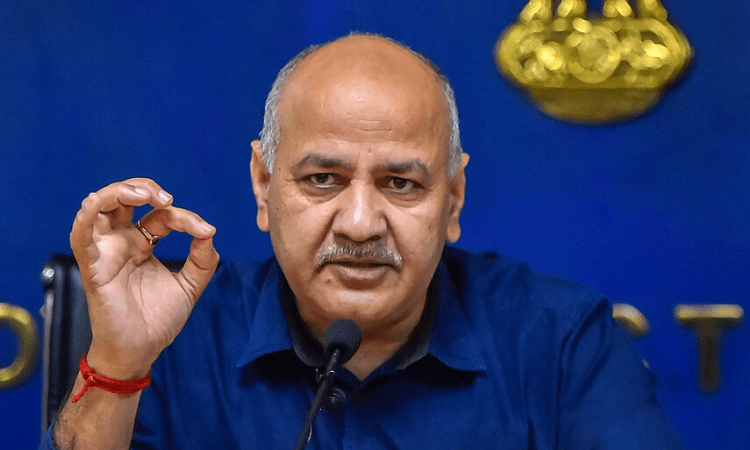
Deputy Chief Minister Manish Sisodia said, “In the meeting of the State Disaster Management Authority, the issue of five-day compulsory institutional quarantine and rate of beds in a private hospital was raked up. A consensus could be reached on both. Now, the meeting will again be held at 5 p.m.”

Sisodia said that the Central government has recommended making only 24 percent beds cheaper in private hospitals, while the Delhi government is adamant on making at least 60 percent beds cheap.

A high-powered panel set up by Union Home Minister Amit Shah has recommended fixing the cost of COVID-19 isolation beds in the private hospitals.

The price range is Rs 8,000 to Rs 10,000 and an ICU bed with a ventilator at Rs 15,000-Rs 18,000 per day, the ministry said.

Meanwhile, in the meeting, Delhi Chief Minister Arvind Kejriwal said the institutional quarantine will make people evade testing, which will further increase the spread of infection.

He also said there is already a shortage of healthcare staff, how will it be possible to arrange doctors and nurses for thousands of patients at quarantine centers.

NZ reports 2 new COVID-19 cases

0

New Zealand on Saturday reported two new COVID-19 cases after the country registered three infections earlier this week for the first time in 24 days, director-general of health Ashley Bloomfield said.

The two infected patients are a couple in their 20s who returned from India on a direct repatriation flight and arrived on June 5, reports Xinhua news agency.

The couple was also traveling with an infant who has not been tested.

It is still to be determined if the child is a probable cause.

The patients didn’t show any symptoms before testing for the virus at the 12th day during the quarantine in Auckland, and they will remain in quarantine and be clinically managed until they are considered to be free of the virus, according to Bloomfield.

Bloomfield also confirmed the number of active cases in the country is five.

The total number of confirmed cases in New Zealand was 1,159, while the death toll stood at 22.

A total of 7,707 tests for COVID-19 were conducted nationally in New Zealand on Friday, bringing the total completed to date to 335,167.

Rajasthan govt caps Covid-19 testing charge at Rs 2,200

0

The Rajasthan government has capped the Covid-19 testing charge at Rs 2,200 for private labs, against the fee of Rs 3,500 to Rs 4,500 which were earlier charged.

The decision was taken by Chief Minister Ashok Gehlot in a meeting held late on Friday night to review measures taken to fight COVID-19 in the state.

In the two-hour meeting, Gehlot further announced that the maximum charge per bed shall be Rs 2,000 while the bed with a ventilator will cost Rs 4,000.

Gehlot also made it clear that the government will not tolerate any exploitation through overcharging patients.

The Chief Minister further ordered the health department officials to ensure that private hospitals do not charge exorbitantly.

“You should initiate action against those flouting norms under various sections of law including that of Epidemic Ordinance in case of violation,” Gehlot ordered the officials present in the meeting.

“Although the lockdown has ended, the corona crisis continues to loom large over us. Hence, everyone should remain careful and wear masks while going out and maintain social distancing,” the CM said.

Eight new COVID-19 cases in Agra; tally goes up to 1,124

0

There has been an alarming rise in the number of coronavirus cases in the four districts of Agra division, as around two dozen fresh infections were reported in the last 24 hours, health officials said on Saturday.

According to the officials, Agra recorded eight new COVID-19 cases and one death in the last 24 hours. The total tally now stands at 1,124. Of this 914 have been discharged after recovery.

The number of active cases in the city now stands at 137. A 65-year-old patient suffering from respiratory disorder succumbed to the coronavirus on Friday.

In the Mainpuri district, 15 fresh cases were reported. Over the past three days, 44 cases have been added. Mathura, on the other hand, recorded 11 fresh cases with one death of an elderly woman, while Firozabad had eight new cases taking the district’ s tally to an alarming 447.

Health officials in Agra have decided to screen all hotspots to identify people with respiratory problems. This vulnerable group of seniors will remain in the focus in the coming days, as part of the redrawn strategy.

A preliminary assessment indicates that a majority of COVID-19 cases have been of those who suffer from respiratory disorders.

The Agra health administration claims it has set a record in surveying families in the last three months. More than 19 lakh people have been part of the exercise conducted by 3,628 teams.

The Nodal Officer, State Energy Secretary, camping in Agra, M Devraj, has asked senior doctors to regularly meet patients and monitor their progress. Though the state government has fixed rates of sample tests, private laboratories in the city were reluctant to test COVID-19 samples. The recovery rate in the city stands at 81.02 percent.

Brazil becomes second country to hit one million cases

0

Brazil has become the second country in the world to confirm more than one million cases of Covid-19, as the disease continues to spread.

The health ministry also posted a record number of new cases in the past 24 hours – more than 54,000, the BBC reported.

In addition, there were more than 1,200 deaths for the fourth consecutive day, taking the total to nearly 49,000.

A lack of testing suggests the true figures are higher and experts say the outbreak is weeks away from its peak.

Only the US has seen more infections. Brazil’s poorest communities and indigenous people have been particularly badly hit by the pandemic.

President Jair Bolsonaro has been heavily criticized for his response to the crisis. The far-right leader – who initially described the disease as a “little flu” – has repeatedly clashed with state governors and mayors who have adopted strict restrictions to curb the spread of the virus, shutting down major cities.

Bolsonaro argues that the economic impact of the measures will be much bigger than the virus itself, a position shared by many. But his overall approach to the crisis has led to the resignation of two doctors as health minister.

As there was no national lockdown, states and cities adopted their own measures. After months of restrictions, some are slowly being lifted, even though the infection level remains high.

There is still concern that the health system will be unable to cope in some places, and that the disease is spreading faster in deprived neighborhoods and remote areas, such as indigenous communities, where access to adequate care is difficult.

At the same time, there is a widespread wish to restart the economy as analysts forecast a contraction between 6% and 8% this year with millions of jobs lost. The government has introduced temporary payments to help people affected by the pandemic but large numbers are expected to be thrown into poverty.

On Friday, Brazil’s health ministry confirmed a total of 1,032,913 cases. It said that the large spike in the number of infections was due, in part, to several states having trouble with reporting data on Thursday.

The US has the world’s highest numbers of cases – more than 2.2 million – and nearly 119,000 deaths, according to Johns Hopkins University, which is tracking the disease globally.

Turkey sees decline in COVID-19 new cases: Minister

0

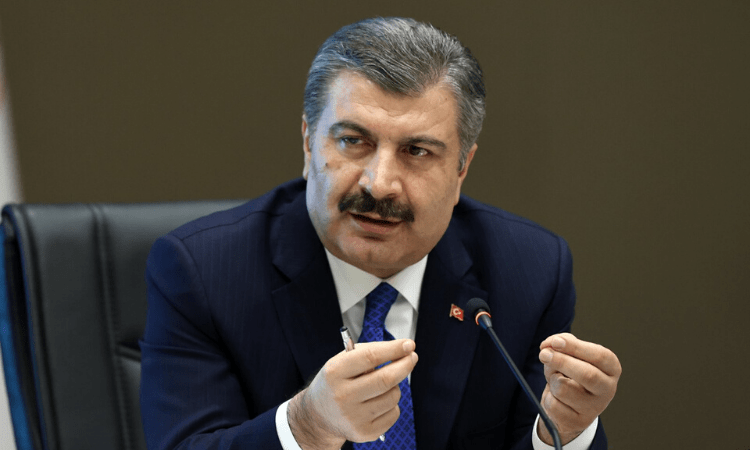
The daily new COVID-19 cases in Turkey started again to decline after a week of a slight increase, said Turkish Health Minister Fahrettin Koca.

Turkey reported 1,214 new COVID-19 cases and 23 more deaths, taking the tally of infections in the country to 185,245, and the death toll to 4,905, the minister tweeted on Friday, Xinhua news agency reported.

“Istanbul and Ankara have reported the lowest numbers of cases in the past week. New cases continue to decrease across the country,” Koca said.

A total of 1,494 patients recovered in the last 24 hours, raising the total number of recoveries to 157,516.

The minister said 41,316 tests were conducted in the last 24 hours, raising the overall number of tests to 2,863,632.

Turkey is currently treating 769 patients in intensive care units, while 310 are intubated.

Turkey reported the first COVID-19 case in the country on March 11 and stepped up the normalization process since June 1.

In the past week, daily new cases had exceeded 1,500, causing the Turkish authorities to warn citizens to obey individual precautions.

Turkey and China have supported each other in the fight against COVID-19.

The leaders of the two countries held a phone conversation on April 8, pledging to cooperate on combating the pandemic and deepen the bilateral ties.

China has facilitated the procurement of medical supplies by Turkey. On April 10, Chinese doctors and medical experts held a video conference with Turkish counterparts to share China’s experience in treating coronavirus patients, protecting medical workers, and controlling the spread of the virus.

AP reports 4 deaths, record high of 376 Covid cases

0

With every passing day, Andhra Pradesh is reporting a higher number of Covid-19 cases and Friday was no exception with the state registering yet another record single-day tally of 376 cases.

On Thursday, the day’s tally was 299 cases, while on Wednesday, 275 positive cases had been detected in Andhra Pradesh.

Following the latest update, Andhra Pradesh’s cumulative tally soared to 6,320 from the overnight tally of 5,854 COVID cases. Friday saw the death toll shoot up with four deaths getting recorded in the 24 hours ending 9 a.m.

The death toll continues to climb with every passing day. Two persons died in Krishna district while one death each was reported from Srikakulam and Prakasam districts. With the latest update, Andhra Pradesh’s death toll stands at 96.

On a positive note, the death rate has been steadily improving with the state’s mortality rate dipping with every day.

On Friday, the situation on this front further improved, with mortality rate dipping further to 1.21 percent from the overnight rate of 1.23 percent. A day earlier, it was 1.27 percent.

Data released on Friday showed that Andhra Pradesh stood at 9th position in the country in terms of mortality rate.

In comparison, on Friday, India’s mortality rate dipped marginally to 3.30 percent from the previous day’s figures of 3.33 percent.

Meanwhile, the cumulative tally of active cases in the state increased to 3,069 from Thursday’s figures of 2,779 active cases, the state’s nodal officer reported.

Despite a substantial number of recoveries, Andhra Pradesh continues to lag on the recovery parameter.

With a recovery rate of 49.05 percent on Friday, Andhra Pradesh ranked 21st or at the bottom of the list of states. India’s recovery rate is comparatively higher at 53.80 percent.

On Friday, 82 persons recovered and were discharged from hospitals, compared to the 77 recoveries reported on Thursday. The latest update raised the cumulative tally of cured persons in the state to 3,065 from the overnight figure of 2983.

Compared to the 13,923 samples tested on Thursday, a relatively higher number of 17,609 tests were conducted in the 24 hours ending 9 a.m., Friday, the nodal officer reported.

The state has conducted 6,30,006 tests, compared to Rajasthan’s 6,54,816, Maharashtra’s 7,19,637, and Tamil Nadu’s 8,00,443. So far, 6,426,627 tests have been conducted across India.

There was no respite on other fronts too. The cumulative tally of COVID-19 cases on Friday jumped by 70 to touch 1,423 cases. The tally of active cases further climbed to 630 from the overnight tally of 611. Friday saw 51 persons belonging to this category being discharged from the hospital.

Among foreign returnees to the state, 26 new cases were detected, taking the cumulative tally to 308. The number of active cases in this category climbed to 261 on Friday, from the 242 cases reported overnight.