

People with atrial fibrillation may live longer with exercise

0

Regular endurance training and good fitness seem to protect against serious cardiovascular (CVD) events and early mortality for people diagnosed with atrial fibrillation (Afib), say researchers.

For the findings, published in the European Heart Journal, the researchers investigated how physical activity and good fitness levels are linked to future health risks for men and women who have been diagnosed with atrial fibrillation.

“The results show that people with atrial fibrillation who meet the authorities’ recommendations for a physical activity generally live longer than patients who exercise less. They also have almost half the risk of dying from cardiovascular disease,” said Lars Elnan Garnvik from Norwegian University of Science and Technology in Norway.

The minimum recommendation is to be physically active for 150 minutes of moderate-intensity or 75 minutes of high-intensity exercise each week.

“We found that both moderate and high-intensity training are associated with significantly reduced risk,” Garnvik said.

The study includes a total of 1117 people who participated in the Trøndelag Health Study (HUNT Study) between 2006 and 2008.

All had a confirmed atrial fibrillation diagnosis, and their average age was over 70. The research team used national health records to find out who died or was impacted by cardiovascular disease in the years leading up to and including 2015.

In the study, the researchers calculated the condition of atrial fibrillation patients with Cardiac Exercise Research Group’s (CERG) widely used fitness calculator.

It was found that the participants with the lowest calculated fitness levels had the highest mortality risk during the follow-up period.

“For every 3.5 point increase in fitness score, the risk of dying dropped by 12 percent over the next eight to nine years. In the case of cardiovascular-related deaths, this risk reduction was 15 percent,” Garnvik said.

The study also shows that inactive men and women with atrial fibrillation generally die earlier than inactive men and women without the condition.

“Our research team has repeatedly shown that high-intensity interval training is more effective than moderate exercise for improving fitness. This is true for both healthy individuals and people with different types of lifestyle diseases,” Garnvik noted.

“Lifestyle changes, including exercise, should be key for treating atrial fibrillation,” the researchers noted.

E-exhibition explores London through past epidemics

0

London, like the rest of the world, has been affected in unprecedented ways by the current COVID-19 crisis. Its past has been mired in many epidemics and pandemics over the centuries including plague, cholera, smallpox, influenza and HIV/AIDS.

A digital exhibition launched this week showcases vignettes of this part and offers a peek into historical remedies.

The Museum of London’s ‘Disease X: London’s next epidemic?’, that originally opened between November 2018 and March 2019, is now available online on the museum’s website, while its physical doors remain closed to visitors.

As per the museum, the opening of ‘Disease X’ in 2018 had marked the 100th anniversary of the second and most deadly wave of the so-called ‘Spanish Flu’. The digital exhibition shares the stories, objects and words of the original display to demonstrate what the past can tell us about historical maladies, their impact on London and its people and the different methods used to fight back.

Exhibits include the mourning dress worn by Queen Victoria to mark the shock passing of her grandson Prince Albert Victor due to ‘Russian Flu’; a 17th-century pomander used to waft away the foul smells thought to cause diseases like the plague and a poster advertising ‘Flu-Mal’, which dubiously claimed to combat both influenza and malaria.

“When we opened the exhibition in 2018, almost two years before the current global health crisis, we did not attempt to predict what might cause a future disease outbreak in London, or when it might occur. Instead, we aimed to link past, present and future together by using our historic collections, new historical research and interviews with top epidemiologists and public health experts to look at what impact any future outbreak may have on London,” said Vyki Sparkes, Curator of Social & Working History at the Museum of London, said in a statement.

Adding, “‘Disease X’ explored how London faced many epidemics through history for which it had no cure but also gave notes of hope, including the development of the first vaccine by Edward Jenner, the global eradication of smallpox in 1980 and the pioneering work in reducing HIV infections by 56 Dean Street sexual health clinic. It also provided an important reminder of the people behind the statistics through focusing on the personal stories of four Londoners who sadly died during the so-called ‘Spanish Flu’ epidemic.”

We gave huge importance to health: Oommen Chandy

0

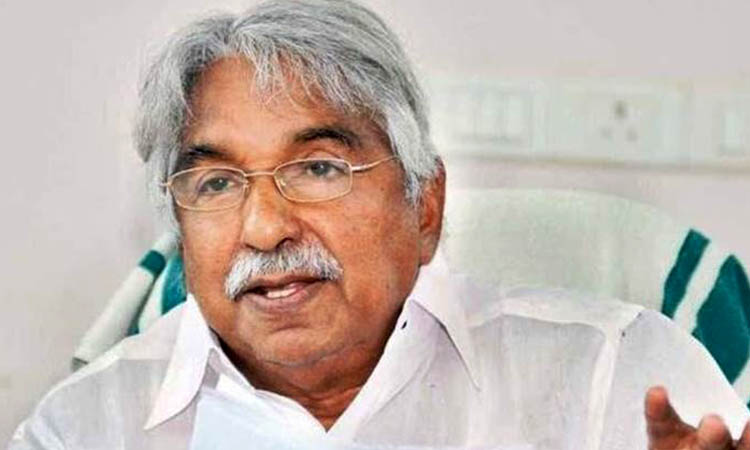
Former Kerala Chief Minister Oommen Chandy on Saturday recalled that during his tenure (2011-16) he gave maximum emphasis to the health sector and several of the programs that were launched still continue now, while some of them have not been taken forward.

“We felt that it was not just a health problem, but a social issue and concentrated on improving the health sector. When we assumed office the allocation to the health sector was a mere Rs 166 crore and it rose to Rs 665 crore. Kerala, during our time stood first with a total score of 76.5. Today even though Kerala stands first, the total score is 74.01,” said Chandy.

Chandy pointed out that his government started the cochlear implant surgery and fixed a target of 100, but later decided to carry forward the scheme and when demitted office in 2016, 640 surgeries were done, giving a new lease of life to kids aged below 5, who were hearing impaired.

“Our dream project was to ensure a medical college in every district and planned for 14 new colleges. But the present government was doing everything to close down a few, that we began, like in Idukki. They closed that, but later they have now opened it. At Thiruvananthapuram, a second medical college was cleared and staff were also appointed, but they closed it down. Had that been there, now we could have had a full-fledged Covid medical college here, and that opportunity has been lost,” added Chandy.

He said he started 2 new dental colleges and increased the total seats from 140 to 240 and after four years, the seats remain the same.

Numerous programs of health care facilities were started pertaining to better health care which includes opening of ayurveda and homeoeo hospitals and pharmacies. But in the present government’s four-year tenure, such things in these sectors have not happened. The Karunya health programme was a flagship program of the then Finance Minister K.M. Mani and it turned out to be a succour for many. We had opened 50 Karunya pharmacies and today I doubt if any of that is there now,” added Chandy.

Chandy also pointed out that during his tenure, he had created 5,000 new posts in the health sector and their Mrithasanjeevini (organ donation) was started.

“In that program, 114 organ transplants were conducted. During our tenure, the first heart and liver transplant was also conducted. We started 80 urban health centres and the present Left government has so far opened just 12,” added Chandy.

The then Health Minister V.S. Sivakumar said that the liver transplant centre in the State-run Medical College hospital here, has by now been closed.

“Our aim was to turn Kerala into a medical hub and that’s the reason why we wanted to have a medical college in every district. But the Left government played politics and did not go forward in a few areas where we had concentrated. The closing down of the second Medical College in the state capital is totally unacceptable, as we had done everything,” said Sivakumar.

Recovery rate improves to 40.32%, lockdown gainfully utilised: Ministry

0

The Union Ministry of Health and Family Welfare on Thursday said the period of lockdown has been gainfully utilized to ramp up the health infrastructure in the country. In a press statement the Health Ministry said the recovery rate in the country improved up to 40.32%.

“There are reports in a section of media about some decisions of the government regarding the lockdown implementation and response to COVID-19 management. The period of the lockdown has been gainfully utilized to ramp up the health infrastructure in the country. As on date, 45,299 people have been cured, taking our recovery rate to 40.32%.”

The ministry said as on May 21,26,15,920 samples have been tested and 1,03,532 have been tested in the last 24 hours, through 555 testing labs (391 in the government sector and 164 private labs).

It also said that the Indian Council of Medical Research (ICMR) in collaboration with the Health Ministry and National Centre for Disease Control (NCDC) with support from State health departments and key stakeholders including WHO, is conducting a community-based serosurvey to estimate the prevalence of SARS-CoV-2 infection in Indian population.

It said at least 3,027 dedicated COVID hospitals and COVID health centers along with 7,013 COVID care centers have been identified. Additionally, more than 2.81 lakh isolation beds, over 31,250 ICU beds, and 11,387 oxygen supported beds have already been identified in Dedicated COVID Hospitals and COVID health centres.

The government supplied 65 lakh PPE coveralls and 101.07 lakh N95 masks to the states. “Nearly 3 lakh PPE coveralls and 3 lakh N95 masks are now being manufactured per day by domestic producers, although they were not produced in the country earlier”.

In addition, the Government is consulting and involving epidemiologists actively at all levels in order to combat COVID-19. The National Task Force (NTF) for COVID-19 constituted by the Indian Council of Medical Research (ICMR) has held 20 meetings since mid-March and has systematically and effectively contributed towards the scientific and technical response to the pandemic,” said the Health Ministry.

It said a team, including researchers from Jawaharlal Nehru Centre for Advanced Scientific Research (JNCASR) — an autonomous institute under the Department of Science and Technology (DST) — has developed a heuristic predictive model for COVID-19 that provides short-term predictions about the evolution of the disease and the medical needs that are generated as a consequence.

The ministry stated that the Department of Bio-Technology and its PSU, Biotechnology Industry Research Assistance Council (BIRAC) have announced a COVID-19 Research Consortium Call to support diagnostics, vaccines, novel therapeutics, repurposing of drugs or any other intervention for control of COVID-19.

The Health Ministry had hitherto maintained that the lockdown was to break the chain of transmission of COVID-19 and was often asked the rationale behind the lockdown when cases continued to be reported over 4 to 5 thousand per day. However experts at various times have said that the numbers would have spiked exponentially sans lockdown, as it was seen in other parts of the world.

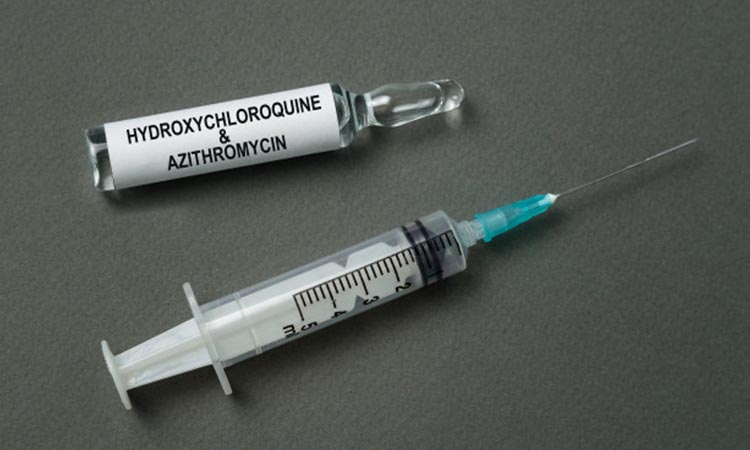
Hydroxychloroquine trial begins in the UK

0

A trial to see whether two anti-malarial drugs — chloroquine, hydroxychloroquine — could prevent the novel coronavirus has begun in the UK’s Brighton and Oxford.

The first UK participants in the global trial are being enrolled on Thursday at the Brighton and Sussex University Hospitals and the John Radcliffe Hospital in Oxford, reports the BBC.

They will be given either hydroxychloroquine or a placebo for three months.

These are the first of a planned 25 UK sites, with results expected by the end of the year.

The trial is open to anyone delivering direct care to coronavirus patients in the UK, as long as they have not been diagnosed with COVID-19.

It will test whether the drugs can prevent healthcare workers exposed to the virus from contracting it.

One of the study’s leaders, Professor Nicholas White at the University of Oxford said: “We really do not know if chloroquine or hydroxychloroquine are beneficial or harmful against COVID-19.”

But, he said, a randomized controlled trial such as this one, where neither the participant nor the researchers know who has been given the drug or a placebo, was the best way to find out.

“A widely available, safe, and the effective vaccine may be a long way off,” the BBC quoted Professor Martin Llewelyn from Brighton and Sussex Medical School, who is also leading the study.

“If drugs as well-tolerated as chloroquine and hydroxychloroquine could reduce the chances of catching COVID-19, this would be incredibly valuable.”

Manushi Chhillar joins Lionel Messi, Rohit Sharma in global campaign against COVID-19

0

Former Miss World and Bollywood debutant Manushi Chhillar has been roped in for a global campaign against the novel coronavirus. She joins Indian cricket superstar Rohit Sharma, besides global football icons Lionel Messi, Gareth Bale, David Beckham and Mesut Ozil among others in the effort.

Manushi has joined a fitness brand for a super star-studded initiative aimed at raising funds for those affected by a coronavirus. She is part of a global campaign titled Home Team Hero.

Manushi says: “Super excited to become a part of the global Adidas campaign Home Team Hero Challenge. It is an opportunity for the world’s athletes and creators to unite and help make a difference with their workouts for those affected by the coronavirus pandemic globally and I’m proud to be doing my bit for the #COVID19FUND.”

Manushi said that she likes to follow football as a sport.

She said: “No one knows this but I’m actually a very sporty person and I do like football as a sport. So, it’s thrilling to be associated with an initiative that has so many sporting legends and icons of the world coming forward to help.”

Manushi added that the world “needs each and every individual to stand up and support those in need and I am pleased to be working towards this common goal through the challenge”.

Manushi is all set to make her Bollywood debut opposite superstar Akshay Kumar in the upcoming film “Prithviraj”.

Directed by Chandraprakash Dwivedi, “Prithviraj” is based on the life of king Prithviraj Chauhan. It stars Akshay as Prithviraj, while Manushi will play the role of the Sanyogita, the love of his life.

Heat kills thousands of Australians yearly: Study

0

Australian researchers have called to add climate change as an official cause of death after a study published on Thursday found that heat-related deaths have been under-reported in the country.

The study, published by Australian National University (ANU), found that excessive natural heat has been responsible for at least 50 times more fatalities than recorded on death certificates, reports Xinhua news agency.

A statistical analysis found that 36,765 deaths in Australia over the past 11 years could have been attributed to heat, but there were only 340.

“Climate change is a killer, but we don’t acknowledge it on death certificates,” Arnagretta Hunter, a co-author of the study from the ANU Medical School, said in a media release.

“If you have an asthma attack and die during heavy smoke exposure from bushfires, the death certificate should include that information.

“We can make a diagnosis of a disease like coronavirus, but we are less literate in environmental determinants like hot weather or bushfire smoke,” Hunter said, adding that heat is the most dominant risk posed from climate change in Australia.

According to the study, excessive natural heat was responsible for approximately 2 percent of all deaths in Australia.

Hunter said the country’s death certificates must be modernized to capture the impact of global warming.

“Climate change is the single greatest health threat that we face globally even after we recover from the coronavirus.

“We know the summer bushfires were a consequence of extraordinary heat and drought and people who died during the bushfires were not just those fighting fires – many Australians had early deaths due to smoke exposure,” she said.

IIT-Guwahati finds new ways to prevent memory loss due to Alzheimer’s

0

Indian Institute of Technology Guwahati (IIT-G) on Wednesday said its researchers have discovered new ways that can help prevent or reduce short-term memory losses associated with the Alzheimers disease.

The research team explored new ways to prevent the accumulation of neurotoxic molecules in the brain that are associated with short-term memory loss due to Alzheimer’s disease.

They reported some methods such as the application of low-voltage electric field and the use of ‘trojan peptides’ to arrest aggregation of neurotoxic molecules in the brain.

The idea of using ‘Trojan peptide’ comes from mythological “Trojan Horse” used as subterfuge by the Greeks in the battle of ‘Troy’.

“Approximately hundred potential drugs for the treatment of Alzheimer’s disease have failed between 1998 and 2011, which shows the gravity of the problem,” lead researcher Vibin Ramakrishnan, Professor, Department of Biosciences & Bioengineering, IIT-G, said in a statement.

A defining hallmark of Alzheimer’s is the accumulation of Amyloid beta peptides in the brain. The research team seeks methods to reduce the accumulation of these peptides, in order to arrest the progression of Alzheimer’s.

Last year, the IIT-G researchers found that application of a low-voltage, the safe electrical field can reduce the formation and accumulation of toxic neurodegenerative molecules that cause short-term memory loss in Alzheimer’s disease.

They found that external electric/magnetic field modulates the structure of these peptide molecules, thereby preventing aggregation.

“Upon exposure to an electric field, we could retard the degeneration of nerve cells to an extent of 17–35 per cent. This would translate to about 10 years delay in the onset of the disease,” said Dr Ramakrishnan.

Working further in this area, the research team explored the possibility of using ‘Trojan peptides’ to arrest aggregation of these neurotoxic molecules.

They have designed ‘Trojan peptides’ by adopting a similar approach of ‘deceit’ to impede the aggregation of the amyloid peptide, arrest the formation of toxic fibrillar assemblies, and reduce poisoning of nerve cells that leads to memory loss.

“Our research has provided a different path that may extend the onset of Alzheimer’s disease. However, it would take testing in animal models and clinical trials before bringing in such new therapeutic approaches into human treatment,” the researchers noted.

Microsoft announces dedicated Cloud for healthcare industry

0

As Covid-19 impacts every aspect of the healthcare system, Microsoft has announced a dedicated Cloud for Healthcare, its first industry-specific cloud offering which is now available in public preview and through a free trial for the next six months.

According to the company, Microsoft Cloud for Healthcare will bring together capabilities for customers and partners to enrich patient engagement, connect caregiving teams, and improve collaboration, decision-making and operational efficiencies.

“Microsoft Cloud for Healthcare will support capabilities such as the new Bookings app in Teams, now generally available to customers across industries to help schedule, manage and conduct business-to-consumer virtual appointments,” said Tom Mcguinness, Corporate Vice President, Worldwide Health, Microsoft.

Microsoft Cloud for Healthcare offers enhanced patient engagement, empower health team collaboration and improve operational and clinical data insights.

Healthcare organizations can use Microsoft Cloud for Healthcare to extend the value of Microsoft Dynamics 365 Marketing, Dynamics 365 Customer Service, and Azure IoT to deploy consumer-friendly patient experience, connected physician and referral management and enhance patient engagement portals.

“As we’ve seen during the COVID-19 pandemic, clinicians also need greater flexibility and convenience in how they are able to connect with patients. Today we are announcing general availability of the Bookings app in Teams, which enables healthcare providers to schedule, manage, and conduct provider-to-patient virtual visits within Teams,” said Microsoft.

Global coronavirus cases surpass 4.8 mn: Johns Hopkins

0

The overall number of global coronavirus cases has increased to over 4.8 million, while the death toll surpassed 323,000, according to Johns Hopkins University.

As of Wednesday morning, the total number of cases stood at 4,897,492, while the death toll increased to 323,285, the University’s Center for Systems Science and Engineering (CSSE) revealed in its latest update.

The US currently accounts for the world’s highest number of cases and deaths at 1,528,568 and 91,921, respectively.

In terms of cases, Russia has the second-highest number of infections at 299,941 followed by Brazil (271,885), the UK (250,138), Spain (231,606), Italy (232,037), France (180,933, Germany (177,778), Turkey (151,615) and Iran (124,603), the CSSE figures showed.

Meanwhile, the UK accounted for the second-highest COVID-19 deaths worldwide at 35,422.

The other countries with over 10,000 deaths are Italy (32,169), France (28,025), Spain (27,778), and Brazil (16,983).