

Atrial fibrillation risk not linked to the amount of body fat: Study

0

Researchers have revealed that that the risk of atrial fibrillation is not linked to the amount of body fat, but instead to large muscle mass, or more precisely, a high fat-free weight.

Atrial fibrillation affects as many as one in three persons in the industrialized/Western world during a lifespan. And when it comes to preventing the condition, the medical doctor’s best advice is often weight loss. However, a new study, published in the journal Trends in Cardiovascular Medicine, shows that the risk of atrial fibrillation is not linked to the amount of fat, but rather to the fat-free weight.

“It appears that people with high fat-free weight do have a high risk, regardless of whether they have a lot of fat on their body or not,” said study researcher from Fenger-Gron Aarhus University in Denmark.

In many people’s eyes, large muscle mass is likely seen as the opposite of high body fat, but it turns out that to some extent, the same people have a lot of both.”And when these people have a high risk of atrial fibrillation, we tend to interpret it as proof that too much fat is harmful,” Grom added.

The study, which is based on a review of the literature on the importance of body fat and fat-free mass for the risk of atrial fibrillation, also contains a meta-analysis which summarises the results of all relevant studies in the field.

The starting point for the work was, among other things, the research group’s own study, in which they analyzed the body mass of 56,000 participants in the Danish ‘Diet, Cancer, and Health’ project.

“Our results point to the importance of remembering to also look for this condition in people who are muscular and without overwhelming body fat – even though they appear to be very healthy and robust,” he said

However, the researcher emphasizes that the results encompass only the risk of atrial fibrillation and do not gainsay that too much body fat increases the incidence of infarctions, diabetes, and many other health problems.


At 7.1 cases per lakh, India’s Covid-19 ratio lowest in world: Govt

0

India has about 7.1 cases per lakh population whereas the average of the whole world is 60 cases per lakh population, the Union Health Ministry said on Monday.

In a statement, the Union Health Ministry said “in terms of confirmed cases per lakh population, India has so far about 7.1 cases per lakh population vis a vis approx 60 cases per lakh population for the world as a whole.” Spain has reported 494 cases per lakh population, which is the highest, followed by the US, which has 431 cases per lakh population. Italy has 372 cases per lakh population and the UK has 361 cases per lakh population.

The Union Health Ministry said a multi-factorial analysis has been done on the combination of the parameters, which are namely, total active cases, active cases per lakh population, doubling rate (calculated over 7 days period), case fatality rate, testing ratio and test confirmation rate.

“India currently has 56,316 cases under active cases. So far, a total of 36,824 people have been cured of Covid-19. In the last 24 hours a total of 2,715 patients are reported cured. We have presently a recovery rate of 38.29 percent,” it said.

The Health Ministry said the states have been asked to meticulously delineate the containment and buffer zones and also to ensure stringent implementation of the containment plans in the containment zones. A senior ministry official said in the containment zones, active search for cases through the house to house surveillance by special teams, testing of all cases as per sampling guidelines, contact tracing, clinical management of all confirmed cases are the priority tasks.

“Further, around each containment zone, a buffer zone has to be delineated so as to ensure that infection does not spread to the adjoining areas. In buffer zones, extensive surveillance for cases through monitoring ILI/SARI cases in health facilities has to be coordinated,” the official said.

How to tackle obesity during lockdown

0

The pandemic has contributed to an increase in obesity rates as weight loss programmes (which are often delivered in groups) and referred interventions such as surgery are being severely curtailed.

Importantly, the current crisis and the need for self-isolation is prompting many to rely on processed food with longer shelf life (instead of fresh produce) and canned food (with higher quantities of sodium). One might notice an increase in weight if this pattern of lifestyle persists for a longer period of time.

So what should a person do to stay healthy and make one stronger in these times? Dr Sharad Sharma, Laparoscopic and Bariatric Surgeon, Hiranandani Hospital, Vashi gives a few recommendations:

Proper nutrition and hydration are vital

Those who consume a well-balanced diet are healthier and are able to build stronger immune system. A healthy diet limits the risk of chronic illnesses and infectious diseases

It is recommended to eat a variety of fresh and unprocessed foods every day to accomplish the body’s requirement of necessary Vitamins, Minerals, Dietary Fiber, Proteins and Antioxidants

Consume whole grains and legumes – this also reduces the risk of Diabetes

Drink ample water – at least 5 liters per day

Avoid sugar, fat and salt to significantly lower your risk of being overweight, and obese

Do not consume sugar-sweetened beverages & limit intake of oily food

Staying active

While the stay at home order has restricted our outdoor movements, it is important for people of all ages and abilities to be as active as possible.

Avoid sitting or slouching all the time

Every 20 minutes, move around for 3-5 minutes; walk or stretch-this will help reduce the strain on a muscle, relieve any form of mental tension and will help circulate blood to the body

Muscle activity increases if you are physically active, reducing the risk of speedy weight gain

More vigorous free exercises are also great ways to remain active at home

In current times focusing on good health, food habits and maintaining some level of physical activity will go a long way in warding off obesity.

Aarogya Setu usage compulsory in SAI’s SOP for training resumption

0

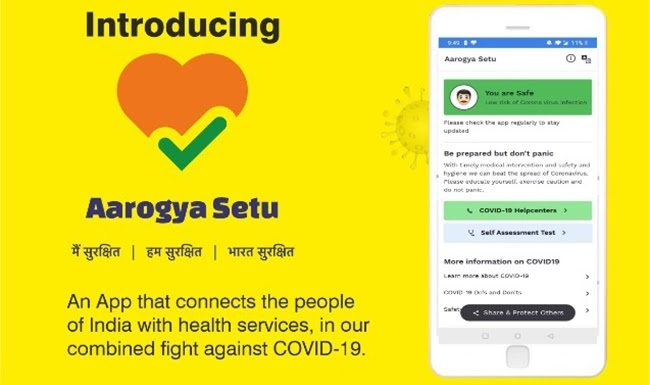
Compulsory usage of the Aarogya Setu app, nomination of a hygiene officer by National Sports Federations (NSF) to ensure compliance and implementation of all protective measures for athlete and staff safety, elimination of the usage of locker rooms and maintaining a distance of “1.5 to 2 metres” are among the measures suggested by the committee put together by the Sports Authority of India (SAI) in their Standard Operating Procedure (SOP) for resumption of training across the country.

SAI had announced the formation of the six-member committee headed by Secretary Rohit Bharadwaj on May 10. It has since created the 33-page document that now needs to be cleared by Health Ministry and Home Ministry.

The SOP also says that the usage of gym “shall be avoided/ limited to inescapable requirement; and as far as possible exercise shall be allowed using personal equipment, which shall not be shared by any other trainee.” If athletes are using the gym, they will have to do so ensuring a distance of 1.5m to 2m between themselves and usage of equipment shall be allowed permitted only “while wearing gloves and face mask and under consequent use of disinfectants afterwards.”

“All physiotherapy/massage shall be avoided unless absolutely necessary” and “recovery areas including sauna, hydrotherapy etc. shall be made inaccessible during this period.”

The SOP also calls for education of athletes on COVID-19 precautionary measures before training resumes.

While some athletes have been at their respective homes throughout the period of the lockdown, many are stuck at SAI centres around the country. The committee says in the SOP that those who have been in training centres shall be subject to “basic screening to detect any concerning ailments.”

Those that have been at their residences or in Non-SAI training centres and are rejoining the SAI centres whenever training resumes will be tested for COVID-19 and placed in quarantine until their test results arrive. “Final clearance should be provided by the doctor-In-charge at the respective SAI centre,” it said.

12 insurgents handed over by Myanmar test corona negative in Manipur

0

Twelve of the 22 insurgents handed over by Myanmar to India on Friday tested negative for coronavirus in Manipur on Sunday, officials said.

Manipur Health and Family Welfare Department’s Additional Director Khoirom Sasheekumar Mangang confirmed that swab samples of 12 “prisoners” had tested negative.

An Assam Police official said on condition of anonymity that swab samples of Assam’s ten militants had been collected even as they were put in institutional quarantine immediately on their arrival in Guwahati on Friday.

According to security officials, these militants include self-styled home secretary of National Democratic Front of Bodoland (Songbijit faction) Rajen Daimary.

Twelve of the 22 terrorists handed over by Myanmar are linked to four insurgent groups in Manipur while the remaining 10 are associated with NDFB (S) and Kamtapur Liberation Organisation (KLO) of Assam.

The 22 insurgents, who linked to NDFB (S), United National Liberation Front, People’s Revolutionary Party of Kangleipak (Pro), Kanglei Yawol Kanna Lup, People’s Liberation Army and KLO, were brought to India on a special aircraft and handed over to Manipur and Assam police separately.

Northeastern states of Arunachal Pradesh, Manipur, Nagaland, and Mizoram – share 1,643-km of unfenced Indian border with Myanmar.

Hypertensive individuals run higher risk of Covid infection: Doctors

0

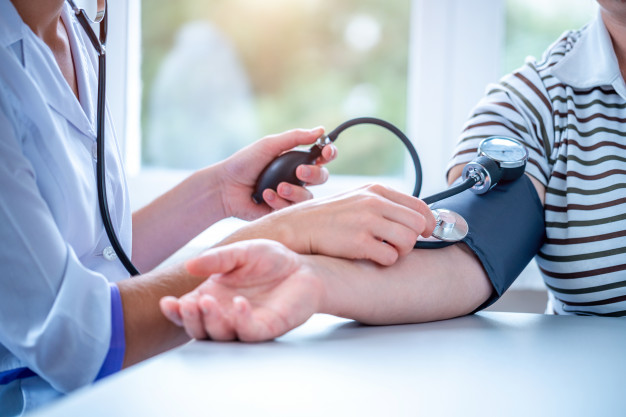
Hypertensive individuals run the increased risk of Covid-19 infection and they should take extra precautions like regularly monitoring their blood pressure level, doctors said on World Hypertension Day on Sunday.

Hypertensive individuals and increased age are high risk factors for Covid-19 infection, said Dr. Shiva Raju, Senior Consultant Physician and Diabetologist, KIMS Hospitals, Secunderabad. He advised such individuals to remain at home, take regular medication for blood pressure, closely monitor BP level at home and ensure a low salt diet – less than 3 grams per day.

Such individuals should also avoid taking more than two coffees per day, avoid alcohol intake and pain killers.

A study shows six percent of those died of Covid-19 were patients with known hypertension and associated diabetes. The Covid-19 mortality rate for normal patients is two percent. Patients who are taking ACE inhibitors and ARB may have higher risk of Covid-19 infection but evidence is inconclusive.

Dr Meeraji Rao, Senior Consultant Interventional Cardiologist, Continental Hospitals, Hyderabad, believes that inactive daily routines due to the ongoing lockdown could result in dangerous health conditions, even before the pandemic hits the individual.

It is important that every individual with possible underlying health ailments, take daily readings of blood pressure as this will help monitor fluctuations. A close watch on blood pressure and diabetes levels will help in creating a lifestyle that is best suited to stay healthy.

“During normal days, an individual moves around and has an active life; but it is important for people to stay active and healthy even under lockdown. It is strongly advised that people exercise at least for 2-3 hours every week to ensure their metabolism functions well, and they remain healthy,” he said

The doctor said patients already suffering from hypertension can continue with their earlier medications even during this pandemic while those who have developed high blood pressure during these times must seek expert opinion when it comes to ACE inhibitors and ARB medicines.

“Stress is one major reason people tend to develop hypertension, and the risk of this condition is higher in these times of pandemic and associated lockdown. It is strongly advised that people maintain a healthy sleep cycle to help beat health risks. Hypertension patients need not do vigorous exercise; but can ensure they stay healthy by doing brisk walking for 30 to 60 minutes each day.”

“Hyper Tension…. the word itself explains one of the major cause for it. This is nothing but a condition where one’s blood pressure is beyond 120/80,” explained Dr. Saji D’souza, Chairman and Managing Director, KSAC Group of Hospitals.

Almost every individual will have raised BP due to many factors including loss of elasticity of arteries and veins, atherosclerosis where in the arteries are blocked with salts/cholesterol etc and stress induced.

A person who has unpredictable variations and the level of BP going beyond 180/120 need to take medical advice as this might invite stroke, cardiac arrest or even death.

He pointed out that ayurveda suggests a balanced diet and exercise. Proper excretory and blood circulatory systems keep the body away from not only hypertension but also other diseases. Ayurveda emphasises on good food, exercise and sound sleep for the perfect harmony on one’s own health, he added.

Medics hail govt measures on health reforms

0

The medical fraternity has welcomed Finance Minister Nirmala Sitharaman’s measures for health reforms, saying these would go a long way in strengthening the healthcare services across the country as well as help prepare India for any future outbreak.

“The government’s decision to allot funds for public health labs and build infectious disease blocks in all district-level hospitals is praise-worthy. This will go a long way in strengthening healthcare services in the country as well as prepare the counrty for any future outbreak,” said Federation of Resident Doctor Association India’s President Dr Shivaji Dev Barman.

“Allotment of funds for providing adequate quantities of PPEs for healthcare workers will ensure their protection in the ongoing fight against COVID-19 epidemic,” said Barman.

“Healthcare planning should include necessary inputs from doctors working at ground level and by introducing the Indian Medical Service (IMS) cadre. Healthcare system needs to be strengthened at every level along with an improved disease surveillance system. Research in the health sector should also be stepped up.”

Dr Sudarshan Ballal, President of NatHealth- Healthcare Federation of India, said, “The healthcare industry welcomes these strategic reforms and looks forward to working with the government on expanding India’s healthcare footprint. In view of the tremendous headwinds faced by the industry, we look forward to continuously engaging with Central and state governments for short-term support to sustain and maintain resilience in the face of COVID”.

Dr.Shankar Narang Chief Operating Officer of Paras healthcare, which is among ‘hospitals turned COVID 19 centres’ in Ranchi, said, “If there is one positive that can be pulled out from the calamitous Covid-19 crisis, it is the fact that it has woken us up to the need for giving healthcare its due. We are happy that the Finance Minister has announced a slew of reforms and measures to improve healthcare infrastructure, including increased public expenditure on health, greater investment in ramping up grassroots-level healthcare systems, creating infectious disease hospital blocks in all districts and boosting ICMR’s research capability.”

How Team Smriti, RIL, J&J, NIV got a Covid-19 testing swab in 10 days at 10% cost of China make

0

India has achieved a major milestone in its fight against Covid-19 as two large companies Reliance Industries Limited (RIL) and Johnson & Johnson collaborated as part of a social contract with National Institute of Virology and Textiles Ministry to get a Made in India testing swab in 10 days at 10 percent cost of what was being imported from China.

This is the story of how the government and private sector have worked on a war footing for a breakthrough in a crucial testing input of nasal and throat swabs at affordable pricing which were being imported from China until just 10 days back.

This is seen as a major achievement for the Vocal for Local campaign announced by Prime Minister Narendra Modi.

Textiles Minister Smriti Irani said in a tweet, “Government efforts & our industry’s prowess have proved that our Nation has capacity & ability to tide over every obstacle. India’s success in the production of PPE & Testing Swabs has already put our Nation on the path of ‘Atmanirbhar Bharat’ as enunciated by PM @narendramodiJi”.

Varun Jhaveri, Officer on Special Duty, Ayushman Bharat said in a tweet, “We used to import collection swabs at Rs 17 from China. Govt contacted the largest Indian polyester manufacturer to locally design swab. Got the design & material approved from NIV & gave manufacturing orders to MSMEs. Today, India manufactures these at Rs 2! Vocal for Local!”.

The ball was set rolling 10 days back for the indigenous project for nasal and throat swabs when Ravi Kapoor, Secretary, Textiles contacted J&J and RIL to check whether India can manufacture swab required for testing purpose.

The video conference was held between Ravi Kapoor and his team, J&J and their team and RIL officials. A question was raised whether in shortest time period whether such swab can be manufactured in India in required quantity.

Since ear buds are manufactured by J&J, the issue raised was whether such swab can be manufactured, which are suitable for carrying out corona testing.

It was also stated that Chinese swabs were costing Rs 17 and difficult to get hence this swabs can be manufactured with the help of J&J and RIL?

It was also stated whether the cotton used on surface can be replaced with polyester so that the tissues taken out on swab can be sent to testing labs.

RIL agreed to this requirement swiftly and sent polyester staple fibre to National Institute of Virology in Pune for testing. This was tested by NIV and the material was approved.

However, more demanding requirements were on the anvil in this short journey. The J&J unit at Vasai which was manufacturing ear buds needed sliver made out of PSF to feed to their automatic machines to manufacture these swabs. These slivers were made from PSF of 38mm usual cut length.

This was done in the RIL RTG Patalganga having prototype machine to produce sliver. This sliver was sent to MSME at Vasai to try out on their automatic machines. Since machines to produce ear bud could accommodate cut length up to 25mm (cotton) this sliver supplied of 38mm fiber could not meet their requirement.

Thereafter, RIL was asked to supply sliver to meet machine requirement. “Our scientist worked overnight on right type of PSF of cut length 22mm with change of certain characteristic to produce sliver to meet requirement of automatic machines. This was done within 12 hours from the intimation received,” officials from RIL said.

These slivser were approved and were suitable for this machine and sample was prepared to be sent to NIV for their final approval by J&J team and this was approved by NIV within 12 hours of time.

It was also a challenge to move the cartons to Vasai plant in view of lockdown conditions. Special passes and other arrangements were made to move the material from PG to Vasai.

The target of the exercise was to manufacture this swab at the lowest cost. The present cost of making swab based on material supplied by RIL is in the range of Rs 1.70 to 1.75/swab, as against imported cost of Rs 17/pc. Officials said this cost can be further brought down once the Vasai unit get their new machine to accommodate longer stick rather than using adaptor which required manual intervention.

Officials said this does not make commercial sense to make the swab but it is doing it in national interest.

“This swab requires .03 grams of PSF/swab hence commercially does not make sense for RIL to get involved for such a small quantity. However, our commitment to India for providing swab was the ultimate goal because without swab no test could be carried out,” RIL officials said.

“We in RIL spent day and night to provide sliver required for manufacturing swabs at Vasai with the help of J&J in shortest time period of 8 days, which normally would have taken a few months to complete the project. We at Reliance take pride to work for Nation’s need rather than looking into commercial aspects,” they added.

“This is one of the targets for Make in India project rather than made for India project. This also eliminates some of the over dependence on China for such critical item required for national interest. Our target will be to manufacture super speciality fibres required for defence and other critical end uses which are being imported and India is vulnerable for such imports and dictation from the supplier,” they added.

Maharashtra notches highest 67 deaths and 1,606 Covid-19 cases

0

Maharashtra on Saturday recorded the highest number of 1,606 new cases and a new high of 67 deaths, with Mumbai also notching a fresh high of 41 deaths, health officials said.

This comes to a death rate of roughly 1 fatality every 20 minutes for the state.

However, the state health department said that while 22 deaths occurred today (in the past 24 hours), the remaining 42 fatalities occurred between April 15-May 14 which have been validated and confirmed as Covid-19 cases today.

With 67 fatalities — up from the previous high of 54 notched on May 13, the state death toll toll now stands at 1,135 and the total number of coronavirus patients increased from 29,100 yesterday to 30,706 today, after the steepest single-day jump of 1,602 recorded on May 14.

Of the total deaths, 41 were recorded in Mumbai alone, taking up the city’s toll from Friday’s 655 to 696 now, and the number of Covid-19 positive patients in the city shot up by 884 to touch 18,555 today.

Mumbai’s Dharavi slum alone continued to be a major hotspot and a headache for the health authorities, notching 53 new cases, taking the total number of patients to 1,198, and 53 deaths to date.

Besides Mumbai’s 41, there were 9 deaths in Thane district, 7 in Pune, 5 in Aurangabad, 3 in Jalgaon, one each in Nashik and Jalgaon.

They comprised 47 men and 20 women, and nearly 66 per cent of them suffered from other serious ailments such as diabetes, hypertension, heart problems and asthma.

On the positive side, 524 more fully cured patients returned home, taking the number of those discharged to 7,088.

In anticipation of an even bloodier war with the virus in the coming days, the government continued to fortify itself by requisitioning the famed Wankhede Stadium premises to set up a jumbo quarantine facility.

This will be the second such facility in a sports complex after a huge 1,000-plus facility has come up in the National Sports Club of India, and at the Bandra Kurla Complex and NESCO grounds in Goregaon.

With a view to reducing the travails of stranded migrants, Chief Minister Uddhav Thackeray and Nationalist Congress Party President Sharad Pawar spoke with Bihar CM Nitish Kumar and West Bengal CM Mamta Banerjee and two trains carrying migrants to Gaya and Kolkata left from this state.

In another humanitarian gesture, the state has so far deployed 11,380 ST buses to give a free drop to 1.46 lakh migrants up to the borders of Gujarat, Madhya Pradesh, Chhattisgarh, Telangana and Karnataka to enable them to reach their homes.

The Mumbai Metropolitan Region (Thane Division) continued to cause huge concerns with 768 Covid-19 deaths and cases shooting to 23,193, with Thane district notching 49 deaths, Palghar 13 and Raigad 12 fatalities so far.

Though trailing a distant second after Mumbai, Pune Division fatalities cross the 200-mark to touch 212 fatalities besides 4,149 patients.

The next major area of concern is Nashik Division with 78 deaths and 1,256 positive cases, followed by Akola Division with 28 deaths and 466 cases, and finally Aurangabad with 26 fatalities and 966 patients.

There’s also Kolhapur Division with 5 deaths and 173 patients, Latur Division with 5 fatalities and 101 cases, and finally Nagpur Division with 3 deaths and 361 patients.

Meanwhile, the number of people sent to home-quarantine increased from 329,302 to 334,558, and those in institutional quarantine went up from 16,306 to 17,048, while the state’s containment zones increased from 1,473 to 1,516 on Saturday.

As many as 14,434 teams have carried out a survey of a population of around 61 lakhs in the state to date.

66% people ‘very hopeful’ of normal life post Covid-19

0

As many as 48-66 percent of people belonging to rural areas, and various educational, social, income and age groups have expressed hope that lives would return to the normal track at the end of the Covid-19 outbreak, according to the latest IANS-CVoter COVID tracker survey.

As per the survey, 48.3 percent people staying in the rural areas said they are ‘very hopeful’ that their own, as well as their family members’ lives, will return to the normal track as and when the dreaded virus goes away, while 38 percent said they are ‘somewhat hopeful’ and 7.1 percent said they are ‘not too hopeful’.

The numbers went up in the semi-urban areas where 56.5 percent said they are ‘very hopeful’, 25.1 percent ‘somewhat hopeful’ and 7.4 percent ‘not too hopeful’.

In the urban areas, 58.6 percent people said they are ‘very hopeful’ that their lives will come back on track after the outbreak, while 25.9 percent said they are ‘somewhat hopeful’ and only 2.4 percent said they are ‘not too hopeful’.

Higher education groups with 66.1 percent of people are very hopeful about normal lives, followed by 56.2 percent middle education sector and 55.4 percent lower education sector.

Similarly, 63.4 percent of people in the higher income groups said they are ‘very hopeful’ about normalcy returning post-COVID-19, followed by 58.6 percent in the middle-income groups and 54 percent in the lower-income groups.

Among social groups, 67.5 percent Christians said they are ‘very hopeful’, followed by 61.5 percent Sikhs, 61.1 percent Muslims, 59.1 percent Scheduled Tribes (STs), 58.5 percent Upper Caste Hindus (UCH), 55.4 percent Other Backward Classes (OBC), 51.7 percent Scheduled Caste and 54.5 percent belonging to the other category.

In the eastern part of the country, 60 percent of people said they are ‘very hopeful’ about normal lives post the pandemic, followed by 58.5 percent in the north, 57.8 percent in the west and 51.1 percent in the south.

Despite the pandemic hurting the old-age people the most, 60.5 percent of those above the age of 60 years sounded ‘very hopeful’ that their lives will return to the normal track, followed by 58.9 percent in the middle-aged category (45-60 years), 55.3 percent in the young age category (25-45 years) and 56.9 percent in the fresher category (below 25 years).

Gender wise, 58.6 percent of males and 55.2 percent of females said they are ‘very hopeful’ of normalcy returning post-COVID-19.