Manushi Chhillar: Health, nutrition top the chart of things I’m passionate about

Former beauty queen and Bollywood debutante Manushi Chhillar is starting a social media campaign on nutrition. She wants to tell people about the positives of eating right.

“I have been told repeatedly that we are what we eat and we have to be very cognizant about what we intake,” said Manushi on National Nutrition Week, which commenced on Tuesday.

She added: “Proper nutrition has manifold health benefits and through my social media, I intend to tell as many people as possible about the positives one can unlock by eating right.”

Manushi credits her doctor’s parents for inculcating the knowledge about how proper nutrition can be a game-changer.

“My parents are doctors and they have always told me that our eating habits define our total health. With this learning, I have been able to lead a very balanced life because awareness about nutrition is key for anyone to understand whether they are planning their meals correctly,” she said.

Manushi added that malnutrition can really damage the inside. “I will use my social media to drive home as much awareness as possible through National Nutrition Week.”

Manushi shared that she is a big fitness and nutrition enthusiast.

“There are a few things that I’m deeply passionate about, and health and nutrition are definitely on top of that chart. I will show people how I eat and balance my diet so that I keep cravings at bay, and also ensure I give proper breaks to my body between meals. It’s a fun social media awareness campaign and I hope to connect with as many likeminded people as possible and jam with them,” she said.

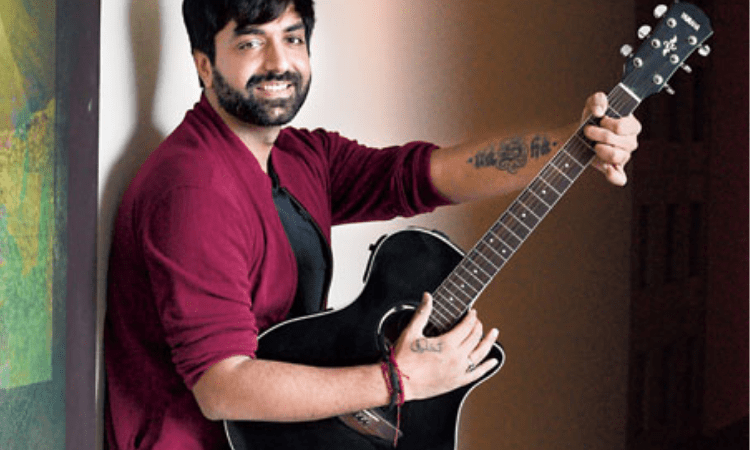
‘Kabir Singh’ singer Akhil Sachdeva on advantage of singing for OTT shows

Singer Akhil Sachdeva says he is currently excited about recording songs for the digital medium.

Akhil recently came up with the song “Galliyaan” for the web show “Bekaabee”.

” I think among the new musicians and the composers that we have, I was the first one to begin giving big melodies to the OTT platform.
While making music you do not really bother about what platform it is going to be on. Music is made from your soul and that is how I write, compose, and sing. I don’t worry about the platform but it is a different platform. So it must be having a different audience, and it is always going to be there, whenever the show is streamed. So, I think with all this going on, OTTs are the safest platform,” Akhil explained the advantage of scoring tunes for the digital platform while speaking to IANS.

However, he badly misses performing on the stage in front of a live audience.

“I’m a stage guy. I started my stage career 11 years ago when I formed a band called Nasha. This band of mine is India’s first Sufi rock band. I’ve been performing before I made my debut in Bollywood, so I’m missing it (performing live). During a lockdown, I did it for a private show but I’m really missing it. It’s really a very uncertain time now, but I would love to start as soon as it is possible,” he added.

Akhil is best known for his songs “Humsafar” (in “Badrinath Ki Dulhania”) and “Tera ban jaunga” (“Kabir Singh”).

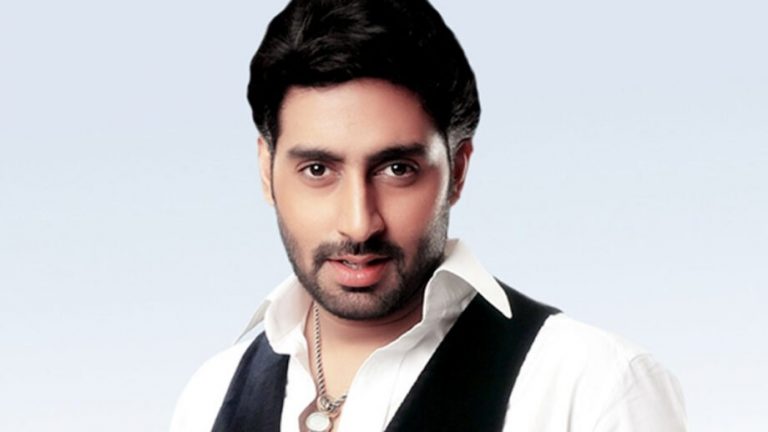
Abhishek Bachchan gets a haircut, says it’s time to get back to work

Actor Abhishek Bachchan on Monday stepped out for a haircut and captured the moments for followers on social media.

Abhishek posted a ‘before and after’ collage of two pictures on Instagram, to reveal his makeover. He also hinted that the crop was necessary for a role.

“Before and after! Time to get back to work,” Abhishek captioned the image.

His post caught actor Anupam Kher’s attention. Kher, who is bald, quipped: “I wish I could also post a pic of before and after.”

After recovering from Covid-19, Abhishek also marked his presence at filmmaker JP Dutta’s daughter Nidhi Dutta’s engagement ceremony recently. He spotted carrying a mask in his hand.

On the work front, Abhishek will be seen in “The Big Bull” and “Ludo”.

Jio, Airtel rule Covid-time war for India’s smartphone, TV public square

Sushant Singh Rajput wasn’t a big star until June 14 when he died. Certainly no Amitabh Bachchan of India’s audiences that he seems today if we just returned from the moon.

Credit SSR’s acting, propelled by the tailwinds of controversy. His “Dil Bechara”, unveiled 6 weeks later by Disney Plus and Hotstar on July 24, sits in the same slot as Amazon Prime Video’s “Gulabo Sitabo” anchored by the great Bachchan in the immediately preceding period.

The review of a 67-page deck by Nielsen and Broadcast Audience Research Council (BARC) in its 10th edition, mapped with an 81-page edition No.11 presented by BARC chief Sunil Lulla on August 27, shows that Bachchan’s “Gulabo…” and Rajput’s “Dil Bechara” were the respective numero uno of direct-to-digital movies of the lockdown period between June 6-July 3 and July 1-August 20.

Framed against these shifting audience preferences, has Covid-19 given us the answer to who is winning between smartphone and TV – the twin screens dominating our quarantined homes?

Nielsen-BARC would politely demur and bat for both mediums. But the trend line is clear. India watched 4 hours 17 minutes of TV in week 33, they tell us in edition no.11. This adds up to 36 minutes a day. Now consider the daily time spent on smartphones during Unlock Phase 3: 3 hours 14 minutes. That’s 194 minutes, almost 5.2x of TV.

The delta, in the coming months, will leave spenders betting very differently on smartphones than they do now or even until Jio lit up on September 5, 2016, and 4G was no longer an elitist game where linear TV ruled.

Coexisting with 5.2x minutes spent on smartphones, there are clear spill-overs across mediums. For example, if you just watched “Dil Bechara” for the fear of missing out, are you likely to stop by for the hollering in news TV about the police investigation? Probably yes.

And what if you saw the hullabaloo the family was savoring on news TV first? Even higher chances of signing up for Disney Plus and Hotstar.

So it isn’t yet a smartphone versus TV. “And” is the operative word.

Which brings us to the moans and groans for “news” and “balance” from purists (read incumbent TV anchormen, barring one). These rating nay-sayers are rattled by the double screen whammy. Here, Indians aren’t just sampling TV as a group or on their phones. We are reacting. We are tweeting. And certainly WhatsApping. All at the same time.

A slice and dice of our 194 minutes of daily smartphone consumption confirm this. In Nielsen-BARC edition no.11, our traditional act of calling has been just 10 percent of our time spent. Chat and voice over internet protocol-VoIP have added up to 20 percent. Social networking has been 10 percent. Browsing, offline media, e-commerce, trading, and trading put together are 15 percent. Utility and phone features soaked in 19 percent, leaving 22 percent of all our minutes per day for smartphone video streaming and games.

That’s 40 minutes-plus of daily gorging. Distracted no doubt, but ten cents more than 36 minutes that Nielsen-BARC says we spent on TV in an entire week — the creamy layer being whipped off by smartphones every passing quarter.

Clearly, a two-screenplay isn’t easy for content creators. The platform owner and/or the owner of the pipe have the keys to the vault. Only some content gambles are paying off. Most are losing bets. Only the house is winning each time.

While Amazon Prime rode on “Gulabo Sitabo” during one edition, and Disney Plus Hotstar via “Dil Bechara” won our hearts the next time, folks at India’s two leading telcos, Airtel and Jio, seem to have won both times.

A simple juxtaposition of Nielsen-BARC numbers with Q1 commentaries by the teams of Sunil Mittal and Mukesh Ambani confirms this. (Relevant financials of Facebook and Alphabet are not in the public domain).

A humongous 14.2 exabytes of data passed through Jio pipes during Q1 of FY 2020-21. That’s 1,420 crores GBs in three months or 4,700-4,800 GBs a month. On Jio alone. At around 398 million customers this meant 12.1 GB per capita per month – up from 11.3 GB per capita per month in the corresponding quarter.

Notwithstanding their worries in the Supreme Court over annual gross revenue calculations, Mittal’s Airtel has an equally compelling narrative: 138 million folks use his 4G, up 45 percent since last time. They use 16.3 GBs of per capita. That’s a massive 74.09 petabytes of daily data flow in Airtel’s pipe versus 42.90 PB/day in just the corresponding quarter.

As content producers scram and more often than not fail to predict audience preferences, the pipe owner’s job seems simpler – and agnostic to platforms like Disney Plus, Hotstar, Amazon Prime, Zee5, or Voot.

Jio’s task primarily is to offer convenience and network effects that migrate 8,000 crore voice minutes (994 minutes/subscriber/month) the company reported in Q1 and convert them into data usage. Likewise for Mittal within his 4G pipe.

On their part, Sundar Pichai of Google and Mark Zuckerberg of Facebook are getting content for free, a situation more and more untenable with every passing week.

So, discount Facebook and Google, for now, factor the state of fading media Moghul Subhash Chandra of Zee, only Ambani and Mittal own a casino showing Kaun Banega Badshah of India’s digital public square.


TV star Nia Sharma wins Khatron Ke Khiladi: Made In India

TV star Nia Sharma has won Khatron Ke Khiladi: Made In India, beating Jasmin Bhasin and Karan Wahi in the final. The contest was a special edition of the reality TV adventure game show and it was launched earlier this month after season 10 of Khatron Ke Khiladi concluded.

The Rohit Shetty-hosted Made In India edition of Khatron Ke Khiladi featured champions of past seasons such as Jay Bhanushali, Rithvik Dhanjani, Bharti Singh, Haarsh Limbachiyaa, Aly Goni and Karan Patel. Dhanjani had to quit the contest midway because of commitments.

“Khatron Ke Khiladi: Made In India started off as a fun special edition, but it quickly became my sole agenda to win the season. I gave my all to every stunt that I performed on the show,” said Nia, who has earlier contested in Khatron Ke Khiladi season eight.

The season witnessed the host and action filmmaker Rohit Shetty design some incredible stunts for the contestants. Nia overcame challenges that involved conquering heights, negotiating explosions, swimming through mud, and, in one round, surviving a watery coffin. She also made a mark on the Colors channel show with her camaraderie with co-contestants, especially comedian Harsh Limbachiyaa.

“The team always showed immense faith in me and encouraged me to go and give my best. I did not want to let go of the second opportunity that Colors gave me. I wanted to win and I would not have been at ease with any other result. Winning the season brought a sense of happiness and satisfaction. It was also my answer to those people who thought Nia was only about makeup and styling. No, she’s not. She is a winner and she has proven it with this win!” Nia added.

The grand finale on Sunday had a Bollywood-style red carpet laid out for the contestants. The finale stunts involved pythons, spinning stunts at towering heights, and a three-part heist designed specially by Rohit Shetty, where the contestants had to hunt down a necklace to win, amidst explosions, shattered glass, and electric shock.

Manisha Sharma, Chief Content Officer, Hindi Mass Entertainment, Viacom18, said: “Given the fact that we were shooting for Khatron Ke Khiladi in India, we got a great opportunity to incorporate various Bollywood elements to the stunts while making it more entertaining.”

Abhishek Rege, CEO, Endemol added: “I would like to congratulate Nia Sharma for her win and for giving such an amazing and spirited performance. To create such an impactful show with the constraints we faced due to the pandemic speaks of the creativity and ingenuity of the entire Khatron Ke Khiladi: Made In India team, and we look forward to the next season.”

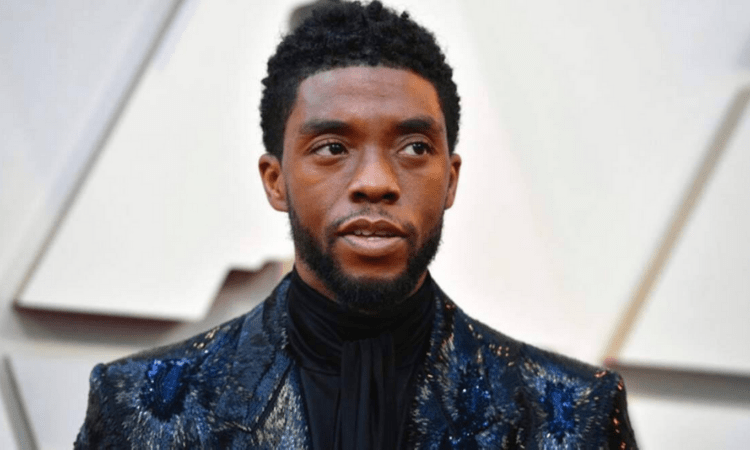
‘Black Panther’ star Chadwick Boseman dies of cancer at 43

Actor Chadwick Boseman, popular for his role as the superhero Black Panther, is no more. Boseman, 43, had been battling colon cancer since 2016, according to a statement posted on his official Twitter account.

The statement read: “It is with immeasurable grief that we confirm the passing of Chadwick Boseman. Chadwick was diagnosed with stage III colon cancer in 2016 and battled with it these last four years as it progressed to stage IV.”

“A true fighter, Chadwick persevered through it all and brought you many of the films you have come to love so much. From Marshall to Da 5 Bloods, August Wilson’s Ma Rainey’s Black Bottom, and several more, all were filmed during and between countless surgeries and chemotherapy,” the statement said.

“He died in his home, with his wife and family by his side. The family thanks you for your love and prayers, and asks that you continue to respect their privacy during this difficult time,” the statement concluded.

He is survived by his wife, singer Taylor Simone Ledward.

Boseman became a global star playing the titular superhero in the 2018 film, “Black Panther”. He also played the role in “Captain America: Civil War”, “Avengers: Infinity War” and “Avengers: Endgame”. His last release was Spike Lee’s “Da 5 Bloods”, which opened digitally on Netflix on June 12 this year amid lockdown.

Starting his career on television with shows like “Law & Order”, “CSI: NY” and “ER”, Boseman gained prominence with films where he played real-life figures, such as baseball great Jackie Robinson in ” 42″, and soul singer James Brown in “Get On Up”.

Masaba Gupta: Used to enjoy blind items until it became about me

Fashion designer Masaba Gupta says even after spending 11 years in the fashion industry, she is questioned about her parents and the events of 1988, but she has made her peace with it.

“I have to say that I used to really enjoy reading blind items until it became about me. I think that’s the nature of the human mind that the minute something happens to you, or you have an experience, you change your viewpoint about it, and you are kinder to people. You don’t speculate that much,” Masaba told IANS while talking about how she learned to live under public scrutiny, and the culture of blind items.

“I think I was born in controversy. I get questions about this, that, my parents etc. Till today, after being in fashion for 11 years, it eventually boils down to my parents, and what had happened back in 1988. I’ve made my peace with it,” added the designer, who was born to actress Neena Gupta after she had a brief relationship with former West Indies cricketer Vivian Richards in the 80s.

Masaba asserted that she prefers to live her life in a “very private bubble”.

“I only share things with people I have really known for a long time, and who I trust. When I step into the outside world, I’m actually a completely different person. I don’t even resonate with that person so much. But I think it is okay. You as a public person realize and understand that there is a certain part of your life (out) in the public, so it is alright. I think it’s good and it’s a bigger blessing than a curse,” she added.

The designer has now opened up parts of her life for a fictionalized series “Masaba Masaba”. In the Netflix show, Masaba and her mother Neena play their fictionalized versions. The show takes one inside the truth behind the picture-perfect smiles while exploring her divorce, her bond with her mother, fickle nature of showbiz, and the after-effects of blind items.

Asked what made her say yes to a show like this, Masaba said: “So, Ashwini Yardi wrote to me and said that ‘we would like to do a show that is inspired by your life and you will play yourself and your mom will play herself’.”

“I thought it was a reality show for the longest time. But later, she told me that it’s a scripted show where it would be part fiction and part reality. It was just great. It was a new format. Mum read the idea, and we were both onboard. I think it was just such a great new idea for us,” she added.

The show, also starring Neil Bhoopalam, Rytasha Rathore, Smaran Sahu, and Satyadeep Mishra, released on Netflix on August 28.

Shabana Azmi: Why is masculinity about flexing muscles and not tenderness?

Actress Shabana Azmi feels if we want to establish gender equality, then along with empowering women, men need to change the definition of masculinity.

Shabana recently presented the film “Mee Raqsam”, directed by her brother Baba Azmi. The film is about a Muslim father who goes out of his way to help his young daughter achieve her dream of becoming a Bharatnatyam dancer.

“A very special element of the father Salim’s character in the film was that he was both a father and a mother to the 15-year-old girl, ever since his wife died. It is certainly not easy for a father to nurture a teenage girl like a mother. I think women are better equipped to be both father and mother to their children. When it comes to men, perhaps they are not. That is why the character of Salim was so special, it was like redefining masculinity,” Shabana told IANS.

She elaborated: “At present, there is toxicity around the whole idea of masculinity. Masculinity means flexing muscles, wielding power over the powerless. That is a toxic thing. It is true that we want women to change, and become independent. But to establish gender equality we also need men to change. Why is masculinity not about tenderness, empathy, and being supportive? All the qualities we look for in the new progressive man, we get to see in the character of Salim in ‘Mee Raqsam’.”

The film featuring Danish Husain and Aditi Subedi is streaming on Zee5.

Rhea Chakraborty captured snapping at paparazzi

A video showing actress Rhea Chakraborty snapping at mediapersons who hound her car and try to click her photos has gone viral.

In the video, an angry Rhea bangs on the car’s window pane with her elbow. She makes the gesture at the window, even as a media person tries capturing her in a frame.

The incident happened on Friday as she was on her way for CBI questioning in connection with the death of her boyfriend, actor Sushant Singh Rajput. This is for the first time that Rhea was being questioned by the federal agency, after it took over the case on August 6.

Besides Rhea, her brother Showik, Sushant’s flatmate Siddharth Pithani, house manager Samuel Miranda, personal staff Neeraj Singh have also been questioned.

The Enforcement Directorate (ED) and Narcotics Control Bureau (NCB) are also probing the various angles into the case, along with the CBI.

‘Dolly Kitty Aur Woh Chamakte Sitare’ to have OTT release in September

The Bhumi Pednekar and Konkona Sensharma-starrer Dolly Kitty Aur Woh Chamakte Sitare will have an OTT release next month.

Set in a developing industrial area on the outskirts of New Delhi, “Dolly Kitty Aur Woh Chamakte Sitare” chronicles the quiet transgression of two women who are cousins, and who find freedom through complicated love-hate equations.

Directed by Alankrita Shrivastava of “Lipstick Under My Burkha” fame, the film also stars Vikrant Massey, Amol Parashar, and Aamir Bashir.

Amid the ongoing COVID pandemic and closure of cinema halls, the makers have opted for a Netflix release. The final date in September will soon be announced.

Bhumi has welcomed the decision and said that she is okay with any platform being the vehicle of her creative expression.

“As an artist, I only look to entertain the audience every time I am on the screen and I am okay with any platform becoming the vehicle of my creative expression. In this day and age, producers will do what is needed, and we must all support each other’s decisions,” Bhumi said in a statement earlier.