Samsung has third-largest number of patents on AI

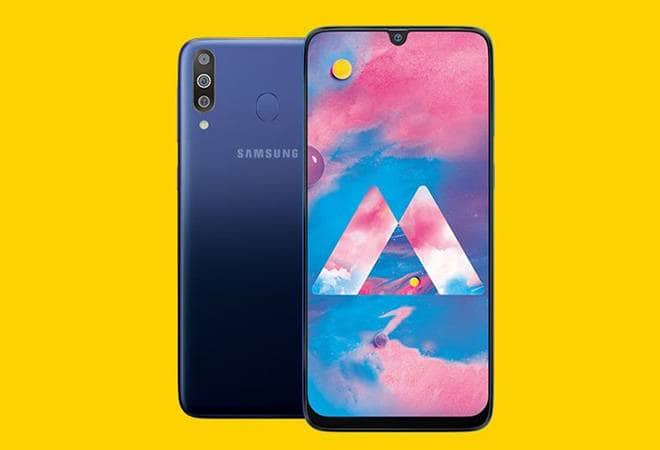
Samsung Electronics Co. is no doubt the third-largest number of patents related to artificial intelligence (AI), coming much behind two US tech giants. This has been revealed in a report. Microsoft Corp. has indeed had the most, with 18,363 AI-related patents as of January, followed by IBM Corp. with 15,046 and Samsung with 11,243. This is based upon a report let out by Germany-based researcher IPlytics.

Samsung has third-largest number of patents on AI

Five of the top 10 companies were no doubt based in the United States, two in Japan, one in South Korea, one in the Netherlands and one Germany, according to Yonhap news agency reported. The number of AI-related patents per year has indeed increased from 22,913 in 2008 to 78,085 in 2018 as more tech companies have delved into the replication of human intelligence by machines for use in a wide range of industries, it noted. The more countries in which an invention has been rather patented, the higher the perceived international market potential for the patented invention says a study. Samsung also happens to be the world’s largest smartphone maker, and has been racing to propel innovation in AI technology in order to foster new growth drivers, have been working on various types of AI applications in smartphones and other electronics in its AI labs.

Samsung Electronics Co. has indeed the third-largest number of patents related to artificial intelligence (AI), coming behind two U.S. tech giants, a report showed Friday. Microsoft Corp. has, in fact, the most, with 18,363 AI-related patents as of January, followed by IBM Corp. with 15,046 and Samsung with 11,243, according to the report by Germany-based researcher IPlytics.

Samsung has third-largest number of patents on AIFive of the top 10 companies are based in the United States, two in Japan, one in South Korea, one in the Netherlands and one Germany. The number of AI-related patents per year has jumped from 22,913 in 2008 to 78,085 in 2018 as indeed more tech companies have delved into the replication of human intelligence by machines for use in a wide range of industries, it noted.

The more countries in which an invention has been patented, the higher the perceived international market potential for the patented invention, the study claims. Samsung, also the world’s largest smartphone maker, has been racing to propel innovation in AI technology to foster new growth drivers, have been working on various types of AI applications in smartphones and other electronics in its AI labs.

Samsung is indeed a very popular smartphone and has made good outreach in the smartphone market. In the electronics industry, the Samsung smartphone has carved a well-established niche for itself and has competed well with other smartphones in the market.

In the field of Artificial Intelligence also it has proved well and has a patented invention it is much in demand. A product gains credibility by its authenticity and Samsung has achieved these parameters.

The industry has well received the Samsung smartphone and its usage is indeed gaining much ground in the smartphone market industry.

An AI chip uses fuzzy math for human-like intuition

There is much future for machine learning. One uses a black marker to dot and diagram the nodes of the human brain: the parts that are “ruminative, that think deeply, that ponder.

A startup is trying to approximate these neurons and synapses in its next-generation computer processors, which the company is betting can “mechanize intelligence.”

Artificial intelligence is indeed often thought of as complex software that mines vast datasets, but Knowles and his co-founder, chief executive officer Nigel Toon, do argue that more important obstacles still do exist in the computers that run the software.

The problem, that has been observed is that chips — known, depending on their function, as CPUs (central processing units) or GPUs (graphics processing units) — were not actually designed to “ponder” in any recognizable human way.

Whereas of course, human brains make use of intuition to simplify problems such as identifying an approaching friend, a computer might indeed try to analyze every pixel of that person’s face, comparing it to a database of billions of images before attempting to say hello. That precision, which made indeed made a lot of sense when computers were primarily calculators, is massively inefficient for AI, burning huge quantities of energy to process all the relevant data.

An AI chip uses fuzzy math for human-like intuitionWhen Knowles and the no doubt more business-minded Toon founded Graphcore in 2016, they put “less precise” computing at the heart of their chips, which they call intelligence processing units or IPUs.

The concepts in one’s brain are quite vague. It is really the aggregation of very approximate data points that do cause one to have precise thoughts. There are various theories on why human intelligence forms this way, but for machine learning systems, which do need to process huge and amorphous information structures known as “graphs,” building a chip that specializes in connecting node-like data points may prove key in the evolution of AI. Put another way, Graphcore is developing a brain for computers that, if its co-founders are right, will one be able to process information more like a human instead of faking it through massive feats of number crunching.

Simon Knowles, chief technology officer of Graphcore Ltd uses a black marker to dot and diagram the nodes of the human brain: the parts that are “ruminative, that think deeply, that ponder.” His startup is indeed trying to approximate these neurons and synapses in its next-generation computer processors, which the company is betting can “mechanize intelligence.”

Artificial intelligence is often regarded as complex software that mines vast datasets, but Knowles and his co-founder, Chief Executive Officer Nigel Toon, argue that more important obstacles still do exist in the computers that tend to run the software. The problem, they feel depends on their function, as CPUs (central processing units) or GPUs (graphics processing units)—were not designed to “ponder” in any recognizably human way.

Whereas human brains make use of intuition to simplify problems such as identifying an approaching friend, a computer might try to analyze every pixel of that person’s face, comparing it to a database of billions of images before rather attempting to say hello.

How AI is powering the transformation of the retail industry?

The brick-and-mortar retail industry is of course not in a good moment right now. Much of the turmoil in this industry does  come from the fact that consumers are  indeed seeking a richer and indulging retail experience that reduces friction – much like what they have now become used to as they shop online. Consumers also do expect traditional retailers to capture the essence of their individuality – which they are, what they like, and how they prefer to consume information.

Retailers do need to understand and align themselves with the expectations of the consumers in order to increase profitability and customer loyalty. They do need to not only be aware, but also go full throttle for adopting technologies such as AI for influencing and revolutionizing customer behavior.

Retailers do need to explore use cases pertaining to exponential technologies to address the disruption that their industry is going through. They do indeed  need to catch up with how recommendation engines  that are redefining customer experience, how retail business value chain transformation is shaping up, and how AI can rather  enhance the supply chain aspects of their business.

The data-powered disruption of retail

Data in the retail industry is rather increasing exponentially in terms of volume, variety, velocity – and more importantly – value with every passing year. Smarter retailers are no doubt  increasingly are aware of how every interaction between the business and customers holds the potential to increase customer loyalty and drive additional customer revenue. Retailers that do adopt AI today have the potential to raise their operating margins by as much about 60 percent.

But just having the data and also building reports that summarize customer behavior at an aggregate level are not enough. Insights are important, no doubt, but retailers desperately do need systems that can make actionable decisions from the data. Insights into average user behavior is indeed simply too broad. Retailers need to now rather create a meaningful dialogue with each individual customer that honors their shopper’s preferred level and mode of engagement. This does require more than summarized reports. It does require technologies powered by AI – the ability to minutely understand every customer individually and also take actions that each individual customer expects.

Nowadays data-driven decisions are extremely pervasive and useful. This means that the worlds of ecommerce and traditional commerce are seamlessly merging. Every company is now omni-channel. Whether one thinks of Walmart buying Flipkart to boost their online presence or one takes to Amazon purchasing Whole Foods to bolster their brick-and-mortar presence. It is not about the web, the app, or the store – it is about having all of those.

AI is powering the transformationAI transforming retail

Predictive analytics has indeed been used in retail for several years now. However, in the last few years – with advances in technology and artificial intelligence – one is seeing the high speed, scale, and value that predictive analytics can deliver. The AI-enabled world of retail helps business transition into a world where consumers are rather always connected, more mobile, more social, and have choices about where they shop.

Through AI innovations, retailers are no doubt starting to shift their businesses forward.

 Deep learning in commerce

The retail industry has a lot of benefits to be gained from deep learning, as it is data-rich industry. Furthermore, a lot of the AI techniques enjoying success in other applications across industries powered by deep learning are well positioned to make serious impact on retail, streamlining processes, and transforming customer experience into something that largely resembles the experience customers who get when they visit online portals.

Automated AI

Utilitarian form of AI is automation. Machine learning is no doubt powering artificial applications that involve curate product recommendations without the need for explicit human intervention. Top tier players in AI are off late capable of developing automated systems that can read digital user reviews, scour through past searches and purchases, and also present product recommendations automatically.

Now with minimal effort, retailers can leverage automated AI capabilities and will see a strong rise in customer engagement and sales.

Intelligent product searches

Leveraging AI for powering intelligent product searches is very useful. By using AI, customers can indeed take pictures of things that they see in the real world, or even in an ad, and then also locate a retailer who has that item in stock. This can also easily serve as the start of a shopping experience. Typically, consumers do often see something that they do like, but do not know the name of the item, brand or where they can source it from.

But taking photos does not happen to be the only modality for shopping, and there are other areas in the shopping experience where AI can indeed play a part. In online commerce retail, for instance, customers often do know what they are looking for but do not know the exact search terms or must scroll through multiple pages of inventory to find it. Deep learning can of course be of much help here as well.

Speed and communication in real time

 Machine learning and AI are no doubt changing the game by streaming live data and curating products in real time – based on their understanding of each customer. This significant drop in the amount of time taken between receiving data and also powering an intelligent decision is indeed made possible by AI and also helps improve the uptake of products from retailers

 Consumers are  indeed seeking a richer retail experience that does  reduces friction while also capturing the essence of who they are, what they like, and how they prefer to consume information. The sooner a retailer understands this and also creates the best consumer experience they can, the sooner they will also increase profitability and retention rates.

Mi 9T All Set to Launch on June 12, Xiaomi Announces

Home Mobiles NewsMi 9T is all set to launch on June 12, Xiaomi Announces

  • Mi 9T is all set to Launch on June 12, Xiaomi Announces
  • A Mi 9T teaser does show the presence of triple rear cameras on the phone

Highlights

  • Mi 9T will indeed feature a pop-up selfie camera
  • The phone is also expected to include an in-display fingerprint sensor
  • There is no word on India launch of Mi 9T

Xiaomi has, in fact, announced that it will launch a new Mi-series smartphone next week. The company on Monday did tweet that the recently teased Mi 9T will be making its debut on June 12.

Xiaomi has not indeed revealed whether it will be hosting an event in China or someplace else to unveil the phone or it will just be an online launch. Mi 9T was, in fact, earlier believed to be a rebranded variant of Redmi K20 for the international markets, but it increasingly seems that is not going to be the case.

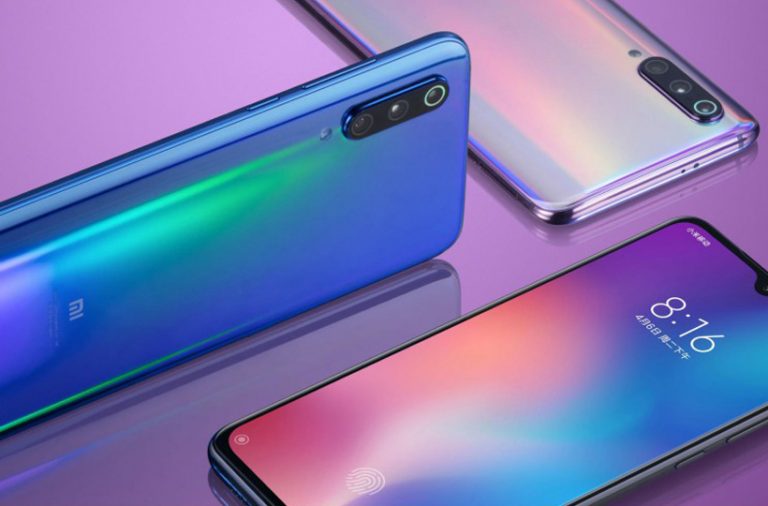
Mi 9T All Set to Launch on June 12, Xiaomi AnnouncesOnly 10 days left seem to be. The new #Mi9 member will launch on June 12th. Is the one ready for more innovation for everyone from #Mi9T? Not much is known about the Mi 9T at this point, however, Xiaomi’s teasers have indeed revealed that the phone will be housing a pop-up selfie camera. Also, an image of the phone’s back shared by the company does show three rear cameras with an LED flash. There does not seem to be a fingerprint sensor on the back of the smartphone, so we can expect to see the in-display fingerprint sensor on the Mi 9T.

Xiaomi has been asking its followers to guess what T stands for in the Mi 9T and it is also quite possible that T is for Turbo here. So, it is likely that Xiaomi is planning to launch a slightly tweaked version of Mi 9 as Mi 9T, which will indeed ditch the waterdrop-style notch for a pop-up selfie camera company and add a few other new features. However, couple of alleged images of Mi 9T retail box did appear online last week, which seemed to suggest the presence of Snapdragon 730 SoC, 4000mAh battery, 6.39-inch full-HD+ screen, and 48-megapixel primary camera on the smartphone. One needs more clarity next week.

It is unclear if the Mi 9T will indeed be making its way to India; however, it is unlikely to happen given the company’s past track record in bringing Mi line-up of devices to the country. Xiaomi India is meanwhile busy in prepping for the launch of Redmi K20 and Redmi K20 Pro. Xiaomi India smartphones will be coming to next within the next six weeks.

Not much is known about the Mi 9T however Xiaomi’s teasers have indeed revealed that the phone will be housing a pop-up selfie camera. Also, an image of the phone’s back shared by the company does show three rear cameras with an LED flash. There does not seem to be a fingerprint sensor on the back of the smartphone, so one can expect to see the in-display fingerprint sensor on the Mi 9T.

Photo credit:  Google Search

Samsung is bringing AMD graphics technology to its smartphones

Samsung and AMD have indeed made surprise announcements off today which could significantly change the graphics experience on the former’s future devices. The two companies have indeed inked a strategic partnership in ultra-low power, high-performance graphics technologies. This also implies in simple words is that Samsung’s future Exynos processors will indeed integrate custom AMD Radeon graphics.

No financial details have been disclosed and it is not explained what the “custom graphics IP” that Samsung will be getting from AMD entails.

Future Samsung SoCs to feature custom AMD Radeon graphics

It specifically mentions AMD’s recently announced RDNA graphics architecture which would indeed suggest that this deal is not just patent based. Samsung is likely to be paying licensing fees and royalties to AMD for its architectural IP which the company would then integrate into its own designs.

Samsung is bringing AMD graphics technology to its smartphonesAMD won’t be facing its traditional rival NVIDIA in this arena. ARM and PowerVR are the incumbents here. Samsung and AMD must be convinced that there’s more appeal to the latter’s IP with a particular focus on ultra-low power solutions.

The strategic partnership will extend the reach of high-performance Radeon graphics into the mobile market, thus significantly expanding the Radeon user base and development ecosystem. Samsung will be using licensed technology in mobile devices such as smartphones as well as other products.

It’s going to take some time before we see the fruits of this partnership in a Samsung device. Nevertheless, there are interesting times ahead.

Samsung and AMD have indeed made a surprise announcement today which could significantly change the graphics experience on the former’s future devices. The two companies have rather inked a strategic partnership in ultra-low power, high-performance graphics technologies. What this means in simple words is that Samsung’s future Exynos processors will indeed integrate custom AMD Radeon graphics.

The official press release is a little light on the terms of this deal. No financial details have indeed been disclosed and it is not explained what the “custom graphics IP” that Samsung will be getting from AMD entails.

It specifically mentions AMD’s recently announced RDNA graphics architecture which would indeed suggest that this deal is not just patent based. Samsung will also likely be paying licensing fees and royalties to AMD for its architectural IP which the company would then integrate into its own designs.

AMD will not be facing its traditional rival NVIDIA in this arena. ARM and PowerVR are the incumbents here. Samsung and AMD must be convinced that there is more appeal to the latter’s IP with a particular focus on ultra-low power solutions. Being picked by the world’s top smartphone vendor is indeed no small feat.

It’s going to take some time before one does notice the fruits of this partnership in a Samsung device. Nevertheless, there are interesting times ahead. One can expect a lot out of this new innovative technology application. One has to wait and see.

LG 88Z9, the World’s First Commercially Available 8K OLED TV, Goes Up for Pre-Order

LG did announce the world’s first 8K OLED TV, the LG OLED88Z9, back in January this year at CES 2019. The TV is no doubt among the earliest 8K-resolution TVs announced, and has, of course, a resolution of 7680×4320 pixels with an 88-inch OLED display. LG has now indeed put the TV up for pre-order in South Korea, with it is set to make it to North America as well as Europe in the third quarter of 2019. The company has not yet, of course, announced the pricing of the TV.

LG 88Z9, the World’s First Commercially Available 8K OLED TV, Goes Up for Pre-Order

8K is indeed the next big thing in TVs, with panels rather having a resolution of 7680×4320 pixels, or over 33 million pixels on a screen. The LG 88Z9, which was, of course, announced ahead of CES 2019, is the first 8K OLED TV, with a massive 88-inch screen. The TV also does support the HDR and Dolby Vision formats. Although 8K is rather four times as sharp as 4K and 16 times the numaber of pixels as full-HD, there is currently of course very little worthwhile 8K content available to take advantage of the resolution.

This was, of course, happens to be an issue even with 4K when it was first commercially available, but over a period of time 4K content has become widespread. Various online streaming platforms do indeed offer a growing list of TV shows and movies in 4K, while the 4K Blu Ray format has also gained popularity.

LG 88Z9, the World’s First Commercially Available 8K OLED TV, Goes Up for Pre-OrderThe LG 88Z9 is indeed also a smart TV, and in some markets, will rather feature support for Google Assistant and Amazon Alexa pics in Tokyo where it is expected to be broadcast in 8K resolution, for the time being, there is not much. Although the price has not been announced, the LG 88Z9 is indeed expected to be quite expensive. For now, it is only up for pre-order in South Korea, and while there are plans in order to bring it to key markets, India may not be in fact on this list initially.

The LG 88Z9 has an 8K decision OLED panel

LG introduced the world’s first 8K OLED TV, the LG OLED88Z9, again in January this yr at CES 2019. The TV I happens to be among the many earliest 8K-resolution TVs introduced and has a decision of 7680×4320 pixels with an 88-inch OLED show. LG has now put the TV up for pre-order in South Korea, with it being set to make it to North America and Europe within the third quarter of 2019. The firm has not but introduced the pricing of the TV.

8K is the following huge factor in TVs, with panels having a decision of 7680×4320 pixels or over 33 million pixels on display screen. The LG 88Z9, which was introduced forward of CES 2019, is the primary 8K OLED TV, with an enormous 88-inch display screen. The TV additionally helps the HDR and Dolby Vision codecs.

Although 8K is 4 instances as sharp as 4K and 16 instances the variety of pixels as full-HD, there may be presently little or no worthwhile 8K content material accessible to benefit from the decision. There were issues of difficulty with 4 K when it was initially commercially accessible. Over a period of time, it was initially commercially accessible. Now over a period of time 4K material has developed into widespread reach.

The LG 88Z9 is solely up for pre-order in South Korea and there are other plans as well, although India is not listed.

.

Google to shut down Jump virtual reality platform in June

A dwindling user base has indeed forced Google to shut down its Jump virtual reality (VR) platform that would indeed go offline by the end of June.

The company is rather telling users to actually download their data before it does shut down the video stitching platform completely.

Launched in 2015, Jump is Google’s professional VR video solution. It does make 3D 360-degree video production at scale possible with automated video stitching making use of the power of Cloud.

In an email sent to the users and a notice posted on the Jump FAQ page, the tech giant did say that the platform will stop accepting uploads for processing on June 26.

Those who are in need of a copy of the data they uploaded to the cloud and will have until June 27th to download them all. On June 28th, Google will indeed start erasing Jump’s cloud data and deactivating accounts, the email read.

Google has actually seen the emergence of a number of good alternative solutions for creators.

As these new cameras, formats, and editing tools Google saw usage of Jump Assembler decline.

The dwindling user base has rather forced Google to shut down its Jump virtual reality (VR) platform that would go offline by the end of June. The company is in fact informing users to download their data before it does shut down the video stitching platform completely.

Google to shut down Jump virtual reality platform in JuneLaunched in 2015, Jump does happen to be Google’s professional VR video solution. It does make 3D 360-degree video production at scale possible with automated video stitching thus making use of the power of Cloud. The platform will rather stop accepting uploads for processing on June 26.

Those who do want a copy of the data they do need to upload to the cloud and will have to until June 27th to download them all. On June 28th, Google will in fact start erasing Jump’s cloud data and will also be deactivating accounts. Google has actually seen the emergence of a number of good alternative solutions for creators. On account of these new cameras, formats, and editing tools becoming available, one has seen the usage of Jump Assembler decline.

Launched in 2015, Jump happens to be Google’s professional VR video solution. It makes 3D 360-degree video production at scale possible with automated video stitching thus making use of the power of Cloud.

The tech giant has stated that the platform will stop accepting uploads for processing on June 26.

Those who are in need of a copy of the data they do need to upload the cloud until June 27th in order to download them all. On June 28th, Google will actually start erasing Jump’s cloud data and deactivating accounts,” the email read.

Google has no doubt seen the emergence of a number of good alternative solutions for creators.

Much is in the offing as far as Google is concerned and the major giant is taking several major decisions to close down certain operations.

Niti Aayog plans index to rank states on artificial intelligence adoption

Federal government brain trust Niti Aayog is definitely intending to create an artificial intelligence (AI) preparedness index that will certainly place states on their capability in order to embrace the innovation for civil service distribution as well as manipulate its cutting-edge capacity.

The index might be no doubt among the very first couple of indices that the Aayog will, in fact, create in its 2nd term after the effective roll-out of the health and wellness, education and learning, water composite index as well as the farming index in the last couple of years.

An old formation federal government authorities rather informed ET that the Aayog has no doubt actually been strongly promoting fostering of AI as well as it is all-natural that the end result of states’ campaigns on AI is evaluated. In fact, it has been felt that the requirement for an index that the authorities have stated. It needs to include that the criteria to place states might be settled in a long time.

The Aayog has actually been in fact strongly relocating in the direction of outcome-based surveillance as well as has in the previously placed states on crucial social indications, a lot according to its function of advertising affordable as well as rather participating federalism.

Niti Aayog plans index to rank states on artificial intelligence adoptionAccording to the authorities, while the Aayog is no doubt yet to choose the indices to determine the states’ efficiency, several of the most likely criteria might, in fact, consist of electronic abilities, development abilities as well as existing information abilities as well as monitoring in each state. The index, in fact, is most likely to also recognize obstacles for each as well as every state in fostering of AI as well as suggest feasible locations of renovation for every single state.

Niti Aayog has indeed actually suggested that India pumps in 7,500 crores at first over the three-year duration as well as established a top-level job pressure in order to look after the rollout of artificial intelligence in the nation. A closet note aimed towards this impact is most likely to be tabled quickly as soon as the brand-new federal government does take workplace.

It is approximated that AI has no doubt the perspective to include $957 billion to India’s GDP by 2035 as well as enhance India’s yearly development by 1.3 percent factors by 2035 as well as therefore it’s very early fostering has actually turned into one of the federal government’s crucial top priority location.

Niti Aayog Chief Executive Officer Amitabh Kant has had made conscious effort to actually currently contact all states as well as ministries requesting them to recognize crucial jobs throughout the 5 determined fields where artificial intelligence can be taken on.

The federal government had in fact in the Union Budget Plan 2018-19 left the Aayog with the required obligation to create the nationwide program on AI, thus complying with which it had in June in 2014 which had been launched the nationwide technique for AI.

Industrial VR and AR Demystified

The focus is on successful implementation of Extended Reality (XR) technologies such as VR & AR during their Industry 4.0; Digital-Transformation journeys. Based upon Digi-Capital, investors do see AR/VR as the fourth wave of technology, after computers, the internet and then mobile. Going with this technological wave has indeed definitive advantages with enormous benefits. One does need to have an in-depth understanding of the facts as well as insights of the XR technologies for Top-Managements that are really crucial to make Effective-Choices by tapping their full advantages.

It has been in fact 6 years now since the current XR evaluation triggered during 2013 by Oculus. Much admiration has been there for Immersive-Teleportation should be over by now. We in fact already crossed the phase of Ornamental-Implementation of VR/AR technologies just for Show-Off purposes. In order to avoid Future-Regrets, Enterprises do indeed need to act now in designing XR-Strategies and also laying the solid roadmap which can indeed create new business models with Increased Productivity, Profitability, and Safety.

Note-Worthy Reports

Reports do state that Industry 4.0 is poised in order to touch $215 billion by 2025 and most of the major economies in the world are adopting it. According to an analysis by McKinsey – the most prestigious American worldwide management consulting firm in case Indian companies do adopt Industry 4.0 across functions such as manufacturing, supply chain, logistics as well as procurement, they can enhance their operating profits by 40% at less than 10% of the planned capital expenditure. Also, a recent Gartner survey did show that out of the organizations that are currently using or piloting AR, 40% has been found that the technology has exceeded beyond expectations.

VR & AR in the Context of Industry 4.0

Off late the “Make in India” initiatives and schemes by the Indian Government are opening new opportunities for wider adoption of ‘Industry 4.0’. Companies such as Boeing, Bosch & GE are already making huge investments for Industry 4.0 implementations in India. The concept of VR/AR in ‘Industry 4.0’ is soon going to change the way Indian Industries going to design, manufacture, market, service their customers & train their employees as well.

Gartner has predicted that by 2020, AR, VR, and Mixed-Reality based immersive solutions will indeed constitute at least 20 percent of the digital transformation strategy of enterprises.

Enterprises do start thinking today on what XR-Implementation really means to them in their context and what kind of Cultural changes going to happen during this adoption. XR happens to be one among the 9 pillars of industry 4.0 Eco-system, while every other pillar is indeed trying to make the “Machines Smarter”, VR/AR has the only objective of making “The Human Workforce-Smarter”.

In fact, it is a known fact that only 20% of employees have the Skills that are required for their current roles and future career, according to Gartner, 2018. Conventional thinking on employee training such as classroom training, refresher courses, group discussions and mockups alone is never going to sustain businesses in the future. In the Industry 4.0 landscape, either today or tomorrow their respective traditional Industrial training facilities have to be Re-equipped with XR-Devices, Trackers, and Sensors. Before it is rather too late, enterprises indeed need to consider adopting the much robust & smarter training methods thus making use of the Immersive VR/AR technologies.

Industrial VR & AR DemystifiedWhy XR-Strategies are essential for Industrial Workforce-Training

The reason being that through VR, the experiences of the senior employees could be shared to new recruits with a knowledge & skill transfer/retention rate of up to 75 to 90%; they can indeed learn 7 times faster than their usual speed. These Empathetic XR experiences are not really achieved through mere technology adoption alone but it has to be combined with other modalities such as Tactile, olfactory, aural which can indeed leverage cognitive embodiment to reinforce maximum learning effectiveness. VR/AR systems can also keep track of how users do respond to various stimuli by tracking their reactions such as movements, positions, and even their mental states. For the very first time, the true Key-Performance-Index (KPI) of the trainees can indeed be measured through empirical analysis methodologies using XR technologies.

Common Road-Blocks for XR Adoption

Enterprises do need to develop a welcoming mindset for the Constructive-Disruptions in order to bring their organizations to the next level in the competitive market place. To avoid lagging behind, these reinventions that have to be really in a deliberate speed. But, the road-block here with most companies are, they need to let-go their Legacy-Training Infrastructure. The considerable investments already made for them in the past and are traditionally used for decades. Lack of clarity, fail to engage the right technology-partner, fear of disruption and ROI uncertainties also the other factors for companies postponing the decision making.

The XR-Strategy Guide

Industries today are in a critical situation to make the strategic decision on moving towards these Disruptive- Landscape and related investments. Conventional thinking on tangible investments such as upgrading the Machineries alone is never going to sustain businesses in the future. Intangible assets creation such as Digital-Assets & IPs is equally important to increase operational efficiency.

The daring strategic decision making can indeed only happen if the CXOs have the radical-thinking, long-term visions and end-to-end understanding of XR-Concepts. They should, in fact, be capable of prioritizing the right use-cases with quantifiable profits as well as benefits. Industrial-XR is not mere technology adoption…but also involve expertise to choose the correct Use-cases & lot of imagination to design the experience pragmatically which could make success a “Practical-Reality”.

First, make one’s objectives clear and then also look for one’s choice of XR-Technology which can best suit the need. The common mistake people do commit is working in reverse which is designing products for technology. Whether VR, AR or MR one has to decide only on a case to case basis. The biggest advantage of Immersive technologies implementation is, neither one’s Pilot-Trials nor Mainstream implementations that will never affect/disturb the shop-floor production in any way.

Typical XR-Blueprint:

  • Involve stack-holders of different departments under the leadership of I. T department in order to plan the most compelling XR-Strategy for next 3 to 5 years
  • Do not work as siloed teams. Identity and involve the right people with the right skill-sets and attitude in order to form a cross-functional experts’ team
  • Associate with experienced VR/AR partners with industrial background and also bring them inside the value system which is crucial for the success
  • Everything in one go is not a good idea. Prior to going Mainstream, start with Piloting and go by Milestone based step-by-step implementations
  • Keep track of the Milestones and Quantifiable ROI benefits via periodic reviews
  • Let trainees learn through the VR/AR-Pilot module Track about the progress of their KPI and mark the effective reduction of the time to employee proficiency
  • Summarize the benefits of XR-Pilot-Trials and also compare with one’s Legacy-systems to demonstrate business values
  • While the proven success spearheading the synergy, one can now secure more funding for a larger rollout
  • Keep updating on the technological changes that are happening in the market. If required, take meaningful deviations from the original road map.

There is absolutely no doubt on the capacities of XR- technologies. It is up to the businesses to take their respective choices to avoid future regrets. Stay tuned for further Immersive stories.


Is this Microsoft’s big bet on a dual-screen Surface?

Technology has made progress by leaps and bounds and is impacting people’s lifestyles in many ways. One cannot do without the gadgets that modern technology is offering as they make life more easy and comfortable.

What role does Microsoft have to play?

Microsoft indeed decided to spill some beans out something new for us, similar to what Apple does prepare to deliver their 2019 WWDC keynote. In a sort of behind-the-scenes peek, Microsoft does present internally a set of prototypes for their next wave of devices. It would seem that a dual-display notebook is… then what’s next?

It is almost as if Microsoft does want to ignore the youth market entirely, and skip right over to business with people who really hate computers. That, in fact, is the view held when one thought of prototypes that Microsoft showed this week.

One can imagine a tablet, but with a sort of Windows, but also get connected to another tablet that is also part of the first tablet. The imagery above might not look very complete, there is a distinct possibility Microsoft might indeed be able to release a device very much LIKE this within the year 2019.

Is this Microsoft’s big bet on a dual-screen Surface?This is indeed a nice way to usher in the future with a new operating system, a new OS, a Modern OS, than with a device that does look quite similar to a notebook that has two displays inside in fact. There must be something here that definitely is well beyond what the company has been able to reveal, because as this reminds one of the sorts of Android tablets we were seeing at conventions such as Mobile World Congress back in 2012.

According to rumors back in March, this device indeed has been in the works for quite a while. And it is running what Microsoft refers to as Windows Lite (internal code-name, hopefully), and it may also, in fact, involve 3rd-party manufacturers right out the gate.

This device is rather codenamed Centaurus – which is perhaps what one has heard about the codename before. It is the sort of device that one will get to see.

It belongs to Microsoft en masse in 2020 – and something that is apparently taken over any other next-gen device efforts from Microsoft that one has heard of in the past.

For instance, Andromeda happens to be a foldable device and/or smartphone that would run Windows software and Android apps have not gained steam in recent months. It is time to move on.

On the other hand, one needs to imagine Microsoft never axed Pioneer Studios. Maybe they did decide that, instead of Windows 8, they would go ahead and roll with a dual-screened notebook that would be comfortable for traditional paper notepad people – but would actually function on a much higher level.

Maybe it sounds all magical. Perhaps it may change the way we make use of Windows, or PCs, or computers of all sorts. Or maybe Toshiba already may have made this device all the way back in the year 2010. It was referred to as Libretto W100, and it was indeed a monster.