Tinder to alert users before they send offensive messages

0

With an aim to reduce harassment on its platform, now dating app Tinder will ask users ‘Are you sure (AYS)?’ before they post potentially offensive language.

“AYS?”, a first-of-its-kind feature in the dating space, has already reduced inappropriate language in messages sent by more than 10 percent in early testing, the company said in a statement on Thursday.

It uses AI to detect harmful language and proactively intervenes to warn the sender their message may be offensive, asking them to pause before hitting send.

The AI was built based on what members have reported in the past, and it will continue to evolve and improve over time.

“The early results from these features show us that intervention done the right way can be really meaningful in changing behavior and building a community where everyone feels like they can be themselves,” said Tracey Breeden, Head of Safety and Social Advocacy for Match Group.

“AYS?” joins the suite of harm reduction tools Tinder already has in place, including “Does This Bother You?”, which provides proactive support to members when harmful language is detected in a message they received, all of which have contributed to more matches and longer conversations during the app’s busiest year yet.

Tinder’s long-standing commitment to safety started with the Swipe, ultimately requiring mutual interest to send a message.

Over the past several years, the app has worked with the Match Group Advisory Council (MGAC) to continue building best-in-class features in the Safety space.

Google tests new tool to ‘follow’ sites in Chrome on Android

0

Google is testing a new feature for its Chrome browser on Android that lets users “follow” sites to create an updating list of new content they publish.

The feature is based on RSS (a web feed) and it is an open web standard that’s been the backbone of many popular web aggregation tools in the past, The Verge reported on Thursday.

“We have heard it loud and clear: Discovery and distribution are lacking on the open web and RSS hasn’t been ‘mainstream consumer’ friendly,” Paul Bakaus, Google’s head of web creator relations said in a tweet.

“Today, we are announcing an experimental new way, powered by RSS, to follow creators with one click,” Bakaus added.

The test is small-scale — the following sites will only be an option for some US users of Chrome Canary (the bleeding-edge version of Chrome that lets enthusiasts access beta features).

Users will be able to follow sites from the browser menu and updates will be aggregated in a card-based feed that’s shown when users open a new tab.

It’s not clear whether this feed is wholly dependent on sites providing RSS support or if Google will fill in the gaps itself, the report said.

RBI to transfer Rs 99,122 crore as surplus to Centre

0

The Reserve Bank of India (RBI) will transfer Rs 99,122 crore as surplus to the Centre for nine months ended March 31, 2021.

The decision was taken at the 589th meeting of the Central Board under the chairmanship of RBI Governor Shaktikanta Das, through video conference.

According to the RBI, the Board in its meeting reviewed the current economic situation, global and domestic challenges, and recent policy measures taken by the Reserve Bank to mitigate the adverse impact of the second wave of Covid-19 on the economy.

“With the change in the Reserve Bank’s accounting year to April-March (earlier July-June), the Board discussed the working of the Reserve Bank of India during the transition period of nine months (July 2020-March 2021) and approved the Annual Report and Accounts of the Reserve Bank for the transition period,” the RBI said in a statement.

“The Board also approved the transfer of Rs 99,122 crore as surplus to the Central Government for the accounting period of nine months ended March 31, 2021 (July 2020-March 2021), while deciding to maintain the Contingency Risk Buffer at 5.50 percent.”

Armaan Ralhan: Doing a film with Ranveer Singh gives my work more eyeballs

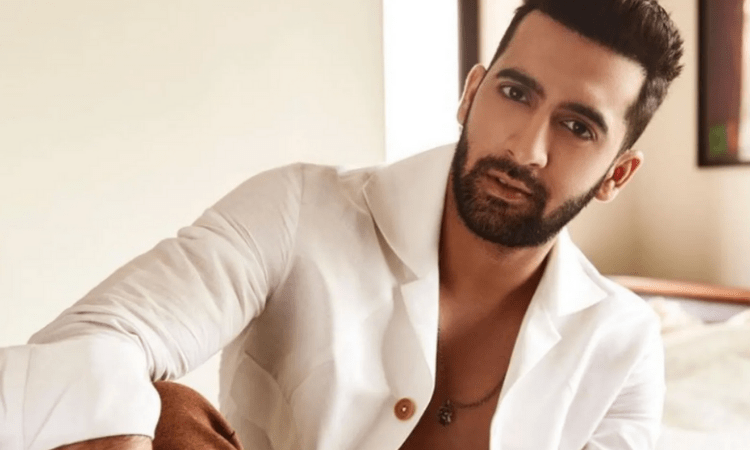
Actor Armaan Ralhaan made his acting debut in the Ranveer Singh-Vaani Kapoor starrer “Befikre” in 2016. Lately, he was seen in the OTT anthology “Ajeeb Daastaans”, in the segment featuring Jaideep Ahlawat and Fatima Sana Sheikh. Armaan says his focus right now is on building a filmography and not necessarily lead roles.

“I didn’t necessarily see it as a risk because as a new person I am not coming in with any kind of hype. The audience will not come and watch a film just because I am in it, because I have not earned their trust yet. So, as far as I am concerned, doing a film with people like Ranveer Singh — or Jaideep Ahlawat and Fatima Sana Shaikh — give my work more eyeballs,” Armaan told.

“So, I am focussed to keep growing and hopefully I will get to a stage where people come to watch a film because I am in it, but gradually I want to build it step by step and your work will be seen. I don’t know if you want to call that risk-taking but you can call it safe,” he added.

For Armaan, the criteria of featuring in films are different from other newcomers.

“As far as newcomers doing lead films is concerned, for me, it is important that I should be in something that I want to be a part of, and the idea is not just to do a lead film to do a lead film,” he told.

“The idea is to build a filmography and build a career that hopefully in the future stands the test of time. (A) Lead (role) is important to me and I hope to do that soon,” he said.

FIFA under-17 women’s WC to be held in India in October 2022

0

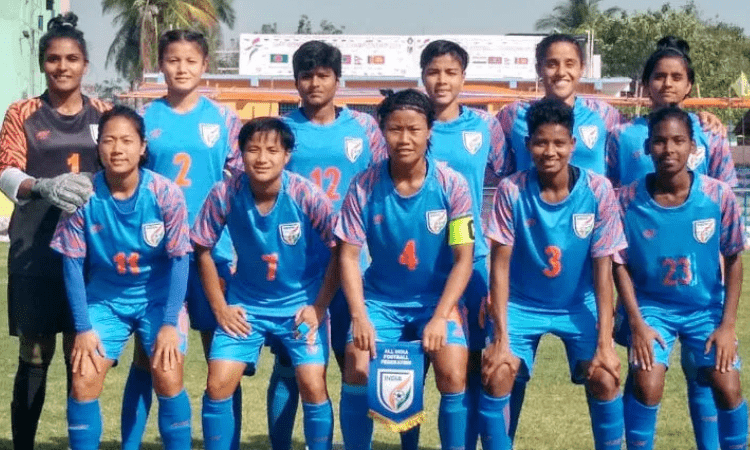
The 2022 FIFA under-17 Women’s World Cup will be held in India from October 11 to 30, 2022, football’s global governing body said. India was set to host the 2021 u-17 Women’s World Cup before it was canceled due to the Covid-19 pandemic.

The World Cup was original to be played between November 2 and 21, 2020, before being postponed to 2021. It was to be staged from February 17-March 7.

“The announcement of the dates for U-17 Women’s World Cup India 2022 marks a fresh beginning for the tournament. The LOC (Local Organising Committee) is carrying on the work that had already begun with the previous edition. As the Covid-19 situation improves, we look forward to restarting all the legacy activities that have been planned, and to the growth of women’s football through this tournament,” said All India Football Federation general secretary Kushal Das.

This global event will be the second FIFA tournament to be hosted by India after the FIFA under-17 World Cup in 2017, which broke the record for being the most attended youth World Cup in FIFA’s history.

Govt invites applications to develop products for Covid

0

Ministry of Science & Technology DST has invited applications from startups and companies for developing new technologies and innovative products to tackle the second Covid-19 wave.

“Supporting the development of devices like Oxygen Concentrators also brings with it huge opportunities in the development and manufacturing of several critical components that are being imported such as specialized valves, zeolite materials, oil-less and noiseless miniaturized compressors, gas sensors, which have wider applications in several sectors,” said Prof Ashutosh Sharma, Secretary, DST.

Development and manufacturing (import substitution) of the products parts currently being imported for the devices like Oxygen Concentrators and so on would also be considered for Seed Support through DST supported network of TBIs.

Promising startups will be provided with financial and mentoring support for scaling up their products/technologies to the next level and speeding up their processes, helping them reach the product deployment stage as fast as possible.

As a rapid response to support startup-driven solutions for tackling the current challenge, the second wave of Covid-19 in the country, Indian startups and companies have been invited to apply for developing new technologies and innovative products that can enable our country to fight the crisis.

NIDHI4COVID2.0, a new initiative under which the companies can apply, will fund eligible startups & companies registered in India offering promising solutions in the thrust areas of oxygen innovation, portable solution, relevant medical accessories, diagnostic, informatics, or any other solution that mitigate various challenges faced by country or society due to the severe impact of Covid-19.

The initiative is a special drive of the National Science & Technology Entrepreneurship Development Board (NSTEDB), Department of Science & Technology (DST), Government of India (GoI) for supporting indigenous solutions and innovative products to combat the crisis that the country is currently facing due to the pandemic.

This initiative has been built based on NSTEDB’s past experience of implementing Centre for Augmenting WAR with Covid-19 Health Crisis (CAWACH) and also through special calls through National Initiative for Developing and Harnessing Innovations – Seed Support System (NIDHI – SSS) from Technology Business Incubators (TBI) to support Startups in 2020.

In the current situation, startups can play a major role in bringing new technologies and products to the market, thus making our country stronger on various fronts against the ongoing war on Covid. Some of the startups already have promising technologies but need mentoring, financial, and marketing support to go to the next level. Thus, DST’s attempt through this new initiative is to scout and support deserving startups with much-needed support to scale up their technologies, helping them reach the product deployment stage as fast as possible.

Petrol price inches closer to century mark in Mumbai

0

The repeated rise in fuel prices in May is all set to take the retail price of petrol to historic high levels of Rs 100 per litre in Mumbai.

Continuing with fuel price hike momentum maintained this month, the Oil marketing companies (OMCs) raised the pump prices of petrol and diesel again on Friday across the country.

The price of petrol increased by 17-19 paisa per litre while the diesel price increased by 28-30 paisa per litre across metro cities of the country.

With this increase retail price of petrol has now reached Rs 99.32 per litre in Mumbai, just a few days off from reaching Rs 100 per litre mark of price rise momentum is maintained by OMCs.

Petrol prices are already over Rs 100 per litre in several cities in Madhya Pradesh, Rajasthan and Maharashtra. Premium petrol has been hovering above that level for some time now.

In the month of May, fuel prices have already increased over 11 days so far. This has taken up the price of petrol by Rs 2.49 a litre Delhi. Similarly, diesel price rose by Rs 3.07 per litre in the capital this month.

Before Friday, OMC was revising fuel prices on every alternate day for the last one week rather than undertaking changes on a daily basis as has been practised.

Under daily price revision, OMCs revise petrol and diesel prices every morning benchmarking retail fuel prices to a 15-day rolling average of global refined products’ prices and dollar exchange rate. However, in a market where fuel prices need to be increased successively, alternate day price revision seems to be the flavour.

IANS had written earlier that OMCs may begin increasing the retail price of petrol and diesel post-state elections as they were incurring losses to the tune of Rs 2-3 per litre by holding the price line despite higher global crude and product prices.

With global crude prices at around $ 66 a barrel mark (lower than $ 70 it touched last week), OMCs may keep a watch and spare consumers from any further increase in fuel prices for some time now.

US wants crypto transfers over $10K to be reported to IRS

0

Calling for stricter cryptocurrency rules, the US Treasury Department has said that any cryptocurrency transfer worth $10,000 or more has to be reported to the Internal Revenue Service (IRS).

In a new report on tax compliance proposals, the Treasury Department’s Office of Tax Analysis estimated that the move will help raise an additional $700 billion in tax revenue over the next 10 years and could bring in as much as $1.6 trillion in the following decade, reports The Verge.

“Cryptocurrency already poses a significant detection problem by facilitating illegal activity broadly including tax evasion. This is why the President’s (Joe Biden) proposal includes additional resources for the IRS to address the growth of crypto assets,” the department said in a statement on Thursday.

Businesses would also be required to report cryptocurrency transactions above $10,000 under the new requirements.

Requiring large crypto transactions to be reported would help “to minimize the incentives and opportunity to shift income out of the new information reporting regime,” it added.

The decision comes at a time when the price of bitcoin tumbled below $40,000 for the first time in months and other cryptocurrencies were pressured earlier this week after the People’s Bank of China apparently warned against using digital coins as payment.

On Wednesday, nearly $1 trillion was wiped off the market capitalization of the entire crypto sector, before it got stabilized at around $40,000 per coin.

It was the second jolt to the fast-growing crypto market after Tesla last week applied brakes on Bitcoin as a payment mode to buy its electric vehicles, citing environmental harm.

Narayani Shastri: I am not a method actor

Actress Narayani Shastri, who portrays Rajvee Rawal in the show “Aapki Nazron Ne Samjha”, says she has never been a method actor and loves to be spontaneous on screen.

“Rajvee Rawal is a confident, sorted, and strong person who wears her heart on her sleeve. She always shows her love for her sons. Her family is everything for her. As a person, she is very fair and has immense integrity. I am not a method actor. I do things spontaneously once I understand the personality of the character I play,” she told.

Actor Vijayendra Kumeria plays her son in the show.

“Vijayendra is so easy to work with. He is very professional, always prepared with his lines, and open to suggestions. He met me as Darsh, not Vijayendra, which made our chemistry the way it is,” she says.

Talking about her journey in the industry, the actress says that she has no complaints.

“I have had a beautiful journey, full of fun. I did everything that I wanted to do and have no regrets. The journey had its ups and downs but that is the fun. I feel blessed with all the opportunities,” she says.

Indian cricketers are amateurs no more

0

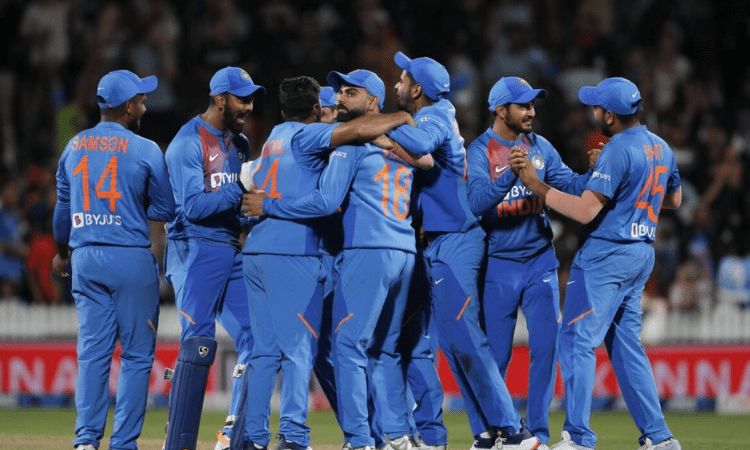
Cricket in India was seen as a game played by amateurs since a person could not make a living by only playing the sport. The Board of Control for Cricket in India (BCCI) did not have money in abundance, so players did not have the luxury of a contract in the past.

This changed when India modernized it electronically and digitally. The BCCI, though some exceptionally brilliant administrators, monetized the sport in India and made it into a money-spinner by making itself the richest cricket establishment.

The poor Indian cricketer without a voice in earlier days became an iconic superstar, and this is precisely why Indian cricket is flourishing and the cricketers are confident in showcasing their ability.

I remember an incident during the fourth Test at the Oval in 1979. The astute and legendry cricketer, Geoffrey Boycott was at the crease accumulating runs slowly towards a century. Fielding at forwarding short leg and getting bored with the way the game was progressing, I decided to have some fun with the fielders close by. We joked and laughed between each delivery. The boycott was amused and said, “Boys, this is a professional game, so stop laughing as amateurs”.

My retort to him was, “Geoff, you play it for your bread and butter, we play it for fun and recreation”.

Although an Indian cricketer by then had started thinking as a professional, the attitude and approach needed to be a hardcore professional had still not been entirely understood by most of us.

One is, therefore, amused to read the remarks recently made by Tim Paine, the Australian captain of how the Indian cricketers niggled and did side-show to distract the Australians during the last series. If so, one is proud that Indian cricket has finally reached a height where it is taken seriously on and off the field.

Cricket is now a full-fledged profession in India and similar to a business and corporate venture. The bottom line is to be successful. The days of taking an Indian cricketer as a mentally weak and gentle individual are far behind. In the competitive cricket environment in India at present, each cricketer is a hardcore professional with only one aim and that is to be a winner.

India till the early 1960s had professional cricketers playing for a state side in domestic tournaments. Most of India’s greats like Vijay Hazare, Vinoo Mankad, Chandu Borde, Salim Durani, Vijay Manjrekar, and many more played for sides as pure professionals. The state associations then had some powerful patrons who, in their quest to win the Ranji Trophy, compiled a team of players similar to what we today term franchisees. The cricketer was well looked after and his needs taken care of.

Foreign cricketers were also invited as professionals to enhance Indian cricket. Charlie Stayers, the West Indian pacer was one of the four who came to India to get domestic cricketers accustomed to pace bowling. He played for Mumbai (Bombay then) in 1962-63 and took six wickets in the Ranji Trophy final to help them win.

During the Indian off-season, many of the Indian cricketers played professional cricket in England. However, the word “professional” was frowned upon by men who ran Indian cricket. A famous incident comes to light when Vinoo Mankad in 1952, because of his commitment to a club side in England, was not chosen to be part of the Indian touring squad. Similarly, Russi Surti and Farokh Engineer were not chosen for India’s tour of the West Indies in 1971 because they were playing professional cricket, the former in Australia and the latter in England.

Indian cricket administration, in trying to encourage local talent, set regulations to ensure that professional cricket was not encouraged in domestic cricket. The criteria to play for a state association in the 1960s stated that a cricketer could only play from a state in which he was either born or living. The major cities became the hotbed for an Indian cricketer, as apart from employment one got a good state team to play cricket for. This is precisely why Mumbai, Delhi, Kolkata, Chennai, Bangalore, and Hyderabad became popular cricket destinations and controlled Indian cricket.

Presently, cricket has taken a complete turn, with each association allowed to play 3 professionals. The IPL has furthered the very essence of cricket as a profession. The greatest benefit that has arisen is that Indian cricket has become purified of zonal, state and city biases. Indian cricket reeked of such petty rivalry and internal enmity earlier. At present, one is pleased to see that the side looks to be a well-integrated and a single fighting unit under the Indian banner.

In the world of free enterprise and futuristic thinking, the Indian cricketers not contracted by the BCCI should be allowed to play cricket wherever they want to. In today’s world, professionals in all fields are free to take up assignments anywhere. To restrict an Indian domestic cricketer from not playing in other cricket tournaments around the world is just not acceptable.

The old tales of Mankad, Surti, Engineer, and many others who played cricket for a living come to mind. The BCCI needs to think beyond it, after all an Indian cricketer is no more an amateur!