Cyclone Tauktae: Efforts on to alert TN fishers

Tamil Nadu fisheries department is trying to alert around 2,500 fishers out in the Arabian sea about a depression that may intensify into Cyclone Tauktae.

The Tamil Nadu fisheries department state Commissioner J. Jayakanthan told IANS: “Most of the fishermen are from the western coast of Kanyakumari since the annual fishing ban is in effect on the eastern coast.”

Fishing officials said that while only 84 vessels have gone into the sea from Thengapattanam coast, 150 fishing boats of Kanyakumari have ventured into the sea from the Kerala coast.

The department is trying to contact them over the satellite phones provided to them by the state government as they move in clusters on high sea. Local churches and the coordination centres opened by the government are also helping.

The fisheries officials said that the fishermen have been advised to touch base at the nearest coast and the department has already coordinated with these coastal belts of various state governments to accommodate the fishermen who reach their shores.

The Indian Meteorological Department(IMD) has forecast the depression is likely to intensify into a cyclone about 100 nautical miles (185km) from the North Kerala coast and move northward till Karachi in Pakistan.

The southern states of Kerala and Tamil Nadu are witnessing heavy rains and thunder storms following a depression in the Arabian Sea.

Australia declares 2 new marine parks

The Australian government has declared two new massive marine parks in the Indian Ocean in a bid to conserve the area.

Sussan Ley, the Minister for the Environment, announced on Wednesday that the marine parks will cover up to 740,000 square km, an area bigger than France and twice the size of the Great Barrier Reef marine park, around Cocos and Christmas Islands off the coast of Western Australia (WA), reports Xinhua news agency.

It will increase the proportion of Australia’s waters under marine park protection from 37 to 45 per cent.

Ley said the move will deliver greater protection from illegal fishing operations.

“This is an international marine treasure on Australia’s doorstep, one that is from a scientific perspective relatively undisturbed and undiscovered,” she said in a statement.

“The Christmas and Cocos Islands boast some of the most fascinating and unique ecosystems on earth and this is about extending that protection to the surrounding waters of the Indian Ocean.”

Marine parks are declared as either green, yellow, dark blue or light blue zones with each designation offering a different level of protection.

Jessica Meeuwig, the director of the Marine Futures Lab at the University of WA, welcomed the announcement, saying the areas were rich in biodiversity “because they’re stepping stones across the wider ocean”.

However, there are concerns that existing marine parks haven’t had enough protection measures to prevent extractive industries from harming the environment.

According to a study published on the Aquatic Conservation journal in 2015, failure in zoning for commercial activities meant there were “business as usual” for extractive industry, in spite of establishment of marine parks.

Adult immunisation: Myth vs reality

0

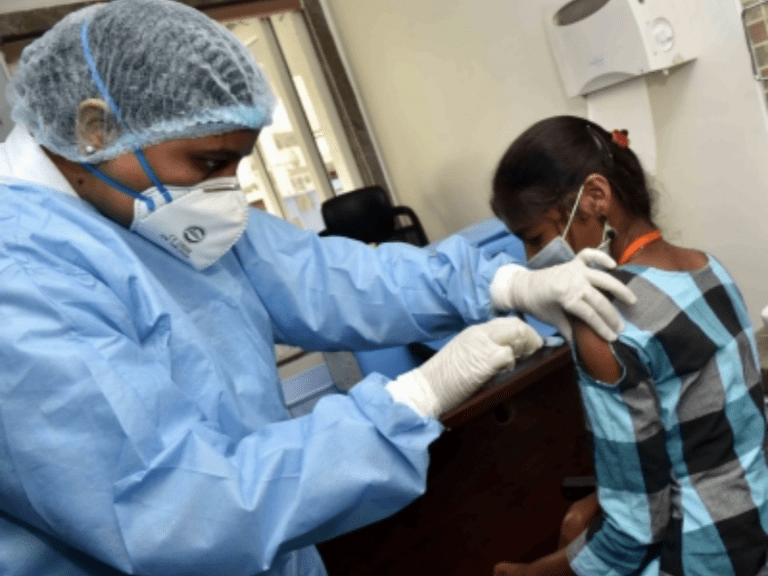
While vaccinations remain the most effective prevention strategy to maintain immunity for a prolonged period, adult immunisation remains neglected.

Adult immunisation myths prevail as a result of inadequate awareness, lack of an established body of official recommendations and vaccine hesitancy, which contribute to reduced vaccine coverage across India. For instance, there are rising incidences of typhoid cases in India, despite the availability of vaccines and is universally recommended. This suggests adults need to be aware of immunisation as a preventive solution to effectively make use of it.

The first-ever adult immunisation recommendations by the Association of Physicians of India highlights the clear need for adult immunisation in India.

Nirmal Kumar Ganguly, Former Director General, Indian Council of Medical Research (ICMR), said, “There is potential to increase adult immunisation coverage in India. To develop these evidence-based recommendations, we convened a panel of healthcare experts across speciality practices, ranging from Cardiology to Pulmonology, Gynaecology to Nephrology. The result is a comprehensive body of knowledge outlining best practices and reliable information on adult immunisation in India. Through these recommendations, we hope to drive a paradigm shift to ensure adult vaccinations are increasingly suggested and adopted.”

While vaccinations prevent infectious diseases, prolong and improve quality of life, emphasis on adult immunisation is low. The recommendations by the API will help increase awareness and equip healthcare practitioners with evidence-based information to guide vaccine recommendation and administration. At Abbott, we aim to continue raising awareness to protect people from vaccine-preventable diseases, so they can live fuller and healthier lives, says Srirupa Das, Medical Director, Abbott India.

It is important to stay informed and clear up common misconceptions around vaccines, so you can make the most of your immunisation conversation with your doctor!

Here are five common vaccine myths, and the facts to know to address them. Inputs from Abbott India.

Myth 1: Vaccines are for children

Fact: Vaccinations are recommended across various stages of life. As protective effects of childhood vaccines wear off over time, it is vital to remain up to date on booster shots. Rapid globalisation and increased frequency of international travel has raised the likelihood of adults contracting vaccine-preventable diseases, including influenza, Hepatitis A and B and more. These can lead to higher disease burden in adults, exacerbate comorbidities and are associated with higher rates of mortality in adults.

There are vaccines you should take as an adult even if you didn’t take them as a child, like the Diptheria, Tetanus, Pertussis (DPT) vaccine, which is a booster shot recommended once every ten years.

Myth 2: Not all adults need vaccines

Fact: Vaccinations are an important public health strategy across the population, including healthy adults, and many vaccines are universally recommended. These include vaccines for influenza, typhoid and Hepatitis A and B, which have resulted in seasonal epidemics across India.

There is also an increased need for certain vaccines, such as the Hepatitis B one, especially among at-risk populations, which include people with comorbidities, healthcare providers, geriatrics and pregnant women.

Myth 3: Vaccines cause unnecessary hassle and make me sick.

Fact: Vaccinations are beneficial and can help avoid disease burden and negative complications in the long run, thus leading to better health outcomes so you can live a fuller, hassle-free life. Moreover, vaccines don’t cause illness but short-lived side effects, including low-grade fever, aches or soreness, which are nothing to worry about — in fact, it is the result of the body building an immune response to the vaccine.

Myth 4: It’s better to get the flu naturally instead of taking a vaccine, which will weaken my immune system.

Fact: Being exposed to the flu naturally means exposing yourself to a potentially serious disease with moderate to severe symptoms including fever, joint pain and cough among others. This can prompt worrying complications or even progress to pneumonia, respiratory failure or even morbidity, particularly for those at high-risk.Vaccination is a far safer option to protect yourself against preventable diseases and in fact, strengthens your immune system.

Myth 5: I took the influenza vaccine last year, so I don’t need it again

Fact: Influenza viruses are constantly changing and so, WHO identifies and provides latest strain recommendations annually. Getting vaccinated every year is thus important to ensure optimal, sustained protection against rapidly adapting influenza viruses. This is vital especially considering in India where we have had pandemic outbreaks of influenza in various states, including Rajasthan, Maharashtra and Gujarat, in 2012, 2015 and 2017. Get your flu shot annually to keep yourself protected.

What next: Get your vaccine checklist in place. Consult your doctor for more myth-busting, in-depth information so you can set a vaccination schedule in place and keep your health in check!

Protect yourself against the summer sun

Too much balcony time, exposure to the sun and gadgets may increase skin-related problems.

With the temperatures soaring high, sunscreens find their way out of boxes. Follow the advice of a good dermatologist to protect your skin against UV and infrared damage while you stay indoors and continue to apply sunscreen at home.

When it comes to protecting the skin, the choice of the right sunscreen is extremely important. Besides the sun, infrared rays can also come from less obvious places like computer screens, mobiles, hairdryers etc. which then travel deep into the skin releasing free radicals that damage the skin.

Here are three reasons listed by Cetaphil India on why the use of sunscreen is imperative at all times. The newly-launched Cetaphil Bright Healthy Radiance Range also offers a range of daily essentials, curated and formulated to offer complete day and night protection.

Prolonged use of gadgets can be damaging

Regardless of the extended �stay at home’ and limited outdoor gatherings, the radiation from the lights, TVs, cell phone screens, and even lights from different indoor lighting(s) might add to skin problems. Moreover, glass windows, do not filter the harmful rays from reaching you. Daily use of sunscreen will shield your skin from the harm brought by exposure to any kind of harmful UV and infrared rays.

Offering proven protection against harmful UV and infrared rays

Your sunscreen must contain broad-spectrum filters to help protect from the sun’s harmful radiation on your skin. A lightweight sunscreen that is easily absorbed, is hydrating and nourishing, water and sweat resistant, and non-greasy – like the Cetaphil Sun SPF50+ / SPF 30+ Light Gel. It is a dermatologically tested, fragrance free sunscreen that can be used even in sensitive skin.

Results in skin aging and skin worries

The harmful UV and infrared rays not only cause skin tanning but also penetrates the skin causing premature skin aging, pigmentation or dark spots and other skin related problems. Hence choosing a sunscreen that offers proven protection against UV and infrared radiation is important.

I may not play in remainder of IPL 2021: Ben Stokes

0

England all-rounder Ben Stokes on Wednesday said that he and other England players may not be able to join their Indian Premier League (IPL) franchises on resumption of the T20 tournament.

The IPL 2021 was postponed due to Covid-19 cases inside the tournament bio-bubble. It has not been announced when the remainder of the league will resume, or will be played at all.

“We don’t know if or when the tournament will be rearranged, but as the ECB has said it could be difficult for the England boys to have a free gap,” Stokes wrote in his column for mirror.co.uk.

“After this year though, I do look forward to playing a full part again at some point in the future,” he added.

The England all-rounder said that he is recovering well from the injury to his index finger for which he underwent surgery.

“I can’t put a date on when I’ll be back playing again, but as long as things progress as well as they have then I should hope it will be well before the three months that was first feared and more like seven, eight, or nine weeks,” the star of the 2019 World Cup final wrote.

Stokes represented Rajasthan Royals in the IPL but had to pull out in the early stage of the tournament this year because of the injury.

“It was tough to say goodbye to the guys at the Rajasthan Royals earlier than I wanted, but the subsequent suspension of the tournament means that everyone is now back early with their families.”


TikTok India head Nikhil Gandhi quits

 Nikhil Gandhi, the India Head of China’s ByteDance-owned short video-sharing platform TikTok, has decided to quit and is currently serving his notice period, IWMBuzz reported.

After the company folded its India business, Gandhi was recently redesignated as TikTok Head for the Middle East, Africa, Turkey and South Asia.

“After much reflection on my time here at ByteDance and looking at my future goals, I have made the difficult decision to leave my role in the company,” Gandhi was quoted as saying by IWMBuzz.

“Working with TikTok, I have seen our app shepherd in a new era of connection, communication and cultural appreciation,” he added.

TikTok roped in Gandhi in the year 2019 as its India head to drive the next phase of growth for the Chinese short video-sharing platform.

However, in 2020, the Indian government said it was banning 59 apps developed by Chinese firms, including TikTok, over concerns that these apps were engaging in activities that threatened the national security and defence of India.

Based out of Mumbai, Gandhi has worked with Times Network. Before that, he was at The Walt Disney Company for nine years. He also worked with UTV Global Broadcasting and Viacom Media Networks as well.

In a career spanning over 20 years, Gandhi has held leadership positions at leading media and entertainment companies.

Pollard was stunned by 1st contract offered by MI: Bravo

0

Dwayne Bravo revealed the role he played in Mumbai Indians (MI) signing Kieron Pollard in 2010. Bravo played for MI between 2008 and 2010 and the team was searching for a replacement after the Trinidadian left for Chennai Super Kings.

“When Mumbai Indians needed a replacement for me, I gave them Kieron Pollard’s name. When they tried contacting him, he was playing for a club, so I recommended Dwayne Smith and he became my replacement,” Bravo told Cricbuzz.

“The following year, when it was the Champions League, I called Rahul (Sanghvi) and said, ‘Pollard, he’s here. Come and sign him now before the tournament starts.’ Rahul and Robin Singh left Mumbai and came to Hyderabad, I’ll never forget they came with a contract which at that time was 200,000 USD. I called Pollard, who came downstairs and met them both in the lobby. He saw the contract. Now for someone coming from Trinidad, as a 19-year-old, that was wow. He said, ‘Dwayne are you serious?” said Bravo.

Pollard has turned out to be one of the most important signings in MI’s history, playing an integral role in the team’s five Indian Premier League (IPL) victories. He has scored 3,191 runs for MI at a strike rate of 150.87 and taken 63 wickets as well.

India very good at making distractions during a series: Paine

0

Australia captain Tim Paine said that they were distracted by India’s apparent reluctance to play at the Gabba in Brisbane during the 2020/21 Test series, which eventually led to them losing the series 2-1.

“Part of the challenge of playing against India is they’re very good at niggling you and trying to distract you with stuff that doesn’t really matter and there were times in that series where we fell for that,” Paine said while speaking at a function for the Chappell Foundation at the Sydney Cricket Ground (SCG) on Wednesday night, according to news.com.au.

“The classic example was when they said they weren’t going to the Gabba so we didn’t know where we were going. They’re very good at creating these sideshows and we took our eye off the ball.”

Rumours were abound during the third Test of the series in Sydney that India were reluctant to play the fourth Test at the Gabba due to the hard quarantine rules in Brisbane.

It had led to Queensland’s Health Shadow Minister Ros Bates warning India to follow quarantine guidelines or don’t come at all.

The third Test ended in a draw from a position of advantage for Australia and India eventually played at the Gabba.

They won the Test by three wickets, chasing down a target of 328 on the final day and thus became the first team since Vivian Richards’ all-conquering West Indies team in 1988 to beat Australia in a Test match at the Gabba.

India will have to invest heavily in infrastructure for economy to recover: UN expert

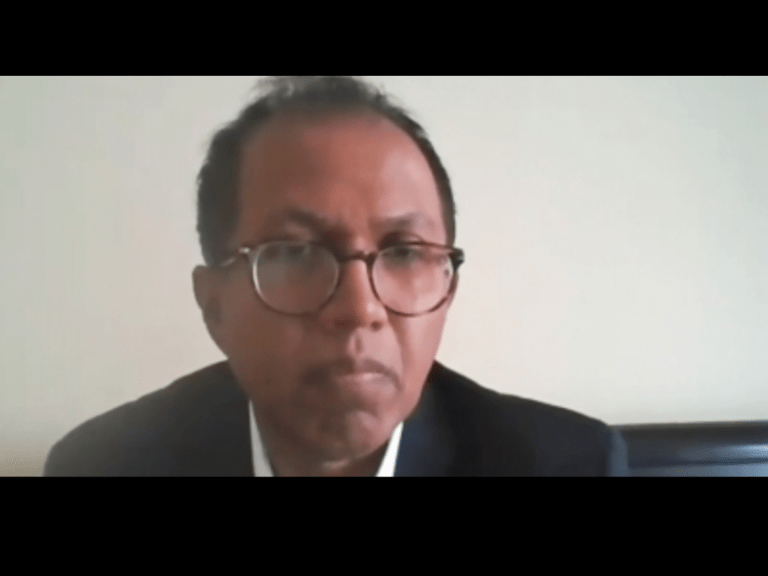
India will have to invest heavily in infrastructure in order to recover from the economic havoc brought on by the coronavirus pandemic, even if that means going in for deficit financing, according to a UN expert.

“A crisis often presents an opportunity” and making the right investments can have a multiplier effect in steering the economies to a recovery, while also making a monumental difference in people’s life,” Hamid Rashid, the head of the UN Development Research Branch, said on Wednesday in an exclusive interview.

“We may feel a little despondent right now in terms of what is happening in India, but there’s a silver lining in our view as well,” he said, citing the possibilities for public sector investing in vital areas and the signs of progress in containing the pandemic.

Developing countries like India do not have the option of financing a stimulus programme like the US has done but they can make substantial public sector investments to stimulate the economy, he said.

The government should prioritise two sectors, digital and health, for investments, he said.

“This is also an opportunity for governments, and for the public sector, to increase investment in health infrastructure, increase investment in digital infrastructure, and that will create jobs and that will create demand for more goods and services, and that will restart the economic engine,” he said.

“Right now you see the oxygen shortages as a huge constraint for India, in terms of saving lives. So, this is an opportunity for creating the right environment so the businesses can invest more in building health capacities,” he said.

There is also a need to bridge the digital divide, he said.

India and other similarly placed countries do not have the option of raising taxes to meet the investment requirements and they may have to resort to deficit financing, which he said is not a bad idea if the investments are properly made.

“Deficit financing is basically borrowing from the future,” he said.

“I believe deficit financing institution like this is not only necessary so it’s a must,” he said. “You have to take the risk and when businesses can’t take risks, when the private sector or hospitals cannot take risks, the only entity that can take risk is the government.”

“So public sector spending is that we have seen in crisis after crisis. Public investment is what brings countries out of crises,” he said.

With deficit spending, “one has to be very careful about targeting the right sector, targeting the right investment”, he said. “Otherwise it can create a huge debt burden, going forward, public debt would balloon”.

China had used investments to stage its recovery, he said while contrasting the Western and Chinese models.

There is the Western model of fighting the crisis through “a demand side support, giving money to the households or you can create more jobs through investment”, he said.

“China chose the path of increasing investment during the pandemic, and so it created lots of jobs, and now the demand is picking up and China’s recovery is on the way” and it would have a growth rate of 8.2 per cent this year, he said.

Rashid’s branch makes the economic forecasts that are the basis for policy suggestions and he is the lead author of the UN’s flagship economic report, World Economic Situation and Prospects.

The mid-year report released on Tuesday, forecast that India’s economy would grow by 7.5 per cent this year and rebound to 10.3 per cent next year.

When the report was being prepared, Rashid said, “We were just seeing the tip of the second wave. And of course, if I do revise the numbers right now, I would probably be a little bit, even less optimistic than 7.5 per cent when there are significant downside risks.”

“But, having said that, we still believe there’s huge room for a recovery in India because we are starting from a very low base,” he added.

The UN estimated that India’s economy shrank last year by 6.8 per cent.

“Last year, there was a significant contraction of the economy. So this is basically recovering the lost ground, so there’ll be quite a bit of lost ground recovered, and that would give the growth, assuming that pandemic comes under control within a month or so,” he said.

If the Covid-19 surge “continues for several months or a full quarter, then this would be a very difficult target (and) we’ll probably see a significant downgrade when we update our number for the end of the year”, he added.

“But so far, we remain optimistic that 7.5 per cent growth rate is still possible for India,” he said.

While infections are coming down significantly in Delhi and Mumbai and other major cities, there’s still concern about the pandemic spreading to rural areas, he said.

“We have to make sure that we are able to contain the spread of the virus and things don’t get any worse than it already is. So, our best hope is that probably the worst is behind us, in terms of the spread of the pandemic in India, and there are some containment measures that are effective,” he added.

Asked about the most important requirement for India’s economy to recover from the havoc of the pandemic, Rashid responded, “It’s vaccination, vaccination, vaccination.”

It would restore consumer confidence and business confidence that are very critical to a recovery, he said.

“When you see news reports every day and they shatter our confidence, businesses will not be willing to invest if they don’t see any light at the end of the tunnel and consumers will not be spending, if they feel that there are bad days ahead,” he said.

“So, this is about managing expectation and right now, the best way to manage expectations of the future of the economy is to make sure everyone gets vaccinated as quickly as possible,” he added.

While vaccinating a population of 1.4 billion would take time, he said that other steps can be intensified to control the Covid-19 outbreak as had been done last year.

“Your experience with the first wave was quite positive and quite successful. I think the combination of vaccination and social distancing and other measures would work, may not do the magic, but would still be able to contain the spread further.”


Granules to provide 16 cr paracetamol tablets to Telangana

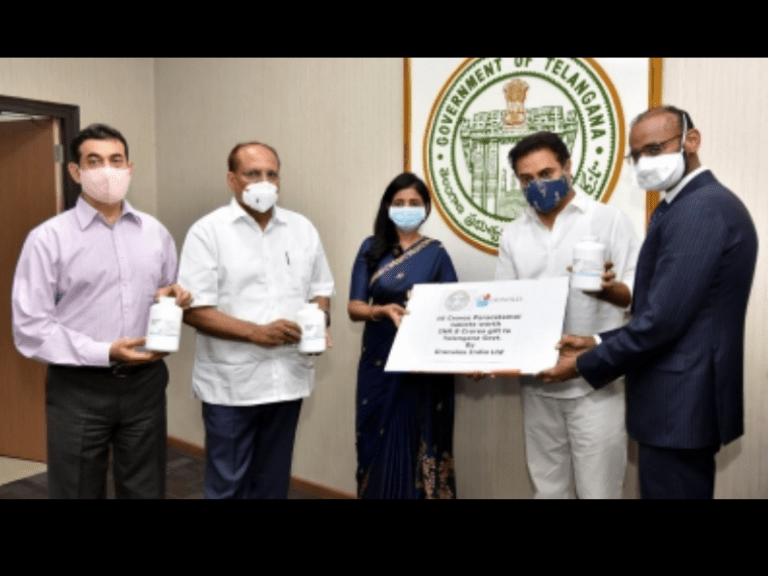
Granules, a vertically-integrated pharmaceutical company headquartered in Hyderabad, on Wednesday announced it has pledged to provide the Telangana government paracetamol-500 mg tablets free of cost to fight the Covid-19 pandemic.

The company will provide one crore tablets every week, starting from May 12, aggregating to 16 crore tablets worth Rs 8 crore over next four months.

Granules India Executive Director Uma Devi Chigurupati said that they believe that this contribution will complement Telangana’s efforts in fighting the Covid-19 pandemic in the state.

She met state Industry and Information Technology Minister K.T. Rama Rao on Wednesday to hand over a letter in this regard.

“As a company, Granules is always in the forefront of taking up corporate social responsibilities and contributing to society. Paracetamol is one of the most important drugs in the Covid treatment regimen. Being one of the largest producers of paracetamol, it’s is our responsibility to make it available to the patients,” she added.