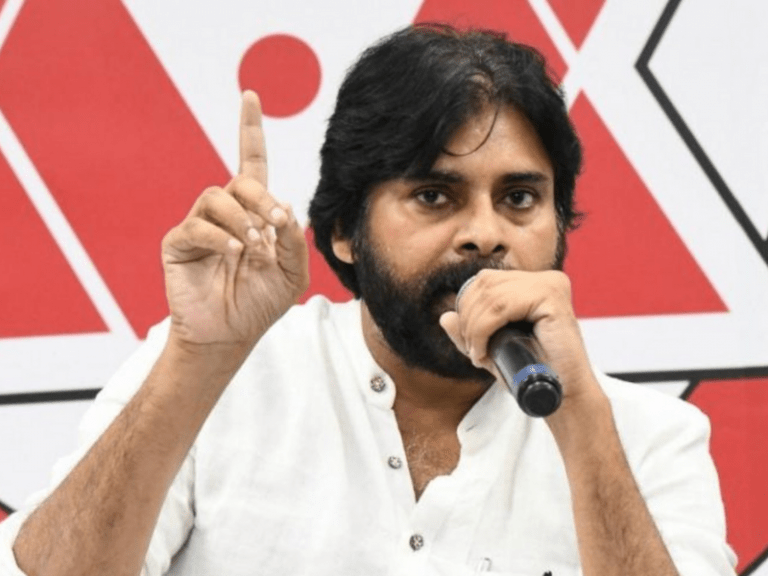
War of words continue between Pawan Kalyan, Andhra ministers

The war of words between actor-politician Pawan Kalyan and leaders of YSR Congress Party continued on Tuesday with the Jana Sena leader slamming Andhra Pradesh’s ruling party for what he calls its “policy terrorism”.

Pawan Kalyan tweeted that YSRCP’s “policy terrorism” is destroying all sectors and all communities and remarked that the time has come to counter it.

For the second time in a day, the Jana Sena leader took to Twitter to launch another attack on the YSRCP government led by Y.S. Jagan Mohan Reddy, this time targetting it for attacks on Hindu temples.

He wrote that there were not one or two but 140 attacks on Hindu temples and idols of Hindu deities. “This is the progress made in Andhra Pradesh during two-and-a-half years of rule of the YSRCP,” he remarked and alleged that those involved are safe.

Tuesday’s tweets further intensified the war of words going on between Pawan Kalyan and the YSRCP leaders since the former lambasted Andhra Pradesh government during the pre-release event of movie “Republic” starring his nephew Sai Dharam Tej. He criticised the Jagan government over the proposed online movie ticket booking system and alleged that the government is trying to profit from movie tickets.

Andhra Pradesh’s ministers including Information and Public Relations Minister Perni Nani countered Pawan’s criticism saying his view does not represent the view of Tollywood. While pointing out the government already consulted the Tollywood elders on the proposal, they also remarked that Pawan Kalyan’s movies have not done well commercially for the government to make any attempt to benefit from them.

This triggered a bitter war of words. In a tweet on Monday, Pawan Kalyan compared YSRCP leaders to dogs. He also posted the video song “Who let the dogs out” with the comment that this is one of his favourite songs.

Perni Nani hit back at the actor for his “culture of marriages” and compared him to a pig. The minister also posted a video of Pawan Kalyan with the song “Who let the dogs out” in the background.

Meanwhile, government advisor and YSRCP General Secretary Sajjala Ramakrishna Reddy said on Tuesday that the state government is trying to do good for the film industry by being a facilitator with the online ticket system.

He said that some prominent people in the film industry consider Pawan Kalyan as a huge burden to the industry and fear that they may get into trouble by being with him. He said that the state government is ready to cooperate with the film industry and even distributors, and exhibitors were happy with the online ticketing system as this would bring transparency. If the film industry still has any doubts, it can meet the Chief Minister any time and get them clarified, he added.

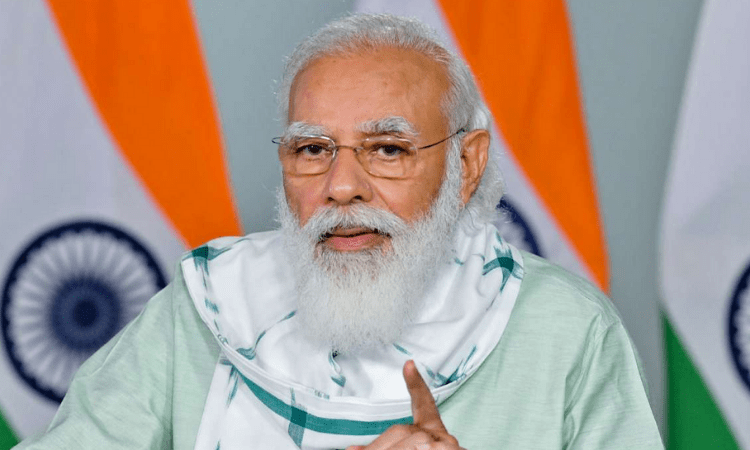
PM launches 35 climate-resilient crop varieties

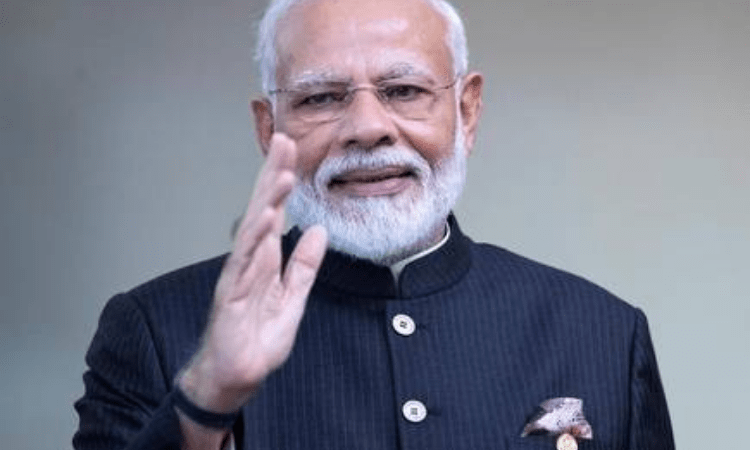
Launching 35 climate-resilient crop varieties, Prime Minister Narendra Modi on Tuesday suggested states and NGOs to conduct various programmes and create a task force for the promotion of millets.

“As part of traditional farming, India had farmers growing different crops according to different climatic conditions. In dry climate, flood-prone areas, even in snow, different varieties of crops were grown, which also had more nutrition value, especially the coarse grains, the millets. These millets are beneficial for health. Therefore, given today’s lifestyle diseases, millets are much in demand,” Modi said during a virtual event to launch the 35 crop varieties.

The Prime Minister also dedicated to the nation the newly constructed campus of National Institute of Biotic Stress Management at Raipur in Chhattisgarh and distributed the ‘Green Campus Awards’ to agricultural universities. Before launching the crop varieties, he interacted with select farmers, who use innovative methods in farming.

Stating that it was due to India’s efforts that 2023 has been declared as the International Year of Millets by the UN, Modi said, “This is a good opportunity to showcase our tradition of millet farming on the international platform. But we will need to start working right away. I appeal to all the NGOs to arrange food festivals on the theme of millets, and conduct competitions on millet recipes. We will need to innovate if we want to take this to global platform in 2023.”

Observing that creating awareness about millets is necessary and suggesting that websites can be developed for millets, wherein people can contribute how and what all can be made from millets and also list its health benefits, Modi said: “I will also ask all the states to form a task force comprising experts from agriculture universities, scientists and progressive farmers and think about how India can lead and bring benefits to its farmers in 2023. You might as well start preparing for it now.”

“With the help of science and research solutions, it is now imperative to develop millets and other similar coarse grains. The aim is to grow millets in different parts of India as per requirement. The crop varieties launched today have a glimpse of this effort,” Modi said, as he stressed on a balance of ‘Back to Basic’ and ‘March for Future’ in agriculture.

Terming climate change as a big challenge not just for agriculture, but the entire ecosystem, the Prime Minister said that livestock and agriculture sectors are bearing its brunt and “the 35 varieties launched today are part of our efforts aimed at meeting that challenge”.

The crop varieties with special traits have been developed by the Indian Council of Agricultural Research (ICAR) to address the twin challenges of climate change and malnutrition. Thirty-five such crop varieties with special traits like climate resilience and higher nutrient content have been developed this year. These include a drought tolerant variety of chickpea; wilt and sterility mosaic resistant pigeon pea; early maturing variety of soybean; disease resistant varieties of rice and biofortified varieties of wheat, pearl millet, maize and chickpea, quinoa, buckwheat, winged bean and faba bean.

Earlier, the Prime Minister spoke with five farmers from across India and lauded their efforts, sought to know their problems, and asked if they benefitted from government efforts.

The farmers were Zaitoon Begum from Ganderbal district in Jammu & Kashmir; Kulwant Singh from Bulandshahar in Uttar Pradesh; Darshana Pednekar from Bardez in Goa; Thoiba Singh from Manipur; and Suresh Rana from Udham Singh Nagar in Uttarakhand.

Union Agriculture Minister Narendra Singh Tomar and Chhattisgarh Chief Minister Bhupesh Baghel also spoke on the occasion.

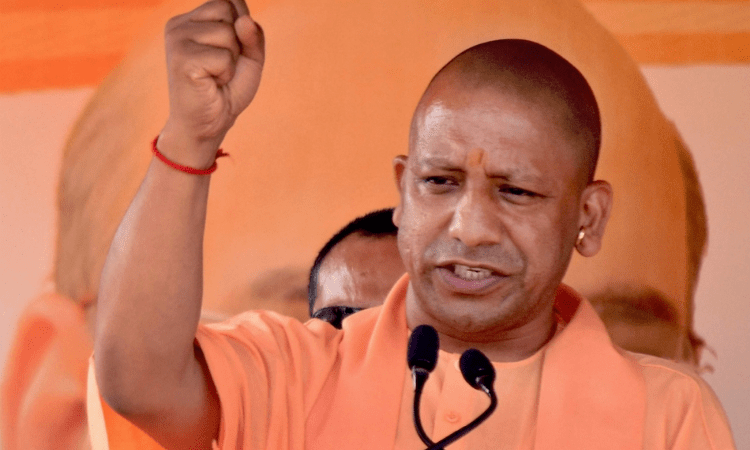
SIT to probe allegations of anti-Hindu propaganda by UP IAS officer

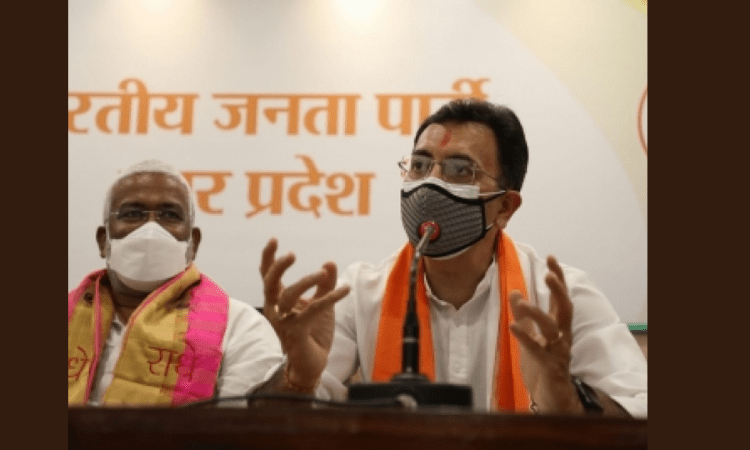
The Yogi Adityanath government in Uttar Pradesh has set up a Special Investigation Team (SIT) to probe charges of anti-Hindu propaganda by senior IAS officer Mohammad Iftikharuddin.

According to a statement by the Home Department, the two-member SIT will be headed by DG CB-CID G.L. Meena and ADG zone Bhanu Bhaskar.

The SIT has been asked to submit its report within seven days.

It may be recalled that the national vice president of Math Mandir Coordination Committee, Bhupesh Awasthi, had alleged that Iftikharuddin was indulging in anti-Hindu propaganda.

Iftikharuddin is presently serving as the Chairman of Uttar Pradesh State Road Transport Corporation.

Awasthi released videos of religious programmes of the officer who was then the Kanpur Zone Commissioner.

It is alleged that in these videos, Iftikharuddin is telling people about the benefits of adopting Islam as a religion.

The purported videos also show a religious leader sitting besides the IAS officer.

In another video, Iftikharuddin is seen sitting on the ground when a Muslim speaker is purportedly giving radical lessons at his official residence.

After the video surfaced, Kanpur Police Commissioner Aseem Arun asked Additional Deputy Commissioner of Police (East) Somendra Meena to investigate the matter.

“The investigation of the viral video taken at Kanpur Commissioner’s residence has been entrusted to ADCP East, Police Commissionerate Kanpur Nagar. It is being investigated whether the video is authentic and if there is any crime in it,” the official said.

Chief Minister Yogi Adityanath had summoned the Police Commissioner Aseem Arun to Lucknow on Tuesday in this regard.

Meanwhile, Deputy Chief Minister Keshav Prasad Maurya said: “This is a serious matter. If there is any truth in it, it will be taken seriously.”

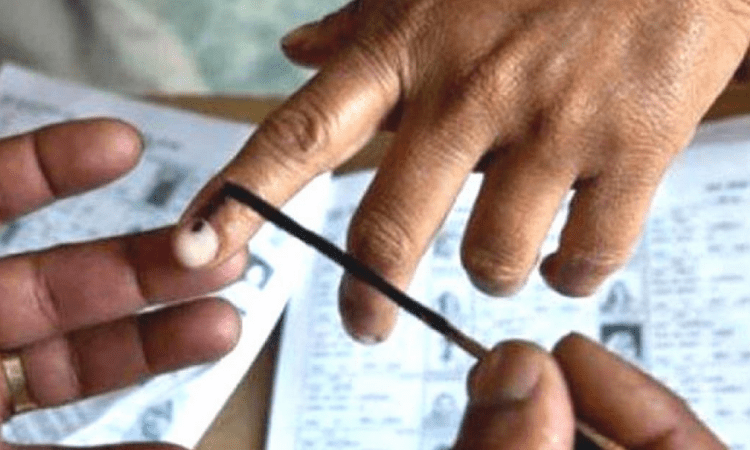
Bypolls to 3 LS and 30 assembly seats on Oct 30, counting on Nov 2

The Election Commission of India on Tuesday announced the schedule for bypolls to 3 Lok Sabha and 30 assembly seats in various states on Tuesday. The counting will take place on November 2.

For Assembly Constituency of Andhra Pradesh, Haryana, Himachal Pradesh, Karnataka, Madhya Pradesh, Maharashtra, Meghalaya, Mizoram, Nagaland, Rajasthan, Telangana and Parliamentary Constituency of UT of Dadra & Nagar Haveli and Daman & Diu, Himachal Pradesh, Madhya Pradesh, the notification for the by-election will be made on October 1, last day of nomination will be October 8, scrutiny of the paper will be done on October 11, withdrawal of the nomination on October 13, polling will be held on October 30 and the counting of votes will be on November 2.

For the by-election in Assam, Bihar and West Bengal, the poll schedule will be the same except the date of withdrawal will be October 16.

The ECI also said that all election related activities will be strictly complied as per the Covid-19 guidelines issued by competent authorities. Social distancing and use of mask, sanitizers, thermal scanning, face shield, hand gloves, etc, as per Covid-19 protocol, have to be complied with. SDMA is responsible for all preventive and mitigation measures to ensure adherence to Covid protocol. Chief Secretary and DG and district level authorities will be responsible for monitoring, supervision and compliance of Covid-19 guidelines.

The commission also said that all polling personnel and election officials including the private persons engaged in the election duty shall be double vaccinated before taking their services.

If a candidate or political party violates any of the above guidelines, no more permission shall be given to the concerned candidate/party for rallies, meetings. If any star campaigner violates the Covid protocols, he shall not be allowed to campaign further in that constituency/district, the commission said.

Candidate/election agent/polling agent counting agent/driver etc whoever is coming in contact with the public or election officials have to be double vaccinated.

One health worker will be appointed as Covid nodal officer for each Polling Station. While the Chief Secretary and Director General of Police shall take enough preventive measures and make necessary arrangements to ensure that no poll related violence occurs.

Jitin Prasada gets technical education portfolio

The newly appointed cabinet minister Jitin Prasada, has been allotted the technical education portfolio by Uttar Pradesh Chief Minister Yogi Adityanath.

The portfolios were announced by the chief minister, late on Monday night.

The technical education portfolio was earlier held by Kamal Rani Varun who passed away last year due to Covid.

Jitin Prasada has also been allotted the 9 Kalidas Marg bungalow that was earlier occupied by Kamal Rani Varun.

Among junior ministers, Paltu Ram has been given sainik kalyan, home guard, Prantiya Rakshak Dal and civil defence. The chief minister is the cabinet minister of these departments.

Sangeeta Balwant Bind has been made junior minister for cooperatives under Mukut Bihari Verma and Dharmavir Prajapati has been sent to industrial development under Satish Mahana.

Chahtrapal Singh Gangwar has been made an MoS in revenue department while Sanjeev Gond has been given social welfare and scheduled caste-scheduled tribe welfare.

Similarly, Dinesh Khatik is now a junior minister in the department of Jal Shakti and flood control.

Meanwhile, Jitin Prasada has dismissed the narrative that his Brahmin identity gave him an advantage after he joined the BJP switching over to the BJP.

“The party and I believe in ‘Sabka saath, Sabka Vikas, Sabka Vishwas’ and I will take along people from all sections of the society,” he said.

Gulab impact: Telangana CM takes stock of situation

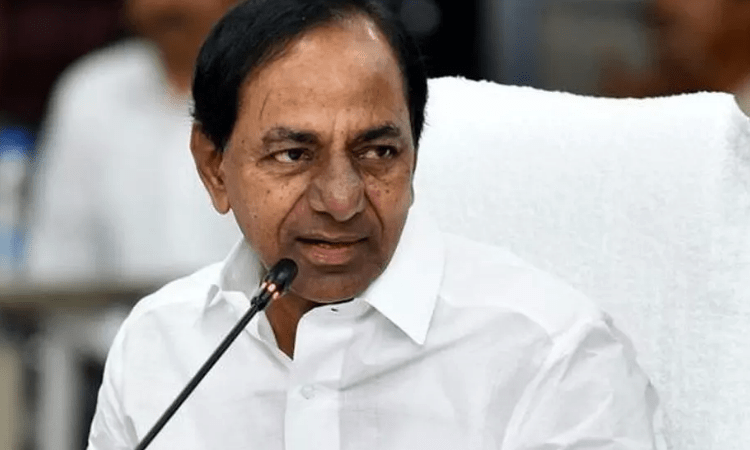
Telangana Chief Minister K. Chandrasekhar Rao on Monday took stock of the situation in the state due to heavy rains under the impact of cyclone ‘Gulab’ which weakened into deep depression after crossing Andhra-Odisha coast overnight.

The chief minister reviewed the situation with Chief Secretary Somesh Kumar and other top officials. He directed the chief secretary to take all necessary precautions against any loss of life or property as heavy rains across the state are likely to continue for another two days due to the impact of ‘Gulab’. The CM wanted revenue, police, and other departments to work in coordination.

Meanwhile, Chief Secretary Somesh Kumar once again held a teleconference with district collectors in the wake of heavy rains in the state. Apart from CS, DGP Mahender Reddy, Special Chief Secretary, Roads and Buildings, Sunil Sharma, Secretary, Panchayati Raj, Sandeep Kumar Sultania and Secretary, Disaster Management, Rahul Bojja were also present in the conference.

Somesh Kumar said collectors have been directed to remain vigilant in the wake of warnings from the Meteorological Department that there will be heavy rains for another two days across the state. He said the Revenue, Police, Panchayati Raj, Irrigation and Fire departments in the district should work in coordination.

The chief secretary asked officials to take adequate measures to prevent loss of life and property. If necessary, services of NDRF teams in Hyderabad, Kottagudem and Warangal should be utilised. He said that a separate control room should be set up in each district collectorate office and information should be provided to the control room set up in the Secretariat.

He said that the situation should be reviewed by appointing special officers at problematic areas such as inland areas, ponds, ditches and bridges.

DGP Mahender Reddy said he had directed the police commissioners and SPs to work in coordination with the district collectors. He said a teleconference had been held with police officers to this effect.

CSIR should re-invent itself for future challenges: Vice President

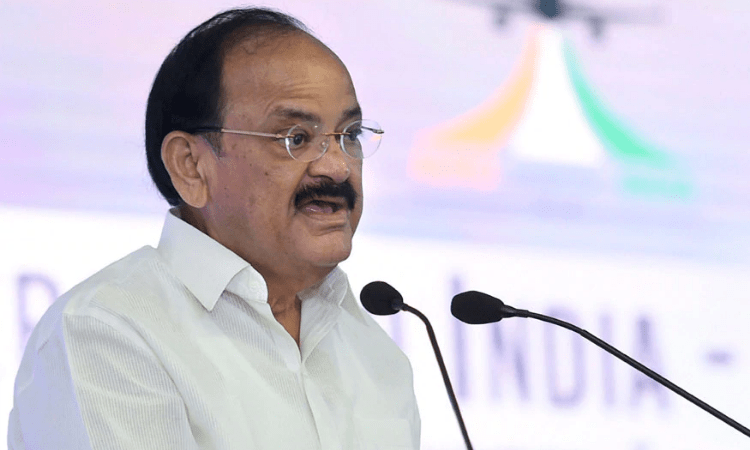
Vice President M. Venkaiah Naidu on Sunday advised the Council of Scientific and Industrial Research (CSIR) to reinvent itself and turn futuristic while pursuing the science of the highest order.

Participating in the CSIR’s 80th Foundation Day celebrations here, he said that he wanted CSIR laboratories and institutes to address challenges that require long-term scientific and technological solutions.

Citing climate change, drug resistance, pollution, epidemic and pandemic outbreaks, among the challenges that need the focus of the scientific community, Naidu said: “I want CSIR to bestow greater attention on agricultural research and come out with new innovations, techniques and solutions to address the problems faced by farmers.”

Union Science and Technology and Earth Sciences Minister Jitendra Singh asked the CSIR and all the science departments to explore S&T innovations needed in the next ten years to make India globally competitive, a Science and Technology Ministry release said.

As the nation is celebrating the Azadi ka Amrit Mahostav, the combined strength of the CSIR, Department of Bio-Technology, Department of Science and Technology, and Ministry of Earth Sciences, along with other science ministries, can indeed transform the entire country in the next 25 years as the entire progress is going to remain heavily technology-dependant, he said, adding, 25 years later, India should be a global leader ranging from defence to economics with strong scientific and technological inputs.”

Lauding the 80-year successful journey of CSIR, he said that it is heartening to see the evolution of the CSIR from developing India’s first indelible ink used in elections to providing Indian Standard Time using atomic clocks today.

From the development of Swaraj Tractor to the recent test flying of HANSA-NG is a testament to the growth of CSIR in the last eight decades, he added.

The legacy of CSIR is built on the cumulative contributions of its many national laboratories and institutes, he said, adding that each laboratory is unique and specialising in diverse areas as genomics to geology, material technology to microbial technology and food to fuel. He also recalled that how the laboratories came together during the Covid pandemic last year and developed several technologies that helped India’s fight against it.

Singh congratulated all the scientists, researchers and students who won the prestigious Shanti Swaroop Bhatnagar Prizes and said that the accolades will further motivate the recipients to continue their excellent work and inspire those around them, the release said.

Principal Scientific Adviser to the Government, Professor K VijayRaghavan, CSIR Director General CSIR Shekhar Mande, Head, CSIR-HRDG, Anjan Ray, and senior scientists and officials were present, the release added.

Delhi received over 800 applications for bio-decomposer use: CM

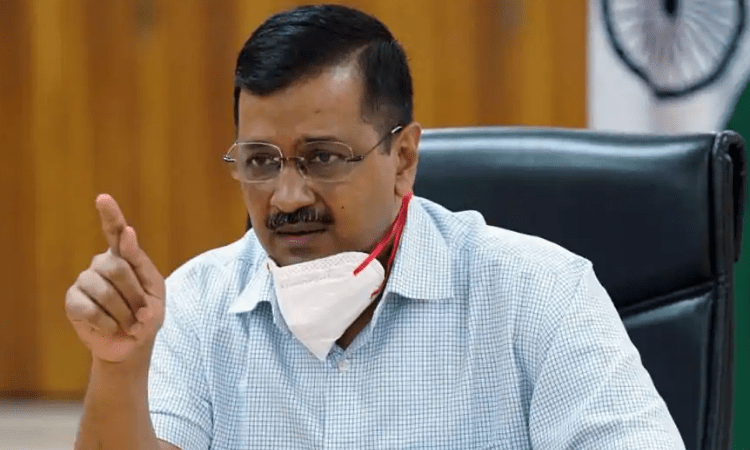
Lauding the success of the Pusa Institute made bio-decomposer, Delhi Chief Minister Arvind Kejriwal on Friday said that the Delhi government has received 844 applications from farmers for sprinkling the naturally made liquid decomposer.

“Earlier we tried this bio-decomposer on 19.5 acre of land. This time we sampled it on 42 acre farm land. Post its success and third-party audit report by WAPCOS, we have received 844 applications by farmers who want this bio-decomposer to be sprinkled on their farm land. We urge Delhi’s neighbouring states to use this method too, as finally a cure to stubble burning has been found,” Kejriwal said in his address after observing the centralised bio-decomposer system set up to prevent stubble burning in the capital.

The bio-decomposer which was sampled in 2020 will be sprinkled in the fields this October and November — a time when farmers start preparing their land for the Rabi crops and in order to do so, they burn the stubble to get rid of the crop residue.

The final mixture will comprise of a bio-decomposer capsule mixed with chickpea flour (besan) and jaggery (gur). “For every 25 litres of ghol (mixture), 20 bio-decomposer capsules will be used which will get prepared in 12 days,” Dhoom Singh, Extension Officer, Agriculture, told IANS.

As per the WAPCOS – a Union government undertaking – report, 90 per cent of the surveyed farmers said stubble in their farm land decomposed within 15-20 days and their fields were ready for the next season’s crop.

“Organic carbon in their fields increased by 40 per cent after the use of this new bio-decomposer as the crop residue became manure. The amount of nitrogen, too, increased by 24 per cent and good bacteria and fungus increased by 7 per cent and 3 per cent, respectively. Other than that the soil quality was so enhanced that the germination of wheat crop increased by 17-20 per cent,” Kejriwal had told the media while announcing the report results on September 13.

Recently, the Commission for Air Quality Management has said the governments of Punjab, Haryana and Uttar Pradesh too can use this bio-decomposer.

“The Commission has been informed that Pusa bio-decomposer is planned for application in six lakh acres in UP, one lakh acres in Haryana, 7,413 acres in Punjab and 4,000 acres in Delhi,” the central commission said in a statement.

What Modi wants from Biden, in Year Zero of post-Covid era

This is the second piece of a two-column combo-pack, over 48 hours, before the Biden-Modi summit in Washington DC, in the morning of September 24.

Never before in human civilisation (yes, never before in human history) have the entire people of planet Earth stopped together at the same time, locked themselves in self-isolations, and retreated into their homes and caves – for 500 days! Due to the pandemic, and in this period, mindsets, priorities and many common assumptions have been disrupted or are newly forming.

Added to the once in century pandemic, is the sudden realisation of the dark clouds of climate change that are now causing floods, wildfires, droughts, and hurricanes that are destroying our homes and lives, almost every day now, in some or other corner of planet Earth.

The above two factors, plus the unprecedented upheavals in geo-politics, including America’s withdrawal from its 20-year long war in Afghanistan, have created a heady cocktail. The world is undergoing a reset, a reboot. This is ‘Year Zero of post-Covid Yug’.

The first column of this two-column pack, of Thursday, was titled “On eve of Biden-Modi summit; a primer on what Biden needs, wants, and will ask from India”.

This is the second column that looks at the opposite, and other half of the equation, i.e., what does India need, want from the US, when Prime Minister Narendra Modi walks into the White House to meet US President Joe Biden?

As the two leaders sit down for discussions, over a glass of lemonade, there is much, very much, riding on the outcomes of this meeting today. Once the 50-minute or so meeting is over, initial judgements of PM Modi, and the Indian PM’s advisors, as they get into their cars, and go back to the W, or for a cuppa coffee at DuPont Circle, or to whichever base-camp that the Indian side has established – will shape India policy with respect to the United States for at least the next decade.

So, what will Modi say, push, persuade, cajole, agree, play hardball with Biden – to achieve the objectives, and worldview of India, in India’s core strategic interests? While yes, also being mindful and amenable, and in fact inviting, to what the United States brings to the table?

What India wants could be listed as below:

1. The small matter of sanctions:

* Purchase of S-400 system from Russia. A minor irritant, but most important of all. This has potential to de-rail, or to cause the double-engine train of US-India to change its track altogether. Russia is under sanctions by the US. India is buying this large-ticket missile defence system from Russia. Is India going to face secondary sanctions from America because of this deal? There is talk of a waiver, or some work-around. The matter should be resolved with clarity and amicably.

* US sanctions on Iran – hurting Indian, and US interests, in heart of Asia. India is being hobbled by US sanctions on Iran. The US too is losing big time in this policy approach. Iran is slowly being drawn into the Chinese orbit. It has signed a large oil and gas deal with China, among other inter-linkages which could soon also see the BRI connectivity via Iran, towards Turkey, and Europe. If US sanctions continue on Iran, then India, and the US will lose ability to introduce even an iota of engagement in the heart of Asia, and any access to this entire geography will be lost for the US and India. The US must consider to reduce, eliminate the sanctions on Iran.

Above two are critical to the core interest of India. Especially, the above mentioned #1 must be resolved during the Modi-Biden meeting today.

2. Next, now there are two big picture questions that Modi may want to be clarified by the time the meeting finishes:

* The first, strangely, is the matter of trust. There is no doubt that America has lost some credibility due to its Afghanistan policy, and the recent ruckus over Aukus is another example. How much can, and should India trust the United States? The civil nuclear deal with the US was the milestone that transformed US-India relations to complete new heights. The deal was for energy sure, but more than that it was a deal that was about atoms for peace and trust between the US and India. Both leaders, Biden and Modi, must make every effort to keep adding to this trust bank.

* The second, is fresh vigour for world leadership, world direction, and world peace. How will the US join India, and India join the US, in promoting a new world order that is non-violent, is peaceful, and where individuals, communities, and nations co-exist in some equilibrium, and abide by a mantra and lifestyle of “Live and Let Live”. US and India can together provide real, positive leadership to the world, and launch a new world spirit in Year Zero of Post-Covid Yug.

Promoting peace between and among nations, religions, cultures, ranging from peace in the Korean Peninsula, to the resolution of conflicts in Africa. And, to invite collaboration of a country like Japan – which has a unique history and approach to peace and non-violence, being the only nation and people ever to have faced a nuclear winter.

3. Next, Modi could, and should explore some secret deal with the US:

* Would it not make sense to keep a contingency plan ready? in case Pakistan implodes into strife and chaos, and extremists, extremist groups stand ready to pounce and scramble away with the nuclear stockpiles of Pakistan? Even if having no much expertise, thanks to Google learning, anyone could make dirty bombs that are radioactive.

* In case of a next Galwan by China, what and how will be the US response? It will be prudent to have some scenarios modelled out in advance, so that when, if and next military adventurism comes by China on India’s borders, the advance script between US and India should play out instantly.

The above two, or any other would be secret deals – not disclosed in public domain. Perhaps 30-40 years later, when some archives are de-classified, we may learn that such a deal, or deals were struck in Year Zero of Post Covid Yug, between Modi and Biden.

4. Next, Modi would of course need to address the issue of Afghanistan, and, Pakistan:

* How will the US stop the export of physical terrorists, munitions, and such, from the boundaries of Afghanistan? Does the US have some strategy, say, something like an “Iron Border Ring” around Afghanistan? How and where can India help in any such containment?

* Modi should offer to provide inputs to the “revision of Pakistan policy” that America is undertaking right now, so that the revised American foreign policy is pragmatic with real ability to reduce the Pakistan-risk that faces the world. India will like to be invited to provide such inputs before the US policy is finalized.

5. Next, is the matter of climate change:

* India is taking major steps on climate change. How can the US help India to counter the threats of climate change? India needs investments in these areas – what are the investment vehicles that the US is forming, contributing to, and how much of those monies will come to India?

* How can India and the United States, together give further momentum and global mobilization to mitigate the oncoming dangers of climate change? The International Solar Alliance (ISA) is one important tool in this journey. How will the US contribute further, and more to the ISA?

6. Role of India in QUAD:

* India will like to know what US envisages as India’s role in the QUAD? Modi will want Biden to articulate an effective, strategic role for India in the QUAD. India would have its own views, which Modi would share with Biden, and want to get his concurrence on those.

* How will the US push American companies to re-locate out of China – towards India, for example. Modi will inform Biden of India’s readiness and focus on infrastructure creation so that resilient supply chains can be set up among the QUAD countries – in areas like electronics and semi-conductor chips, pharmaceuticals (special focus on Covid), and green energy, like Hydrogen.

7. Bilateral Trade and Investments:

* There are multiple friction areas in bilateral trade between the US and India. Modi would like the US to be more accommodative to some of India’s concerns, so that he can go back with some concrete resolutions to at least some of the issues that are outstanding.

* Boosting of US private sector investments in India. India understands that the US government, unlike the Chinese government, does not have direct access and control on capital for investments overseas. Modi will like to see that Biden plays a proactive role in promoting the US private sector to go to India.

Of course, the two leaders will not end up discussing each of above item in detail. Their aides would have narrowed down and bubbled up the almost ready talking points, that need a OK from both leaders present, and would have left some 2-3 issues open-ended, on which a Go, or a No-Go decision will be taken by the two leaders in this meeting itself.

Whatever be the Go, or No-Go decisions, there is no doubt that the one “Go” decision that both will agree to, will be to have a glass of lemonade during their discussions. Afterall if life has handed you a lemon, why not make lemonade?


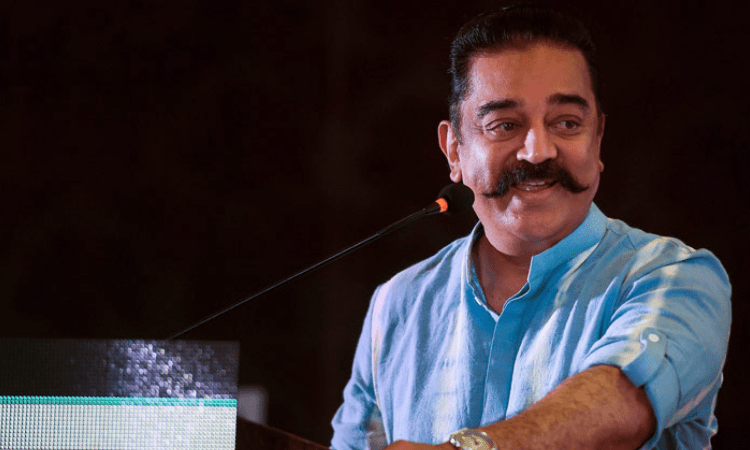
Kamal Haasan asks party cadre to participate in gram sabhas

Superstar turned politician Kamal Haasan has called upon his party cadre, Makkal Needhi Maiam (MNM), to actively participate in gram sabha meetings.

The actor turned politician urged the cadres that the gram sabhas are the basis of democratic process and that they must take part in them. Gram sabha, which was last held in the state on January 26, 2021 will be held on October 2 in all the districts except the nine where elections to rural local bodies are being held.

In a statement addressed to the cadres on Thursday, Kamal Haasan said that they should reiterate the importance of grama sabha meetings to the people and must encourage their participation.

He said that the ruling party and the opposition were trying to make sure that the grama sabhas are not held regularly. The actor, politician also said that the Covid-19 situation was a good excuse for the ruling class to not hold the sabha meetings. He said while election meetings and government swearing-in ceremonies were being held with public participation, the ruling party and the opposition ensured that grama sabhas were not held citing Covid-19 pandemic.

He said that issues like degradation of the environment, Tasmac liquor shops and neglected water bodies must be raised in the grama sabhas.

Haasan said that the resolutions passed in the grama sabha meetings have high values and that the people must participate in large numbers.

He also insisted on the cadres that they must conduct a door to door awareness on the importance of grama sabhas and ensure participation of people in large numbers as the issues that are of importance to the day to day lives can be discussed.