Ahead of polls, BJP presenting Goa govt’s report card to people

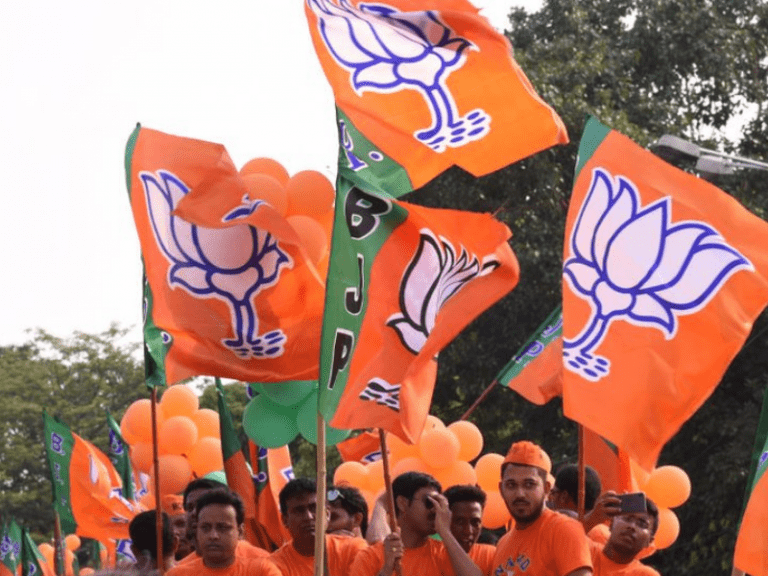
For winning the third election in a row in the state, the Goa BJP has started presenting a report card of state government to people.

The party workers are visiting every household with the works of the BJP government in the last ten years.

A well placed source said that a campaign has been launched to reach every house in the state with the works of the BJP government in 10 years.

“We have started presenting our report cards to people. Report card contains works of the BJP government in the state since 2012. The campaign started on January 1 and will continue till January 10. In these 10 days, BJP workers will reach out to each and every household in the state and tell the voters what our government has done in the last 10 years,” he said.

Goa Assembly polls will be held in February- March next year along with Uttar Pradesh, Punjab, Uttarakhand and Manipur. The BJP has been in power in the coastal state since 2012.

Apart from knocking each door in the state, the BJP workers and leaders are also meeting eminent personalities with the report card and taking their suggestions. “We are meeting eminent personalities and influencers giving details of our government in the last two terms,” a party leader said.

The saffron party, meanwhile, is organising meetings at different levels to activate its cadres. “Assembly level convention of the party has started and workers’ meetings are also being organised across the state,” he said.

It has set a target to win over 25 seats in the 40-member Goa Assembly. BJP national general secretary and state in-charge, CT Ravi said that BJP will form the government for third term by winning more than 25 seats.

“People have seen development in the last ten years under the BJP government and will once again elect a BJP government to further accelerate the pace of development of the state. We are going to win over 25 seats,” Ravi said.

New education policy follows Mahatma Gandhi’s ‘Nai Talim’: Venkaiah Naidu

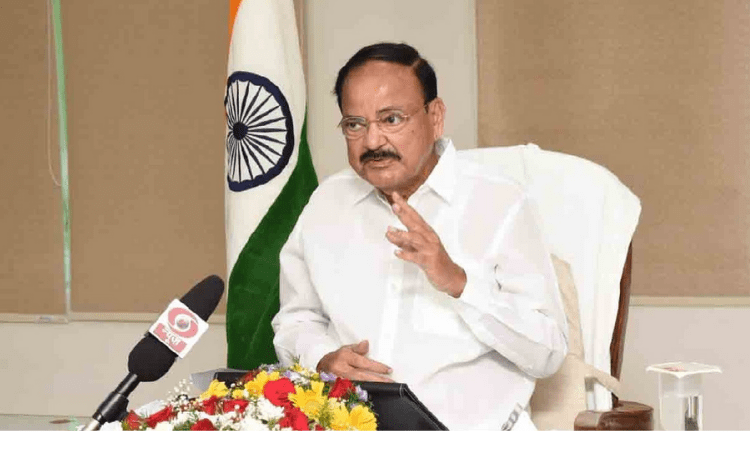
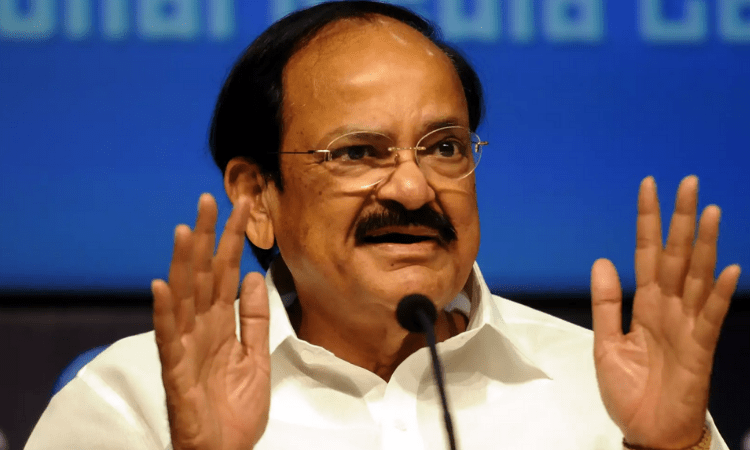
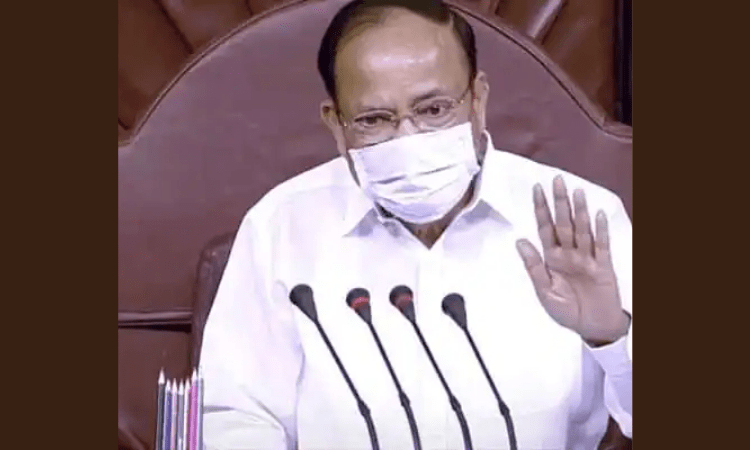
Vice President M. Venkaiah Naidu on Tuesday said that the New Education Policy (NEP) follows the ‘Nai Talim’ (new education) of Mahatma Gandhi by giving importance to the mother tongue as the medium of instruction at school level.

Addressing the Silver Jubilee Celebrations of Mahatma Gandhi International Hindi University, Wardha, the Vice President recalled that the ‘Nai Talim’ proposed by Mahatma Gandhi in Wardha in 1937 laid emphasis on making mother tongue as the medium of instruction in addition to free compulsory education and skill training to the students.

“Our Constituent Assembly, after a long debate, accepted Hindi as the official language and also accorded constitutional status to other Indian languages in the eighth schedule. Noting that every Indian language has a glorious history and rich literature. We are fortunate to have linguistic diversity in our country. Our linguistic diversity is our strength as our languages symbolise our cultural unity,” Naidu said.

Referring to Mahatma Gandhi’s views on language, he said that for Mahatma Gandhi, the question of language was a question of national unity.

“Even after insisting on Hindi, Mahatma Gandhi understood the sensitivity of every citizen to his mother tongue. Gandhiji associated mother tongue with Swaraj and called for according due importance to it,” he said.

He also said that Indian languages have played an important role in keeping the overseas Indian community connected with the motherland India,he observed.

The Vice President said that it is expected of a civilised society that its language should be gentle, cultured and creative. “Let us exercise our freedom of expression with the decency of language and the discipline of words,” he said.

Describing our linguistic diversity as the strength of the country, the Vice President urged to strengthen this thread of unity in diversity and stressed the need for enhanced dialogue between Indian languages.

He suggested the language departments of universities play an important role in this regard. “There should be constant contact and intellectual dialogue between the language departments of the universities,” he said.

The Vice President also unveiled the statue of the architect of the Constitution, Babasaheb Dr. Bhimrao Ambedkar. The Vice President also inaugurated Atal Bihari Vajpayee Bhawan and Chandrashekhar Azad Hostel in the university as part of its Silver Jubilee celebrations.

Arvind Kejriwal tests Covid-19 positive

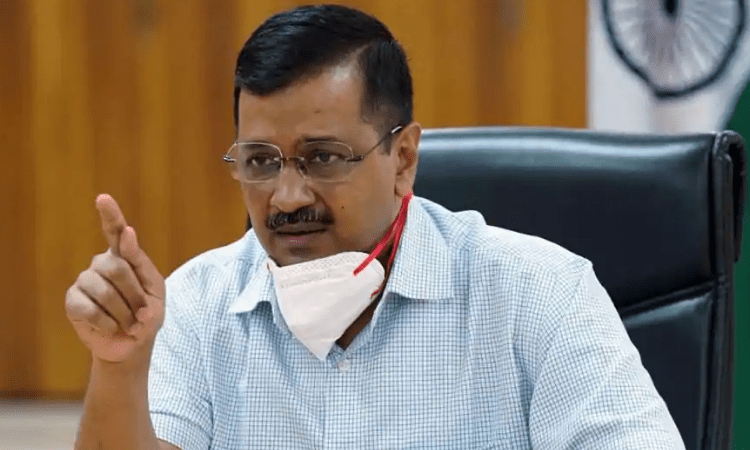
Delhi Chief Minister Arvind Kejriwal on Tuesday announced that he has tested positive for Covid-19, adding that he has “mild symptoms”.

Taking to Twitter, he said: “I have tested positive for Covid. Mild symptoms. Have isolated myself at home. Those who came in touch wid me in last few days, kindly isolate urself and get urself tested.”

This comes as Delhi is witnessing a Covid-19 resurgence triggered by the new highly-transmissible Omicron variant.

The national capital on Monday reported 4,099 fresh Covid cases, the highest single-day rise after May 18, 2021 when the tally was 4,482, and one death.

The new cases have pushed up the infection tally to 14,58,220, while the toll is 25,110 now.

The Covid infection rate has climbed to 6.46 per cent, highest in last seven months. According to the Delhi Health Department, the city had recorded 6.89 per cent positivity rate on May 18.

The capital has, so far, detected 351 Omicron cases, of which 57 have been discharged from the hospital.

Jagan meets Modi; discusses funds release, pending issues

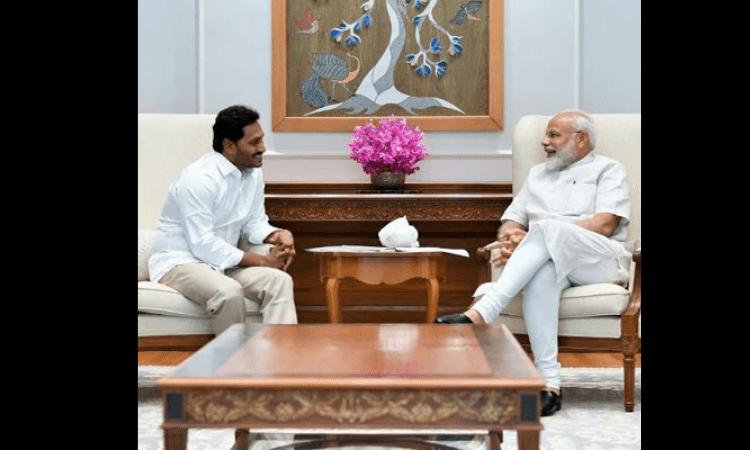
Andhra Pradesh Chief Minister Y.S. Jagan Mohan Reddy called on Prime Minister Narendra Modi at his residence here on Monday, and discussed several key issues related to the state.

The Chief Minister requested Modi to approve the revised cost estimates of Rs 55,657 crore at 2017-18 price level, which includes drinking water component of Rs 4,000 crore, and also to release the pending payments of Rs 2,100 crore already incurred by the state government towards the Polavaram project.

Pointing out while state’s total revenue deficit for 2014-15 financial year stands at Rs 22,948.76 crore, Jagan Reddy said only Rs 4,117.89 crore has been released.

He requested the Prime Minister that the remaining Rs 18,830.87 crore be released at the earliest, to support the state during this hour of need.

The Chief Minister said an amount of Rs 6,284 crore is receivable by Andhra Pradesh Generation Corporation Limited (APGENCO) from the Telangana State Distribution Utilities and Telangana DISCOMs have recognized the amount as payables but are yet to make the actual payment.

He requested the Prime Minister to direct the concerned authorities to settle these dues at the earliest so that the state power sector will be financially strengthened and the state’s payables to power suppliers can also be discharged.

The Chief Minister said there is inadequate coverage of beneficiaries under NFSA (National Food Security) Act, and large number of needy and deserving persons being uncovered and requested the Prime Minister to direct the concerned officials that the State’s data be reviewed and corrected. He also urged that a comprehensive view be taken on the poverty levels in the State, wider coverage of population of Andhra Pradesh under TPDS be ensured and the anomaly be corrected.

The Chief Minister said the NBC (net borrowing ceiling) for the financial year 2021-22 was originally fixed at Rs 42,472 crore as per the FRBM norms fixed by the Central Government and made applicable to every State.

The Department of Expenditure, Ministry of Finance, has subsequently informed that an amount of Rs 17,923.24 crore is to be adjusted against the NBC fixed for this year on account of the so called overborrowing of the state during earlier years of the previous government in the state.

The Chief Minister emphasised that the so called over-drawal was only a borrowing and not a grant and the borrowing is also being serviced without any default. He has requested the Prime Minister that the state’s NBC be restored to its original level of Rs 42,472 crore.

The Chief Minister has urged the Prime Minister to look into the renewal of the approvals of site clearances for greenfield international airport at Bhogapuram.

In regard to setting up an Integrated Steel Plant in YSR Kadapa district, he said MECON, a Central Government undertaking, has not yet concluded its report as to the feasibility of the integrated steel plant, and urged the Prime Minister to direct the concerned officials to expedite it.

He said the state government has incorporated ‘YSR Steel Corporation Ltd’ for establishing the steel plant in YSR Kadapa district. For securing iron ore mineral for the proposed steel plant, requests have been made to the Ministry of Mines to reserve iron ore mineral areas in favour of a government of Andhra Pradesh undertaking, AP Mineral Development Corporation Ltd.

Such reservation is permitted by the extant legal framework.

Later, the Chief Minister also called on Union Finance Minister Nirmala Sitharaman and discussed the issues related to the state.

President appoints 5 Judges, additional Judges in Calcutta, Bombay HCs

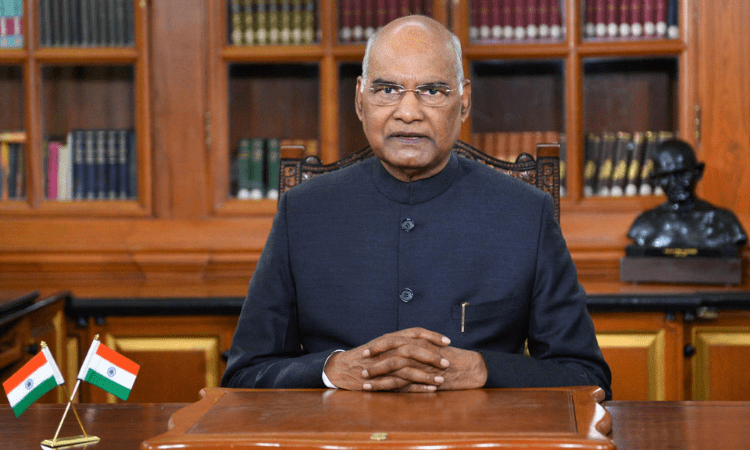
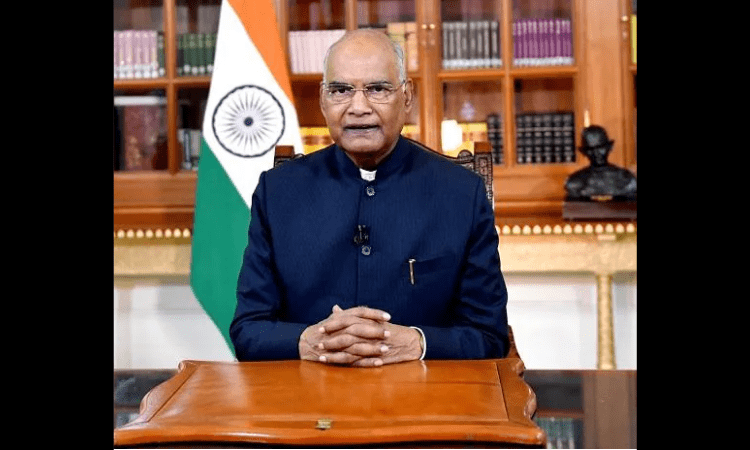
President Ram Nath Kovind on Monday appointed four new judges in the Calcutta and Bombay High Courts while extending the tenure of one additional judge of the latter high court by one year.

While Calcutta High Court’s Additional Judge Aniruddha Roy and Bombay High Court’s Additional Judges Madhav Jayajirao Jamdar, Amit Bhalchandra Borkar, and Shrikant Dattatray Kulkarni have been elevated as full judges, the term of Bombay High Court’s Additional Judge, Abhay Ahuja, has been extended by one year, with effect from March 4, 2022.

“In exercise of the power conferred by clause (l) of Article 217 and by clause (l) of Article 224 of the Constitution of India, the President, after consultation with the Chief Justice of India, is pleased to appoint the following as Judges/Additional Judge of the following High Courts, w.e.f. the date they assume charge of their respective offices, vide notifications dated 03.01.2022,” a Law and Justice Ministry statement said.

Dire need to inculcate spirit of service in youth: Vice President

Vice President M. Venkaiah Naidu said on Monday that there is a dire need to inculcate the spirit of service from a young age in the youth and urged schools to make community service compulsory for students once normalcy returns.

Speaking at an event organised to mark the 150th anniversary of Saint Chavara at Mannanam in Kottayam, Kerala, the Vice President said that once the pandemic is behind us, government schools as well as those in the private sector must make community service compulsory for students for at least two to three weeks.

“It would help them develop an attitude of sharing and caring in their interaction with others,” he said.

Naidu emphasised that the philosophy of share-and-care is at the core of India’s age-old culture and must be widely propagated.

“For us, the whole world is one family as encapsulated in our timeless ideal, ‘Vasudhaiva Kutumbakam’. It is with this spirit that we should move forward together,” the Vice President said.

Pointing out that every person has the right to practice and preach his or her faith in the country, the Vice President said, “Practice your religion but don’t abuse and indulge in hate speech and writings.”

He also expressed his disapproval of attempts to ridicule other religions and create dissensions in the society.

Observing that hate speech and writings are against culture, heritage, traditions, constitutional rights and ethos, Naidu said that secularism is in the blood of every Indian and the country is respected world over for its culture and heritage.

Urging youngsters to imbibe, protect and promote Indian cultural values, he highlighted the importance of India’s philosophy of sharing and caring for others. He said that living for others will not only give a person a lot of satisfaction, but will also make the people remember that person for a long time for his or her good deeds.

Paying tribute to Saint Chavara, he said “This iconic spiritual and social leader of Kerala, whom people considered as a saint during his lifetime, was a true visionary in every sense of the term.”

Urging all states to take a cue from Kerala in the fields of education, social justice and women’s empowerment, the Vice President said that every state can be transformed into an engine of growth and progress which can be achieved through social and educational empowerment of women and youth belonging to the poorer sections of the society.

Big bonanza for poll bound Punjab by PM Modi

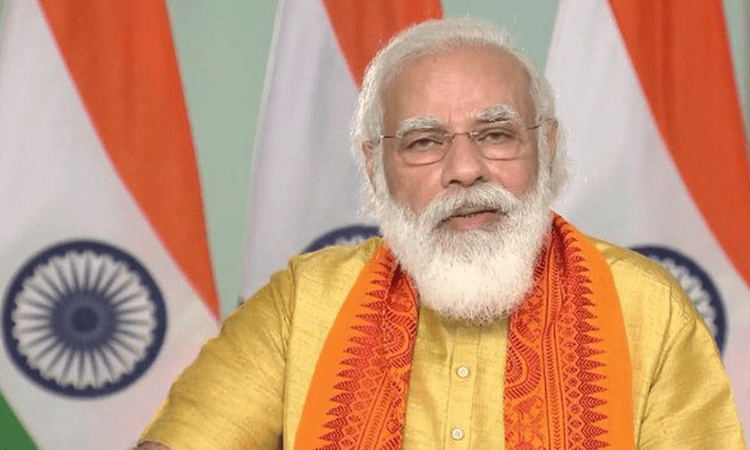
Prime Minister Narendra Modi will visit Ferozepur, Punjab on January, 5 and will lay the foundation stone of multiple development projects worth more than Rs 42,750 crore. These projects include Delhi-Amritsar-Katra Expressway; four laning of Amritsar-Una section; Mukerian-Talwara New Broad Gauge railway line; PGI Satellite Centre at Ferozepur and two new medical colleges at Kapurthala and Hoshiarpur.

The consistent endeavour of the Prime Minister to improve connectivity all across the country has led to multiple national highway development initiatives being taken up in the state of Punjab. It has resulted in more than doubling the total length of National highways in the state from about 1,700 km in 2014 to more than 4,100 km in 2021. In continuation of such efforts the foundation stone of two major road corridors will be laid in Punjab. This will also be a step towards fulfilling the Prime Minister’s vision to enhance accessibility to major religious centres.

The 669 km long Delhi-Amritsar-Katra Expressway will be developed at a total cost of about Rs 39,500 crore. It will halve travel time from Delhi to Amritsar and Delhi to Katra. The Greenfield Expressway will connect key Sikh religious sites at Sultanpur Lodhi, Goindwal Sahib, Khadoor Sahib, Tarn Taran and the holy Hindu shrine of Vaishno Devi in Katra. The expressway will also connect key economic centres like Ambala, Chandigarh, Mohali, Sangrur, Patiala, Ludhiana, Jalandhar, Kapurthala, Kathua and Samba in the three states/UTs of Haryana, Chandigarh, Punjab and Jammu and Kashmir.

The four-laning of Amritsar-Una section will be done at the cost of around Rs 1700 crore. The 77 km long section is part of the larger Amritsar to Bhota corridor spanning across the longitudinal expanse of Northern Punjab and Himachal Pradesh, connecting four major national highways, namely Amritsar-Bhatinda-Jamnagar Economic Corridor, Delhi-Amritsar-Katra Expressway, North-South Corridor and Kangra-Hamirpur-Bilaspur-Shimla Corridor. It will help in improving the connectivity of religious sites at Ghoman, Shri Hargobindpur and Pulpukta Town (home to the famous Gurudwara Pulpukta Sahib).

The Prime Minister will lay the foundation stone of a new Broad Gauge railway line between Mukerian and Talwara of around 27 Km in length, to be built at a cost of over Rs 410 crore. The railway line will be an extension of Nangal Dam-Daulatpur Chowk railway section. It will provide an all weathered means of transportation in the area. This project also holds strategic importance as it will serve as an alternative route to Jammu and Kashmir, joining the existing Jalandhar-Jammu Railway line at Mukerian. The project will prove especially beneficial for the people of Hoshiarpur in Punjab and Una in Himachal Pradesh. It will give a boost to tourism in the region, and provide ease of connectivity to hill stations as well as to places of religious importance.

In line with the Prime Minister’s endeavour to provide world class medical facilities in all parts of the country, foundation stone of new medical infrastructure in three towns of Punjab will be laid. The 100 Bedded PGI Satellite Centre at Ferozepur, will be built at a cost of more than Rs 490 crore. It will provide services in 10 specialities including Internal Medicine, General Surgery, Orthopedics, Plastic Surgery, Neurosurgery, Obstetrics & Gynecology, Pediatrics, Ophthalmology, ENT and Psychiatry-Drug De-addiction. The satellite center will provide world class medical facilities at Ferozepur and the nearby areas.

Two Medical colleges at Kapurthala and Hoshiarpur will be developed at a cost of around Rs 325 crore each and with a capacity of about 100 seats. These colleges have been approved in Phase-III of the Centrally Sponsored Scheme ‘Establishment of new medical colleges attached with district/ referral hospitals’. A total of three Medical Colleges have been approved for Punjab under this Scheme. The college approved at SAS Nagar in Phase-I is already functional.

31-member panel on marriage age Bill has 1 woman: Sena MP seeks more representation

Shiv Sena MP Priyanka Chaturvedi on Monday wrote a letter to Rajya Sabha Chairman M. Venkaiah Naidu requesting for more representation and participation of women in the discussion on the eligible marriage age Bill as the 31-member panel had only one woman.

The parliamentary panel, which will examine the Bill seeking to raise the legal age of marriage of women from 18 to 21 and submit its recommendations has only one woman member.

Chatirvedi in her letter said, “The committee has only one female Member of Parliament as a member. This is disheartening to note that a Bill so pertinent to women and the Indian society will be deliberated upon in a committee where the representation is highly skewed.

“Therefore, I request you to ensure that there should be more representation and participation of women in the discussion around the Bill that concerns the issues faced by women in India. It is of utmost importance that the interests of all stakeholders are taken into account and that voices of all, especially women are heard and understood by the committee,” she added.

The Prohibition of Child Marriage (Amendment) Bill seeks to raise the legal age of marriage from 18 to 21 for women. After being introduced in the Lok Sabha it was sent to the Department Related Parliamentary Standing Committee on Education, Women, Children, Youth and Sports.

As per the Rajya Sabha website, the Parliamentary Standing Committee of Education, Women, Children, Youth, and Sports, headed by BJP’s Rajya Sabha member Vinay Sahasrabuddhe, has its full complement of 31 members and Trinamool Congress member of the Upper house, Sushmita Dev is the only woman among them.

Of the 31 members, 10 are from the Rajya Sabha and 21 from the Lok Sabha.

A committee member said that it would be better if a few more women parliamentarians are made members of the committee, which is going to discuss the law about increasing the legal marriage age of women to 21 years from 18.

“Currently there is no vacancy to nominate new women MPs in the committee. But the committee Chairman has power to invite any one and we wish he will invite everyone for wider consultation on the proposed law,” said the member, who did not want to be identified.

BJP protests against Delhi govt’s new excise policy

The BJP Delhi on Monday protested against the Arvind Kejriwal-led government’s new excise policy by obstructing traffic at 15 spots across the national capital.

The opposition party has alleged that the new policy will encourage opening of liquor shops in every nook and corner of the national capital, giving the city a bad name.

The protests were staged at ITO, Chandini Chowk, Akshardham cross mall road, Keshavpuram, Vikas Marg, Civil Lines, Shahadra, Signature Bridge, Karol Bagh, South and South West Delhi, among other locations.

“Every single individual of Delhi, including women, are concerned about liquor shops coming up close to their houses,” Delhi BJP president Adesh Gupta said on Sunday while announcing the protest.

“Kejriwal wants to make Punjab liquor-free, but is adamant to make Delhi a city of liquor. We will oppose this move.”

Since the introduction of the new excise policy, the BJP has been protesting against the Kejriwal-led government.

Under this policy, nearly 850 liquor shops are supposed to open up across city as the state government made an exit from the liquor business.

The opposition party has also objected to the opening of new liquor shops in close vicinity to residential areas, religious sites and educational institutes.

While announcing the policy, Delhi Deputy Chief Minister Manish Sisodia had said that it would revolutionise Delhiites’ liquor buying experience by giving the liquor vends a new shape.

He had also claimed that the policy would further put a complete ban on the modus-operandi of liquor mafias operating in the union territory.

Reacting to Monday’s protests, Sisodia tweeted: “BJP is furious over the implementation of the new excise policy because Kejriwal government has put a stoppage to the theft to Rs 35,000 crore in Delhi.

“This money is now being received by the government which will use it for the benefit of masses, earlier this money used to go to the pockets of BJP leaders and liquor mafia.”

Clear Bengaluru roads of potholes in 15 days: K’taka CM

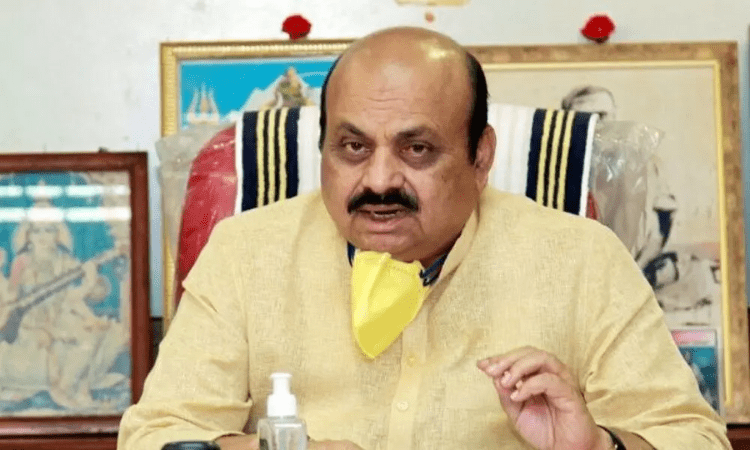
Chief Minister Basavaraj Bommai has instructed officials to fix potholes on 751.41 kilometer roads in the city within 15 days.

He has also asked them to complete all the works under the Tender Sure project by March 31.

Bommai, who chaired a meeting of people’s representatives of Bengaluru and senior officials to discuss the development issues of the city on Sunday said, quality work should be ensured in storm water drains project in the city. Detailed Project Report for the project would be prepared professionally and Rs 1,500 crore would be provided for the purpose.

He also gave orders to complete repair works on the High Density roads by calling short-term tenders. He also directed the completion of a maximum stretch of 950km road works in newly added 110 villages to the BBMP.

A Zonal level Coordination Committee comprising officials from civic agencies like BBMP, BESCOM, BWSSB and various departments would be constituted to improve the synergy in executing civic works and a Monitoring Committee with a Coordinator at the state level would be constituted. A government order in this regard would be issued in 2-3 days, the Chief Minister said.

Bommai in his address wanted improvement in street lighting system in the city and said that necessary finances would be provided. “But the work should be taken up immediately and completed without any delay. Take measures to install new bulbs,” he said.

About 7,000 CCTV cameras would be installed in the city under the Nirbhaya programme, he said.

Greater emphasis would be given for Comprehensive development of Bengaluru. Officials have been instructed to prepare a road map for the purpose, Chief Minister Bommai further said.

“We will not allow haphazard growth of Bengaluru any more. A blueprint should be prepared for the comprehensive development of the city and it would be developed accordingly,” Bommai said.

Bommai turned the heat on slack officials with a go slow attitude at the meeting. He warned them of stringent action for any dereliction of duty.

Strained Indo-Maldives relations

A lot has happened in the bilateral relations between India and Maldives during the last 10 years. The relations which were once described as one of the most vibrant and dynamic, have turned into one in which India has been painted as a villain. Though the genesis started 10 years back, yet it gathered further momentum during the last three years particularly, resulting in ‘India Out campaign on the social media.

The movement got a boost when the Maldives Supreme Court overruled former President Abdulla Yameen’s conviction in a money-laundering and embezzlement case in November 2021. The development allowed him to make a return to politics.

A political campaign:

Ties between India and the Maldives had hit a low during the tenure of Yameen, who was considered to be pro-China rather than pro-India. Yameen’s half-brother, former president and currently Maldives Reform Movement party leader (MRM) Mamoon Abdul Ghayum, is among those who have opposed the campaign, even in 2013 when Yameen became the President.

India-Maldives bilateral relations deteriorated during the Peoples Party of Maldives’ (PPM) five-year rule beginning in 2013, then led by Yameen and the anti-India sentiment was apparent even back then, observers say. Paradoxically though the Yameen government and its predecessor, the Waheed government, were considered “anti-India”, and though the Yameen government’s tilt in favour of China was clear, yet it had also openly discussed an ‘India-First’ policy for the Maldives.

Other political parties in the Maldives too have opposed the anti-India campaign, saying the former president is irresponsibly inciting hatred among the people towards India.

The PPM brushing aside the charges against it, in its defence says that the current Ibrahim Solih government has opted at times to keep the relationship, particularly that under the defence sector under wraps from where the criticism basically stems from.

The Adhaalath Party, a coalition partner of President Solih, in a statement condemned efforts to “incite hatred in the people’s hearts towards neighbouring and global partners”, and expressed concern at the “reckless acts led by former president Yameen to incite hatred towards neighbouring India amongst the civilians”.

The Jumhooree Party, another coalition partner of the Solih government, also said in a statement that it doesn’t support any activities, which compromise the independence and sovereignty of the Maldives, and the Jumhooree Party does not believe that there is any legal ground to decide the existence of any Indian military presence in the country.

Out-India campaign
There are specific issues, which have fuelled the anti-India sentiments and rhetoric on the social media during the last three years. The first is the long-standing controversy over the two Advanced Light Helicopters (ALF) that were given by India to the Maldives in 2010 and in 2015, both of which were used for ocean search-and-rescue operations, maritime weather surveillance and for airlifting patients between islands.

These helicopters were meant to be deployed for humanitarian purposes only, but some in the anti-India constituency, particularly Yameen’s party PPM, tried to portray that by gifting these helicopters, India was creating military presence in the country because they were military choppers.

Secondly, the two countries signed bilateral agreements according to which Indian officers were to train the Maldives National Defence Force, under whose command these helicopters operate.

Thirdly, after the Solih government came to power, in 2019, local Maldivian media speculated that the UTF Harbour Project agreement signed between India and the Maldives in 2016, during the Yameen government, would be turned into an Indian naval base. Under the project India was to develop and maintain a coastguard harbour and dockyard at Uthuru Thilafalhu, a strategically located atoll near the capital Malé, and develop road connectivity to Male and decongest the Male harbour.

Back then, Maldivian chief of defence forces, Major-General Abdulla Shamaal had said that while the Indian government had indicated that it would provide grant assistance for this project, there were no plans of any Indian naval base in the country. Fourthly, in 2016, an Action Plan between India and the Maldives was signed for ‘defence cooperation’ to enhance “shared strategic and security interests of the two countries in the Indian Ocean region”.

In 2016 when anti-India sentiments were at their peak and the bilateral relations were at their worst against the perceived military presence of Indian forces in Maldives, the Yameen government had asked India to take back these helicopters and refused to extend the term of the agreement that would extend their stay and use in the country.

Observers say that one of the main reasons behind the ‘India Out’ campaign was rooted in this controversy surrounding the ALF choppers and India’s reported refusal to take them back. During the Yameen-era, India had looked on in concern as the Maldives began to develop stronger ties with China and its Belt and Road Initiative.

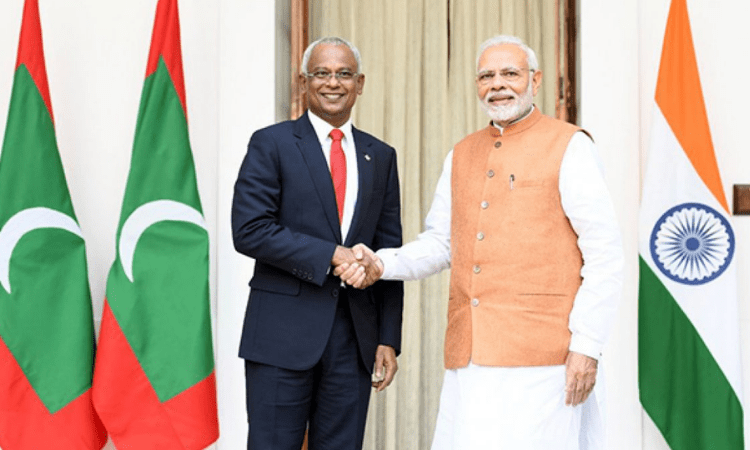
By 2018 when Ibrahim Mohamed Solih assumed office, he immediately renegotiated these agreements, extending the stay and use of these choppers in the country. The Solih government’s visibly warm relations with India have only served to fuel anti-India sentiment in the country.

However, among the many grievances in social media posts by prominent members of ‘India Out’ campaign, a recurring complaint is the lack of transparency in agreements being signed between the Solih government and India.

It is a fact that that much of the criticism levelled by the Maldivian opposition and the ‘India Out’ campaign wouldn’t have arisen had these bilateral agreements been publicly discussed in the Maldivian Parliament. But the ruling government and the defence ministry describing these agreements as confidential has led to agitation in political circles that percolated down to ordinary Maldivian nationals and has taken the form of a wave of criticism, inflammatory rhetoric and unverified allegations, especially on social media platforms.

Fundamentally, the issue is not so complex though it involves bilateral relations, geopolitical and economic interests for both countries. However, both the governments have acted in a mature manner in this regard. Both of them are aware of the increasing defence importance of Maldives in the Indian Ocean, due to the increased US interest in the Indo-Pacific and Maldives’ strategic position. In addition to the Maldivian need to have India on its side to guard its defence and commercial interests.


Telangana expands IT to another tier-II town

As part of its policy to encourage information technology in tier II towns in Telangana, the state government on Friday launched work on IT Hub in Nalgonda.

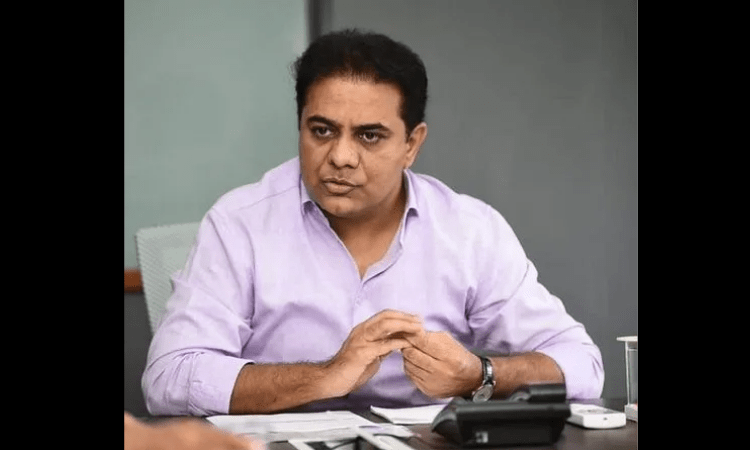
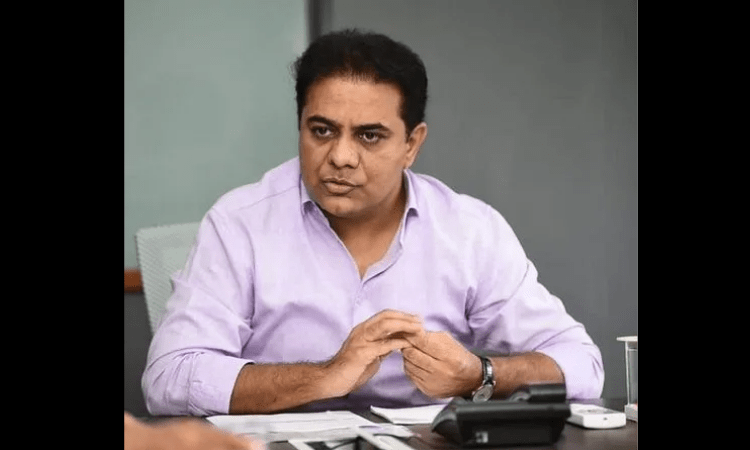
Information Technology Minister K.T. Rama Rao laid the foundation for the IT Hub, which will be constructed in three acres, with a built-up area of 75,000 square feet.

This state of the art facility will have all the advanced facilities in a plug and play manner.

Officials said nine companies have already signed MoUs with the state government to set up their offices in Nalgonda IT Hub and seven more companies showed keen interest in having their offices in the IT Hub.

The IT Minister said these companies will create jobs for 1,500 local youth. He said the building for the IT hub will be ready in 16-17 months.

He quoted the IT entrepreneurs that Covid-19 has come as a blessing in disguise as it has led to a situation where the work can be done not just from home but from anywhere.

He asked the District Collector and other officials to provide temporary facility to these companies so that they can set up their operations immediately.

KTR, as the minister is popularly known, said Nalgonda will be the six tier II town to have an IT Hub.

“We have already started IT hubs in Warangal, Khammam and Karimnagar. The IT hub in Nizamabad will be inaugurated by Ugadi while the same in Mahabubnagar will be inaugurated soon,” he said.

KTR recalled when the Telangana Rashtra Samithi (TRS) came to power in 2014, IT was confined to Hyderabad but Chief Minister K. Chandrasekhar Rao set the goal to take it beyond Hyderabad so that tier II towns also enjoy fruits of technology and the youth in these towns also get jobs.

He announced that the IT Hub in Nalgonda will also have a centre of Telangana Academy of Skills and Knowledge (TASK) to train educated youth in IT skills. The facility will also have a regional centre of T Hub to encourage innovations by local youth.

The minister claimed that Telangana was marching ahead on the path of development not just in agriculture and rural development but also in industry and information technology.

He said in a short span of seven years, Telangana witnessed rapid growth.

“Among 28 states in the country Telangana is at 11th place in terms of size and 12th place in terms of population but as per a recent report of the Reserve Bank of India, Telangana is the fourth largest contributor to the economy,” he said.

President extends New Year greetings to people

President Ram Nath Kovind on Friday extended his greetings to all fellow citizens for New Year 2022 and urged the people to resolve to usher in progress in society and country.

“On the joyous occasion of the New Year 2022, I extend my warm greetings and best wishes to all our fellow countrymen, living in India and abroad.

“May the new dawn of the New Year reinvigorate the spirit of peace, prosperity and fraternity in our lives. Let us resolve to bring in the new year with endeavour to usher in progress in our society and country,” he said in his message, as per a communique from the Rashtrapati Bhavan.

“May the New Year 2022 bring a lot of happiness and good health as well as success and prosperity in your life.”

100% vaccination target in 2021 turned out to be ‘Jumla’: Rahul

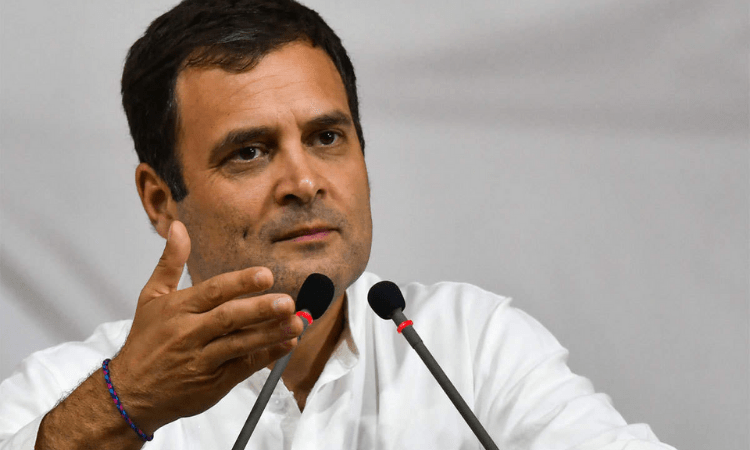
Former Congress president Rahul Gandhi on Friday criticised the Central government for “missing” the double vaccination target, saying the government’s claims to achieve 100 per cent vaccination turned out to be “Jumla”.

“The Central government had promised 100 per cent vaccination by the end of 2021… today is the last day of the year, the country is still far from the vaccination target. One more ‘Jumla’ got shattered,” the Congress leader tweeted.

Claiming there is a scarcity of Covid vaccines, the Congress said 47,95,00,000 Indians need 59,40,00,000 vaccination doses.

“Besides, 25,70,00,000 senior citizens and corona warriors need the vaccine while those in the 15-18 age group need another 35,70,00,000 doses,” Congress spokesperson Randeep Singh Surjewala said.

India’s Omicron tally on Friday rose to 1,270 cases and among the 23 states and UTs that have reported the Omicron infection so far, Maharashtra tops the list with 450 cases of this variant.

Of them, 125 patients have been discharged, as per the health ministry data.

Delhi has the second highest cases of Omicron infection at 320. However, 57 of them have been discharged from the hospital.

Delhi is followed by Kerala with 109 Omicron cases. The Health Ministry on Friday said the Omicron variant of Covid-19 has so far spread to 23 states and UTs.

The government in a statement on Friday said “with the administration of 66,65,290 vaccine doses in the last 24 hours, India’s Covid-19 vaccination coverage has exceeded 144.54 crore (1,44,54,16,714) as per provisional reports till 7 a.m. today. This has been achieved through 1,54,27,550 sessions.”

Did Pinarayi Vijayan reject proposal to confer Honorary D.Litt on President?

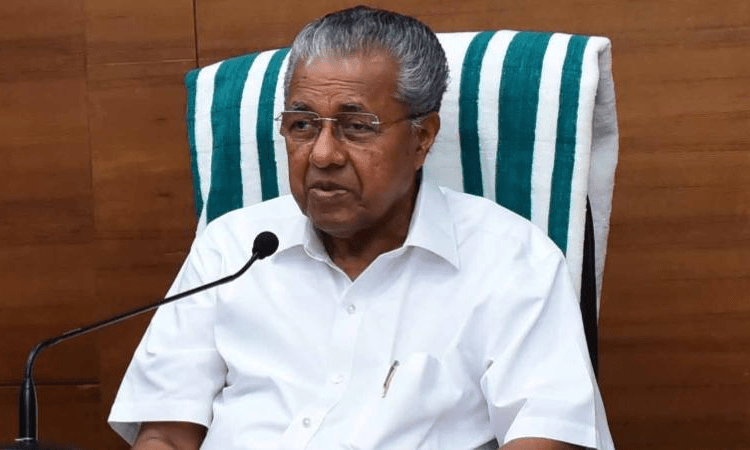
If the words of former Leader of Opposition Ramesh Chennithala’s are to be believed, then Chief Minister Pinarayi Vijayan has to come clean on why the recommendation of Kerala Governor Arif Mohammed Khan as chancellor to confer Honorary D.Litt on Indian President Ram Nath Kovind was shot down.

Chennithala’s statement to the media on Friday morning if read with conjecture with Khan’s utterances that some undesirable things have happened recently, is a shame to the country.

Speaking to the media, Chennithala said he wish to ask a few questions and it includes what Khan’s statement means after he claimed to have said only very little things to the public as it is a shame.

Chennithala then asked Vijayan to explain if Khan as chancellor had recommended to confer Hon D.Litt on Indian President and if it was true, then wish to know when was it.

“Was his proposal shot down by the Kerala University Vice-chancellor after the intervention of the Vijayan government? Did the Vice-chancellor instead of placing this request before the senate and syndicate of the Kerala University put it before the Vijayan government?, Can the state government intervene on aspects like this? Wish to know, if the recently retired Kalady Sanskrit University Vice-chancellor put up a list of three people to be conferred Hon D.Litt to the Governor, if so wish to know the names which were recommended? Want to know if the University get the reason why there was no accent to this from the Governor?,” asked Chennithala.

Chennithala said if all these are true, it’s a really shameful act of the Vijayan government and all wish to know Vijayan stand on it.

Khan and the Vijayan government have parted ways and it surfaced, after the former himself came out in the open that he, after December 8, is no longer the chancellor as he is feeling guilty for clearing the name of Gopinath Ravindran for re-appointment as Kannur University Vice-chancellor.

And with Chennithala breaking the unpleasant news of denying country’s first citizen a Hon D.Litt, it remains to be seen what the Kerala High Court has to say on January 12 on the re-appointment of Ravindran, on how Vijayan is going about doing things with a political outlook.

T’gana urges Centre to reconsider GST hike on textiles, handlooms

The Telangana government has demanded the Centre to reconsider the decision of increasing GST on textile and handloom sectors.

In a letter to Union Finance Minister Nirmala Sitharaman, Telangana’s Industry Minister K.T. Rama Rao has appealed her not to take this proposal forward in the GST Council meeting which will be chaired by her on Friday.

He said the industry and weaver community have staged several protests demanding the Union government to waive off the 5 per cent GST on handloom products and its raw material, instead the Centre is planning to increase it to 12 per cent from January 1, 2022, which will strike a death knell to the industry and lakhs of people will lose their jobs.

The textile and handloom sector provide the second highest employment in our country. This sector is already bearing the brunt of Covid-19 and the Union government has not even provided any relief to the sector. Considering the current scenario, the Centre must extend additional advantages and incentives to the sector, said KTR, as the Minister is popularly known.

He added that the increase in GST will impact about 80-85 per cent of the handloom and textile production. As it is, cost of raw materials, yarn, chemicals, packaging material and transportation have gone up substantially post-Covid. In addition to these costs, the increase in GST will further escalate the production costs by 15 to 20 per cent.

“This would adversely impact the demand, which is essential for the survival of the industry. Due to this there is danger of many textiles and apparels units closing down. There is every possibility of 15 lakh people losing their jobs in the handlooms sector due to the increase in GST, the Minister said.

“This will put an additional burden on the middle-income groups, which usually buy garments with a budget of Rs 1000,” he added.

KTR said the Central government, which had failed in fulfilling the promise of providing two crore jobs every year, must withdraw the decision to increase the GST as it would impact the employment of crores of people in the handlooms and textiles sector.

Considering the Covid-19 infection, the Centre must extend all support to handlooms and textiles sector. But on the contrary, it was serving a death knell on the sector through a hike in GST which is highly condemnable, he added.

Due to the Central government’s policies, the country was registering marginal growth in the sector compared to smaller countries like Bangladesh. All this despite there being tremendous scope for growth in the sector and the decision to increase GST will affect getting international investments, KTR said.

The Minister added that the farmers have already taken to the streets and forced a rollback of ill-conceived farm laws. He urged the Centre to immediately withdraw the decision to increase GST on textiles and handlooms otherwise weavers of this country will repeat what their farmer brethren have done.

Malegaon 2008 case: End threats, enticement of witnesses, urges Congress

In a significant development, the Maharashtra Congress on Thursday urged the Maha Vikas Aghadi government to ensure that the witnesses in the sensitive Malegaon 2008 blasts case “are not pressurised, threatened or enticed”.

In a letter to Chief Minister Uddhav Thackeray and Home Minister Dilip Walse-Patil, Congress state Working President Arif Naseem Khan said the terror case has prominent names as prime accused, including Bharatiya Janata Party MP Sadhvi Pragya Singh Thakur, Col. P.S. Purohit, retired Major Ramesh Upadhyay, Dayanand Pandey and several others.

“I have learnt that in order to save all these accused in the Malegaon 2008 bomb blast case, some organisations and individuals are threatening, pressurising and luring the witnesses to make them ‘hostile’ before the court,” Khan said.

The blast occurred in Malegaon on September 29, 2008, near a mosque when Muslims were offering prayers, and left at least nine dead and another more than 80 injured, and the subsequent probe revealed the involvement of what was called ‘saffron terror groups’.

Khan urged Thackeray and Walse-Patil that such groups or persons should be investigated by a high-level committee and stringent action must be initiated against them for influencing or harassing the witnesses.

The case was probed by the Maharashtra Anti Terrorist Squad and later taken over by the National Investigation Agency (NIA), and has a total of 495 witnesses.

From these, 220 witnesses have already testified, out of which 15 have already been declared ‘hostile’, with the likelihood of more witnesses going against the probe agency owing to pressures exerted by some organisations and persons, Khan pointed out.

The Congress leader said that Walse-Patil had assured he would do the needful in the matter in order to ensure a free and fair trial at the day-to-day hearing before a Special Court.

Khan’s letter assumes significance, coming a day after a witness in the case made a shocking claim that he was allegedly detained for a week by the ATS in 2008 and then compelled to name five RSS leaders, including Yogi Adityanath, who is now Chief Minister of Uttar Pradesh.

The witness, who is one of the trustees of Abhinav Bharat, a right-wing group, also contended that the ATS did not record his statement though the agency had attached his purported five-pager statement in its charge sheet filed in 2009.

During the cross-examination, the witness named Adityanath, Swami Aseemanand, Indresh Kumar, a Prof. Deodhar and one Kakaji, whose names he was allegedly forced to take by one police official Chavan, DCP Shrirao and an IPS officer Param Bir Singh.

PM to release Rs 20K cr to more than 10 cr beneficiaries under PM-KISAN

Prime Minister Narendra Modi will release the 10th instalment of financial benefits under Pradhan Mantri Kisan Samman Nidhi (PM-KISAN), transferring more than Rs 20,000 crore to nearly 10 crore beneficiary farmer families on January 1, 2022.

Under the PM-KISAN scheme, a financial benefit of Rs 6,000 per year is provided to the eligible beneficiary farmer families, payable in three equal 4-monthly instalments of Rs 2000 each. The fund is transferred directly to the bank accounts of the beneficiaries.

Samman Rashi of over Rs 1.6 lakh crore has been transferred to farmer families so far.

During the programme, Prime Minister will also release an equity grant of more than Rs 14 crore to about 351 Farmer Producer Organizations (FPOs), which will benefit more than 1.24 lakh farmers.

The Prime Minister will interact with FPOs during the event and will also address the nation. Union Agriculture Minister will also be present on the occasion.

PM to inaugurate, lay foundation stones of 23 projects in U’khand

Prime Minister Narendra Modi will inaugurate and lay the foundation stones of 23 projects worth over Rs 17,500 crore in Haldwani, Uttarakhand on Thursday.

Among the 23 projects, 17 projects worth over Rs 14,100 crore cover a wide array of sectors/areas across the state including irrigation, road, housing, health infrastructure, industry, sanitation, drinking water supply among others.

The Prime Minister will inaugurate six projects, including multiple road widening projects, a hydropower project in Pithoragarh and projects to improve sewerage network in Nainital.

The cumulative cost of the projects being inaugurated is over Rs 3,400 crore.

Modi will lay the foundation stone of the Lakhwar Multipurpose Project to be built at the cost of about Rs 5,750 crore. This project was first conceived in 1976 and had been pending for many years.

Modi’s “vision to prioritise long pending projects is the force behind the project’s foundation stone being laid. This project of national importance will enable irrigation of about 34,000 hectare additional land, produce 300 MW hydro power and supply drinking water to the six states of Uttarakhand, Uttar Pradesh, Haryana, Delhi, Himachal Pradesh and Rajasthan”, the Prime Minister’s Office (PMO) said in a statement.

To improve connectivity at far flung places of the country, inauguration and foundation stone laying of multiple road sector projects worth about Rs 8,700 crore would be done.

Further, foundation stones of multiple road projects all across the state under the Pradhan Mantri Gram Sadak Yojna would also be laid by the Prime Minister.

The projects include laying of 133 rural roads with a total length of 1,157 km at cost of more than Rs 625 crore and construction of 151 bridges at a cost of about Rs 450 crores.

The Prime Minister will also lay the foundation stone of AIIMS Rishikesh satellite centre in Udham Singh Nagar district and Jagjivan Ram Government Medical College at Pithoragarh. These two hospitals are being built at a cost of about Rs 500 crore and Rs 450 crore, respectively.

The improved medical infrastructure will not only help the people of Kumaon and Terai regions but also the bordering areas of Uttar Pradesh.

The Prime Minister will also lay the foundation stone of ‘Aroma Park’ at Kashipur and Plastic Industrial Park at Sitarganj and multiple other initiatives in housing, sanitation and drinking water supply across the state.

BJP minority morcha to appoint social media warriors at block level

In an attempt to spread the work of the Narendra Modi-led Central government, the BJP minority morcha has started appointing social media warriors at the block level, focussing on the five poll-bound states.

“Our target is to appoint social media warriors at the mandal (block) level. To complete the process of appointment at the earliest, all the state units have been asked to appoint social media warriors at block level,” Jamal Siddiqui, Bharatiya Janata Party (BJP) minority morcha national president, said.

The social media warriors will discuss and make people aware of the work of the Central government with an emphasis on the minority welfare initiatives.

Five poll-bound states — Uttar Pradesh, Uttarakhand, Punjab, Goa and Manipur have been asked to complete the process by January 15.

BJP minority morcha national media in-charge Syed Yasir Jilani said that the morcha will prepare a strategy to increase its presence on social media following the guidelines issued by the Centre.

“It is the responsibility of social media warriors to spread the work of the Modi government, especially the welfare initiatives for minorities in the country in the last seven years. All the five poll- bound states have been asked to complete the process by January 15. Rest of the state units have asked to appoint social media warriors by the end of January,” Jilani said.

A training programme of social media in-charges of minority morcha of all the state units was held on Monday.

In view of the upcoming elections in five states, the social media in-charges of minority morcha of all the state units were imparted training about how to reach out to the people by using various social media platforms.

It was learnt that these social media warriors will tell the minority voters about the Narendra Modi government’s initiatives to educate and promote economic empowerment of the communities along with other social welfare measures.

The national and state office bearers of the minority morcha will also visit all district and block level to impart training to social media warriors.