Dhanlaxmi Bank MD Sunil Gurbaxani voted out by shareholders

0

The shareholders of Kerala-based small private sector Dhanlaxmi Bank on Wednesday voted out Managing Director and CEO Sunil Gurbaxani at the annual general meeting (AGM).

The ordinary resolution moved for Gurbaxani’s appointment was defeated, with 90.49 per cent of the votes polled against the proposal, as per the regulatory filing.

Only 9.51 per cent of the votes were polled in favour of his appointment.

Out of the 10 resolutions moved at the AGM, the shareholders had passed nine and defeated one.

This is the second private bank where the shareholders have voted against the appointment of the Managing Director and CEO in recent days.

Earlier, the shareholders of Lakshmi Vilas Bank (LVB) had voted out seven directors, including the Managing Director and CEO, in the AGM.

India’s artificial intelligence spending grows at over 30%: IDC

0

India’s Artificial Intelligence spending will grow from $300.7 million in 2019 to $880.5 million in 2023 at a compound annual growth rate (CAGR) of 30.8 per cent, said an International Data Corporation (IDC) report on Wednesday.

As per IDC’s 2020 Covid-19 Impact Survey, half of India enterprises plan to increase their AI spending this year.

However, data trustworthiness and difficulty in selecting the right algorithm, are some of the top challenges that hold organisations back from implementing AI technology, according to the new report titled “India Artificial Intelligence Market, 2020.”

The report also explores the businesses’ approach across the core AI pillars including, strategy, culture, data, skills, and ethics.

“COVID-19 is pushing the boundaries of organisations’ AI lens. Businesses are considering investments in intelligent solutions to tackle issues associated with business continuity, labor shortage, and workspace monitoring,” said Rishu Sharma, Principal Analyst, Cloud and AI at IDC in India.

“Organisations are now realising that their business plans must be closely aligned with their AI strategies.”

The latest report provides a market overview including AI spending, end-user adoption plans, the business value of AI investments, and COVID-19 impact.

The report also provides insights on evolving end-user plans as they progress on their approach to adopt AI.

“The variety of industry-specific tech solutions supported by emerging technologies like Internet of Things, robotics, Blockchain, etc. are getting powered by complex AI algorithms and are cloud-enabled to reach their max potential,” said Ashutosh Bisht, Senior Research Manager for IDC’s Customer Insights and Analysis group.

“In India BFSI and Manufacturing verticals are the two biggest spenders of AI across different use cases making almost 37 per cent of the AI spending in 2019.”

Find playing style that suits your players: Dennerby advises Indian coaches

0

Indian U-17 women’s football team head coach Thomas Dennerby believes it is very important for the coaches to first understand the attributes of players and then accordingly devise the playing style.

Speaking to coaches across India at the ongoing international virtual coaching conference organised by the All India Football Federation (AIFF), the highly-experienced Swedish tactician on Wednesday said: “When I arrived in India in October 2019, we had a goal — success at the FIFA U-17 Women’s World Cup. People would ask what style my team would play even before I had met the players. However, when you arrive to work with a new team, you try to get an overview of the various things you need to know, such as the tactical, technical, fitness and mental aspects.”

“Then, you try to find a way that suits the team best. You have to find your own playing style and vision. Football is like philosophy, there is no wrong or right. One has to try to improve the way you want the team to play while seeing what is best for the players,” he added while speaking on the topic ‘Current playing style of the U-17 World Cup team’.

Talking about the style he has adopted for the current team that is preparing for the upcoming FIFA World Cup, the 61-year-old termed it as a ‘technical’ style which makes use of the players’ ‘extreme speed’.

“We decided to have a style that is more like the Asian style — a technical style and passing game. We have players with extreme speed and we need to work with the passing and quick touches. Getting the ball out from defence fast, we can be quick on counter-attacks that we can use when opponents are unorganized. We have created a lot of opportunities that way, especially when we played against Romania and won one match as well,” Dennerby said.

“Without the ball, our style is zonal defence. We play as a close compact team with short distances between players so that we can work together and try to win the ball quick and high,” he added.

Airtel launches cybersecurity services for businesses

0

Bharti Airtel on Wednesday announced the launch of Airtel Secure, a suite of advanced cybersecurity solutions for business customers.

As part of Airtel Secure, the company also launched its Security Intelligence Centre in the National Capital Region. This facility will offer its tracking services to businesses of all sizes — from large enterprises to small and medium businesses — on a 24/7 basis.

Gopal Vittal, MD and CEO (India and South Asia), Bharti Airtel, said: “With the incredible trust we enjoy from our customers, we believe Airtel Secure will provide our customers peace of mind, enable faster response times to potential threats, and help protect their data so as to reduce business risk.”

The company said that from endpoint protection, email protection to Cloud DDOS protection among others, Airtel Secure has created the most comprehensive portfolio through strategic partnerships with global leaders such as Cisco, Radware, VMWare, and Forcepoint.

On Wednesday, Airtel and Cisco announced that they will jointly bring to market a wide range of cutting-edge security solutions that secure networks, endpoints, applications, and Cloud.

Through the partnership with Cisco, Airtel will have access to advanced monitoring, analysis, and investigation of malicious code and be able to protect people and information in an automated manner.

Airtel also unveiled a strategic partnership with Radware. Through this partnership, the first global data scrubbing centre in India has been set up to ensure threats to data and information are attacked and eliminated at source in the country. This facility is hosted by Airtel’s Nxtra Data in Chennai.

Google India to launch ‘Namaste Digital’ show on DD to empower SMBs

0

Google India on Wednesday said that it will launch a new show in partnership with Doordarshan called Namaste Digital as part of its new multi-pronged effort to help small and medium-sized businesses (SMBs) navigate the challenging economic environment.

The “Namaste Digital” show will serve as a mass media programme for SMBs to learn about the Internet and help them grow their business, Google said.

Building on its effort to help consumers discover small businesses on Google search and maps, the new initiative will focus on accelerating the efforts to help businesses build digital presence in partnership with software development company Zoho and payment gateway Instamojo.

Keeping the needs of different businesses in mind, Google has also partnered with delivery services providers Dunzo and Swiggy to fast track the on-boarding process, with both partners committing to provide additional support to small businesses to start accepting orders online and enable delivery logistics.

Under the new initiative, small businesses will be able to create business websites using Zoho inventory and sell online through Zoho Commerce for free till March 31, 2021.

Instamojo on the other hand is offering a six-month free subscription to its “Premium Online Store Solution.”

SMBs can also avail Dunzo’s 24×7 merchant support for free with zero sign-up fees and instant registration and can make use of Swiggy’s seven days “Fast track Onboarding”.

All these will be available for SMBs on “Grow with Google Small Business” hub in India which was launched in July this year.

“Today, the need to go digital is a necessity and SMBs are hard-pressed to digitise fast. We need to do everything we can to handhold millions of small businesses in their digital-transformation journey and support business recovery during the current crisis,” Shalini Girish, Customer Solutions Director at Google India, said in a statement.

“The needs of small businesses differ across the country and we are partnering with the industry leaders to offer more support to help small businesses go digital.”

The new initiative builds on the “Grow with Google Small Business hub” effort, and is in direct response to the feedback received from small medium businesses captured in the Google-Kantar small business tracker research conducted in July.

According to the report, customer related challenges tops the list for small businesses, with 92 per cent businesses facing customer related challenges, revenue loss due to low demand and payment of fixed costs are the other most severe challenges among businesses.

The report also highlights that businesses are seeing the benefits of going digital, and today 5 out of 10 businesses are using digital channels to engage their customers compared to just 4 in 10 in April.

In addition to providing support to go digital, Google India is also investing in efforts to scale its outreach to help small businesses learn to use digital tools in local Indian languages.

As part of this effort, Google has worked closely with Federation of Indian Chambers of Commerce & Industry (FICCI) to drive an industry wide skilling program which has already trained 1.2 million individuals.

1 in 4 Indians use weak passwords for online accounts: Report

0

At least one in four Indians still use weak passwords for their online accounts, while more than 55 per cent change their passwords regularly, according to a new report on Wednesday.

A survey ‘Digital Privacy and Password Management Habits’ conducted by cybersecurity company Kaspersky also found that around 76 per cent Indians use strong passwords for all their online accounts.

On the other hand 32 per cent of the people allow browsers on the devices to save their passwords and the exactly equal number of people i.e. 32 per cent never follow this practice, the report said.

“Password management is the easiest and the most important first step that the user has control over, and by following a few basic steps, users can avoid falling prey to cybercriminals,” Stephan Neumeier, Managing Director for Asia Pacific, Kaspersky, said in a statement.

The survey also showed that only 11 per cent people use one password for all their accounts, while more than half (54 per cent) use unique passwords for all their accounts.

According to the company, 78 per cent people create passwords themselves, 25 per cent of the Internet users store their passwords on a document in their devices and only 17 per cent of the people use a password manager to store all their passwords.

The survey revealed that around 44 per cent of the people have no idea on how to check whether their password has been leaked and 5 per cent said that they never change their passwords on their own (even if required).

This signifies that India as a nation is gradually becoming aware but yet needs to dedicatedly follow this path to cybersecurity awareness.

“The simplest way to keep your passwords secure is to regularly visit the ‘Have I Been Pwned?’ website and enter your email/account ID that you would want to check for data breaches and data hacks,” said Dipesh Kaura, General Manager, Kaspersky (South Asia).

Apple CEO Tim Cook could earn over 1 million shares by 2025

0

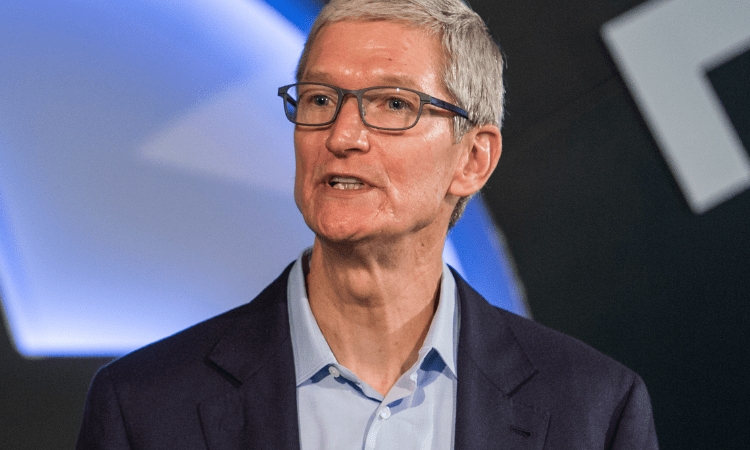
Apple CEO Tim Cook has received his largest stock grant since 2011. The Cupertino-based tech giant granted Cook 336,987 restricted units of Apple stock on Tuesday.

The company also issues performance-based grants that could take his total to 1,001,961 shares by 2025, reports CNBC.

At Tuesday’s closing price of $114.09, the shares are worth $114 million.

“Chas brought unparalleled innovation and focus to his role as CEO and demonstrated what it means to lead with values and integrity,” Apple’s board of directors said in a statement.

“For the first time in nearly a decade, we are awarding Tim a new stock grant that will vest over time in recognition of his outstanding leadership and with great optimism for Apple’s future as he carries these efforts forward.”

In 2019, Cook received a $3 million salary and a $7.67 million bonus.

After adding stock, he took home over $125 million.

Cook became a billionaire last month as Apple broke all previous records to become the most valued US company after crossing $2 trillion in market cap.

The net worth of Cook crossed the $1-billion mark, officially making him a billionaire.

Cook, however, still has a long way to go to catch up with other CEOs on the Bloomberg Billionaires’ list, like Amazon Founder and CEO Jeff Bezos, former Microsoft CEO Bill Gates and Facebook CEO Mark Zuckerberg.

Delhi: Mosquito-borne diseases plummet in NDMC areas

0

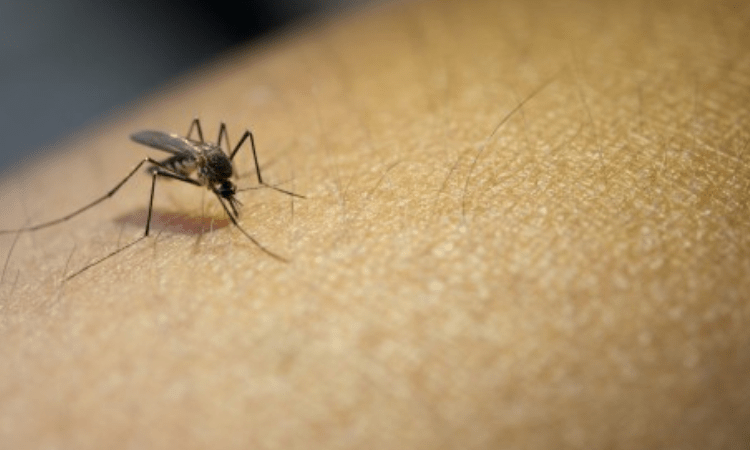
With the sustained efforts made by the Health Department of the New Delhi Municipal Council(NDMC) with respect to prevention and control of dengue and other vector-borne diseases, the number of such cases has decreased considerably in comparison to the last two years, said a senior official.

In Delhi, mosquito-borne diseases are on the rise. In the last one week, 40 new cases of dengue, 11 cases of malaria and 10 cases of chikungunya have been reported from different parts of the Capital, taking the tally over 212.

Medical Officer Dr Ramesh Kumar said that as per the comparative report of three years on vector-borne diseases, the numbers of cases registered for dengue this year are only 22, considerably less than the previous two years wherein the figures were 81 in 2018 and 52 in 2019.

This year the number of malaria cases are eight while only four cases of chikungunya have been reported. In 2018 and 2019, the malaria cases were 49 and 44 respectively, added Dr Kumar. The civic body administers the Lutyens’ Delhi area, among others.

At the outset, the New Delhi Municipal Council regularly conducts anti-larva checking drive, in which teams have been visited and checked 4,27,970 houses and premises and found 1,636 premises with larva till date.

The health department team members are also focusing on the presence of overhead tanks without covers or other water containers, prone to larva breeding. After the checking of 8,36,480 water containers, only 3,514 were found positive for larva.

The NDMC has issued 2,894 notices this year while 3112 and 2819 notices were issued in 2018 and 2019 respectively.

During 2018 and 2019, the numbers of challans issued were 124 and 108 respectively while this year just 163 challans have been issued.

The civic body is also distributing pamphlets on do’s and don’ts to sensitise people on prevention of vector-borne diseases. The NDMC has sent 50,000 SMS every week to residents regarding actions to be taken to contain the spread of mosquito-breeding in their neighbourhoods.

Andhra police crack Chittoor temple ‘Nandi’ desecration case

0

Andhra Pradesh’s Chittoor district police on Wednesday arrested a gang of eight inter-state treasure hunters for desecrating a ‘Nandi’ idol outside an Abhaya Anjaneya temple near Abhayamangalam.

With these arrests the police stopped a major arson planned across districts including in temples of Kanipakam, SR Puram, Tirupati, Kurnool, Mahanandi, Patthikonda and Guntur.

“The Chittoor wing of Andhra Pradesh police has successfully cracked the ‘Chittoor Nandi desecration’ case within 72 hours,” said an official.

The accused included a team of five youths from Karnataka, who were aided by three locals.

Police arrested Kuruva Somasekhar, 24; M.S. Manikanta, 30; J.L. Naveen, 35; R. Saravanan, 30; S. Kiran Kumar, 39; M. Vikas, 34; Ashok Kumar, 57 and P. Peddabba, 35.

Somasekhar is from Peddahoturu village of Aaluru mandal in Kurnool district; Saravanan is from Palace Road in Kuppam in Chittoor district and Peddabba from Pichigulla House, Pandiguttur village, Mudigolam of Irala mandalam in Chittoor.

The other five hail from places such as Tumkur, Tiptur and Bijapur in neighbouring state Karnataka.

On Sunday, a local from Abhayamangalam reported the idol of ‘nandi’ (the cow accompanying Lord Shiva) having been desecrated by some unknown people. On receipt of this complaint, GD Nellore police station officials registered an FIR and set three teams in motion to nab the culprits.

After two days, police received a tip-off that some treasure hunters were hiding at Kanipakam mandalam on Wednesday.

Police rushed to the location and arrested all the eight gang members.

On interrogating them, police found that the arrested five from Karnataka had researched on the Andhra temple and spoken to locals about them, enquiring about the presence of hidden treasures in those temples.

“In the meantime, those who came in from Karnataka found local partners to collaborate with. The accused went to the extent of going on a recce before finalising the plan and executing the same,” he said.

Shockingly, they even made a list of temples and readied plans to execute similar treasure hunts in those ancient temples after this crime.

They zeroed in on temples in Kanipakam, SR Puram, Tirupati, Kurnool, Mahanandi, Patthikonda and Mantralayam, as well as a few more spread across Ananthapur and Guntur districts.

Meanwhile, Chittoor Superintendent of Police, S. Senthil Kumar, clarified that this incident was not a targeted one.

“People tried to project this incident as a targeted attack due to the negligence of the police which is entirely false. In this case, we traced the accused within two days of registering the case,” said Kumar.

Cognizant of the charged atmosphere of religious politics raging in the southern state, Kumar said the police department has taken up a massive drive to secure all religious places.

“Have asked all the managements to install CCTVs. Had the management of this temple also taken that initiative, this incident could have been prevented,” the SP said.

Post Antarvedi Sri Lakshmi Narasimha Swamy temple chariot blaze, religious politics are raging in Andhra Pradesh, a state which has been immune to such developments and renown for communal harmony.


Amazon creates over 1 lakh jobs ahead of festive season

Amazon India on Wednesday said that it has created more than 1 lakh seasonal job opportunities across its operations network in the country ahead of the festive season.

The new associates will join Amazon’s existing network of associates and support them to pick, pack, ship and deliver customers’ orders safely and efficiently, the company said in a statement.

“The new seasonal positions will help elevate its delivery experience and boost the company’s fulfilment and delivery capabilities to meet the surge in customer demand this festive season,” it said.

The company has also generated tens of thousands of indirect opportunities through its partner networks such as its trucking partners, packaging vendors, ‘I Have Space’ delivery partners, Amazon Flex partners and housekeeping agencies among many others to support the exponential demand during this period.

The latest announcement, the company said, is in line with its commitment to create 10 lakh new job opportunities in India by 2025 through continued investments in technology, infrastructure, and its logistics network.

“This festive season, we are looking forward to serving customers in every part of the country by providing fast, safe and a more seamless ecommerce experience to them from the safety of their homes. This year, more than 1,00,000 seasonal associates will join us to fulfil customer promises,” said Akhil Saxena, Vice President – APAC, MENA and LATAM Customer Fulfilment Operations, Amazon India.

Common cold in past may give protection from Covid-19

0

In a big breakthrough, researchers have found that people who have had a bout of seasonal or common cold in the past may get protection from Covid-19.

The study, published in the journal mBio, also suggests that immunity to Covid-19 is likely to last a long time — maybe even a lifetime.

The study showed that the Covid-19-causing virus, SARS-CoV-2, induces memory B cells, long-lived immune cells that detect pathogens, create antibodies to destroy them and remember them for the future.

The next time that pathogen tries to enter the body, those memory B cells can hop into action even faster to clear the infection before it starts.

Because memory B cells can survive for decades, they could protect Covid-19 survivors from subsequent infections for a long time, but further research will have to bear that out, the researchers said.

The study is also the first to report cross-reactivity of memory B cells — meaning B cells that once attacked cold-causing coronaviruses appeared to also recognise SARS-CoV-2.

Study authors believe this could mean that anyone who has been infected by a common coronavirus — which is nearly everyone — may have some degree of pre-existing immunity to Covid-19.

“When we looked at blood samples from people who were recovering from Covid-19, it looked like many of them had a pre-existing pool of memory B cells that could recognise SARS-CoV-2 and rapidly produce antibodies that could attack it,” said lead study author Mark Sangster from the University of Rochester in the US.

The findings are based on a comparison of blood samples from 26 people who were recovering from mild to moderate Covid-19 and 21 healthy donors whose samples were collected six to 10 years ago — long before they could have been exposed to Covid-19.

From those samples, study authors measured levels of memory B cells and antibodies that target specific parts of the Spike protein, which exists in all coronaviruses and is crucial for helping the viruses infect cells.

The Spike protein looks and acts a little different in each coronavirus, but one of its components, the S2 subunit, stays pretty much the same across all of the viruses.

Memory B cells can’t tell the difference between the Spike S2 subunits of the different coronaviruses, and attack indiscriminately.

The study found that was true for beta coronaviruses, a subclass that includes two cold-causing viruses as well as SARS, MERS and SARS-CoV-2.

“Now we need to see if having this pool of pre-existing memory B cells correlates with milder symptoms and shorter disease course — or if it helps boost the effectiveness of Covid-19 vaccines,” the authors wrote.

Microsoft Translator now supports Assamese too

0

Microsoft India said on Wednesday that it has added Assamese as the latest Indian language in Microsoft Translator, increasing the number of Indian languages it supports to 12.

The Azure-based service will now provide real-time translation and transliteration support for the language.

Powered by Azure Cognitive Service Speech, users will also be able to translate speech into Assamese text or to translate Assamese text into another language with speech output.

Assamese — besides being the official language of the state of Assam — is spoken by more than 14 million people across India’s northeastern states.

“Microsoft has a responsible approach to Artificial Intelligence, a key principle of which is inclusiveness. Breaking language barriers is a key step in enabling inclusion of more people and organizations to utilize technology to achieve more,” Sundar Srinivasan – General Manager – AI & Search – Microsoft India, said in a statement.

“As part of our mission to remove language barriers, particularly in India, we are happy to announce the release of translation for Assamese to add to the set of 11 Indian languages already supported”.

The other Indian languages that are already supported are — Bengali, Gujarati, Hindi, Kannada, Malayalam, Marathi, Odia, Punjabi, Tamil, Telugu, and Urdu.

With the addition of Assamese, Microsoft Translator will now allow over 90 per cent of Indians to access information and work in their native/preferred languages, making computing language-agnostic and more inclusive in the country.

It can help general users interpret real-time conversations, menus and street signs, websites, and documents.

Companies can leverage it to globalise their business and strengthen customer outreach.

Microsoft Translator can be availed across Windows, iOS, Android, and the web.

The service is available on Microsoft Translator app, add-ins, Office 365, Bing Translator, and through the Azure Cognitive Services Translator API for businesses and developers.

Realme sells over 2.31 lakh narzo 20 series units in a jiffy

0

Realme on Wednesday revealed that it has sold over 2.31 lakh units of its newly-launched narzo 20 series smartphones in India, aiming to reach 50 lakh narzo users with the new series launch.

The narzo 20 series offers performance-oriented smartphones with powerful gaming processors, fast charge and a massive battery.

“#realmeNarzo20Pro: 50,000+, #realmeNarzo20: 1,30,000+, #realmeNarzo20A: 51,000+, Our power-centric series for young players received a thunderous response,” Madhav Sheth, Vice President, Realme and Chief Executive Officer, Realme India and Europe, said in a tweet.

“Being the world’s fastest-growing smartphone brand isn’t a sudden leap but a natural result of the right products”, he added.

The three devices in the series are narzo 20 Pro with a powerful 65W charging technology, narzo 20 with gaming hardware and a cheaper, entry-level narzo 20A.

The 6.5-inch narzo 20 Pro is powered by MediaTek Helio G95 gaming processor with 48MP AI quad camera, 90Hz Ultra Smooth Display and 4500mAh battery. The device is available in 6GB+64 GB and 8GB+128GB variants for Rs 14,999 and Rs 16,999, respectively.

The narzo 20 is powered by MediaTek Helio G85 processor, a 6000mAh mega battery, a 48MP AI triple camera and a 18W quick charge technology.

Available in 4GB+64 GB and 4GB+128GB variants for Rs 10,499 and Rs 11,499, the device went on its first sale on September 28.

The cheaper sibling narzo 20A houses a Snapdragon 665 processor, a massive 5000mAh battery, and a 12MP AI triple camera. Available in 3GB+32GB and 4GB+64GB variants for Rs 8,499 and Rs 9,499, respectively, the device can be purchased on September 30.

Covid-19 effect: Disney Parks to fire 28,000 US employees

0

Disney Parks is letting go of 28,000 US employees due to impact of the ongoing the pandemic on Disneyland and Walt Disney World.

Two-thirds of these employees are part-time workers.

Disney Parks chairman Josh D’Amaro wrote a letter to employees, saying that this was “the only feasible option we have” due to the Covid-19 pandemic forcing the parks to limit capacity and the ongoing closure of Disneyland in Anaheim, California, reports variety.com.

He added in another statement that the state of California’s “unwillingness to lift restrictions that would allow Disneyland to reopen” worsened the situation.

Disneyland has remained shut since mid-March. Walt Disney World in Orlando, which also closed in March, reopened in mid-July with safety measures as well as reduced visitor capacity.

In the letter to workers, D’Amaro said that the company would meet with affected salaried and non-union hourly employees over the next few days and will begin discussing next steps with the unions that represent those theme park workers.

About 67 per cent of the cuts will impact part-time workers, affect Disney staff across executive, salaried and hourly positions.

KCR asks officials to take Centre to task at Apex Council meet

0

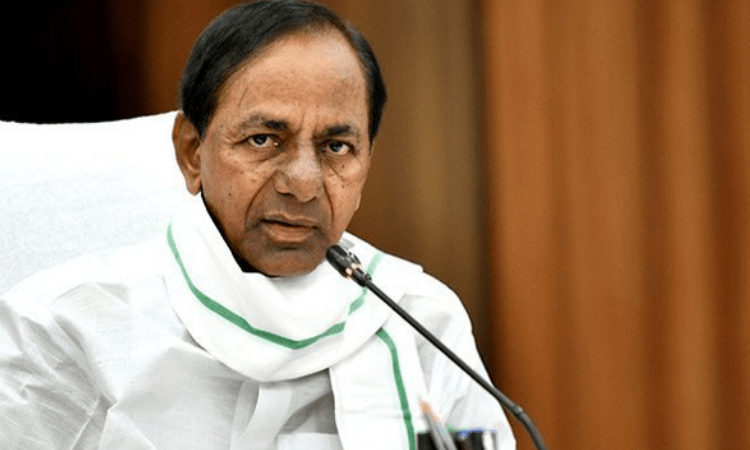
Telangana Chief Minister K. Chandrashekhar Rao has asked officials to take the Centre to task during the Apex Council meeting scheduled on October 6 over the sharing of Krishna and Godavari river waters between Telangana and Andhra Pradesh.

Stating that the Centre is doing nothing, he directed the officials to be firm in demanding that there should be absolute clarity on the allocation of water to Telangana.

KCR, as the Chief Minister is popularly known, the officials to prepare all arguments in support of the just demands of Telangana on the matter.

The Chief Minister has convened a high-level meeting with the Water Resources Department officials on Thursday to discuss on the strategy to be adapted at the Apex Council meeting.

He instructed the officials concerned to come with complete data and information and issues to be placed before the Central government.

“Andhra Pradesh state is intentionally creating disputes on the River water sharing. We have to give a befitting reply to the AP State’s arguments at the Apex Council meeting. Give an absolute clarity on issues so that the AP government will not raise the issues again in future,” a statement from the Chief Minister’s Office quoted him as saying.

“Take the opportunity to expose the seven years delay caused by the Centre and its inactive role on the matter. Oppose and reject the attempts made to undermine the rights of Telangana people. Utilise the Apex Council meeting to tell the whole country about the facts,” KCR said.

He pointed out that under the States Bifurcation Acts, whenever a new State is formed, it should be allocated its water share.

“The Telangana State was formed on June 2, 2014 and we wrote a letter to the Prime Minister on June 14, 2014 requesting for the allocation of water to the Telangana State. We also stated that water could be allocated by constituting a Special tribunal under section (3) of the Inter State River Water Disputes Act 1956 or through the existing Tribunal. We also wanted the allocation of water should be done between the Telangana State and AP or among the river basin states. Even after seven years, there was no response for the letter written to the PM. The Centre kept mum on the issue. Moreover, they are giving a picture that they were doing something by convening Apex Council meetings. But in reality, the Centre is not doing anything,” he said.

The Apex Council meet has been postponed twice. It was last scheduled on August 25 but was postponed as Union Minister for Jal Shakti, Gajendra Singh Shekhawat, tested positive for Covid-19.

The minister is the Chairman of Apex Council formed under Andhra Pradesh Reorganisation Act, 2014. The chief ministers of the Telugu states are members of the Council.

The meeting assumed significance in view of the objections raised by Telangana over Andhra Pradesh going ahead with the Rayalaseema Lift Irrigation Scheme (RLIS) across Krishna river. Telangana has been stating that the project would adversely affect its interests.

Andhra Pradesh, on the other hand, had raised objections to six irrigation projects or schemes, including the Kaleshwaram Lift Irrigation Scheme, taken up by Telangana on the Godavari river.

KCR had earlier stated that the state will be taking a tough stand over Andhra Pradesh’s objections to the projects across Krishna and Godavari rivers while seeking a halt to the RLIS.

He had asked the officials to take Andhra government to task for illegally utilising water from Godavari and Krishna rivers in contravention of the Bachawat Tribunal Award.

The Apex Council meeting was earlier scheduled on August 5 but was postponed on the request of the Telangana government.

Mumbai Police summons Anurag Kashyap in MeToo case

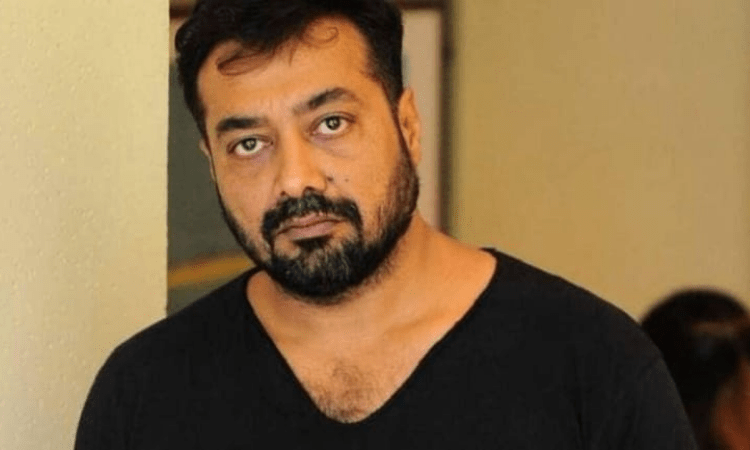
Mumbai Police have issued summons to filmmaker Anurag Kashyap in connection with the sexual harassment charges levelled against him by actress Payal Ghosh. Kashyap has been summoned to appear at Versova Police Station on Thursday.

“A summons has been served to Anurag Kashyap by Versova police station to appear on 1.10.2020 for investigation of offence registered against him,” reads an official statement shared by the Mumbai Police.

The summons by Mumbai Police to Kashyap has been issued just a day after Payal had a meeting with Maharashtra Governor Bhagat Singh Koshyari on Tuesday. The actress was accompanied by Union Minister of State for Social Justice and Empowerment Ramdas Athawale and her advocate Nitin Satpute.

Alleging that there is a threat to the actress’ life, her lawyer has submitted a letter to the governor seeking Y-category security for Payal and himself.

Petrol & diesel prices unchanged, crude remains soft

0

Diesel and petrol rates remained unchanged on Wednesday as oil marketing companies paused after reducing diesel price for the past five days while keeping the petrol price steady.

The development is in line with the movement of global oil prices. Crude prices remained soft for the second successive day as prices fell by up to three per cent in the last trading session.

Continuing coronavirus pandemic has impacted the oil demand and pulled down prices in the absence of any other trigger to lift the markets.

In the national capital, diesel continues to be priced at Rs 70.63 per litre. Similarly, prices in Mumbai, Chennai and Kolkata, remained unchanged at Rs 77.04, Rs 76.10 and Rs 74.15 respectively.

The petrol price has remained unchanged for seven consecutive days. In Delhi, Mumbai, Chennai and Kolkata, petrol was priced at Rs 81.06, Rs 87.74, Rs 84.14, and Rs 82.59 per litre respectively.

Benchmark Brent crude price for December delivery on intercontinental exchange fell marginally on Wednesday to $41.11 per barrel. Similarly, US crude WTI on Nymex fell 0.74 per cent YoY to $39 a barrel.

Cong seeks Yogi’s resignation in Hathras case

0

Keeping up the pressure on the Uttar Pradesh government in the Hathras gang rape case, the Congress on Wednesday demanded the resignation of Chief Minister Yogi Adityanath.

Addressing a press conference in Delhi, Congress leaders Sushmita Dev and Udit Raj attacked the government and said the state government tried to cover up the case, and even denied the family the right to hold last rites for the victim.

Sushmita Dev said, “The government has constituted SIT, but who will inquire the CM. First the state government said there is no rape, and only brought the victim to Delhi when her condition deteriorated.”

Priyanka Gandhi Vadra, who is in-charge of the state, too demanded resignation of the Chief Minister. “Instead of protecting the victim and her family, your government became complicit in depriving her of every single human right, even in death. You have no moral right to continue as Chief Minister,” she tweeted.

Priyanka Gandhi said she was on the phone with the Hathras victim’s father when he was informed that his daughter had passed away. I heard him cry out in despair.

“He had just been telling me that all he wanted was justice for his child. Last night he was robbed of the chance to take his daughter home for the last time and perform her last rites,” she added.

The 19-year-old Dalit woman from Hathras, who died in a Delhi hospital after sustaining grievous injuries during an alleged gang rape, was cremated early Wednesday in her village amid tight security.

“The police have forcibly taken the dead body, and my father along with them for cremation. When my father reached Hathras, he was immediately taken (to the crematorium) by the police,” the victim’s brother told the media.

However, Hathras police have denied the charges and have issued a notice saying the coercion being talked about on social media was a canard. It said: “The family cremated the body with due rituals under the supervision of police and administration.”

The victim, who was paralyzed after being allegedly dragged on the field by her attackers on September 14, died at the Safdarjung Hospital on Tuesday after battling for life for a fortnight.

Her mortal remains reached the Boolgarhi village around midnight and the cremation was done at 3 a.m. There was tension as the victim’s mortal remains reached the village and people tried to block the ambulance from moving ahead.

Superintendent of Police (SP) Vikrant Veer denied any ‘urgency’ by the police in holding the cremation at night even though cremations do not normally take place after sunset.

He added that the cremation was done by the family as usual after the body reached Boolgarhi village. The SP claimed that the situation is calm in the village, but heavy police force has been deployed.

The woman was allegedly raped in a Hathras village by four men, who were later taken into custody. Initially she was rushed to the Jawaharlal Nehru Medical College and Hospital in Aligarh, but on Monday night had to be shifted to the Safdarjung Hospital in Delhi after her condition deteriorated.

1,500 families return as Vijayawada flood situation under control

0

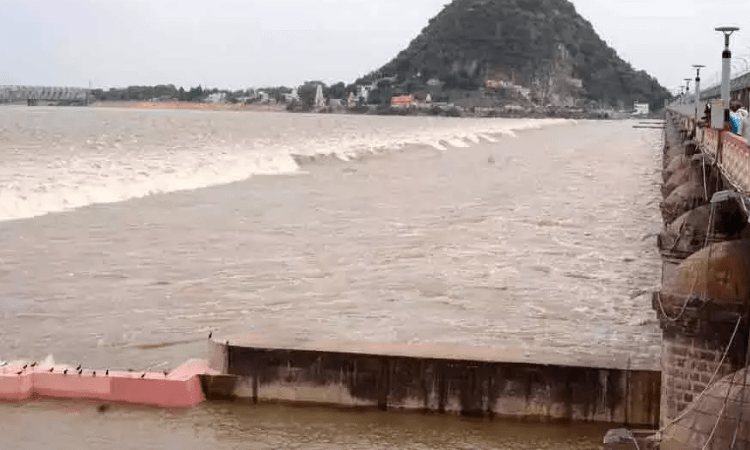
With the flood situation in Vijayawada areas under control, around 1,500 families evacuated in the wake of heavy rain and consequent increased water flow at Prakasam Barrage have returned, officials said on Wednesday.

“The flood water has receded and the situation is totally under control,” Krishna District Collector A Mohammed Imitiaz told IANS.

He said no death was reported and all 1,500 families evacuated from various places in and around Vijayawada have returned to their homes.

The evacuees from Raavirala and Vedadri near Jeggayyapeta, Krishnalanka, Bhupesh Gupta Nagar Colony, Tarakaramanagar, and other places in Vijayawada were housed at five rehabilitation centres in Vijayawada.

He said all departments and officials concerned were put on high alert and worked continuously to help the affected.

Imitiaz said the construction of retaining wall on Krishna river banks will begin soon.

‘Promotion of Khalistan’: HC junks PIL for action against Twitter

0

The Delhi High Court on Wednesday refused to entertain a PIL that sought action against social media giant Twitter on the charge of involvement in a conspiracy to promote the Khalistan movement of radical Sikhs.

A Division Bench of Justices Hima Kohli and Subramonium Prasad declined the petition on the ground that petitioner Sangeeta Gupta had not made a representation to the central government and instead directly approached the court.

“Merely because you say something is in public interest doesn’t mean you don’t approach the government first,” the court said.

When the petitioner’s counsel said that a member of Parliament had raised the issue, the court questioned: “Are you the gentleman’s lawyer? We don’t propose to entertain this petition without you making a representation first to the authority concerned.”

The plea contended that some “promoted handles” on Twitter were used for promoting the agenda for a separate Khalistan.

“… Respondent No 5 (Twitter India) deliberately and knowingly in order to create rift in society deliberately promoted the prohibited content of the Sikhs For Justice.”

“… in the absence of any law to deal with offensive and hate messages, platforms like Twitter are knowingly promoting messages that are against the law of the land and, therefore, the Respondent needs to explain circulation and promotion of prohibited content…,” the plea added.

The plea had sought court directions to the Ministry of Law and Justice, Information Technology Ministry and the National Investigation Agency (NIA) to formulate a mechanism to check the content and advertisements promoting anti-national agenda and hatred among communities.

“The brazen attack on the sovereignty and integrity of India on Twitter is to the detriment of citizens as a whole. Hence the present PIL,” the plea said.

The petitioner also sought an NIA inquiry as many users promoting the cause of Khalistan were stationed outside India.