Finally, there’s a central database for migrant workers

0

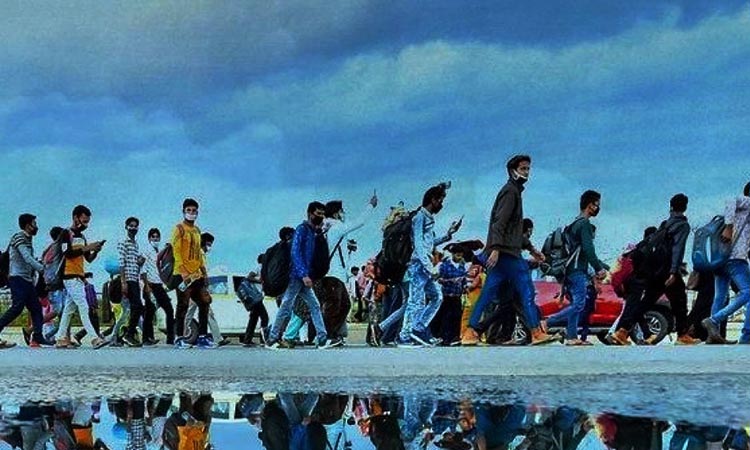
At a time when the plight of the migrants in India has become international headlines, the National Disaster Management Authority (NDMA) has come forward and developed a National Migrant Info System (NIMS) — a central online repository to facilitate their seamless movement across states amid the Covid-19 induced lockdown.

Meanwhile, the Union Home Ministry has also asked the states to upload data on the NIMS dashboard for better coordination, movement monitoring and contact tracing. Union Home Secretary Ajay Bhalla wrote to all the chief secretaries in this regard on Saturday.

“The portal will maintain a central repository and help the sending as well as receiving state/district to ask for and give their acceptance in an online format seamlessly. This system will help in speedy communication between states without creating additional work at the level of the field officers,” Bhalla wrote.

Some of the key features of this system will be a unique ID generated for each migrant, which can be used for all transactions and help any state can visualise how many people are going out from where and how many are reaching their destination states. The mobile numbers can also be used for contact tracing and movement monitoring.

While so far 3.5 lakh migrants have been transported in 350 Shramik Special trains, there are many more who need to be moved back home.

The announcement came on a day when 25 migrant workers were killed and several injured after a truck they were travelling in rammed into a lorry in Uttar Pradesh’s Auraiya, bringing the focus back to the plight the migrant workers.

CIAL MD welcomes more airports on PPP model

0

The Managing Director of the country’s first airport under the public private partnership (PPP) basis on Saturday welcomed the latest decision announced by Union Finance Minister Nirmala Sitharaman to further relax Indian airspace restrictions for civilian flying and auctioning of six more airports on PPP basis.

V.J. Kurian, a former top bureaucrat of the Kerala government and presently the MD of the Cochin International Airport Limited (CIAL), said the decision is a welcome move.

“CIAL in 1993 became the first PPP airport in the country and then we saw similar airports in Mumbai, Delhi and then came other major airports. There are 650 aircraft in the country owned by various airlines and each time they go abroad for maintenance, precious foreign exchange is lost. We at the CIAL started work for the hangar unit in 2006. I see this as a very good step. Once more details come in, we will know more,” said Kurian.

The new decisions were part of the fourth tranche of announcements under the Rs 20 lakh crore economic package announced by Prime Minister Narendra Modi on Tuesday.

Centre pulling a joke on poor, says Telangana govt

0

In a bitter attack on the Centre, the Telangana government on Saturday said that it is pulling a joke on the poor and distressed people of the country through daily announcements as part of its Covid-19 package.

Telangana State Planning Board Vice-Chairman B. Vinod Kumar condemned what he called the callous attitude of Prime Minister Narendra Modi and Union Finance Minister Nirmala Sitharaman for giving false hopes to the distressed people of India through “phony announcements” every day without giving any substantial direct benefits and relief to them.

Reacting to day four announcements of relief measures by Sitharaman under the Rs 20 lakh crore package announced by the Prime Minister, he said the Centre was mistaking reform measures as relief measures.

He said once again there was no announcement of any financial support to the states facing a huge financial crisis due to revenue loss on account of the lockdown.

“As long as these announcements do not contain some direct financial support to the states, they are just publicity gimmicks to divert attention from serious issues,” he said in a statement.

Referring to the announcements made about the structural reforms in sectors like coal, mineral exploration, defence production, civil aviation, power distribution companies in union territories, space and atomic energy, Vinod Kumar wondered how they are related to Covid-19 relief.

Stating that structural reforms in any sector are always required and it is an ongoing process, the Telangana Rashtra Samithi (TRS) leader said that the moot point is how these reforms pertain to relief measures at the individual and institutional levels.

“One is forced to wonder that the government of India is mistaking reforms measures as relief measures. If it is so, the government of India’s announcements on relief measures are misleading and mischievous. It is not an exaggeration to state that the government of India is pulling a joke on the poor and distressed population of the country through these daily announcements,” he said.

Karnataka to benefit from Centre’s new mineral policy: CM

0

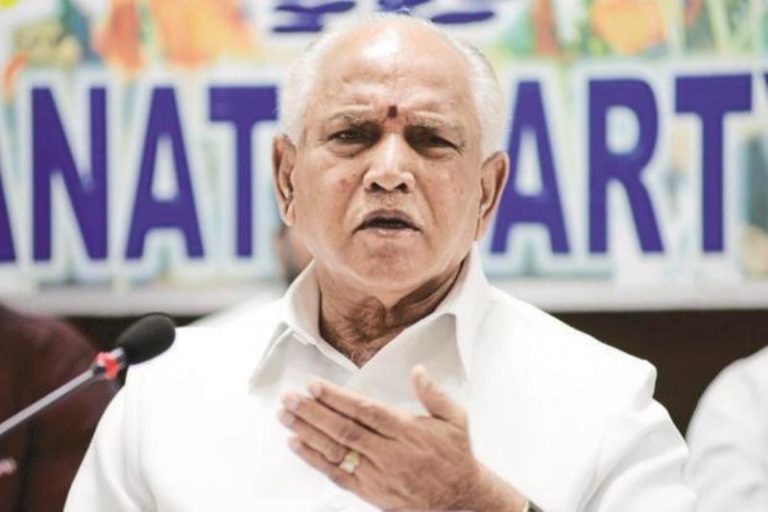
Mineral-rich Karnataka would benefit from the Centres new policy for the sector to be framed soon as part of the governments structural reforms, Chief Minister B.S. Yediyurappa on Saturday.

“Policy changes in the mineral sector will complement our mineral policy, as the state has several mineral deposits and mining is allowed,” Yediyurappa said here after Union Finance Minister Nirmala Sitharaman announced structural reforms for eight growth sectors, including minerals.

Detailing the measures for easing the economic hardships triggered by the Covid-19 pandemic, Sitharaman said a seamless composite exploration-cum-mining-cum production regime would be introduced to enhance private investment in the mineral sector.

“As the present mining laws are cumbersome, structural reforms in the sector would enable the state to mine mineral deposits and create direct and indirect employment for our people,” Yediyurappa said in a statement.

With one of the oldest geological formations in the Deccan region of the Indian peninsula, the southern state has abundant mineral deposits like iron, copper, gold, quartz and uranium in its central and northern districts.

“Mining the mineral reserves in an eco-friendly manner will help the state’s economic growth. Private participation in mining will be profitable for the state,” asserted the Chief Minister.

Investments in civil aviation, defence production, space and planetary exploration will also benefit the southern state.

“As the state has many manufacturing units in these growth sectors, other units complementing them can be set up to build an ecosystem for them. The new financial policies for the sectors will save foreign exchange, with greater thrust on self-reliance and ‘Made in India’,” Yediyurappa said.

Besides coal, structural reforms are also envisaged in airspace management, MRO (maintenance, repairs and overhaul) of aircraft, power distribution and atomic energy.

“Private participation in atomic energy will also benefit our state. Many overseas atomic, space and defence firms have evinced interest in setting up their Indian operations in Karnataka,” said Yediyurappa, recalling his visit to Davos in Switzerland during the World Economic Summit in January this year.

In the space sector, the state-run Indian Space Research Organisation (ISRO) is headquartered in this tech city.

In the defence sector, the state-run Hindustan Aeronautics Ltd (HAL) is also based in this aerospace hub, rolling out fighter and transport aircraft and multi-utility helicopters.

BMS ‘strongly opposes’ FM’s plans on privatisation

0

RSS-affiliated Bharatiya Mazdoor Sangh on Saturday “strongly opposed” the announcements on privatisation in eight sectors of the Indian economy made earlier in the day by Union Finance Minister Nirmala Sitharaman.

The trade union said it was a “sad day” for the country that the announcements on privatisation in eight sectors showcased a dearth of ideas in the Central government.

The BMS said privatisation was against national interests and the Indian economy was not going to bounce back on the basis of “failed ideas”.

Expressing “dismay” over what it called lack of appropriate ideas to strengthen the sagging economy, the Rashtriya Swayamsevak Sangh-affiliated body said the Centre’s stand that there was no other option to privatisation in coal, minerals, defence production, airports and airport management, power distribution, space, and nuclear energy indicated lack of ideas with the Central government.

Pointing out that workers were affected the most by any change, privatisation would mean job losses on a large scale and a dearth of quality jobs.

It would lead to profiteering and exploitation of the workforce, the BMS claimed and said that the government was bringing about a change without any social dialogue which was the essence of democracy.

The BMS said the Central government was shying away from holding discussions and consultations with trade unions.

“It is our recent observation that private players and markets flopped in the recent crisis situation and only the public sector of India had played an important role,” the trade union said.

The BMS said that setting aside Rs 50,000 crore for the privatisation of coal sector was “objectionable”, adding that auction of 500 mining blocks, including those of bauxite and coal, was against national interests.

It also flayed the proposals to increase in Foreign Direct Investment in defence production from 49 to 74 per cent as well as privatisation of Ordnance Factory Board.

The trade union said auction of six airports for Rs 13,000 crore and privatisation of discoms in metro cities was also against the long-term interests of India.

It also cautioned that privatisation of the space sector could be detrimental to national security, adding that start-ups were not capable of meeting the challenges faced in the sector.

66% people ‘very hopeful’ of normal life post Covid-19

0

As many as 48-66 percent of people belonging to rural areas, and various educational, social, income and age groups have expressed hope that lives would return to the normal track at the end of the Covid-19 outbreak, according to the latest IANS-CVoter COVID tracker survey.

As per the survey, 48.3 percent people staying in the rural areas said they are ‘very hopeful’ that their own, as well as their family members’ lives, will return to the normal track as and when the dreaded virus goes away, while 38 percent said they are ‘somewhat hopeful’ and 7.1 percent said they are ‘not too hopeful’.

The numbers went up in the semi-urban areas where 56.5 percent said they are ‘very hopeful’, 25.1 percent ‘somewhat hopeful’ and 7.4 percent ‘not too hopeful’.

In the urban areas, 58.6 percent people said they are ‘very hopeful’ that their lives will come back on track after the outbreak, while 25.9 percent said they are ‘somewhat hopeful’ and only 2.4 percent said they are ‘not too hopeful’.

Higher education groups with 66.1 percent of people are very hopeful about normal lives, followed by 56.2 percent middle education sector and 55.4 percent lower education sector.

Similarly, 63.4 percent of people in the higher income groups said they are ‘very hopeful’ about normalcy returning post-COVID-19, followed by 58.6 percent in the middle-income groups and 54 percent in the lower-income groups.

Among social groups, 67.5 percent Christians said they are ‘very hopeful’, followed by 61.5 percent Sikhs, 61.1 percent Muslims, 59.1 percent Scheduled Tribes (STs), 58.5 percent Upper Caste Hindus (UCH), 55.4 percent Other Backward Classes (OBC), 51.7 percent Scheduled Caste and 54.5 percent belonging to the other category.

In the eastern part of the country, 60 percent of people said they are ‘very hopeful’ about normal lives post the pandemic, followed by 58.5 percent in the north, 57.8 percent in the west and 51.1 percent in the south.

Despite the pandemic hurting the old-age people the most, 60.5 percent of those above the age of 60 years sounded ‘very hopeful’ that their lives will return to the normal track, followed by 58.9 percent in the middle-aged category (45-60 years), 55.3 percent in the young age category (25-45 years) and 56.9 percent in the fresher category (below 25 years).

Gender wise, 58.6 percent of males and 55.2 percent of females said they are ‘very hopeful’ of normalcy returning post-COVID-19.

Online entertainment a hit among youth

0

A larger number of freshers, people below 25 years of age, and those in the age group of 25-45 year are spending more time watching TV/movies, playing games or on other online entertainment amid the ongoing nationwide lockdown to contain Covid-19 spread, according to the latest IANS-CVoter survey.

According to the survey, nearly 61.1 percent freshers were found hooked to online entertainment, while 50 percent of the ‘young’, the next category in the age profile, also agreed that they are spending most of their time watching TV or movies.

In the income group category, 55.6 percent people in the middle-income group are spending most of their time on online entertainment, whereas 53.5 percent in the lower income group said they are not spending much time on online entertainment.

It is apparent that people in the lower-income were caught up mitigating livelihood challenges, which emerged due to the lockdown. Yet, 39.6 per cent of the people from this category agreed on spending more time watching TV or movies.

Region wise, nearly 50 per cent of people in East, North and West India are spending more time watching TV or movies, while in the southern region, 34.2 percent of people are doing the same.

Education group wise, 43.3 percent people in the lower education groups are spending more time watching TV, while in the middle and higher education groups, more than 50 percent of the people are spending time on online entertainment.

In the social group category, 70.3 percent Christians, the highest in the group, are spending more time on online entertainment, while only 37.4 percent Sikhs, lowest in the group, are doing the same.

Location wise, the survey found that 54.7 percent of people in the semi-urban settings are spending more time watching TV or movies, while 42.6 percent of people in urban settings are doing the same.


477 new cases take Tamil Nadu Covid-19 tally to 10,585

0

As many as 477 people tested Covid-19 positive and 939 patients were cured and discharged in Tamil Nadu on Saturday, according to the Health Department.

Three Covid-19 patients died, taking the toll to 74, it added.

The new cases took the state’s tally to 10,585. The new infections included, 93 people who had come to Tamil Nadu from Maharashtra (81), Gujarat (7), Andhra Pradesh (1) and Dhaka (4).

With 939 discharges during the day, the number of Covid-19 cured people in the state reached 3,588.

According to the government, 10,535 samples have been tested taking to total to over 3.13 lakh till date. Testing of 531 samples are under process.

Chennai continued to see the highest number of infections at 332, taking the total to 6,271.

The number of infected children in the age group 0-12 went up to 621. The total number of active cases in Tamil Nadu stands at 6,970.

People with lower education, income became more health conscious

0

While about 20 percent of the people with lower education or income were taking care of their health before the lockdown, post the spread of the coronavirus, about 65 percent of those from the two categories have started taking care of their health, according to the latest IANS-CVoter survey.

The nationwide survey indicated that 65.4 percent of those with lower education have started taking care of their health since the lockdown and 64 percent of those in the lower income have been doing the same.

In terms of gender, about 20 percent of both males and females were taking care of their health before the coronavirus spread. Post the imposition of the lockdown, while 68 percent of males have started taking care of their health, 62 percent of the females have been doing the same.

Age wise, about 43 percent of those above 60 years were taking care of their health. Post the infection pread, the numbers have gone up to 49 percent.

After the lockdown, 72 percent of those below 25 years; 66 percent of those between 25 and 45 years; and 67 percent of those between 45 and 60 years have started taking care of their health.

Similarly, about 65 percent of people having lower, middle and higher education have started taking care of their health, up from about 20 percent earlier.

A huge jump can also be seen in people having lower and middle income — up from 20 percent before the lockdown to about 70 percent now.

While 32 percent of those from higher income groups were taking care of their health before the lockdown, the numbers have gone up to 56 percent now.

Power Ministry writes to states/UTs extending Rs 90K cr package

0

The Ministry of Power has written to all states/UTs extending Rs 90,000 crore financial package to assist the stressed DISCOMs.

A communication in this regard was sent on May 14.

“The package for power sector will significantly reduce the burden of Discoms for maintaining distribution of electricity as supplied by gencos/transcos during these difficult times,” said Power Ninister R.K. Singh.

The government had on May 13 decided to make an infusion of liquidity of Rs 90,000 crore through Power Finance Corporation (PFC) and Rural Electrification Corporation (REC) as a part of the ‘Atmanirbhar Bharat Abhiyan’.

Under this intervention, REC and PFC would extend special long-term transition loans up to 10 years to DISCOMs.

The letter sent to States/UTs mentions that REC and PFC shall immediately extend loans to DISCOMs which have headroom for further borrowing within the working capital limits prescribed under UDAY.

Further, the DISCOMs that do not have headroom under UDAY working capital limits but have receivables from the state government in the form of electricity dues and subsidy not disbursed will also be eligible for these loans to the extent of receivables from the state government.

Since these loans are long-term and are not against the working capital requirement of the DISCOMs, with repayment security from the state government, UDAY Working capital limits will not be applicable.

In addition, the respective states may request for relaxation of the limit to the government of India for the DISCOMs that do not have receivables from states or headroom available under the working capital limits imposed under UDAY.

The letter says the COVID-19 pandemic and the resultant lockdown has adversely affected the power sector finances, creating a situation of acute liquidity crisis across the value chain in the power sector as a consequence. In this situation, the liquidity infusion in the power sector value chain will help to tide over the cash flow problem. This money will help discoms to repay most of the money that they owe to power generators (Gencos) and transmission companies( Transcos). It will help restart the virtuous cycle of cash flow in the power sector.

The loans will be provided to the DISCOMs against guarantees by the state governments which will be used to clear liabilities of CPSE Gencos/Transco, IPP and RE generators. Total funding quantum will be about Rs 90,000 crore. The funding would be done in two tranches of Rs 45, 000 crore each, it adds.

To further lift the discoms out of the financial stress, the Power Ministry as per another communication issued on May 15 has decided to defer the fixed charge on power not scheduled of Central Gencos for lockdown period and it will be repaid in interest-free three equal instalments in subsequent months.

During the lockdown period, there has been a significant drop in demand because industrial and commercial units were closed.

According to the Power Purchase Agreements, Discoms pay a fixed charge to Gencos for all the contracted quantity, even if power is not drawn. This has burdened the Discoms because they have to pay for the power that was not used during the lockdown period.

They have also been suggested a rebate of 20-25 percent on power supplied (fixed cost) including Inter State Transmission Charges (ISTS) payable to PGCIL for the lockdown period. The Discoms have been asked to pass on these cost savings to the end consumers which will lead to reduction in electricity cost to the consumers.


People from the south most concerned about losing jobs

0

Theres no prize for guessing that it’s the low income group that has been the most concerned about the coronavirus outbreak in the country, but what may interest you is that among all the four regions of India, its the south of Vindhya that has most people freaking out over the prospect of job losses due to Covid-19 pandemic and the ensuing nationwide lockdown, according to the latest IANS-CVoter Economy Battery survey.

When asked, “How concerned are you that you or someone in your household who is currently employed will lose his/her job because of the coronavirus outbreak”, 49.0 percent from South India said they are very concerned while 33.3 percent, 35.5 percent and 33.2 percent said the same from East, North and West India, respectively.

Even among people in the job within their households, 76.8 percent from South India responded by saying they are concerned about losing their jobs, 65.7 percent, 72.5 percent and 63.6 percent said the same from East, North and West India, respectively.

Among the pay grade strata, 43.0 percent belonging to the low income groups said they are very concerned that they may end up losing their jobs. From the middle income groups, 38.3 percent, and 16 percent from the high income groups said they are “very concerned” about losing their jobs.

Among the people in job within their concerned households, when asked to choose between ‘concerned’ or ‘not concerned’, 75. percent from the lower income groups said they are indeed concerned. However, that number fell to 67.5 percent when it came to MIG and further lower to 55.2 percent in the HIG category.

Women are more worked up than their male counterparts with the prospect of losing their jobs. As many as 41.0 per cent of women said they are very concerned while 34.1 per cent men said the same. A total of 22.6 per cent men said they are not at all concerned while just 18.9 per cent women said the same.

Religious wise, Sikhs seem to be the most concerned, as 59.1 per cent of them said they are way too perturbed at the thought of losing their jobs, while 48.3 per cent Christians, 38 per cent Muslims and 32.8 per cent upper caste Hindus said the same. The most comfortably placed, or so it seems, are those from the Scheduled Tribes as 21.3 per cent of them said they are “very concerned” that the pandemic may cost them their jobs.

Lockdown diaries: Payal Ghosh learns kickboxing

0

Actress Payal Ghosh loves to take up a sport and, considering the limitations right now, she is learning kickboxing.

She is taking lessons from digital platforms.

“I had weight issues. So I try to take up a sport which engages my body and mind. In kickboxing, the intensity is high. I burn a lot of calories and it engages the entire mind and the body. Moreover, it’s a great way of expression,” said Payal.

“I am just loving it and looking forward to taking it to the next level,” she added and urged all “my country people to follow all the protocols set up by the government. We would come out strong and hopefully soon. A huge salute to the health workers and the people who are protecting us”.

Last month, Payal had opened up on experiencing panic attacks a couple of years ago and how the medicines led to weight gain. The actress had also shared how she successfully battled the situation, regained shape and feels much fitter now.

Actor files complaint against imposter offering audition on behalf of Salman Khan Films

0

Television actor Aansh Arora has filed a complaint at Mumbai’s Oshiwara Police Station against an imposter trying to dupe him in the name of Salman Khan Films (SKF). The complaint was lodged on Friday.

On March 1, an impersonator, identified as Shruti, got in touch with Aansh pretending to represent Salman’s production house. Shruti informed the actor that she is “heads the casting at Salman Khan Films” and that they were looking for a “TV actor to portray a main role” in a film titled “Ek Tha Tiger 3”.

“She told me that she’s leading the casting of Salman Khan Films’ production ‘Ek Tha Tiger 3′ and they wanted to audition me for the lead negative role. She briefed me (on) the character and story as well,” Aansh told IANS.

The actor further revealed that he was asked to visit their office for a meeting and audition with director Prabhu Deva on March 3. However, Shruti later cancelled the meeting saying that the director was busy, and also informed Aansh that he had been shortlisted for the negative role on the basis of his profile and videos.

Asked about the specifics of the role he was offered, Aansh was informed that it is the role of the “main antagonist who is also the wrestler”, reveal screenshots of a conversation lying with IANS.

The hoax came to light on Thursday when Bollywood superstar Salman Khan took to Twitter to issue a statement where he categorically denied any such film was in the making right now. The actor also warned of taking legal action against impersonators.

“This is to clarify that neither I nor Salman Khan Films are casting for any film currently. We have not hired any casting agents for any of our future films. Please do not trust any emails or messages received by you for this purpose. Legal action will be taken if any party is found falsely using SKF or my name in any unauthorised manner,” Salman had said in his Twitter statement.

The superstar’s tweet acted as an eye-opener for Aansh. “Just when I saw Salman Khan’s tweet on this (matter) — that neither he nor Salman Khan Films production were casting for any film currently — that I realised (the truth),” shared the TV actor, who is a resident of Lokhandwala. The actor filed a police complaint against the imposter at Oshiwara Police Station the very next day.

Aansh Arora is not the only actor who has falled prey to the hoax. A few days ago, another television actor Vikkas Manaktala shared on Facebook how an impersonator pretending to be from SKF had approached him for a role in a film titled “Ek Tha Tiger 3”.

“Impersonator alert… Please be careful… The number doesn’t belong to Dipti R Sharma and the email id is fake… Skf.com is not Salman Khan Films’ domain… Please don’t be fooled by such impersonators.. #fakecasting #impersonator #becareful,” wrote Vikkas Manaktala on Facebook sharing a phone number and an email id.

When IANS tried reaching Shruti on the number mentioned in Aansh’s chat conversation as belonging to Shruti, nobody responded.

56.2% males took up child-care duties amid lockdown

0

Amid the ongoing nationwide lockdown to contain the spread of coronavirus, 56.2 percent of males have taken up child-care duties against 50.8 percent females, according to the latest IANS-CVoter Economy Battery survey.

According the survey, 49.3 percent males said ‘yes’, when they were queried on having taken up child-care duties during the nationwide lockdown, while 22.9 percent males said they have already been doing this. A total of 16 percent males said ‘no’, while 9.5 percent said the query was not applicable to them, which led to a nett of 56.2 percent.

When similar query was put to the females, 41.7 percent said ‘yes’ while 20.2 percent said ‘no’. A total of 29.3 percent females said they have been doing this already, while 8.5 percent said it was not applicable to them, taking the nett to 50.8 percent.

The survey found that 53.3 percent of those in the age group 25-45 years have taken up child-care duties during the lockdown.

Nearly 50 percent of people, who have taken up child-care duties, belong to the lower education group, while 33.6 percent belong to the higher education group.

The survey also found that 49.3 percent of people involved in child-care duties are from the middle income group and 46.4 percent from the lower income group.

In terms of social groups, 58.5 percent of Muslims have taken up child-care duties, highest in the group, followed by 53.9 percent Schedule Tribes, 48.3 percent Sikhs and 32.7 percent Christians.

Region wise, in the east and west, 50 percent people have taken up child-care duties, followed by north at 48 percent and south at 32.4 percent.

The urban region recorded the highest number of people taking up child-care duties at 47.5 percent.

Lizaa Malik does virtual workouts with her girl gang

0

Actress Lizaa Malik is not compromising on her fitness even during these gloomy days, and she has her girl gang with her on this.

After a virtual party, she and her friends engage in virtual workouts.

“Me and my friends are all trying to stay healthy and make the best of the situation at hand. We get on a video conferencing and we do our workouts. Obviously the buzz and the bustle of the gym is missing but it’s not bad,” said Lizaa.

“We are enjoying the workouts and we have hit good momentum. Let’s see how things go. Till then we will keep to our virtual workouts day in and day out,” she added.

On the work front, Lizaa was last seen in the web series “Who’s Your Daddy?” for which she had followed different diet charts.

Bruce Willis slips into his ‘Armageddon’ spacesuit

0

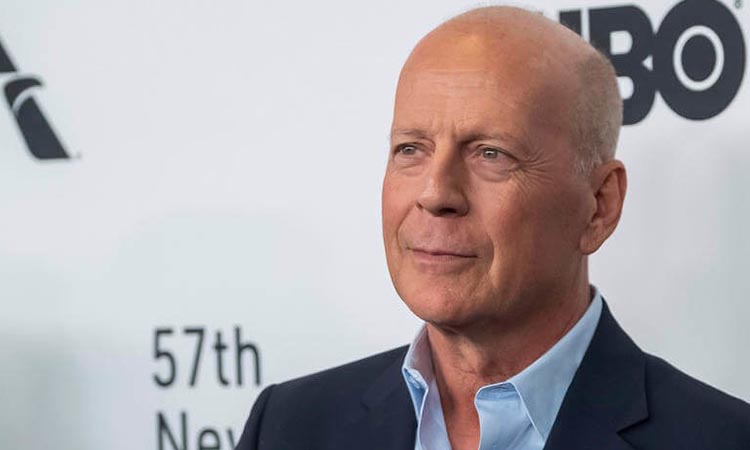
Hollywood star Bruce Willis is ready to “save the world” in his “Armageddon” spacesuit.

The 65-year-old actor pulled out his iconic orange spacesuit from the 1998 film “Armageddon” that, according to his daughter Rumer Willis, he calls his “saving the (world) outfit”, amid the COVID-19 pandemic, reports usatoday.com.

Rumer shared an Instagram picture of her father donning the complete costume.

She said his spacesuit is the “actual one from Armageddon”, and after 22 years, the orange costume still fits him well.

Willis has been quarantining since March in Iowa with ex-wife Demi Moore and the couple’s three children: Rumer, Scout and Tallulah, 26.

He also shares daughters Evelyn Penn, and Mabel Ray, with his current wife, Emma Heming Willis

Dalai Lama teaches ways to tackle negative emotions amid pandemic

0

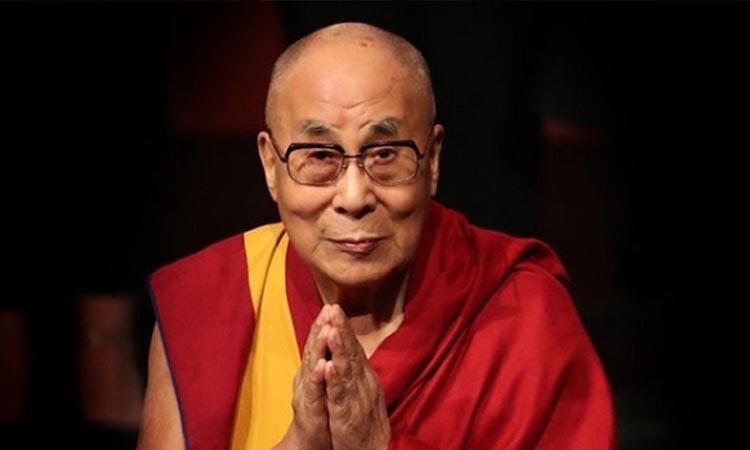
Tibetan spiritual leader the Dalai Lama, after a three-month-long break from all engagements since the outbreak of Covid-19 pandemic, began two-day virtual teaching on Saturday on tackling negative emotions of fear and anxiety precipitated by the global health crisis.

Drawing from the teachings of Buddhist scholar, Nagarjuna in his text, ‘Precious Garland’, he said the analytical and scientific approach of the Nalanda tradition, forming the base for Tibetan Buddhism, is precise in the study of the workings of human mind, according to a post on the Central Tibetan Administration (CTA).

He compared it to quantum physics that makes a distinction between appearance and reality.

“Appearance can be misleading, an object can be dissected into the tiniest molecule. While inherently the object holds no fixed meaning, we as observers ascribe meaning to the object. Therefore, we should instead seek an objective reality”.

His Holiness observed how materialistic development with its comfort and ease has brought along the human ignorance towards inner peace, so much that even materially successful people feel discontent.

The antidote to this discontent is the understanding that mental and emotional wellbeing is central to self-confidence and happiness.

Tibetan Buddhist philosophy espouses the transformation of mind as the key to achieving peace and happiness within oneself and in the world at large.

Especially relevant in the present circumstances, the spiritual leader spoke on the interdependence of all living beings — “an individual is reliant on community to survive which teaches us to strive for kindness and compassion towards one another, qualities intrinsic to human nature.”

Similarly in the COVID-19 crisis that the world is facing today, the Nobel Peace laureate stressed global cooperation and focus on “what unites us as members of one human family”.

In this vein, he called upon all citizens of the world to also pay attention to the long-term issue of global climate change that has been set in motion and are expected to have far-reaching consequences within the next two decades.

His Holiness will resume the teachings on Sunday.

When Aamir Khan didn’t offer curd rice to ‘hungry’ Deepika Padukone

0

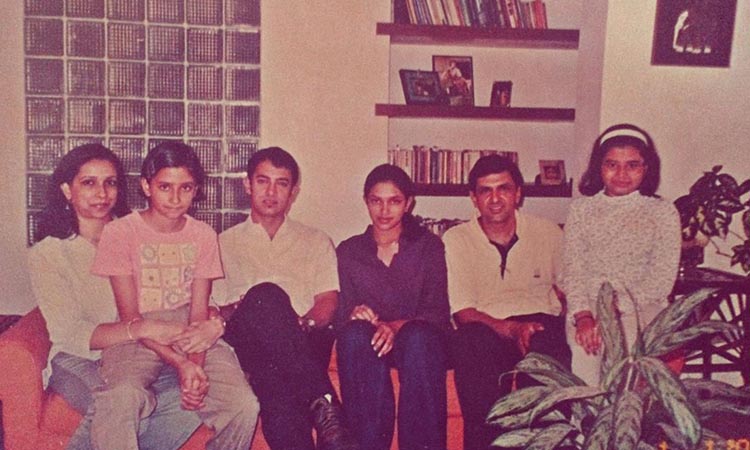
She was hungry and he was having curd rice in front of her, but he did not offer her a bite even once. At least, that is Deepika Padukone’s allegation against Aamir Khan!

On Saturday, Deepika shared a “major throwback” photo from 2000 when Aamir Khan visited their place. In the photo, the actor can be seen sitting on a sofa along with teenager Deepika and the rest of her family.

“Major throwback to 1st January, 2000. I was 13 and awkward. I still am. He was having lunch. Curd Rice to be precise. I was hungry, like I always am. But he didn’t offer and I didn’t ask… #random #anecdote @_aamirkhan,” captioned the actress.

Commenting on Deepika’s post, hubby Ranveer Singh commented: “Major throwback indeed.”

On the work front, Deepika Padukone and Ranveer Singh will next be seen in Kabir Khan’s “83”.


Higher income group tops in panic buying

0

India’s higher income group purchased groceries and supplies more than their normal needs during the lockdown imposed to fight the coronavirus pandemic, according to the latest IANS-CVoter Economy Battery survey.

As per the survey, 27 percent of the higher income group bought certain groceries and supplies more amid the lockdown than they normally used to purchase. Among this group, 58.5 per cent purchased normal supplies, while 3.4 percent bought less than what they used to buy.

The survey showed how people resorted to panic buying despite the government’s assurance that there won’t be any shortage in the supply of essential goods.

The middle income group followed the higher income group in panic buying with 24.4 percent purchasing these items more than their consumption levels. A total of 47.2 percent of the people bought normal items, while 27 per cent purchased less.

As per the survey, the purchasing capacity of the lower-income group, however, decreased drastically as 42 percent bought less grocery than their normal routine. An estimated 37.5 percent of people in this group bought these items in a normal way, while 16.8 percent bought more than they did otherwise.

Surprisingly, 26.5 percent of people in the higher education group purchased goods more than their normal requirement, followed by 20.3 percent in the lower education group and 19.4 percent in the middle education group.

At least 23.7 percent of people residing in semi-urban areas bought more, while the figure was 20 percent in the urban areas and 17.8 percent in the rural areas.

Eastern, southern and western parts of India bought more than normal groceries and supplies at 23.8 percent, 22.6 percent and 22.5 percent, respectively, while 14.9 percent showed similar trend in the northern part of the country.

Going by ethnic groups, 50.9 percent Christians purchased goods more than they normally did, followed by 34 percent Scheduled Tribes (ST), 22.5 percent upper caste Hindus, 21.4 percent Muslims, 19.2 percent Scheduled Caste (SC), 14 percent Other Backward Classes (OBC), 9.2 percent Sikhs and 48.3 percent others.

Age group wise, 26 percent aged below 25 year years purchased more, followed by 22.2 percent aged between 25 and 45 years and 19 percent aged between 45 and 60 years.

As per the survey, only 11.4 percent people aged 60 years and above bought more groceries.

Gender wise, 23 percent females purchased more as compared to 18.9 percent males.

Rajat Barmecha: ‘Udaan’ a once-in-a-lifetime opportunity

0

Vikramaditya Motwanes “Udaan” had premiered at Cannes Film Festival in May 2010 and went on to garner universal acclaim. Actor Rajat Barmecha, who shot to fame with his portrayal of a 17-year-old boy Rohan in the film, has come a long way since then.

Over the past decade since the film’s release, Rajat has explored himself professionally as an actor and also spiritually as a person.

” ‘Udaan’ is a once-in-a-lifetime opportunity. Any actor in this world would love to get a debut like that, and I was fortunate enough to get one. It’s been an amazing journey since then,” said Rajat.

” ‘Udaan’ made me the actor I am today. The root of all that I know about filmmaking and my craft as an actor comes from ‘Udaan’ and my director Vikramaditya Motwane. He taught me a lot about cinema and filmmaking in general,” he added.

On the personal front, life has been beautiful, he says.

“I learnt and explored so many things about myself since ‘Udaan’, especially in the past five years. I have been backpacking solo. Travelling and spirituality have made me grow as an actor and more importantly as a human being. There is nothing in this world that can teach you what travelling does,” said the actor, who was seen in the 2016 series “Girl In The City” starring Mithila Palkar.

“‘Today at 31 when I look back at myself when ‘Udaan’ happened, I realise how much I have grown. At 21, I was naive. I wanted to do too much. I gave all my energies to money and a career, but today I give more importance to quality of life. I am still very raw and honest with myself as I was at 21, and that’s one thing I love about myself and don’t want to change ever. But at the same time I have matured as a soul,” he said.

“Today, I am doing projects that interest me. Acting is something I love and will continue forever but today by living I mean actually living my life to the fullest. That is my top priority and that’s the reason every single day of my life, I do exactly what I want to do. I am living my best life,” he said.