Government should provide food and shelter to migrant workers

0

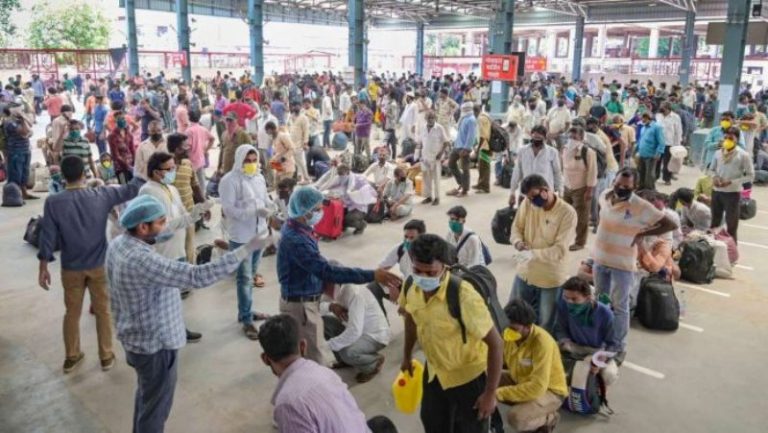
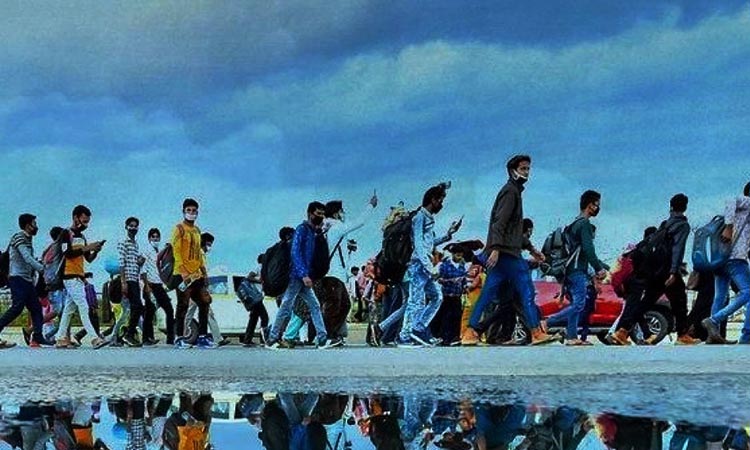
Thousands of migrant workers all over the country are reaching their native places in this lockdown with no work. Daily we have been seeing workers on the roads and railway tracks. Getting tired of walking all day, migrant workers are sleeping on the train tracks and losing lives.

Regarding the migrant workers, a petition has been filed in the Supreme Court that respective state governments should provide food and shelter to them. Taking up this petition, the Supreme Court made disappointing comments.

The advocate general on behalf of Centre argued that the government has taken all the measures to move migrant workers. But they need to wait for their turn. Many are in no mood to wait and are taking their own route to reach their places. Even if the government stops them, unprecedented circumstances may occur.

After listening these arguments, Supreme Court said, how is it possible to avoid the train mishap when migrant workers sleep on the tracks? In fact state governments should take necessary steps to prevent such incidents and dismissed the petition.

We were hearing reports of pregnant ladies walking hundreds of kilometers and are evening delivering babies on the highways. At least for the sake of women, the court should have directed states to take necessary steps to prevent migrant workers from taking their route.

The Virat Kohli vs Steve Smith debate

0

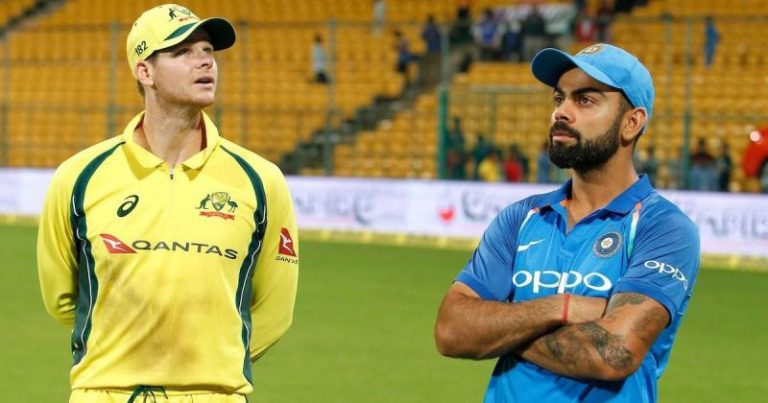
The Virat Kohli vs Steve Smith debate is one for the ages and while many have been asked to pick one over another, most have decided to sit on the fence and not give an definitive answer. But not Kevin Pietersen. The former England batsman, in a freewheeling chat with ex-Zimbabwe cricketer and current commentator Pommie Mbangwa, didn’t shy away from making a huge claim. Pietersen, without even batting an eyelid, picked Kohli over Smith, even going on to say that the former Australia captain “doesn’t even come close” to the Indian superstar.

In an Instagram Live chat, Mbangwa asked Pietersen to pick between Kohli and Smith.”Kohli, hands down. Freakshow. His record chasing, winning games for India with the amount of pressure he consistently lives under, Smith doesn’t even come close, said the former England batsman.

Mbangwa took it a step further and prodded the England batting star again by asking him to choose between Sachin Tendulkar and Virat Kohli, and once again Pietersen didn’t shy away.”Again Virat because of his chasing numbers. His chasing numbers are frightening. He averages 80 in chases, all his one-day hundreds come when chasing. He consistently wins games of cricket for India. He just keeps on turning the numbers, chasing, chasing, chasing.”

“That’s what drives me. My man of the match performances. It was not the way that I played or how I played. How many man of the match performances and how many games that you win for England. And he does that for India. Unreal numbers,” added Pietersen.

While many have admitted that Virat Kohli is head and shoulders above the rest when it comes to the limited-over formats, some are of the belief that Smith is better when it comes to the longest format.

As per the current ICC Rankings, Smith heads the list in Test rankings with Kohli hot on his heels. In the ODI rankings, Virat Kohli sits pretty at the top followed by teammate Rohit Sharma with Smith not featuring even in top 10.

In T20Is, Pakistan batsman Babar Azam is in number one spot followed by India star KL Rahul with Kohli currently in 10th spot. Smith is currently in 52nd spot in the table.

The states are facing sharp decline in revenues

0

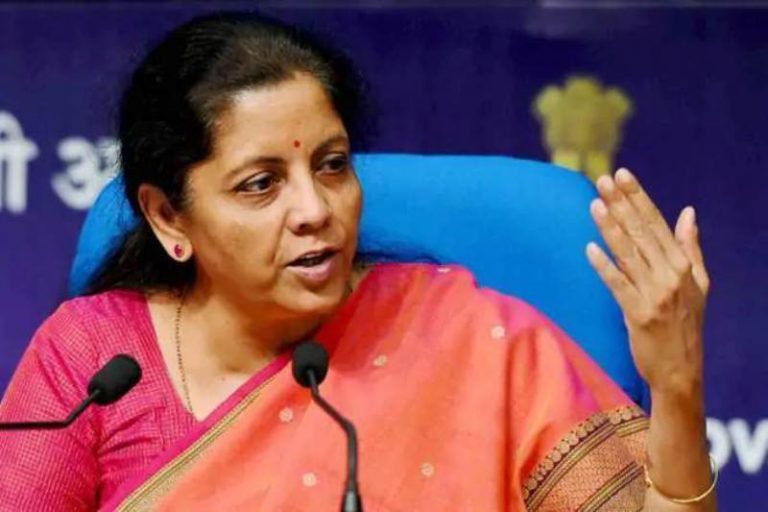
States would be able to borrow more money, the Centre said today, increasing their borrowing limit from 3 per cent to 5 percent. This would give them an Rs 4.28 lakh crore, said Union finance minister Nirmala Sitharaman, unveiling the Rs 20 lakh crore fiscal stimulus in the fifth and the last tranche.

The states are facing sharp decline in revenues following the countrywide lockdown imposed to counter coronavirus. “We have consistently provided the necessary support because they are at the front end of fighting the pandemic,” Ms Sitharaman said.

The states have a net borrowing ceiling, the minister said. They can borrow upto 3 per cent of state’s GSDP. “The government is increasing the borrowing limit to 5 per cent from 3 per cent. This will give an additional Rs 4.28 lakh crore to states,” the minister said.

The minister said the government has also asked the Reserve Bank to increase the advance limits for states by 60%.

The number of days a state can stay in continuous overdraft days has been increased from 14 days to 21 days and from 32 to 51 days quarterly, Ms Sitharaman said.

The states have been demanding financial assistance for long. Last week, during their videoconference with Prime Minister Narenra Modi, all Chief Ministers underscored the point. The Centre must release their share of the Goods and Services Act, they said, and provide further assistance in the battle against coronavirus.

Lanka tour close to impossible at present: BCCI official

0

At a time when cricket boards across the globe have been postponing tours with an eye on the coronavirus pandemic and health directives from their respective governments, the Sri Lankan board has requested the  to go ahead and play the limited-over series against the Island Nation in mid-July. But the Indian board feels it will be near impossible to go ahead with it.

Speaking to IANS, a BCCI official said that while it is still some time away, it looks almost impossible that the Indian team can travel to Sri Lanka for a limited-overs series as early as July.

“I would say it is close to impossible at present. Firstly, we need to take one step at a time in the current scenario and you do realise that some of our players are stuck in Mumbai and Bengaluru — two zones which are highly affected by the pandemic. Without even going into the question on whether the Indian team would travel without the likes of Virat Kohli, Rohit Sharma among others, I would say will international travel be permissible? So, we all need to wait and watch how things unfold.

“But keeping in mind how efficiently the government has looked to fight the battle against the pandemic, I doubt we will be in a position to travel outside the country by mid-July. The BCCI will obviously try to honour all its commitments, if not now, then at a later date which suits both boards involved. But looking at the current scenarios, safety is priority. Also, to get cricketers in the red zone to come out and travel to a green zone is currently not allowed. So, if the government does in the near future allow that, we will have to see what happens from there on and if we can then start domestic cricket. Domestic cricket is the way forward at present,” he explained.

As per a report published in ‘The Island’, Sri Lanka Cricket has sent an e-mail to BCCI, requesting the possibility of resuming bilateral cricket later in July. Virat Kohli-led India are slated to tour the Island Nation in mid-July for three ODIs and three T20 internationals.

The report further said that “when contacted by The Island, an official said that they would have to follow strict quarantine rules and the series might take place behind closed doors considering the safety of fans.”

Interestingly, SLC has also shown interest to host the 13th edition of the Indian Premier League, a move that was supported by Australia legend Mathew Hayden during an interview with IANS. He said that if it’s not possible to stage the tournament in India, it can be held in a nation like Sri Lanka where a city like Colombo has three or four international venues — provided all necessary health precautions are taken care of and there’s no risk to the players, support staff and the broadcasting team that would be travelling.

But an IPL now seems likely only in the October-November window with the World T20 almost set to be postponed.

Tesla to build Cybertruck Gigafactory in Austin: Report

0

Elon Musk-owned electric vehicle (EV) maker Tesla is reportedly planning to build its next Gigafactory factory to produce Cybertrucks in or near Austin, Texas.

According to an Electrek report quoting a reliable source familiar with the matter, Musk is set on bringing the next Tesla Gigafactory, or ‘Terafactory’, to Austin, Texas, or at least close to the city.

Musk announced its search for a third factory back in March. “Scouting locations for Cybertruck Gigafactory. Will be central USA,” he said in a tweet.

The factory could produce Tesla’s electric pickup truck called the Cybertruck as well as company’s new Model Y crossover electric vehicle.

Tesla’s current US vehicle assembly factory is in Fremont, California, which employs 10,000 workers. The company has a second US factory in Reno, where it builds batteries for its vehicles.

US President Donald Trump last week backed the Tesla CEO in his fight with the local authorities in California as he reopened the electric car factory in Fremont against the state guidelines.

Defying the stay-at-home order in place, Musk reopened Tesla factory in Fremont, California, challenging the authorities to arrest him if he has defied the rules.

“Tesla is restarting production today against Alameda County rules. I will be on the line with everyone else. If anyone is arrested, I ask that it only be me,” Musk tweeted earlier.

Tesla filed a lawsuit against Alameda County seeking injunctive relief, an effort to invalidate orders that have prevented the electric car maker from reopening.

The Tesla California plant was shut on March 23 under a six-county order in the San Francisco area, which has been extended through May 31.

Indian firms reimagining business continuity plans amid Covid-19: Oracle India

0

The current pandemic has compelled several Indian organisations, that were still contemplating a move to the Cloud, to explore more and let leading Cloud providers manage data centres for them, help shun legacy infrastructure and adopt digital ways of remote working, according to a top Oracle executive.

Now more than ever, organizations are realising the need for a strong digital foundation for their businesses as Covid-19 has disrupted their future plans.

“To keep their business up and running and serve customers with minimal disruption, enterprises are reimagining business resiliency and fine-tuning their business continuity plans. Just look at how the banking, financial services and insurance (BFSI) industry has responded with agility, for instance,” Shailender Kumar, Regional Managing Director, Oracle India, told IANS.

Deemed “essential services”, in a very short time span, most banks have successfully empowered their employees to work-from-home, minimising inconvenience to their customers.

“In fact, one of our customers, a leading mid-size bank with origins in south India, saw digital migrations increase by almost 10 percent at an overall bank level. So organisations are increasingly looking to digital technologies like Cloud for ensuring business continuity,” said Kumar.

Traditional enterprises now aim to reduce their CAPEX model of managing data centres on their own, and instead switch to an OPEX model which Cloud provides in terms of price and performance advantages.

“Most IT leaders also agree that some Public Clouds are far more secure than their traditional on-premise IT setups,” Kumar added.

Manappuram is among leading NBFCs that has leveraged modern technology, especially Cloud, to drive business growth and deliver innovative solutions to its customers.

“Mannapuram Group will be moving databases and applications of its 17 group companies to Oracle Cloud Infrastructure in a phased manner. The move to Cloud also allows them to modernise and consolidate their IT infrastructure via an OPEX model,” informed Kumar.

The company did evaluate a few other Public Cloud offerings before choosing Oracle Gen 2 Cloud.

According to Nandakumar VP, MD and CEO, Manappuram Finance Limited, their primary need to have a secure, enterprise-grade cloud to power Manappuram’s future business growth made then choose Oracle’s Gen 2 Cloud.

“To put this into perspective, by moving to Oracle Cloud, we anticipate 3X performance improvement vis-a-vis our existing IT setup, and nearly 35 percent cost savings, over the next five years. This will help Manappuram focus more on its core business and increase customer satisfaction quotient”, said Nandakumar.

Buoyed by rising demand for high performance, enterprise-grade, secure cloud services in the country, Oracle is set to announce its second Gen 2 Cloud region before the end of this year in the country.

“As more and more organisations look to optimise IT investments and improve their business efficiencies, there’s bound to be a switch to an OPEX model, leading to increased usage of cloud based services. To help customers manage this shift to the cloud seamlessly, we’re on track to announce our second Gen 2 Cloud region in India very soon,” Kumar told IANS.

Oracle is currently helping its customers in the country adapt to the new normal, by providing free access to online learning content and certifications for a broad array of users for Oracle Cloud Infrastructure and Oracle Autonomous Database, as well as content related to topics such as data science, machine learning, and multi-cloud environments such as integration with Microsoft Azure.

The Cloud giant is also providing free Oracle Cloud Infrastructure credits for startups part of our ‘Oracle for Startups’ programme and free HR tool to help customers keep their employees safe.

One villager killed as Army tries to catch ultras in Arunachal village

0

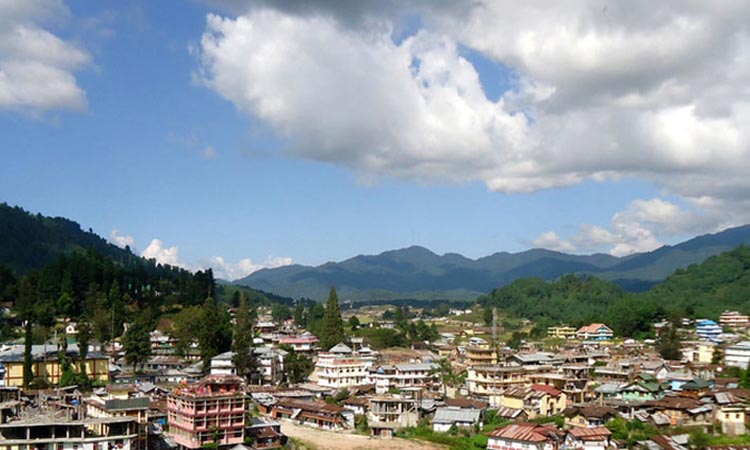
A civilian was killed and many others, including Army soldiers, were injured during firing as well as stone-pelting when the armed force team went to a village to catch hold of NSCN (IM) ultras on Saturday in Arunachal Pradesh, a defence release said.

Acting on a specific input about the presence of National Socialist Council of Nagaland (Isak-Muivah) insurgents in Pumao village in Longding district of eastern Arunachal Pradesh, Army troops launched a search operation.

The release said that a gathering of villagers began protesting against the security forces and resorted to stone-pelting. Many soldiers were injured in stone-pelting.

Noticing suspicious movement, troopers started moving towards a house which drew two to three bursts of firing on the Army men.

“The civilians were told to disperse. To safeguard their lives and property, controlled retaliation was resorted to by firing eight single shots. In the melee, the NSCN insurgents managed to escape. However, in the cross-fire, it is believed a few villagers have been hurt and one of them has expired,” the release said.

The release said that the Army offers condolences to the family of the deceased villager.

Depression over Bay of Bengal intensifies into cyclonic storm: IMD

0

The India Meteorological Department (IMD) said on Saturday that the deep depression over the Bay of Bengal has intensified into a cyclonic storm named ‘Amphan’.

“The deep depression over Southeast Bay of Bengal and the neighbourhood remained practically stationary during the past six hours and rapidly intensified into the cyclonic storm ‘Amphan’,” IMD scientist R.K. Jenamani said.

The cyclonic storm is likely to intensify further into a ‘severe’ cyclonic storm during the next 12 hours and into a ‘very severe’ cyclonic storm by May 18.

“It is very likely to move north-northwestwards initially till May 17 and then re-curve north-northeastwards across northwest Bay of Bengal towards West Bengal and adjoining Odisha coasts during May 18-20,” the weather department added.

Private forecaster Skymet Weather also echoed similar predictions. “It is expected to make landfall over Gangetic West Bengal on May 20, although some models indicate its movement towards Bangladesh,” said Mahesh Palawat, Vice President at Skymet.

“Either way, Gangetic West Bengal is going to get heavy rains and gale force winds. Sea will be very rough,” he added.

The coastal state governments have warned fishermen not to venture into the sea. Cyclone shelters have been readied and areas requiring evacuation of people have been identified.

How Team Smriti, RIL, J&J, NIV got a Covid-19 testing swab in 10 days at 10% cost of China make

0

India has achieved a major milestone in its fight against Covid-19 as two large companies Reliance Industries Limited (RIL) and Johnson & Johnson collaborated as part of a social contract with National Institute of Virology and Textiles Ministry to get a Made in India testing swab in 10 days at 10 percent cost of what was being imported from China.

This is the story of how the government and private sector have worked on a war footing for a breakthrough in a crucial testing input of nasal and throat swabs at affordable pricing which were being imported from China until just 10 days back.

This is seen as a major achievement for the Vocal for Local campaign announced by Prime Minister Narendra Modi.

Textiles Minister Smriti Irani said in a tweet, “Government efforts & our industry’s prowess have proved that our Nation has capacity & ability to tide over every obstacle. India’s success in the production of PPE & Testing Swabs has already put our Nation on the path of ‘Atmanirbhar Bharat’ as enunciated by PM @narendramodiJi”.

Varun Jhaveri, Officer on Special Duty, Ayushman Bharat said in a tweet, “We used to import collection swabs at Rs 17 from China. Govt contacted the largest Indian polyester manufacturer to locally design swab. Got the design & material approved from NIV & gave manufacturing orders to MSMEs. Today, India manufactures these at Rs 2! Vocal for Local!”.

The ball was set rolling 10 days back for the indigenous project for nasal and throat swabs when Ravi Kapoor, Secretary, Textiles contacted J&J and RIL to check whether India can manufacture swab required for testing purpose.

The video conference was held between Ravi Kapoor and his team, J&J and their team and RIL officials. A question was raised whether in shortest time period whether such swab can be manufactured in India in required quantity.

Since ear buds are manufactured by J&J, the issue raised was whether such swab can be manufactured, which are suitable for carrying out corona testing.

It was also stated that Chinese swabs were costing Rs 17 and difficult to get hence this swabs can be manufactured with the help of J&J and RIL?

It was also stated whether the cotton used on surface can be replaced with polyester so that the tissues taken out on swab can be sent to testing labs.

RIL agreed to this requirement swiftly and sent polyester staple fibre to National Institute of Virology in Pune for testing. This was tested by NIV and the material was approved.

However, more demanding requirements were on the anvil in this short journey. The J&J unit at Vasai which was manufacturing ear buds needed sliver made out of PSF to feed to their automatic machines to manufacture these swabs. These slivers were made from PSF of 38mm usual cut length.

This was done in the RIL RTG Patalganga having prototype machine to produce sliver. This sliver was sent to MSME at Vasai to try out on their automatic machines. Since machines to produce ear bud could accommodate cut length up to 25mm (cotton) this sliver supplied of 38mm fiber could not meet their requirement.

Thereafter, RIL was asked to supply sliver to meet machine requirement. “Our scientist worked overnight on right type of PSF of cut length 22mm with change of certain characteristic to produce sliver to meet requirement of automatic machines. This was done within 12 hours from the intimation received,” officials from RIL said.

These slivser were approved and were suitable for this machine and sample was prepared to be sent to NIV for their final approval by J&J team and this was approved by NIV within 12 hours of time.

It was also a challenge to move the cartons to Vasai plant in view of lockdown conditions. Special passes and other arrangements were made to move the material from PG to Vasai.

The target of the exercise was to manufacture this swab at the lowest cost. The present cost of making swab based on material supplied by RIL is in the range of Rs 1.70 to 1.75/swab, as against imported cost of Rs 17/pc. Officials said this cost can be further brought down once the Vasai unit get their new machine to accommodate longer stick rather than using adaptor which required manual intervention.

Officials said this does not make commercial sense to make the swab but it is doing it in national interest.

“This swab requires .03 grams of PSF/swab hence commercially does not make sense for RIL to get involved for such a small quantity. However, our commitment to India for providing swab was the ultimate goal because without swab no test could be carried out,” RIL officials said.

“We in RIL spent day and night to provide sliver required for manufacturing swabs at Vasai with the help of J&J in shortest time period of 8 days, which normally would have taken a few months to complete the project. We at Reliance take pride to work for Nation’s need rather than looking into commercial aspects,” they added.

“This is one of the targets for Make in India project rather than made for India project. This also eliminates some of the over dependence on China for such critical item required for national interest. Our target will be to manufacture super speciality fibres required for defence and other critical end uses which are being imported and India is vulnerable for such imports and dictation from the supplier,” they added.

Most youth spent time with parents, elderly during lockdown

0

Amid the Covid-19 lockdown, the majority of youth and people below 45 years of age said they spent more time with their parents or the elderly in the family, according to the latest IANS-CVoter Covid tracker survey.

According to the survey, a whopping 71.5 percent of respondents below 25 years of age said they spent more time with their parents or the elderly in the family.

The survey also pointed out that 61.7 percent of respondents between 25 and 45 years of age did the same, followed by 52.5 percent in the middle age group.

Gender wise, male (57.1 percent) and female (60.1 percent) participants were close when it came to spending time with parents or the elderly in the family.

In the education group category, 53.7 percent of respondents from the lower education group said they spent time with their parents, whereas the numbers were 67.2 percent for the middle education group and 68.8 percent for the higher education group.

In the social group category, 80 percent Sikh respondents said they spent more time with their parents or the elderly in the family, the highest in the category, followed by 78.7 percent Christian participants.

Income group wise, 64.2 percent respondents from the middle-income group said they spent more time with their parents.

Region wise, 67.5 percent respondents from the eastern region said they spent more time with their parents or the elderly in the family, followed by 66.1 percent in the western region, 54.9 percent in northern region and 43.2 percent in the southern region.

In the location category, 66.1 percent respondents in the rural settings spent more time with their parents, followed by those in semi-urban settings at 61.5 per cent and those in the urban settings at 56.2 percent.

Heavy rains lash Hyderabad, other Telangana districts

0

Heavy rains accompanied by gales lashed Hyderabad and some other districts of Telangana on Saturday, officials said.

The rains, which lasted for 30 to 45 minutes, inundated roads in several parts of Hyderabad. The strong gales led to uprooting of trees. The inundation led to traffic jams at a few busy intersections in the city, causing inconvenience to the motorists.

Water-logging on roads was reported from busy areas in the heart of the city — Panjagutta, Somajiguda, Khairatabad, Basheerbagh, Himayat Nagar, Basheer Bagh, Nampally, Kacheguda, Nallkunta, Mehdipatnam, Saroornagar and Malakpet.

The sudden downpour provided relief to people from the heat as the day temperature dropped by a few notches.

The Hyderabad Meteorological Office said the state received the rains under the impact of cumulonimbus clouds. These clouds are formed in areas recording high temperatures.

Out of 30 circles of Greater Hyderabad Municipal Corporation (GHMC), moderate rainfall between 17.3 to 55.3 mm was recorded. In the remaining circles, the rainfall was light, the met office said.

Medchal, Ranga Reddy, Nagarkurnool and other districts also recorded heavy rains.

Longer travel time, halts and contactless ticketing in metro expected in lockdown 4.0

0

Face masks, contactless ticketing, thermal screening and longer travel time and halts at stations can be expected in the Metro, if it gets approval to run in the lockdown 4.0 after May 17.

While the Central government is yet to announce the relaxations in the next edition of the lockdown, the Delhi Metro Rail Corporation (DMRC) is all set to resume operations — stopped since March 22 — on a short notice.

Speaking to IANS, an official from the DMRC said among the precautions people need to take will be installing the Aarogya Setu app in their mobile phones, wearing masks and social distancing.

“We are all prepared to start the services even on a short notice. People will have to be careful too, if the services are started,” the official told IANS.

On the changes in the services, the official said the halts at the stations will be longer than usual so that people will not have to rush to board the trains.

“The crowd at the Metro stations will also be checked and people will not be allowed to entre if there were enough people already inside the station. Also, if needed, the entry gates will be closed,” the official added.

The official added that thermal screening of all the passengers will be done and those having flu-like symptoms will be barred from entering.

“Stickers are already being pasted on stations and inside the metro reminding people to maintain social distancing. So, whenever the services will be started, we are ready with our preparedness.”

While sitting arrangements were done for alternate seats, only limited people will be allowed to stand inside the trains, the official said.

The Delhi government has written to the Centre urging it to allow the Metro. However, it has demanded that only employees of the Union and city governments, Central and state PSUs, local bodies/government autonomous bodies, and persons providing essential services be allowed on production of ID cards and passes.

Meanwhile, Anuj Dayal, Executive Director, DMRC has said that the decision to resume Metro rail services in Delhi-NCR will be taken by the government after which the detailed protocol to be followed by passengers for traveling in the Metro will be shared with the public.

“At present, DMRC is taking up necessary cleaning mechanisms inside the trains and indoor areas of stations such as entrance lobbies, corridors, staircases, escalators, elevators, security areas etc. Other necessary logistical arrangements such as provision for hand sanitization/thermal screening at stations and installation of social distancing related signages are also being handled in the interim,” Dayal said.

According to the official data, there are 264 stations, 2,200 coaches and over 1,100 escalators and 1,000 lifts for common use. With a network of 389-km across the national capital region, the Metro ferried about 60 lakh people per day in February.

Apple’s $500 mn deal over iPhone throttling gets preliminary nod

0

Apples up to $500 million deal to end several lawsuits accusing the company of slowing down certain older iPhone models with software updates has received preliminary nod, but the deadline for final approval got extended by a few weeks due to the Covid-19 pandemic.

According to a report in Law360, US District Judge Edward J. Davila during a hearing held on Friday via video conferencing told both the parties to discuss about a new date for a final settlement approval hearing that would take place sometime in December.

Apple in 2017 had admitted that it occasionally slowed down certain iPhone models with older batteries to avoid unexpected shutdowns.

The suits generally accuse the iPhone maker of diminishing the battery life of older devices with software updates, just as it launched new models.

Apple denied any wrongdoing, but agreed for the settlement.

The $500 million settlement meant for affected iPhone owners is equivalent to $25 per impacted iPhone.

The lawsuit covers current and former owners of the iPhone SE, 6, 6 Plus, 6s, 6s Plus, 7 and 7 Plus, who were running the iOS 10.2.1 operating system, 9to5Mac reported.

The iPhone maker in 2017 said that the update was necessary to prevent an unexpected shutdown and preserve the life of the devices.

However, it also apologised for not communicating to users properly and offered affected customers cut-price iPhone battery replacements.

Maharashtra notches highest 67 deaths and 1,606 Covid-19 cases

0

Maharashtra on Saturday recorded the highest number of 1,606 new cases and a new high of 67 deaths, with Mumbai also notching a fresh high of 41 deaths, health officials said.

This comes to a death rate of roughly 1 fatality every 20 minutes for the state.

However, the state health department said that while 22 deaths occurred today (in the past 24 hours), the remaining 42 fatalities occurred between April 15-May 14 which have been validated and confirmed as Covid-19 cases today.

With 67 fatalities — up from the previous high of 54 notched on May 13, the state death toll toll now stands at 1,135 and the total number of coronavirus patients increased from 29,100 yesterday to 30,706 today, after the steepest single-day jump of 1,602 recorded on May 14.

Of the total deaths, 41 were recorded in Mumbai alone, taking up the city’s toll from Friday’s 655 to 696 now, and the number of Covid-19 positive patients in the city shot up by 884 to touch 18,555 today.

Mumbai’s Dharavi slum alone continued to be a major hotspot and a headache for the health authorities, notching 53 new cases, taking the total number of patients to 1,198, and 53 deaths to date.

Besides Mumbai’s 41, there were 9 deaths in Thane district, 7 in Pune, 5 in Aurangabad, 3 in Jalgaon, one each in Nashik and Jalgaon.

They comprised 47 men and 20 women, and nearly 66 per cent of them suffered from other serious ailments such as diabetes, hypertension, heart problems and asthma.

On the positive side, 524 more fully cured patients returned home, taking the number of those discharged to 7,088.

In anticipation of an even bloodier war with the virus in the coming days, the government continued to fortify itself by requisitioning the famed Wankhede Stadium premises to set up a jumbo quarantine facility.

This will be the second such facility in a sports complex after a huge 1,000-plus facility has come up in the National Sports Club of India, and at the Bandra Kurla Complex and NESCO grounds in Goregaon.

With a view to reducing the travails of stranded migrants, Chief Minister Uddhav Thackeray and Nationalist Congress Party President Sharad Pawar spoke with Bihar CM Nitish Kumar and West Bengal CM Mamta Banerjee and two trains carrying migrants to Gaya and Kolkata left from this state.

In another humanitarian gesture, the state has so far deployed 11,380 ST buses to give a free drop to 1.46 lakh migrants up to the borders of Gujarat, Madhya Pradesh, Chhattisgarh, Telangana and Karnataka to enable them to reach their homes.

The Mumbai Metropolitan Region (Thane Division) continued to cause huge concerns with 768 Covid-19 deaths and cases shooting to 23,193, with Thane district notching 49 deaths, Palghar 13 and Raigad 12 fatalities so far.

Though trailing a distant second after Mumbai, Pune Division fatalities cross the 200-mark to touch 212 fatalities besides 4,149 patients.

The next major area of concern is Nashik Division with 78 deaths and 1,256 positive cases, followed by Akola Division with 28 deaths and 466 cases, and finally Aurangabad with 26 fatalities and 966 patients.

There’s also Kolhapur Division with 5 deaths and 173 patients, Latur Division with 5 fatalities and 101 cases, and finally Nagpur Division with 3 deaths and 361 patients.

Meanwhile, the number of people sent to home-quarantine increased from 329,302 to 334,558, and those in institutional quarantine went up from 16,306 to 17,048, while the state’s containment zones increased from 1,473 to 1,516 on Saturday.

As many as 14,434 teams have carried out a survey of a population of around 61 lakhs in the state to date.


Finally, there’s a central database for migrant workers

0

At a time when the plight of the migrants in India has become international headlines, the National Disaster Management Authority (NDMA) has come forward and developed a National Migrant Info System (NIMS) — a central online repository to facilitate their seamless movement across states amid the Covid-19 induced lockdown.

Meanwhile, the Union Home Ministry has also asked the states to upload data on the NIMS dashboard for better coordination, movement monitoring and contact tracing. Union Home Secretary Ajay Bhalla wrote to all the chief secretaries in this regard on Saturday.

“The portal will maintain a central repository and help the sending as well as receiving state/district to ask for and give their acceptance in an online format seamlessly. This system will help in speedy communication between states without creating additional work at the level of the field officers,” Bhalla wrote.

Some of the key features of this system will be a unique ID generated for each migrant, which can be used for all transactions and help any state can visualise how many people are going out from where and how many are reaching their destination states. The mobile numbers can also be used for contact tracing and movement monitoring.

While so far 3.5 lakh migrants have been transported in 350 Shramik Special trains, there are many more who need to be moved back home.

The announcement came on a day when 25 migrant workers were killed and several injured after a truck they were travelling in rammed into a lorry in Uttar Pradesh’s Auraiya, bringing the focus back to the plight the migrant workers.

CIAL MD welcomes more airports on PPP model

0

The Managing Director of the country’s first airport under the public private partnership (PPP) basis on Saturday welcomed the latest decision announced by Union Finance Minister Nirmala Sitharaman to further relax Indian airspace restrictions for civilian flying and auctioning of six more airports on PPP basis.

V.J. Kurian, a former top bureaucrat of the Kerala government and presently the MD of the Cochin International Airport Limited (CIAL), said the decision is a welcome move.

“CIAL in 1993 became the first PPP airport in the country and then we saw similar airports in Mumbai, Delhi and then came other major airports. There are 650 aircraft in the country owned by various airlines and each time they go abroad for maintenance, precious foreign exchange is lost. We at the CIAL started work for the hangar unit in 2006. I see this as a very good step. Once more details come in, we will know more,” said Kurian.

The new decisions were part of the fourth tranche of announcements under the Rs 20 lakh crore economic package announced by Prime Minister Narendra Modi on Tuesday.

Centre pulling a joke on poor, says Telangana govt

0

In a bitter attack on the Centre, the Telangana government on Saturday said that it is pulling a joke on the poor and distressed people of the country through daily announcements as part of its Covid-19 package.

Telangana State Planning Board Vice-Chairman B. Vinod Kumar condemned what he called the callous attitude of Prime Minister Narendra Modi and Union Finance Minister Nirmala Sitharaman for giving false hopes to the distressed people of India through “phony announcements” every day without giving any substantial direct benefits and relief to them.

Reacting to day four announcements of relief measures by Sitharaman under the Rs 20 lakh crore package announced by the Prime Minister, he said the Centre was mistaking reform measures as relief measures.

He said once again there was no announcement of any financial support to the states facing a huge financial crisis due to revenue loss on account of the lockdown.

“As long as these announcements do not contain some direct financial support to the states, they are just publicity gimmicks to divert attention from serious issues,” he said in a statement.

Referring to the announcements made about the structural reforms in sectors like coal, mineral exploration, defence production, civil aviation, power distribution companies in union territories, space and atomic energy, Vinod Kumar wondered how they are related to Covid-19 relief.

Stating that structural reforms in any sector are always required and it is an ongoing process, the Telangana Rashtra Samithi (TRS) leader said that the moot point is how these reforms pertain to relief measures at the individual and institutional levels.

“One is forced to wonder that the government of India is mistaking reforms measures as relief measures. If it is so, the government of India’s announcements on relief measures are misleading and mischievous. It is not an exaggeration to state that the government of India is pulling a joke on the poor and distressed population of the country through these daily announcements,” he said.

Karnataka to benefit from Centre’s new mineral policy: CM

0

Mineral-rich Karnataka would benefit from the Centres new policy for the sector to be framed soon as part of the governments structural reforms, Chief Minister B.S. Yediyurappa on Saturday.

“Policy changes in the mineral sector will complement our mineral policy, as the state has several mineral deposits and mining is allowed,” Yediyurappa said here after Union Finance Minister Nirmala Sitharaman announced structural reforms for eight growth sectors, including minerals.

Detailing the measures for easing the economic hardships triggered by the Covid-19 pandemic, Sitharaman said a seamless composite exploration-cum-mining-cum production regime would be introduced to enhance private investment in the mineral sector.

“As the present mining laws are cumbersome, structural reforms in the sector would enable the state to mine mineral deposits and create direct and indirect employment for our people,” Yediyurappa said in a statement.

With one of the oldest geological formations in the Deccan region of the Indian peninsula, the southern state has abundant mineral deposits like iron, copper, gold, quartz and uranium in its central and northern districts.

“Mining the mineral reserves in an eco-friendly manner will help the state’s economic growth. Private participation in mining will be profitable for the state,” asserted the Chief Minister.

Investments in civil aviation, defence production, space and planetary exploration will also benefit the southern state.

“As the state has many manufacturing units in these growth sectors, other units complementing them can be set up to build an ecosystem for them. The new financial policies for the sectors will save foreign exchange, with greater thrust on self-reliance and ‘Made in India’,” Yediyurappa said.

Besides coal, structural reforms are also envisaged in airspace management, MRO (maintenance, repairs and overhaul) of aircraft, power distribution and atomic energy.

“Private participation in atomic energy will also benefit our state. Many overseas atomic, space and defence firms have evinced interest in setting up their Indian operations in Karnataka,” said Yediyurappa, recalling his visit to Davos in Switzerland during the World Economic Summit in January this year.

In the space sector, the state-run Indian Space Research Organisation (ISRO) is headquartered in this tech city.

In the defence sector, the state-run Hindustan Aeronautics Ltd (HAL) is also based in this aerospace hub, rolling out fighter and transport aircraft and multi-utility helicopters.

BMS ‘strongly opposes’ FM’s plans on privatisation

0

RSS-affiliated Bharatiya Mazdoor Sangh on Saturday “strongly opposed” the announcements on privatisation in eight sectors of the Indian economy made earlier in the day by Union Finance Minister Nirmala Sitharaman.

The trade union said it was a “sad day” for the country that the announcements on privatisation in eight sectors showcased a dearth of ideas in the Central government.

The BMS said privatisation was against national interests and the Indian economy was not going to bounce back on the basis of “failed ideas”.

Expressing “dismay” over what it called lack of appropriate ideas to strengthen the sagging economy, the Rashtriya Swayamsevak Sangh-affiliated body said the Centre’s stand that there was no other option to privatisation in coal, minerals, defence production, airports and airport management, power distribution, space, and nuclear energy indicated lack of ideas with the Central government.

Pointing out that workers were affected the most by any change, privatisation would mean job losses on a large scale and a dearth of quality jobs.

It would lead to profiteering and exploitation of the workforce, the BMS claimed and said that the government was bringing about a change without any social dialogue which was the essence of democracy.

The BMS said the Central government was shying away from holding discussions and consultations with trade unions.

“It is our recent observation that private players and markets flopped in the recent crisis situation and only the public sector of India had played an important role,” the trade union said.

The BMS said that setting aside Rs 50,000 crore for the privatisation of coal sector was “objectionable”, adding that auction of 500 mining blocks, including those of bauxite and coal, was against national interests.

It also flayed the proposals to increase in Foreign Direct Investment in defence production from 49 to 74 per cent as well as privatisation of Ordnance Factory Board.

The trade union said auction of six airports for Rs 13,000 crore and privatisation of discoms in metro cities was also against the long-term interests of India.

It also cautioned that privatisation of the space sector could be detrimental to national security, adding that start-ups were not capable of meeting the challenges faced in the sector.

66% people ‘very hopeful’ of normal life post Covid-19

0

As many as 48-66 percent of people belonging to rural areas, and various educational, social, income and age groups have expressed hope that lives would return to the normal track at the end of the Covid-19 outbreak, according to the latest IANS-CVoter COVID tracker survey.

As per the survey, 48.3 percent people staying in the rural areas said they are ‘very hopeful’ that their own, as well as their family members’ lives, will return to the normal track as and when the dreaded virus goes away, while 38 percent said they are ‘somewhat hopeful’ and 7.1 percent said they are ‘not too hopeful’.

The numbers went up in the semi-urban areas where 56.5 percent said they are ‘very hopeful’, 25.1 percent ‘somewhat hopeful’ and 7.4 percent ‘not too hopeful’.

In the urban areas, 58.6 percent people said they are ‘very hopeful’ that their lives will come back on track after the outbreak, while 25.9 percent said they are ‘somewhat hopeful’ and only 2.4 percent said they are ‘not too hopeful’.

Higher education groups with 66.1 percent of people are very hopeful about normal lives, followed by 56.2 percent middle education sector and 55.4 percent lower education sector.

Similarly, 63.4 percent of people in the higher income groups said they are ‘very hopeful’ about normalcy returning post-COVID-19, followed by 58.6 percent in the middle-income groups and 54 percent in the lower-income groups.

Among social groups, 67.5 percent Christians said they are ‘very hopeful’, followed by 61.5 percent Sikhs, 61.1 percent Muslims, 59.1 percent Scheduled Tribes (STs), 58.5 percent Upper Caste Hindus (UCH), 55.4 percent Other Backward Classes (OBC), 51.7 percent Scheduled Caste and 54.5 percent belonging to the other category.

In the eastern part of the country, 60 percent of people said they are ‘very hopeful’ about normal lives post the pandemic, followed by 58.5 percent in the north, 57.8 percent in the west and 51.1 percent in the south.

Despite the pandemic hurting the old-age people the most, 60.5 percent of those above the age of 60 years sounded ‘very hopeful’ that their lives will return to the normal track, followed by 58.9 percent in the middle-aged category (45-60 years), 55.3 percent in the young age category (25-45 years) and 56.9 percent in the fresher category (below 25 years).

Gender wise, 58.6 percent of males and 55.2 percent of females said they are ‘very hopeful’ of normalcy returning post-COVID-19.