
Third list of defence items banned for import to come out soon: Modi

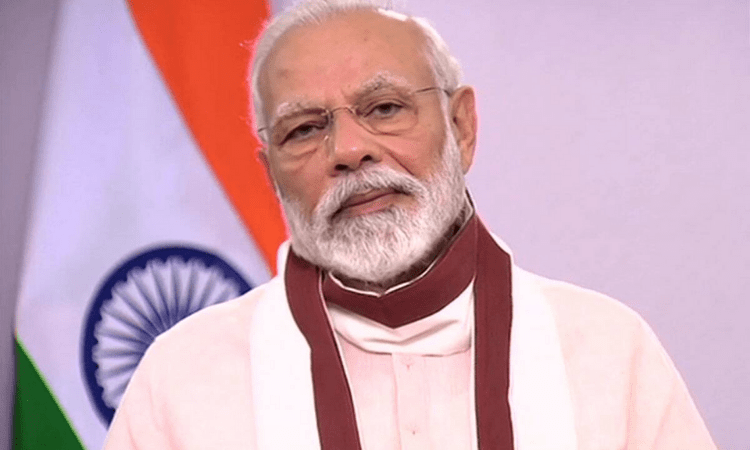
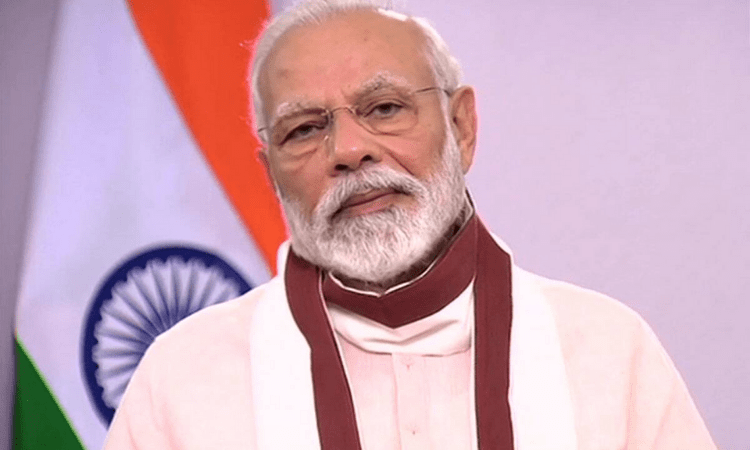
Indian Defence Ministry will come up with a third list of defense items banned for import very soon, Prime Minister Narendra Modi said on Friday stressing self-reliance in the sector.

“A total 70 percent has been allocated for domestic defense industry this budget,” said Prime Minister while addressing a post-budget webinar titled ‘Aatmnirbharta in Defence – Call to Action on the announcements made in the budget.

The webinar was organized by the Ministry of Defence.

Prime Minister Modi recalled that India’s defense manufacturing was quite strong even during the period of slavery and in the immediate aftermath of independence.

Indian-made weapons played a major role during the Second World War. “Though, in the later years, this prowess of ours declined, still it shows that there has been no dearth of capabilities, neither then nor now”, he said.

Underscoring the importance of customization and uniqueness of the defense system for a surprise element over the adversaries, PM Modi said: “Uniqueness and surprise elements can only happen when the equipment is developed in your own country.”

This year’s budget, the Prime Minister mentioned, has a blueprint for developing a vibrant ecosystem from research, design, and development to manufacturing within the country. About 70 percent of the defense budget has been kept for domestic industry only, he added.

The defense Ministry has, so far, released Positive Indigenisation Lists of more than 200 defense Platforms and Equipment.

After this announcement, the Prime Minister informed that contracts worth Rs 54,000 crore have been signed for domestic procurement.

Apart from this, the procurement process of more than Rs 4.5 lakh crore worth of equipment is at various stages. The third list is expected soon, he said.

The Prime Minister lamented the long-drawn process of weapon procurement which often results in a scenario where weapons are outdated by the time they are commissioned.

“Solution for this lies is in Aatmnirbhar Bharat and Make in India initiatives”, he emphasized. The Prime Minister lauded the armed forces for taking decisions while keeping the importance of Aatmnirbharta in mind.

The Prime Minister stressed the need to keep the pride and feelings of the jawans in matters of weapons and equipment. “This is possible only when we are Aatmnirbhar in these areas,” he said.

He noted that cyber security is no longer confined to the digital world but has become a subject of national security. “The more we deploy our formidable IT power in the defense sector, the more confident we will be regarding our security”, he said.

Noting the competition among the defense manufacturers for contracts, the Prime Minister said it often led to money-focus and corruption. A lot of confusion was created with regard to the quality and desirability of weapons. Aatmnirbhar Bharat Abhiyan tackles this problem also, he said.

He lauded the ordnance factories for being a shining example of progress with determination. The Prime Minister expressed happiness that seven new defense undertaking that was incorporated last year are rapidly expanding their business and reaching new markets. “We have increased defense exports six times in the last 5-6 years. Today, we are providing Made in India Defence equipment and services to more than 75 countries”, the Prime Minister added.

As a result of the government’s encouragement to ‘Make in India’, the Prime Minister said that more than 350 new industrial licenses have been issued for defense manufacturing in the last seven years. Whereas in the fourteen years from 2001 to 2014, only 200 licenses were issued. The Prime Minister also said that the private sector should also come on a par with DRDO and defense PSUs, hence 25 percent of the defense R&D budget has been kept for Industry, start-ups, and academia. The Special Purpose Vehicle model has also been arranged in the budget. “This will establish the role of the private industry as a partner beyond just a vendor or supplier”, he said.

Transparent, time-bound, pragmatic, and fair systems of trial, testing, and certification are essential to the growth of a vibrant defense industry, Modi noted. For this, an independent system can prove useful in solving problems, he added.
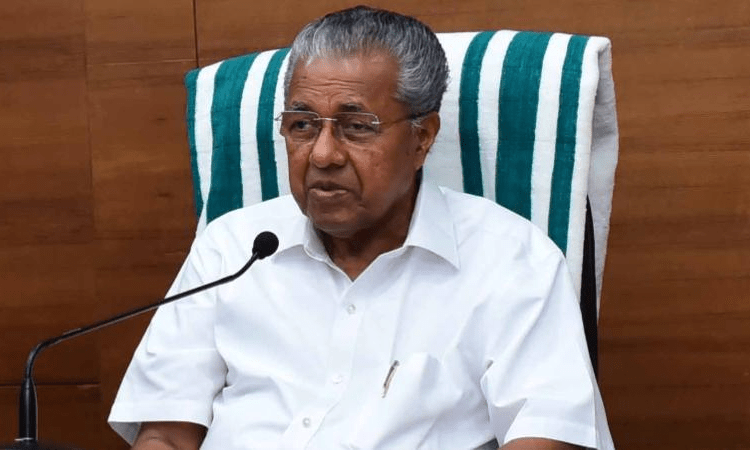
Will Pinarayi be able to stamp his ‘continued’ authority at CPI-M state party conference?

With the CPI-M state party conference set to kick-off from March 1 in Kochi, the political circles are abuzz with conversations about whether Chief Minister Pinarayi Vijayan be able to stamp his continued authority in the party.

As things stand, there appears no doubt about it, as he always has the last word not just in governance, but also in the party, contrary to his predecessors who played “second fiddle” to the party’s state secretary.

A media critic, on condition of anonymity, said the only reason why Vijayan, ever since he took over as chief minister in 2016, has the last and final word is because of the way he ran the party as its state secretary from 1998 to 2014 and holds the record of having sat on the chair for the longest period.

“It was his 16-year tenure as state secretary, which gave him the absolute confidence he displays now, that he is not just the final word in Kerala, but also at the national level. During the period he kept a close watch on all the leaders and handpicked leaders of his choice. He showed it again when the party prevented stalwarts like Thomas Isaac, G.Sudhakaran, A.K.Balan from contesting in the 2021 Assembly polls. The biggest surprise came when he decided not to give a second term to popular Health Minister K.K.Shailaja. There was not even a slightest of noise from any quarters,” said the critic.

When Vijayan decided to move out as state secretary in 2014, he made sure that the wings of the Achuthanandan faction in the party were clipped forever.

“In the run-up to the 2016 Assembly polls, there were more posters of Achuthanandan than Vijayan portraying the former as the team leader. But it ended the day votes were counted and when the CPI(M)-led Left had an easy victory, in came Vijayan and then, as they say, there was no looking back for him,” added the critic.

One big advantage that Vijayan has is the party’s second-in-command Kodiyeri Balakrishnan, who was the Home Minister in the Achuthanandan cabinet 2006-11 but does not appear to be in a mood to move up the ladder. In all likelihood, he will be getting his third and final term as the state secretary, he said.

Unlike the factional feud between Achuthanandan and Vijayan when the former was active, there are none at the moment who dare to oppose him, and hence the four-day event at Kochi would go the way he wants.

With aging leaders like Vaikom Viswan, Anathalavattom Anandan, and K.P.Karunakaran in the state secretariat, it remains to be seen if they will be replaced.

Hence the only thing that will be of any significance is whether there be new faces in the 21-member state secretariat, the 88-member state committee and not to mention to decide the party’s Kerala contingent to the Party Congress to be held at Vijayan’s home turf Kannur in April.

Indian govt contemplating to evacuate students through land routes: K’taka CM Bommai

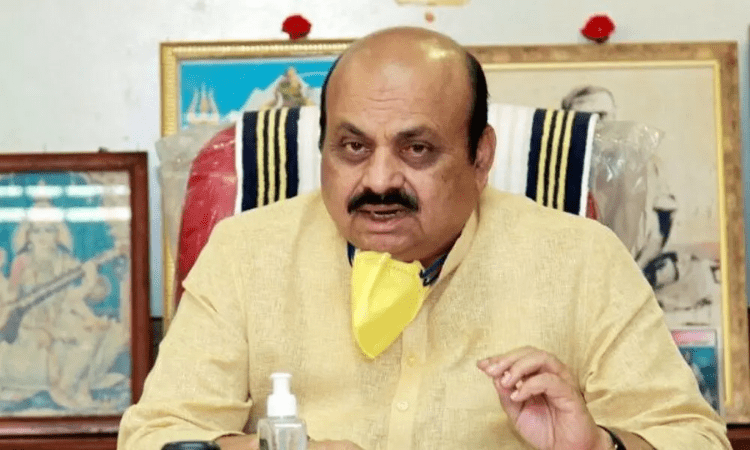
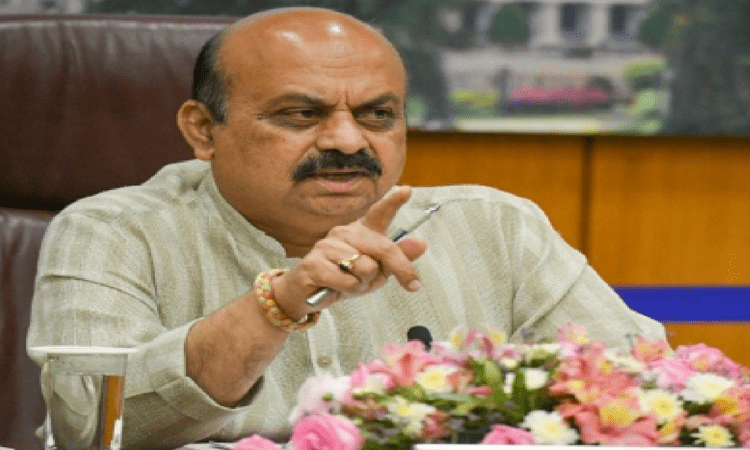
Karnataka Chief Minister Basavaraj Bommai on Friday said that the Indian government is contemplating bringing back Indian students stranded in war-torn Ukraine through land routes.

While interacting with reporters, CM Bommai stated that he had spoken to External Affairs Minister S. Jaishankar this morning in detail about the crisis. “Indian government is initiating all possible measures for the evacuation of students from Ukraine. Russian language-speaking diplomats are being sent to Ukraine.

“Options are being explored for bringing back Indian students from Ukraine through land movement since airlifting is impossible currently. The diplomatic channels are being opened in this regard. The possibility of taking out students from the west direction in Ukraine is being thought about,” he explained.

“The Foreign Minister has got all the information regarding Indian students in Ukraine. Many Karnataka students are pursuing medical courses there and a majority of them are staying in Kharkiv city. Presently all are safe,” CM Bommai stated.

“The students have been asked by the embassy not to make any movement unless asked. Clear information would be given to students during evacuation and they are in constant touch with the student community,” he said.

“I have requested him to arrange for their food, shelter, and other basic arrangements. We have opened a helpline and there is another helpline by the Government of India to coordinate between students and parents. The foreign affairs ministry has asked the students to be careful. No one is in trouble yet. However, bombing is happening near the region where the students are staying presently, that is a matter of concern,” he said.

Sawang takes charge as APPSC chairman

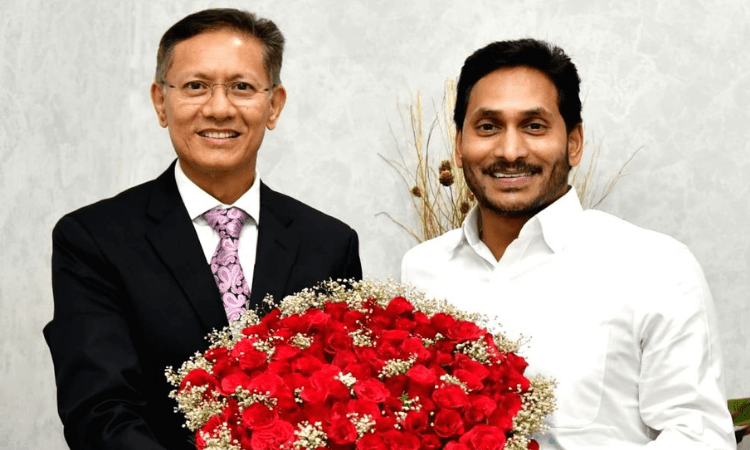
Damodar Gautam Sawang took over as the chairman of the Andhra Pradesh Public Service Commission (APPSC) on Thursday.

He was last week shunted out as Director General of Police (DGP).

After taking charge as the APPSC chairman, Sawang called on Chief Minister Y. S. Jagan Mohan Reddy.

The Indian Police Service (IPS) officer was appointed on the new post on February 18, three days after he was removed as the police chief.

Governor of Andhra Pradesh made the appointment under Articles 316 (1) and 316 (2) of the Constitution of India.

Sawang succeeded incharge of chairman A V Ramana Reddy who was holding the post after the exit of former chairman Uday Bhaskar.

Sawang will hold the post of APPSC chairman for a period of six years. However, as per the APPSC’s regulations, he will be deemed retired from IPS.

Sawang’s new appointment is being seen by many as an honorable exit along with the extension of service as the 1986-batch IPS officer is due to retire in July next year.

The Andhra Pradesh government on February 15 shunted out Sawang as DGP and appointed Kasireddy V. R. N. Reddy as the new police chief.

KVRN Reddy, Director General of Police (Intelligence) was placed in a full additional charge of the post of DGP (head of police force) until further orders.

Sawang’s transfer came nearly two weeks after government employees held a huge protest in Vijayawada despite police denying permission and imposing restrictions in the city. Thousands of employees from across the state managed to reach the city for ‘Chalo Vijayawada’ on February 3. This was seen as a big failure by the police.

Jagan Mohan Reddy had reportedly taken serious note of the incident. The next day he had called DGP and sought an explanation from him.

After assuming office as the chief minister in May 2019, Jagan Mohan Reddy had picked Gautam Sawang as the police chief.

Sawang, a 1986-batch IPS officer, had succeeded R. P. Thakur, who was transferred and posted as Commissioner, Printing and Stationery and Stores Purchase.

Before Telangana was carved out of Andhra Pradesh, Sawang worked in various positions including Superintendent of Police (SP) and Deputy Inspector General of Police (DIG) of Maoist-hit Warangal district.

In 2015, he became the Commissioner of Police in Vijayawada and three years later, he was appointed as Andhra Pradesh’s DG, Vigilance and Enforcement.

During 2009-12, he served as a Commissioner for UN Police in Liberia.

More than 10 K’taka students stranded in Ukraine, says CM Bommai

Karnataka Chief Minister Basavaraj Bommai on Thursday said that about 10 students from the state are stranded in Ukraine after Russia launched an all-out attack on the country.

“As many as 100 Indian citizens, students are stranded in Ukraine due to war. They got stranded while going to the airport. The flights have been suspended after the war broke out. Right now they are in two buses and we have learned that there are more than 10 students from Karnataka among them. We are getting information on their whereabouts,” he said.

“We are in touch with the Indian Embassy and our Chief Secretary is in touch with the foreign affairs secretary. The Embassy has been contacted and it has been learned that priority is given to their safety. We are doing everything for their safety and we are in touch with the central government also,” Bommai said further.

“I have been trying to get in touch with the Minister for Foreign Affairs. He is attending a meeting and as soon as possible, I will be speaking to him on the issue,” he stated.

Though many returned to India from Ukraine last week, some students wanted to leave the country at their convenience. This was supposed to be the last batch of arrival to India from Ukraine. “Today, they had almost reached the airport and then it (war) happened. We are in touch with the Indian embassy and they are in turn in touch with the students and working out measures to keep them safe. They have informed students about safety measures,” Bommai explained.

Budget can be effective means to bring change in agriculture: PM

Emphasizing that the agriculture budget allocation this year is much more than previous years, Prime Minister Narendra Modi on Thursday said it is aimed at the complete modernization of the sector and suggested seven pointers from the budget provisions.

In just six years the agriculture budget has increased manifold and agriculture loans for farmers have also increased by two and half times in the last seven years, the Prime Minister said, and added that the preparation for multiple schemes that have been discussed during this budget need preparation, for which the month of March can be utilized and then, “start rolling out right from day one in the new financial year.”

If all this is done properly, the budget will not just be a numbers game but, in reality, can be an effective means to bring about change in life, change in agriculture,” he said while addressing a webinar on the positive impact of Union Budget 2022 in the Agriculture sector.

The seven important pointers from the budget that Modi mentioned started with the provision for natural farming along the Ganga banks on both sides up to five kms, including a push for herbal, medicinal plants and also for horticulture; infusion of modern technology for improving agriculture and horticulture practices; focus on Mission Oil Palm and encouragement to other oil seeds too for lessen the import burden on edible oil and incorporating new schemes under PM Gati Shakti for transportation of agriculture goods.

The other three-pointers were how agri-waste management will be better organized, how waste to energy solutions will not just help bringdown carbon emissions but also increase farmers’ income; the regular bank-like facilities that the farmers will get from across 1.5 lakh post offices across India and, last but not the least, the need for changes to be brought in for investment in agri-research along with skill development, human resources development, etc., in the education sector.

Recounting the work done by his government in previous years, Modi recalled how three years ago the PM Kisan Samman Nidhi was started, and it has benefitted almost 11 crore farmers, most of them small farmers, till date, and Rs 1.7 lakh crore has been disbursed till now under the scheme. He also talked about how his government has brought in smartness in all things related to agriculture, ‘Beej Se Bazar Tak’ (from seed stage to market stage) by improving the systems over the last seven years.

The Prime Minister also appealed to the private sector to invest in the agriculture sector and described the multiple opportunities. For instance, soil health cards are prepared by the government and there can be private labs everywhere where the farmer can get his soil tested and work on fertilizers accordingly. “We need a vast network of soil testing labs just as today we have pathology labs for human health,” he said.

Modi also recounted achievements such as micro-irrigation, which is a medium to bring down input cost and improve production and something which also helps the cause of the environment. “Saving water in today’s times is a service to mankind. More crop per drop is our motto. This field too has immense possibilities,” he appealed to the private sector.

Ethanol blending, agri-startups, agri-waste management, logistics, transport of agriculture produce, food processing, drones for agriculture, and farm equipment on rent are some of the fields that the Prime Minister pointed out wherein private investors, especially young entrepreneurs can enter to benefit from immense potentialities.

KCR vows to put India on right track

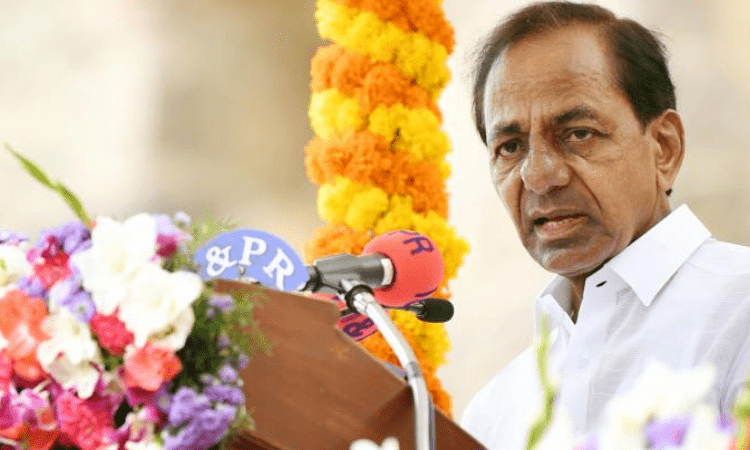
Telangana Chief Minister K. Chandrasekhar Rao on Wednesday vowed to put the country on the right track and said he was even ready to sacrifice his life for the purpose.

The Chief Minister, who is leading the efforts to cobble together an anti-BJP alliance, reiterated his national ambitions while inaugurating Mallanna Sagar, India’s largest man-made reservoir, in the state’s Siddipet district.

“Come what may, to put the country on the right track, if need be, I will sacrifice my last drop of blood. I will set right the country and will march forward,” he told a public meeting.

The Telangana Rashtra Samithi (TRS) chief voiced concern over the country losing its way and remarked that an “evil system” is prevailing. “Disgusting things are happening. Havoc is being created in the name of religion and caste,” he said and cited the current situation in neighboring Karnataka.

KCR, as Rao is popularly known, said some people including IAS officers shared with him how their children studying in Bengaluru were scared to go to schools and colleges due to the situation created there in the name of religion.

The TRS chief said that the image of Bangalore known as Silicon Valley of India took a beating due to the “hate” being spread at educational institutions. Pointing out that Hyderabad is next only to Bengaluru in terms of IT exports and was attracting huge investments, he cautioned people against the path being followed by the neighboring state.

KCR termed communalism cancer and called for rooting it out. “This evil posed a threat to the country. We should not allow this cancer to spread. We should throw it out of the country,” he said.

He said all states and regions of the country can develop and prosper if the government at the Centre is virtuous and does not divide people in the name of religion and caste. He said nobody would come to invest in a state or a country where there is communal strife and there is no peace and law and order.

He told people that since they were in public life and were determined to do good to people, they can’t be mute spectators to what was happening in the country.

“I am going ahead to impact national politics. For this, I will utilize all the strength God has given me and will use all my intellect,” he said.

KCR said despite no support from the Centre, Telangana made rapid strides in all sectors during the last seven years and has emerged as the role model for the entire country.

He listed out the schemes implemented by his government to ensure 24-hour electricity supply to all sectors, drinking water to every household, welfare of farmers, and all other sections of people.

Haryana launches prog to attract investment of Rs 25,000 cr

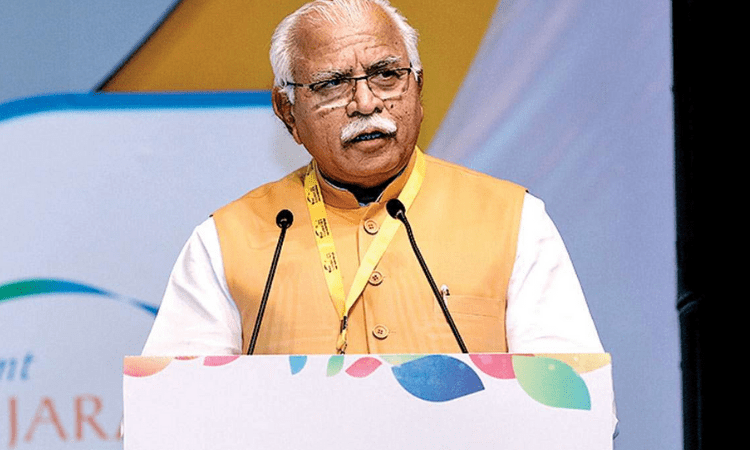
Haryana Chief Minister Manohar Lal Khattar on Wednesday launched a five-year program named Programme to Accelerate Development for MSME Advancement (PADMA) that is expected to bring in investment of over Rs 25,000 crore.

PADMA is a multi-departmental and multi-agency program that would not only promote the local products but would also give ample employment opportunities to the local youth, especially to the targeted Antyodaya families.

“Based on the principles of local yet global, PADMA aims to create a dynamic, self-sustainable and thriving industrial infrastructure at the cluster level for each block of Haryana,” said the Chief Minister while formally launching PADMA at a function here.

Deputy Chief Minister Dushyant Chautala and Minister of State for Labour and Employment Anoop Dhanak were present, among others.

“PADMA, a five-year program, will not only revolutionise the industrial landscape in Haryana through the development of PADMA industrial parks across all the blocks but is also expected to bring in investment of over Rs 25,000 crore in the form of infrastructure, common facility centers, business development service centers, and set-up new industrial units in each block,” said Khattar.

He said around 10,000-15,000 new units are expected to be opened by next year in these clusters.

The Chief Minister said in line with Atmanirbhar Bharat and to support state Micro, Small, and Medium Enterprises (MSMEs), a tremendous focus has been on the development of its MSME ecosystem. “With this in mind, the Haryana government has set up a separate directorate for the MSMEs.”

“The MSMEs play a significant role in the economic landscape of Haryana, contributing over 22 percent to the Gross State Value Added (GSVA),” said the Chief Minister.

He said under PADMA, one product in each block of 22 districts, has been identified based on the locally available resources, existing micro-enterprise ecosystem, demographic profile, key opportunities, sunrise sectors, and growth potential.

“If required necessary training and skilling would also be given so as to promote this sector,” he added.

Deputy Chief Minister Chautala said with the launch of PADMA a new benchmark has been set for taking the industries forward.

“One year ago, the blueprint of this One Block One Product was prepared and a survey and study were conducted before the implementation of this program. The findings highlighted that there are various local products at block levels that have huge market potential. In a bid to give a boost to each block and their special product on a larger level, PADMA program has been launched,” Chautala, who also holds the portfolio of Industries and Commerce Departments, said.

Battle for UP: 9.10% voter turnout till 9 am in phase 4

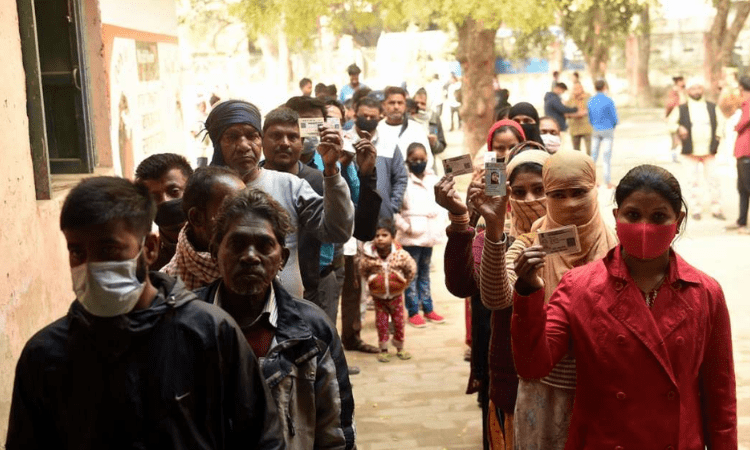
The voter turnout at 9 a.m. for the fourth phase of the Uttar Pradesh Assembly polls was 9.10 per cent, according to the data released by the Election Commission on Wednesday.

The Election Commission said the 9.10 percent voter turnout figure was an approximate trend as data from some polling stations takes time.

Banda registered 8.79 percent, Fatehpur 9.69 percent, Hardoi 8.09 percent, Kheri 10.45 percent, Lucknow 8.19 percent, Pilibhit 10.62 percent, Rae Bareli 8.00 percent, Sitapur 9.52 percent while Unnao registered 9.23 percent by 9 a.m.

Voters in phase-4 of polling will vote to select their MLAs from 59 seats across nine districts from amongst 624 candidates. There are a total of 2.13 crore voters, of which 1.14 crore are male, 99.3 lakh female, and 966 are transgender voters.

There are 24,643 polling booths and 13,817 polling stations with a maximum of 1,250 voters per booth, the Election Commission said.

Drive to protect mother tongue should become a people’s movement: Vice President

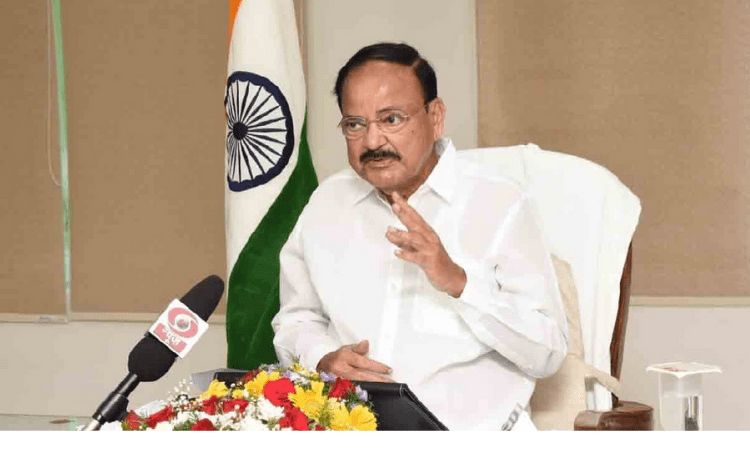
Observing that ‘language’ is a fundamental bond that unites people, Vice President M. Venkaiah Naidu on Tuesday said that the drive to protect and preserve the mother tongue should become a people’s movement in the country.

“If we lose our mother tongue, we will lose our identity,” Naidu said.

Addressing an event organized by the Ministry of Earth Science on the occasion of International Mother Languages Day virtually from Chennai, the Vice President called for tailoring languages to the changing needs of our times and finding creative and innovative ways to promote them among younger generations.

“Children should be encouraged to learn the nuances of language through games and activities,” he opined and also underlined the need to improve the scientific and technical terminology in Indian languages.

Describing languages as carriers of our cultural heritage, Naidu said that a language is the vital, unseen thread that links the past with the present.

“Our languages are thus a repository of our collective knowledge and wisdom which we have amassed over thousands of years,” he said.

The Vice President suggested referring to them as ‘Indian languages’ instead of ‘regional languages’ signifying their equal status and distinct identities.

“These ‘Indian languages’ are the epitome of our long-cherished value — unity in diversity,” he said.

Noting that India is home to hundreds of languages and thousands of dialects, the Vice President termed this linguistic richness as the key to our creativity and expression.

He also expressed happiness over the fact that NEP-2020 encourages the use of mother tongue in schools and colleges and seeks to ‘Indianise’ our education system by making it holistic, value-based, and inclusive.

Commending this approach, he urged the states to implement the policy in letter and spirit.

The Vice President talked about the need to offer technical courses in Indian languages to make education truly inclusive and to unlock the full potential of our youth force. He suggested learning from their policies and strategies for the preservation and promotion of the mother tongue.

Naidu urged the state governments to take a proactive stance in implementing Indian languages in every walk of life.

“All states must use the mother tongue of the people as the language of administration and also as a medium of education,” he said.

Pointing out that colonial rule has harmed our languages, he said: “After Independence also, we have not made enough efforts to do justice to our languages.”