BJP all set for 9-day Vijaya Sankalp Abhiyan in K’taka; Nadda to inaugurate

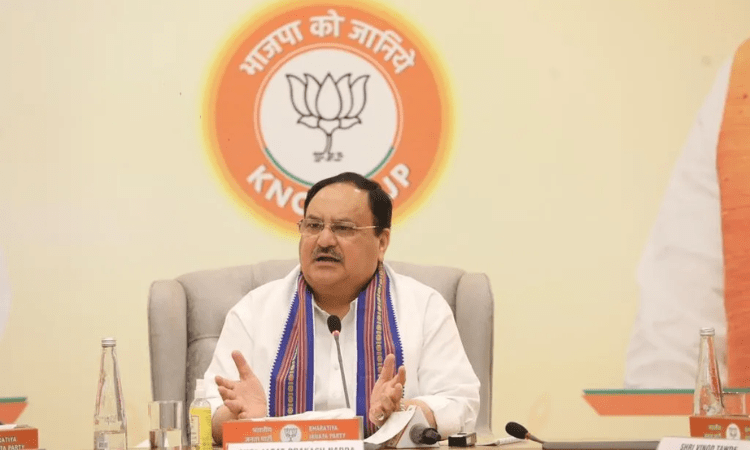
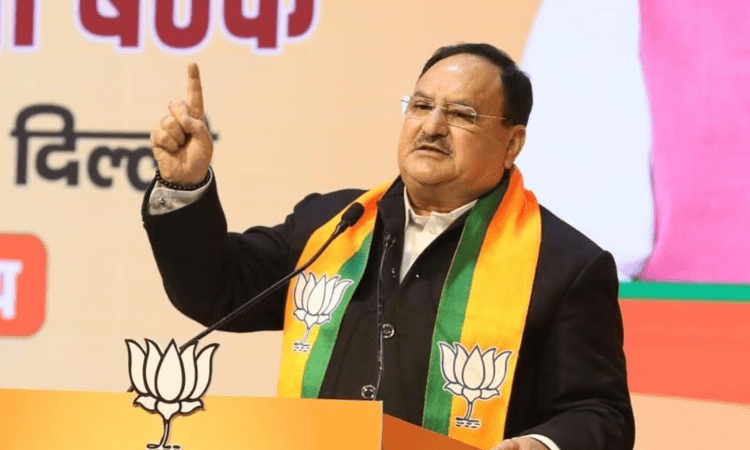
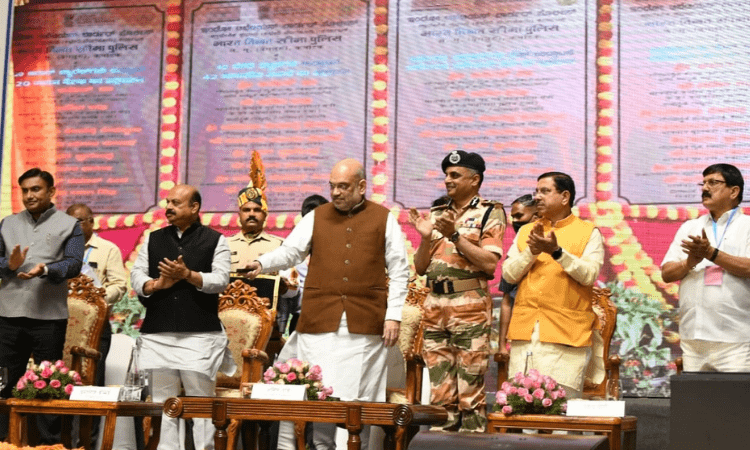
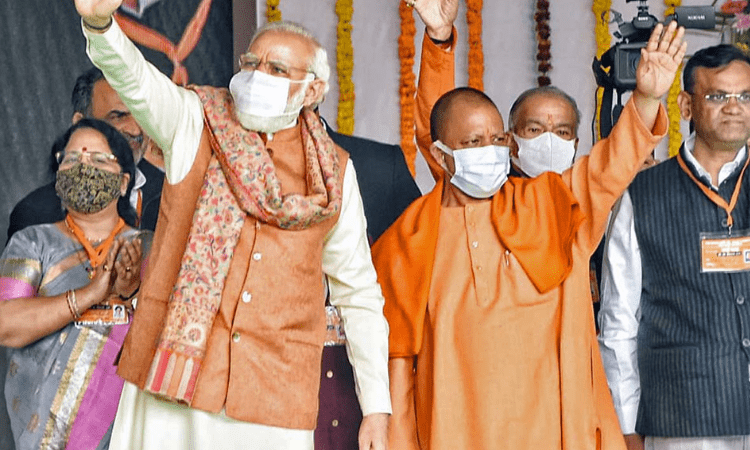
Ahead of the assembly polls, the ruling BJP is gearing up for the nine-day Vijaya Sankalp Abhiyan in Karnataka which will be inaugurated by BJP President J.P. Nadda on Saturday in Sidhagi of Vijayapura in the state.

Sindhagi is decked up for the mega event and BJP wants to kick-start campaigning in the north Karnataka region, considered as a strong BJP hold. More than one lakh people are expected to attend the programme.

The Vijay Sankalp Abhiyan will be carried out from January 21 to January 29. The state leaders will also inaugurate the abhiyan at various locations across the state.

Former Chief Minister B.S. Yediyurappa will take part in the inauguration program at Sindhagi. Karnataka BJP President Nalin Kumar Kateel will kick off the campaign in Bengaluru, Chief Minister Basavaraj Bommai in Tumakuru, Union Minister for Parliamentary Affairs, Mine and Coal Pralhad Joshi in Davanagere, BJP Karnataka In-Change Arun Singh in Chikkaballapur.

The ministers and MPs of Karnataka will inaugurate the campaign in their respective districts. The BJP workers would reach out to the voters with achievements, policies, and programs of the BJP.

The party plans to establish contact with more than 1 crore beneficiaries of various programs of the ruling BJP government.

Three crore stickers will be distributed to be pasted on vehicles. The stickers will have info-graphics of BJP’s signature programs such as ‘Kisan Samman’, and ‘Mudra’. The party has also planned a missed call campaign and registered more than 1 crore members.

Centre pumps budgetary allocation for northeastern states

The Indian government has made the development of the northeast a major priority. Prime Minister Narendra Modi has visited the northeast Region more than 50 times in the last eight years, while various other ministers have also visited the region over 400 times.

The government has approved schemes of the Ministry of Development of North Eastern Region (MDoNER) with an outlay of Rs 12,882.2 crore for the balance period of the 15th Finance Commission (2022-23 to 2025-26).

According to a press statement issued by the ministry, there has been a 74 percent reduction in insurgency incidents, a 60 percent reduction in incidents of attacks on security forces, and an 89 percent reduction in civilian deaths in the northeast. About 8,000 youth have surrendered and joined the mainstream, ushering in a better future for themselves and their families.

The actual expenditure in the last four years under MDoNER schemes was Rs 7,534.46 crore, whereas the funds available for expenditure in the next four years till 2025-26 is Rs 19,482.20 crore (2.60 times approx).

Massive efforts have been undertaken for infrastructure development in the region with improving connectivity being a prime focus.

For improving railway connectivity, Rs 51,019 crore has been spent since 2014. Nineteen new projects worth Rs 77,930 crore have also been sanctioned. For railways, in comparison to the average annual budget allocation of Rs 2,122 crore during 2009-14, in the past eight years, there has been a 370 percent increase in average annual budget allocation totaling Rs 9,970 crore.

For improving road connectivity, 375 projects worth Rs 1.05 lakh crore are underway. In the next three years, 9,476 km of roads will be laid under 209 projects. For this, the Central government is spending Rs 106,004 crore.

Air connectivity has also improved massively in the northeast. In 68 years, the northeast had only nine airports, which jumped to 17 in a short span of the past eight years.

Today, air traffic movement in the northeast has increased by 113 percent since 2014 (weekly basis). To further give a boost to air connectivity, Rs 2,000 crore will be invested in civil aviation in the northeast region.

For improving telecom connectivity, the Cabinet has also approved 4G connectivity in 4,525 villages in the northeast region. The Central government has set a target of 500 days to provide complete telecom connectivity in the region by the end of 2023.

Waterways are integral to the life and culture of the northeast. The Indian government is undertaking all efforts to develop this important sector in the northeast region. Before 2014, there was only one national waterway in the region. Now 20 waterways are declared as national waterways in the northeast. Recently, around Rs 600 crore was sanctioned for the development of national waterway 2 and national waterway 16.

Approximately Rs 190 crore has been spent towards enhancing skill development infrastructure in the region, along with the upgradation of existing government ITIs into model ITIs between 2014 and 2021.

A total of 193 new skill development institutes have been set up. Rs 81.83 crore has been spent as expenditure towards skilling. A total of 16,05,801 people have been killed under various schemes.

Micro, small and medium enterprises (MSME) have been promoted under various schemes to boost entrepreneurship development. Rs 645.07 crore has been spent to support/ set up 978 units.

Improving health infrastructure has remained a key focus over the last eight years. The government has spent Rs 31,793.86 crore since 2014-15 in the health sector.
Around 19 state cancer institutes and 20 tertiary care cancer centers have been approved under the strengthening of the tertiary care of cancer scheme.

Over the last eight years, efforts have also been carried out for improving the education infrastructure in the region. From 2014 till now, the government has spent Rs 14,009 crore to promote higher education in the northeast.

As many as 191 new institutes of higher education have been set up. There has been a 39 percent increase in the number of universities set up since 2014. As a result, there has been a 29 percent increase in total student enrolment in higher education.

Power infrastructure has been strengthened to fuel development in the region. Since 2014-15, the government has sanctioned Rs 37,092 crore, out of which Rs 10,003 crore has been spent so far.

The North East Gas Grid (NEGG) project worth Rs 9,265 crore is underway, which will improve the economy in the northeast region.

Reach out to people, hold gatherings at every district: PM Modi

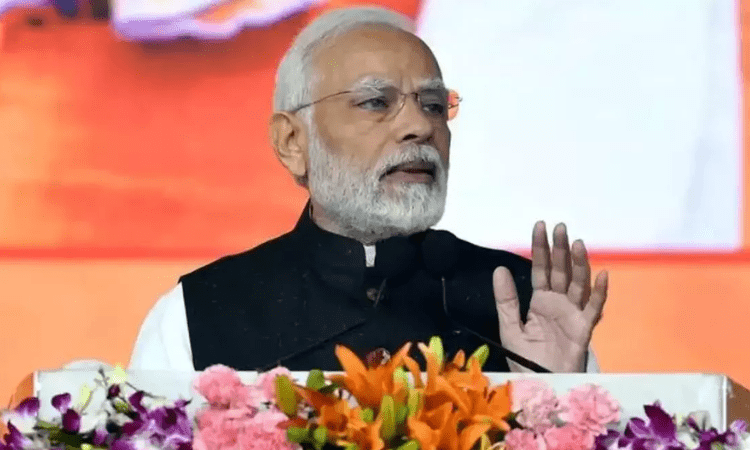
On the concluding day of the two-day national executive meeting of the Bharatiya Janata Party (BJP), Prime Minister Narendra Modi on Tuesday urged the party workers and leaders to strengthen the BJP by reaching out to people and holding gatherings in every district.

With as many as nine states going to the polls this year, the Prime Minister gave valuable tips to the representatives of those states who were present at the national executive meeting.

Addressing a press conference, Deputy Chief Minister of Maharashtra, Devendra Fadnavis, said, “The Prime Minister called upon the party workers to bring the marginalized and backward sections of the society into the mainstream.”

While delivering his speech, the Prime Minister said that India’s best time is approaching and the BJP workers should work hard to make the most of it, Fadnavis said.

Saying that there are only 400 days left for the general elections in 2024, the Prime Minister asked the party workers to tell people the difference between good governance and bad governance, to make the youth of the country aware, among others, Fadnavis informed.

The Prime Minister said that people should know how the BJP government ended the malpractices and corruption that were common during the tenures of previous governments.

The Prime Minister also said that he never considers the opposition as weak, but everyone should play their part.

Modi said that the BJP has now transformed into a social movement, and not just a political movement, as he asked the party leaders across the country to strengthen the BJP by reaching out to the people.

The Prime Minister also urged all BJP fronts to increase their activities in the border villages.

Nadda to continue as BJP President till June 2024

BJP President J.P. Nadda’s tenure, set to end this month, had been extended till June 2024 in view of the upcoming Assembly elections this year and the Lok Sabha elections next year.

Informing about the decision taken in the BJP National Executive meeting, Union Home Minister Amit Shah said that Defence Minister Rajnath Singh proposed to extend the presidential term of Nadda till June 2024, which was approved.

Citing the BJP’s victory in elections and organizational expansion under the leadership of JP Nadda, Shah said that BJP is the biggest democratic party. He further said that due to the pandemic, the membership drive could not be held, and nor could the organizational elections, and due to this, it was decided to extend Nadda’s tenure.

Shah claimed that under the leadership of Prime Minister Narendra Modi and the chairmanship of Nadda, the 2024 Lok Sabha elections would see the BJP win even bigger than in 2019.

India has shown growth and resilience amid global headwinds: PM

Prime Minister Narendra Modi said on Friday that India has shown growth and resilience amid global headwinds, as he urged the public and private sectors to seize opportunities arising as a result of the emerging global environment and to think out of the box.

Modi said this during his interaction with economists prior to the forthcoming Union Budget to be presented on February 1.

Recognizing that the underlying global headwinds are likely to continue, strategic recommendations were also made by the economists for further strengthening India’s economic resilience, sources aware of the developments said.

Modi noted that while there are risks, the emerging global environment offers new and diverse opportunities in areas such as digitization, energy, healthcare, and agriculture, among others.

To seize these opportunities, public and private sectors need to leverage synergies and think out of the box, he emphasized during the meeting, official sources said.

Participants at the meeting offered practical measures on ways in which India could prudently sustain its development momentum.

Ideas and suggestions were shared with the Prime Minister on diverse topics, ranging from agriculture to manufacturing.

Sources said that Modi applauded the success of the India Digital story and the rapid adoption of fintech across the country as well as the potential for inclusive growth and development it promises.

The Prime Minister underscored Nari Shakti as a key driver of India’s growth and urged her to continue making efforts to further enable and boost women’s participation in the workforce.

In the ongoing International Year of Millets, Modi highlighted the need to promote millets in view of their potential to transform the rural and agricultural sectors, with their attributes such as being carbon neutral, conducive to natural farming, and an affordable source of nutrition.

Finance Minister Nirmala Sitharaman, Minister of State for Planning Rao Inderjit Singh, Niti Aayog Vice Chairman Suman Bery, Principal Secretary to PM P.K. Mishra, Cabinet Secretary Rajiv Gauba and Chief Economic Advisor V. Anantha Nageswaran were present at the meeting, along with Niti Aayog members and CEO Parameswaran Iyer.

Himachal CM allocates portfolios to cabinet ministers

Three days after the Cabinet expansion, Himachal Pradesh Chief Minister Sukhvinder Singh Sukhu distributed departments among his Ministers.

While Sukhu has kept Finance, Home, General Administration, Planning, Personnel and other departments, the departments of Industries and Public Works have been allocated to six-time MLA Harshwardhan Chauhan and two-time MLA Vikramaditya Singh, respectively.

Jal Shakti, Transport and Language, Art and Culture are already with Deputy Chief Minister Mukesh Agnihotri.

The most elderly legislator Dhani Ram Shandil was allocated Health and Family Welfare, Social Justice and Empowerment, and Labour and Employment, while Chander Kumar was given Agriculture, Animal Husbandry, Jagat Singh Negi was allocated Revenue, Horticulture, and Tribal Development, Rohit Thakur was given Higher Education, Elementary Education, and Technical Education and Anirudh Singh got Rural Development and Panchayati Raj.

Andhra releases Rs 395 crore towards interest-free loans for traders

Andhra Pradesh Chief Minister Y.S. Jagan Mohan Reddy on Wednesday released Rs 395 crore under Jagananna Thodu for interest-free loans.

Under this scheme, Rs 10,000 each would be given to 3.95 lakh small-time traders and artisans to make them self-sufficient.

The Chief Minister also released Rs 15.17 crore towards reimbursement of interest to benefit 13.28 lakh beneficiaries who have repaid loans promptly in the last six months.

In his remarks at the release program at his official residence, he said: “Beneficiaries of the scheme, besides becoming part and parcel of the self-employed community are also helping the society indirectly in a great way.”

Jagan Mohan Reddy stated that it is a matter of pride for the state that it has sanctioned Rs 2,406 crore in interest-free loans to 15,31,347 beneficiaries. As many as 8,74,745 traders and artisans have promptly repaid their loans and have become an inseparable part of the scheme.

“This indicates a good change in the society,” he observed.

The CM reiterated that eligible people who could not avail of the scheme for various reasons in the past could still apply through village and ward secretariats and such people would be included in the scheme at the end of the social audit every six months.

Stating the reason behind the government’s push, he said that he had seen the hardships of several artisans and traders during his Praja Sankalpa Yatra and had decided back then that he would end their woes by introducing the Jagananna Thodu and assisting them in every possible manner.

“With today’s disbursal that benefits 28,000 new traders and artisans, the government has so far reimbursed Rs.63.65 crore as interest alone while the total loan amount sanctioned has benefitted 15.31 lakh people of which 80 percent belong to SC, ST, BC, and minority communities,” he said.

Vendors who sell fruits, vegetables, and foodstuffs on push carts, people running roadside tiffin centers, and others selling products in baskets and vending products on motorcycles and auto rickshaws besides Bobbili veena makers, artisans involved in brass work, Kondapalli and Etikoppaka toy makers, puppet, Kalankari and lace makers are among the beneficiaries.

Sasikala urges DMK govt to buy sugarcane of all sizes for Pongal hampers

AIADMK former interim general secretary and close aide of late Chief Minister J. Jayalalithaa, V.K. Sasikala has urged the Tamil Nadu government to buy Sugarcane of all sizes for the Pongal gift hampers.

She said that the state government had put the size of sugarcane to be bought in for Pongal gift hampers at 6 feet which were not feasible.

Sasikala said that the size of the sugarcane is based on the soil from where it was grown and that it was not in the hands of the farmers. The former AIADMK general secretary said that the government must not stick to fixing the size of sugarcane and buy sugarcane of all sizes from the farmers. It is to be noted that the state government was buying sugarcane from farmers at a rate of Rs 33 per piece.

In a statement on Tuesday, the former interim general secretary of the AIADMK said that the DMK government was stalling all the pro-people projects initiated by the previous AIADMK governments of MGR and J. Jayalalithaa.

She also charged that the DMK men were indulging in rowdyism and that this was not acceptable. The former aide of Jayalalithaa said that during the regime of Jayalalithaa, the government had taken stern action even if AIADMK men were involved in any malpractices.

Sasikala alleged that “if people don’t pay ‘hafta’ or protection money to the DMK men, no activities, including construction is not allowed”.

She called upon the state government to be more people-friendly and said that the government must take stringent action against anyone who was indulging in violence.

The day NTR became CM was historic for Telugus: Chandrababu

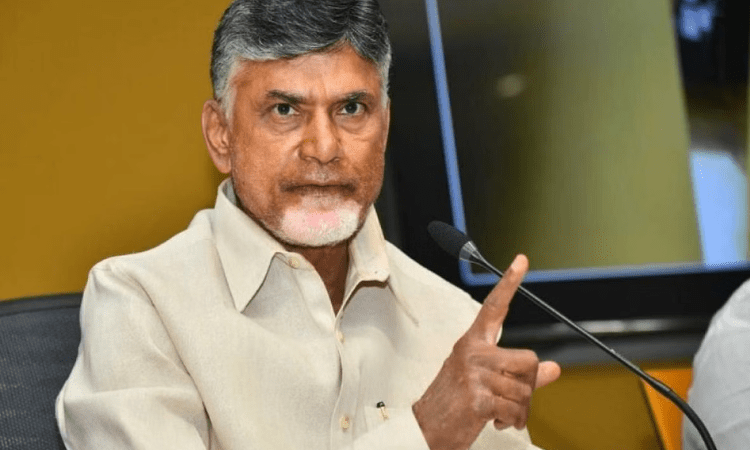
Telugu Desam Party (TDP) president Nara Chandrababu Naidu said on Monday the day party founder N.T. Rama Rao formed the first TDP government in united Andhra Pradesh was a historic one for the Telugus across the globe.

On the occasion of the TDP completing 40 years of forming the government, the former chief minister and TDP national president stated that revolutionary changes came in the lives of the Telugu people both economically and politically only after Rama Rao formed the TDP government.

He noted that the journey of the lives of the Telugu people is now being viewed as before and after the TDP formation.

He recalled that Rama Rao, who personally witnessed the ruthless political situation in the state and the untold hardships that the people were facing, floated the TDP only to ensure a poverty-free society.

It was on January 9, 1983, that NTR, as the legendary actor was popularly known, took oath as the chief minister of Andhra Pradesh. He created a record by coming to power within nine months after floating the TDP on the slogan of Telugu self-respect. This brought to an end the single-party rule of Congress in the state.

“Exactly, this was the day 40 years ago the late NTR took oath as the chief minister to bring in radical changes in the lives of the poor,” Naidu said.

The entire credit goes only to TDP for introducing revolutionary changes in society by bringing in welfare schemes like the Rs 2-a-kg rice scheme, single Window system, doing away with the Patel, patwari system, rights for women in property, pucca houses for the poor and old age pensions besides distribution of janatha clothes, Chandrababu recalled.

It is the TDP that established separate educational institutions for women like Padmavathi University and created reservations for women in education and employment, the TDP supremo observed.

The Backward Classes (BCs), who form 50 percent of the population, could progress in politics only with the encouragement given by the TDP, Chandrababu Naidu said, adding that even a separate quota was extended to BCs in the administration and local bodies only by the TDP.

The quota for Scheduled Castes (SCs) and Scheduled Tribes (STs) was increased and a separate welfare corporation for minorities was created by the TDP to ensure that they progress well both economically and socially, the TDP supremo maintained.

Better education facilities were created for the downtrodden sections of society by setting up more engineering colleges, schools, and other educational institutions and it is the TDP that brought radical changes in the lifestyle of the BCs, SCs, STs, and other sections, he stated.

“While NTR tried to uphold the dignity and self-respect among the Telugus, I tried my best to increase the self-confidence among them,” said Naidu, the son-in-law of NTR.

Observing that he introduced several reforms after he took charge as the chief minister of the state, Chandrababu said that the administration was brought closer to the people.

Since the credit of introducing reforms in information technology (IT), pharma sectors completely go to the TDP following which Telugu are now holding top positions in the world in both sectors.

Naidu became chief minister in 1995 after leading a revolt against NTR a few months after the latter led TDP back to power with a record majority. NTR’s children also supported Naidu as they were unhappy with the alleged attempts by his second wife Lakshmi Parvathi to take control of the party and the administration.

The TDP founder died of cardiac arrest on January 18, 1996, at the age of 72.

Naidu, who led TDP to power again in 1999, remained the chief minister till 2004. After the bifurcation of Andhra Pradesh in 2014, he formed the first TDP government in the residuary state.

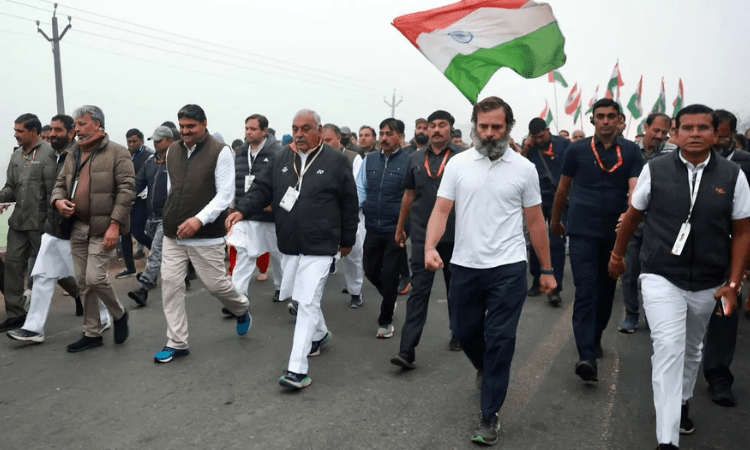
Bharat Jodo Yatra resumes from Delhi, to enter UP today

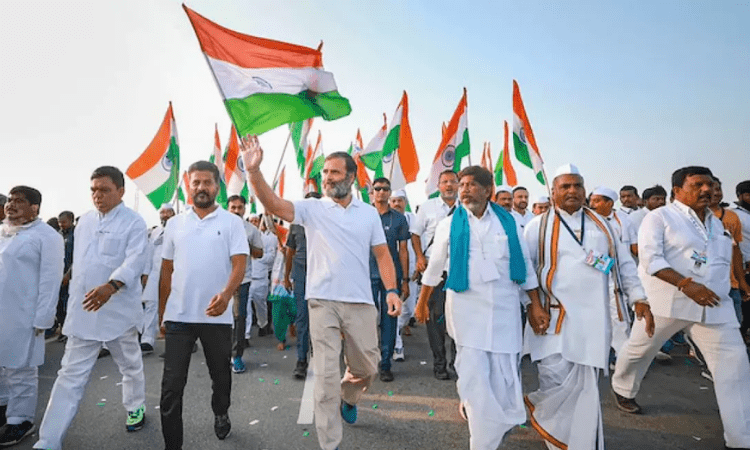
Congress leader Rahul Gandhi’s Bharat Jodo Yatra resumed in Delhi on Tuesday after a nine-day break for Christmas and New Year.

The Yatra resumed from Yamuna Bazaar and will enter Uttar Pradesh at Loni Border in the afternoon.

Rahul Gandhi along with senior leader Ambika Soni reached the venue of the march where scores of Congress workers and leaders were assembled.

From Uttar Pradesh, where the Yatra is for three days, it will re-enter Haryana on January 6. The Yatra will be in Punjab from January 11 to 20 and spend a day in Himachal Pradesh on January 19. The Yatra will then enter Jammu and Kashmir on the evening of January 20.

“The message of Bharat Jodo is not limited only to the 12 states and two Union Territories through which the Yatra passes. Several state-level Yatras have already been announced, and the upcoming ‘Haath se Haath Jodo Abhiyan’ will take the message of Bharat Jodo to the doorstep of every Indian,” Jairam Ramesh, a party spokesperson said.

K’taka BJP slams Siddaramaiah over comment against Amit Shah

Karnataka’s BJP unit on Saturday slammed opposition leader Siddaramaiah’s comment that Union Home Minister Amit Shah is a “political businessman who has put up the Chief Minister’s post for sale for Rs 2,000 crore”, saying that no post is for sale in the saffron party.

Taking to social media a day after his remark, the party’s state unit said that “if lies are told a hundred times, it will not become the truth. You have put tickets (for elections) for sale for candidates. It is natural for you to imagine”.

“The CAG report maintains that for Rs 35,000 crore money that has been spent during the tenure of your government there are no accounts. Siddaramaiah has not bothered to answer this to date.

“Your (Siddaramaiah) courage must be appreciated. You disappeared when the PMO asked for evidence for your charges. You ducked the directions from the court to submit evidence.

“You have swallowed Rs 68.8 crores in the name of modernization of police forces. You are disturbed by the visit of Amit Shah and again playing the same tune and making commission allegations. Mr. Siddaramaiah you can’t fool people,” the party noted.

The BJP went on to say that “your government released Rs 1,43,341 crore for filling up lakes with water in the state. No work was taken up till the end of the tenure of the Congress government”.

“In the name of this project, your colleagues’ pockets were filled with money. Finally, the lakes were filled by the rain… Your government was overthrown by the people for rampant corruption. 7,785 hectares of forests were given away for mining to his own people,” it added

PM to attend Bengal programmes via video conferencing

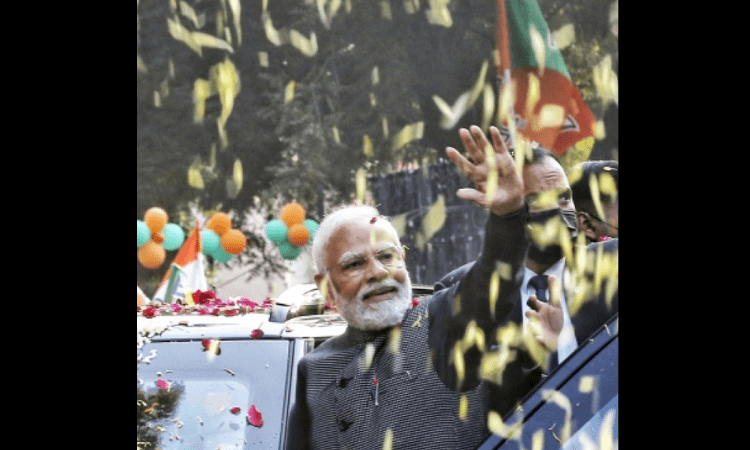
In the wake of the demise of his mother Heeraben Modi, Prime Minister Narendra Modi will join Friday’s scheduled programs in West Bengal via video conferencing. This was announced through his official Twitter handle.

The Prime Minister rushed to Ahmedabad early in the morning after his mother passed away at the U.N. Mehta Hospital where she had been admitted since Wednesday.

He was scheduled to visit West Bengal on Friday for a day-long visit.

The programs include the launch of key connectivity-related projects and the meeting of the National Ganga Council.

“It is always special to be among the people of West Bengal. Tomorrow, 30th December is an important day for the growth trajectory of the state. Development works over Rs 7,800 crore would either be inaugurated or their foundation stones would be laid.” Modi tweeted on Thursday.

Stampede in Chandrababu Naidu’s Andhra roadshow, police register case

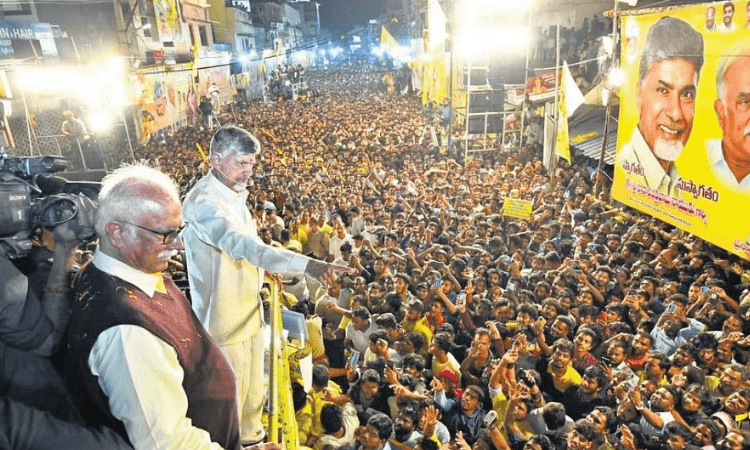
Police in Andhra Pradesh’s Kundukur town registered a case in connection with the death of eight persons in a stampede during Telugu Desam Party (TDP) president N. Chandrababu Naidu’s roadshow on Wednesday night.

Eight persons, including two women, died and five others were injured when they fell into a drain due to a stampede during the former chief minister’s roadshow in the town of Nellore district.

Kundukur police registered a case under section 174 of the Code of Criminal Procedure and took up an investigation.

Meanwhile, the authorities handed over the bodies of the deceased to their relatives after an autopsy at the Kandukur Area Hospital on Thursday morning. Arrangements were being made to send bodies to their respective villages.

The opposition TDP has announced that it will make arrangements for the funeral of the deceased. Chandrababu Naidu asked his party leaders and cadres to participate in the last rites.

The TDP has blamed inadequate security by police for the incident. Local TDP leaders said they had informed police that a large number of people were expected for the roadshow but they failed to make proper arrangements.

One of the leaders said unauthorized construction over the drain also caused the mishap. With no parking place, some people had parked their two-wheelers near the drain. When the TDP leader arrived, people surged forward to catch his glimpse and fell on each other and some people fell into the drain.

The deceased were identified as E. Rajeswari (48), Chinna Kondaia (55), Kakumani Raja (50), K. Yanadi (55), Devineni Ravindra (73), G. Madhubabu (44), Y. Vijay (45) and Purshottam (70).

Chandrababu Naidu, on Wednesday, announced Rs 10 lakh each as ex gratia to the kin of those who died in the stampede.

Expressing deep regret at the loss of lives, Chandrababu Naidu said that those who died are the family members of the TDP and it is a great loss to the party. “It is really a great agony that the family members of the TDP who fought for the interest of the state, who attended the party public meeting here have lost their valuable lives,” Naidu said.

Promising that he will stand by the family members of those who died in the incident, Chandrababu said that he will not only pay the ex gratia to the family members but also will help with the education of their children. He also ordered the party activists to stay back in Kandukur till the last rites of the dead are complete.

The president of the state unit of the TDP, Atchen Naidu, also said that the death of seven persons at the public meeting of Chandrababu is a great tragedy and the party will stand by the family members of the deceased.

PM announces relief for victims of Andhra stampede

Prime Minister Narendra Modi on Thursday announced an ex-gratia of Rs 2 lakh from the PM Relief Fund (PMNRF) to the kin of the seven people who died after falling in a drainage canal in Andhra Pradesh’s Nellore district during former Chief Minister N. Chandrababu Naidu’s roadshow.

“Pained by the mishap at a public meeting in Nellore, Andhra Pradesh. Condolences to the bereaved families. May the injured recover soon. An ex-gratia of Rs 2 lakh from PMNRF would be given to the next of kin of each deceased and the injured would be given Rs 50,000,” Modi tweeted on Thursday.

During the incident on Wednesday in Kandukur town which took place soon after the TDP chief arrived to address the roadshow, eight people were also injured.

After the tragedy, Naidu immediately canceled the meeting and announced Rs 10 lakh to the kin of the deceased.

Andhra Pradesh CM urges PM to resolve post-bifurcation issues

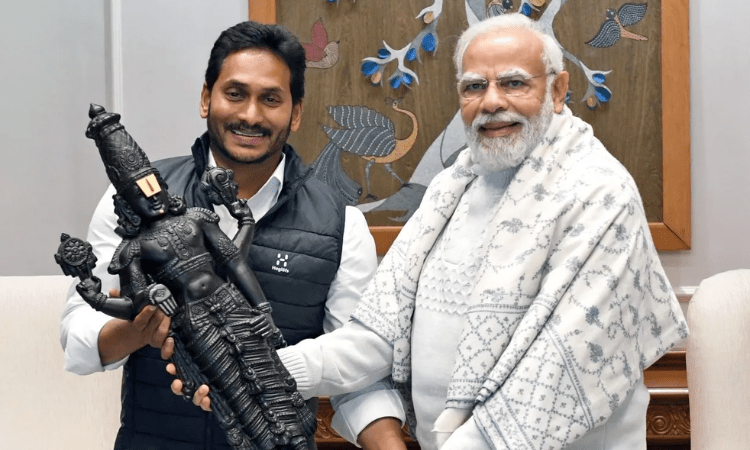
Andhra Pradesh Chief Minister Y.S. Jagan Mohan Reddy on Wednesday met Prime Minister Narendra Modi in Delhi and urged him to resolve several pending issues that remained unattended for the last eight years after the bifurcation of the state.

The CM apprised him that several issues remained unsolved even after eight years of the bifurcation due to which the residual state of Andhra Pradesh is hampered a lot.

According to the Chief Minister’s Office (CMO), Jagan Mohan Reddy said that despite the special committee headed by the Union Finance Secretary holding several meetings and discussing the unsolved bifurcation issues and related assurances given by the Centre in Parliament, no progress has been made to resolve key issues.

He told the Prime Minister that a huge amount of Rs 32,625.25 crore including resource funding of Rs 18,330.45 crore for the fiscal 2014-15 and pension arrears payable to Andhra Pradesh has been pending and appealed to expedite it immediately.

The Chief Minister said that the Finance Ministry has been imposing a plethora of restrictions on the state government on its permitted borrowings while adjusting the loans made by the previous TDP regime which had borrowed beyond the limits.

The YSRCP government has been facing several restrictions now for the wrongs of the TDP regime, he said, stressing the need for the Prime Minister to intervene and do away with the restrictions. The Chief Minister made it clear that the state would suffer a lot financially if the restrictions continue unabated, especially at a time when the country is set to fight the new variant of the Covid pandemic.

He further said that no final decision has been made by the Centre on the estimated expenditure of the Polavaram Project despite the Technical Advisory Committee finalizing the total project cost as Rs 55,548 crore. Apart from not reimbursing the Rs 2,937.92 crore spent by the state government on the project from its own revenues so far, the Centre has also wrongly chosen to treat the drinking water supply system separately from the project, he complained, saying such a decision has not been applied to any other irrigation project which has got national status.

Jagan Mohan Reddy also appealed to the Prime Minister to do away with the policy of treating the project cost component-wise as it is escalating the total project cost besides causing delay and difficulties in reimbursement of the bills.

He appealed to the PM to release Rs 10,485.38 crore immediately on ad-hoc basis to begin land acquisition and take up the works of relief and rehabilitation of families displaced in view of the efforts to increase the height of the dam to 41.15 meters.

The Chief Minister also requested the Prime Minister to take immediate steps to ensure that the Telangana government pays its dues of Rs 6,886 crore outstanding from the TS Discoms immediately to AP GENCO which is in dire straits.

Pointing out the flaws and the irrational points in the National Food Security Act, the Chief Minister said that AP is being put to huge financial losses because of the faulty Act. He said that the NITI Aayog also has agreed with this view and there is a need to correct it.

Because of the flaws in the Act, some 56 lakh eligible families in the state are foregoing the benefits under the PMGKAY, he pointed out saying the state government has spent Rs 5,527 crore so far. He sought allotment of 77,000 tonnes of ration rice to the state out of the 3 lakh tonnes of ration rice being stranded at the Centre every month.

He further asked the Prime Minister to grant 14 more medical colleges to the state as there are only 12 medical colleges now to cater to the medical needs of the people as there are now 26 districts after reorganization with each district having a population of 18 lacks.

He also appealed to the Prime Minister to allot mines to meet the iron ore requirement of the steel plant being built at Kadapa and extend all cooperation to the proposed 76.9 km long Metro Rail Project in Visakhapatnam for which DPR has been already submitted, besides fulfilling the promise of granting special status to the state as per the assurances given in the Parliament.

The Chief Minister assured the Prime Minister that the AP government is ready to face the emerging BF-7 Covid threat.

Telangana: BRS assets up by 66% during 2021-22

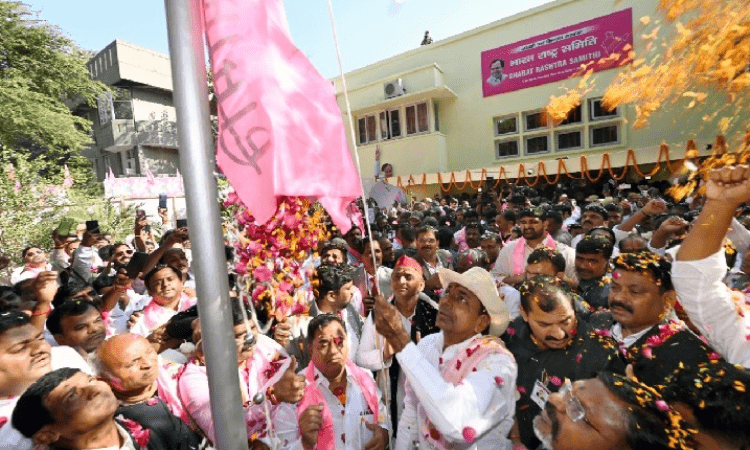
The assets of Telangana Rashtra Samithi (TRS), which recently rechristened itself as Bharat Rashtra Samithi (BRS), have grown by over 66 percent during 2021-22.

The annual audited accounts and annual report of contributions submitted by the party to the Election Commission of India (ECI) show that its current assets have gone up to Rs 480 crore from Rs 288 crore in 2020-21.

The party’s income during the same period jumped by a whopping 480 percent from Rs 37.65 crore to Rs 218.11 crore.

During 2021-22, the party led by Telangana Chief Minister K. Chandrasekhar Rao earned Rs 153 crore through electoral bonds and another Rs 40 crore through electoral trusts. The party had no income under these two heads during the previous year.

Annual fees/subscriptions from members came down to Rs 7.54 crore from Rs 16.70 crore. There were no donations or contributions from companies during the year while the party received Rs 3.15 crore from companies in 2020-21.

The party incurred election expenditure of Rs 7.68 crore in 2021-22 against Rs 4.79 crore in 2020-21. The opening balance for the year ending March 31, 2022, was Rs 307 crore against Rs 292 crore the previous year.

The statement also shows that the party’s balance with scheduled banks for more than 12 months maturity period was Rs 451 crore in 2021-22 against Rs 256 crore in 2020-21.

At TRS plenary in April, the party president and Chief Minister KCR had said that the party was Rs 1,000 crore entity which is sufficient enough for him to jump into national politics.

Bommai meets Shah in Delhi to discuss K’taka Cabinet expansion

Karnataka Chief Minister Basavaraj Bommai on Monday met Union Home Minister Amit Shah at his residence in the national capital to discuss some key issues including the Karnataka Cabinet expansion.

According to a source, issues related to the upcoming Assembly elections in Karnataka, Lok Sabha polls, and Karnataka Cabinet expansion would be discussed during the meeting between the two Bharatiya Janata Party (BJP) leaders.

The meeting between Bommai and Shah lasted over four hours.

“With pressure mounting from former ministers K.S. Eshwarappa and Ramesh Jarkiholi, who have demanded their re-induction into the Karnataka Cabinet, the issue is likely to come up for discussion when Bommai meets senior BJP leaders in the national capital,” a source had earlier said.

The Karnataka assembly elections are likely to be held in April-May next year. With less than six months left for the assembly elections, the BJP has been holding a series of meetings in Karnataka as well as in Delhi.

It’ll be SP’s M-Y versus BJP’s M-Y in UP

In the New Year, the Samajwadi Party is seeking to consolidate its M-Y (Muslim- Yadav) base and pose a challenge to BJP’s M-Y (Modi-Yogi) — the latter having proved its power in the recent elections across the country.

The past year has been a roller-coaster ride for the Samajwadis in Uttar Pradesh and the party is now reworking its strategies for 2023.

The party — following the demise of its founder Mulayam Singh Yadav and the rapprochement with Shivpal Singh Yadav — is working overtime to improve its performance in the 2024 Lok Sabha elections.

SP president Akhilesh Yadav is also trying to counter allegations of being a drawing-room politician.

He visited jailed party MLA Irfan Solanki in the Kanpur jail, a day before the latter was shifted to Maharajganj district jail.

He will also be paying a visit to Jhansi jail where another SP MLA Deepchand Yadav is lodged.

Akhilesh’s decision to meet his beleaguered party leaders is apparently designed to send a positive message to the party cadres.

The Samajwadi Party has lost three allies in UP after the 2022 Assembly polls — the Suheldev Bhartiya Samaj Party (SBSP), Mahaan Dal, and Janwadi Party — but the SP has, more or less, made up for the loss by bringing in Shivpal Yadav into the party fold.

Shivpal Yadav is known for his organizational skills and ability to mobilize party workers. Given an opportunity, he will play an important role in gearing up the party for the 2024 polls.

His return to the SP fold will also prevent a division in the Yadav vote base of the party.

A senior SP MLA, who spoke on condition of anonymity, said “Shivpal’s return to the party fold will prove to be an elixir for the party and also galvanize the veterans who had receded into their shells when the Akhilesh – Shivpal rift widened.”

According to party sources, Akhilesh will be looking towards new allies for the general elections, besides further cementing his friendship with the Rashtriya Lok Dal (RLD).

He will focus on smaller parties like the Azad Samaj Party (Bhim Army) instead of looking toward the BSP and Congress.

“He knows that SP is the only party that can challenge the BJP in Uttar Pradesh. The results of the recent Assembly elections where the SP appreciably increased its vote percentage and also doubled its seats, is proof that it is SP alone that can challenge the BJP alliance,” said the MLA.

Another major change in the SP strategy for 2024 polls is its decision to openly support Muslims.

Akhilesh, since he took charge of the party in 2017, has been peddling soft Hindutva and trying to shed a pro-Muslim image.

“But Akhilesh is now speaking up against atrocities on Muslims. He has realized that the SP should follow his late father’s caste formula of Muslim Yadav. The fact that he visited Irfan Solanki in jail, is a part of this strategy,” said a party leader.

The main challenge that Akhilesh will face in the coming days is the ‘respectable amalgamation’ of Shivpal Singh Yadav’s supporters. He is also expected to give a respectable position to Shivpal in the party.

According to sources, Akhilesh will ensure that winnability is the main factor in ticket distribution for the general elections.

“It is a case of every seat counts and the party will make sure that candidates are selected with care,” said a former MLC, known for his proximity to Akhilesh.

However, the biggest challenge that Akhilesh faces is that the BJP has an extremely well-oiled organizational machinery and SP is no match for it yet.

Besides, Akhilesh is leading a one-man army while the BJP has multiple leaders who carpet bomb the entire state during elections.

Banking on Telangana growth model, KCR looks to influence national politics

The year 2022 saw the Telangana Rashtra Samithi (TRS) opening a new chapter in its 20-year-old history as it rechristened itself as Bharat Rashtra Samithi (BRS) with the party supremo K. Chandrasekhar Rao eyeing a key role in national politics.

With the formal launch of BRS and the recent opening of its central office in New Delhi, the party is gearing up to expand its activities to different parts of the country.

KCR, as Rao is popularly known, will be projecting the Telangana development model to the rest of the country and presenting his vision to replicate the same in other states.

The coming year will determine to what extent it will influence national politics but a lot will depend on the outcome of the Assembly elections in Telangana scheduled towards the end of 2023.

If KCR leads the party to a third consecutive term in power and becomes the first leader in South India to score a hat-trick, it is likely to bolster the chances of the BRS establishing itself as a force in some other states ahead of the 2024 Lok Sabha polls.

From a leader who led the movement and achieved statehood for Telangana to becoming the first chief minister of India’s youngest state and winning a second term in power, the 68-year-old is now looking to set a new record and don the mantle of a national leader.

While launching the BRS, KCR gave the slogan of “ab ki baar kisan sarkar”, thus hinting that farmers and agriculture will be at the core of his party’s strategy as it looks to make inroads in other states.

As part of his efforts to emerge as a national leader, the BRS chief distributed compensation of Rs 3 lakh each to the kin of the farmers killed during the movement against the three farm laws of the Centre. The Telangana cabinet approved Rs 22.50 crore for distribution among the families of the 750 farmers killed during a 13-month-long stir.

On every occasion, the BRS chief highlights the innovative schemes under implementation in Telangana for development of agriculture and the welfare of farmers. He has predicted that a non-BJP government will come to power at the Centre and that it will provide free electricity to farmers across the country.

Claiming that Telangana is the only state in the country supplying 24 hours free electricity to farmers, KCR has already announced that when a non-BJP government comes to power at the Centre, this will be extended to the entire country.

KCR has also been highlighting two other major schemes – Rythu Bandhu and Rythu Beema. Under Rythu Bandhu, the government is providing investment support of Rs 10,000 per acre every year irrespective of the extent of land owned by a farmer while under Rythu Beema it is providing compensation of Rs 5 lakh to the family of a farmer after his death whatever may be the cause of death.

The BR’s leader has also been highlighting how Telangana achieved tremendous progress in eight years.

Telangana’s Gross State Domestic Product (GSDP) more than doubled to Rs 11.55 lakh crore while the per capita income increased to Rs 2.75 lakh in 2022 from Rs 1.24 lakh in 2014.

Overcoming electricity shortage to ensure round-the-clock electricity to all sectors, a massive increase in food production by completing several irrigation projects including Kaleshwaram, considered the world’s largest lift irrigation project, and the increase in annual IT exports to Rs 1.83 lakh crore from Rs 57,000 crore in 2014 are projected as the other achievements.

“When a new state can achieve this in such a short span of time, why can’t the rest of the country achieve this,” KCR often poses the question at public meetings.

KCR also claims that no other state can compete with Telangana in terms of welfare schemes for various sections of people. Last year, it launched another innovative scheme, Dalit Bandhu, for the socio-economic empowerment of Dalits. Under this scheme, every Dalit family will be provided Rs 10 lakh assistance to start any business of its choice.

These schemes are not only attracting national attention but a few villages in neighboring Karnataka and Maharashtra bordering Telangana have even demanded that they be merged with Telangana so that farmers and other sections of people can reap the benefits of its schemes.

The BRS is primarily looking to expand from these states and also looking at Andhra Pradesh and Tamil Nadu.

In tune with the priority of the agriculture sector and farmers, BRS launched a Kisan cell on the day of the launch. KCR appointed the leader of the National Farmers’ Union, Gurnam Singh Charudi of Haryana, as president of the BRS Kisan Cell.

The party has drawn up plans to go aggressive to expand after Christmas. As part of this, the BRS Kisan Cell will be launched next week in Punjab, Haryana, Maharashtra, Karnataka, Odisha, Andhra Pradesh, and Telangana.

BRS leaders say that many former MLAs and senior political leaders with their teams and followers from various states of North, East and Central India are having discussions with KCR. The BRS chief is explaining to them what kind of policies should be adopted according to the aspirations of the people there following the geographical, social, and cultural conditions of their states.

While KCR has long been aspiring for a role in national politics by bringing together like-minded parties for a third alternative, his plans failed to take off apparently due to differences with other regional leaders over the composition of the proposed front.

Aware of the fact that with the limited Lok Sabha seats (17) that Telangana has, he will not be able to influence national politics, KCR came out with the idea of BRS. Working with the 2024 Lok Sabha polls as its target, the party will be focusing on 100 Lok Sabha seats.

The BRS hopes to influence the nation with its socio-economic and political agenda by winning at least 50-80 seats. But, it remains to be seen what strategy the party will adopt to achieve this target.

“BRS will remain a fallacy unless the party wins seats outside Telangana. Currently, every state has a different dynamic and there are regional forces to cater to the expectations of the people there,” observes political analyst Palvai Raghvendra Reddy.

“KCR is wishing to go national with farmers as a key agenda. But in the past elections held across India, we have not seen farmers alone deciding the fate of an election, except in western Uttar Pradesh during the time of Chaudhary Charan Singh and once in Punjab in 2012. We have noticed how the farmers’ agenda has faltered in UP in this year’s Assembly polls,” he said.

The BRS will face challenges in every state as it seeks allies to achieve its target.

“The first major challenge before KCR would be to get prominent allies across states/regions who would be willing to contest on BRS party tickets. We are a country of divergent groups and differing sentiments, and we will have to wait and see who will align with the BRS in the immediate future,” said Reddy.

“Though the Janata Dal (Secular) leadership was seen standing with KCR during the launch of the BRS, it is unlikely they would contest as BRS in the upcoming Karnataka Assembly elections; and Gowdas are not that big a factor from Karnataka in the parliamentary elections,” the analyst said.


Delhi Congress gears up to welcome Bharat Jodo Yatra

The Delhi unit of Congress is all set to receive the Rahul Gandhi-led Bharat Jodo Yatra as it enters the national capital through the Badarpur Border on Saturday.

The party has put all its might to make it a grand ceremony with the central leaders taking charge. Flags and hoardings have been put up along the route.

According to party sources, the Yatra will enter Delhi via Badarpur Border in the morning and reach Ashram at 10.30 a.m. After taking a morning break, the foot march will resume at 1.30 p.m. and proceed to Red Fort via Hazrat Nizamuddin India Gate.

At the Red Fort, the yatra will take a break with Rahul Gandhi paying tributes at the Mahatma Gandhi memorial at the Rajghat.

The Yatra will break for a few days and resume on January 3. Earlier, senior party leader Jairam Ramesh had said that there will be a break of nine days, to repair the containers and ready them for the harsh winter in the north.

“Also, many of the yatra participants will be able to spend time with their families after almost four months. The journey will resume on January 3, 2023.”

The yatra will resume from Ghaziabad on January 3 and proceed towards Haryana and reach Sanoli Khurd at the Panipat border on January 6. On the occasion, a massive rally will be organized the following day.