7-point agenda for environment protection by Kamal Haasan’s party

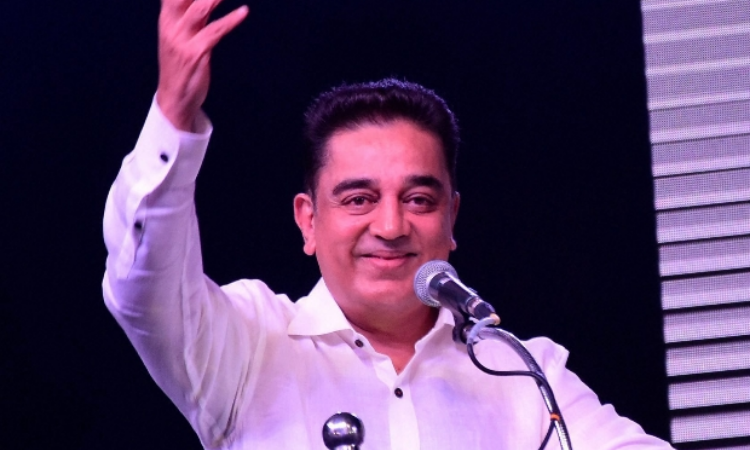
Establishing a circular economy, enforcing pollution standards, strict groundwater regulations, and having an environment atlas is part of the seven-point agenda of the Kamal Haasan promoted Makkal Needhi Maiam (MNM) party, which was announced on Monday.

As per the seven-point agenda for the environment, the MNM announced that it would establish a circular economy, where recycling and reuse will be a norm for water, plastic, and e-waste.

“Incentivise production of non-plastic alternatives by household industries and Self-Help Groups,” the party said.

The party said all pollution monitoring data will be published as a continuous stream through “OCEMS – Online Continuous Emission and Monitoring Systems” as per the Supreme Court directive of 2017.

In order to regulate the exploitation of groundwater, the party said it would bring a comprehensive and stringent groundwater regulation for large-scale harvesting of groundwater. This will be implemented to safeguard the interests of local communities, farmers, and future generations. Wetland rules will be amended to ensure the protection of local water bodies like lakes and other waterways.

A statewide environmental atlas will be developed for the industrial sites on the lines of the Central Pollution Control Board (CPCB) siting criteria for industries while encouraging green industries.

According to MNM, “Local Area Environment Committees” involving local community activists, Tamil Nadu Pollution Control Board, and District Administration, will be set up in pollution hotspots to monitor industrial compliance of pollution standards.

“Bringing in behavioral change in people for respecting the eco-systems will be instilled through sensitization,” the party said.

The party had earlier announced its seven-point economic agenda.

Kangana on charges of merging flats: Will fight in higher court

Bollywood actress Kangana Ranaut on Saturday tweeted a denial to a news piece reporting that she has allegedly merged three flats into one, which she owns on the fifth floor of a 16-story building in the Khar area of the city.

The actress claimed in a tweet that the building has been constructed in a way that there is one apartment on each floor, and it was like this when she purchased it. The actress in turn alleged that the Brihanmumbai Municipal Corporation (BMC) is harassing her and she also took a dig at the Shiv Sena government.

“Fake propaganda by Mahavinashkari government, I haven’t joined any flats, the whole building is built the same way, one apartment each floor, that’s how I purchased it, @mybmc is only harassing me in the entire building. Will fight in the higher court,” Kangana wrote on Twitter.

In September last year, the BMC had demolished parts of Kangana’s office located in Bandra citing illegal construction. The demolition work was stopped midway after a stay order from Bombay High Court on September 9.

Start-ups future MNCs, to give ‘Brand India’ new global identity: PM

Prime Minister Narendra Modi on Saturday stressed that start-ups be set up in all sectors for building future multinationals which, he said, would give ‘Brand India’ new global identity in the times to come.

Speaking after laying the foundation stone of IIM-Sambalpur’s permanent campus in Odisha through videoconference, the Prime Minister said: “This is a perfect time. Today’s start-ups are tomorrow’s multinationals. These start-ups are emerging in Tier 2 and 3 cities. These start-ups will play a big role in establishing multinationals.”

Modi said that the scope for start-ups is expanding. “You have to prepare yourself for new possibilities. Our youths are responsible for giving ‘Brand India’ a new global identity.”

The Prime Minister said that the Indian Institute of Management-Sambalpur has to showcase its strength to the country. The new campus would help strengthen the potential of Odisha’s youths.

Odisha Governor Ganeshi Lal, Chief Minister Naveen Patnaik, apart from Union Ministers Ramesh Pokhriyal ‘Nishank’, Dharmendra Pradhan, and Pratap Chandra Sarangi were present on the occasion.

Yogi govt’s campaign attracts youth towards farming

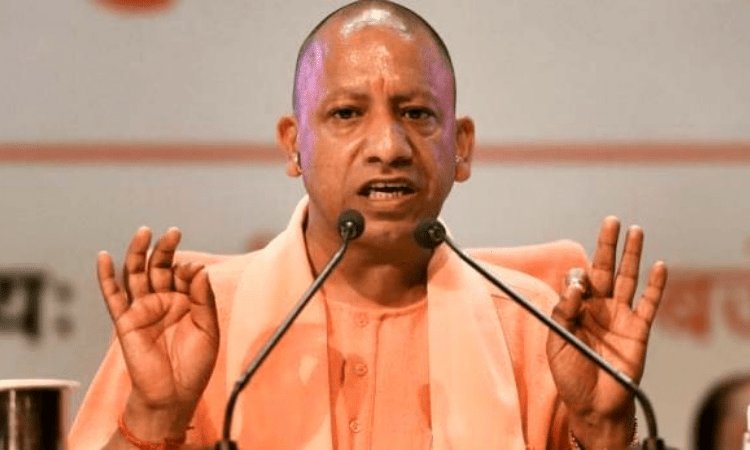
The Mukhyamantri Krishak Chhatravratti Yojana, a scheme run by the Yogi Adityanath government, is swiftly changing the scenario in Uttar Pradesh. The younger generation that was almost reluctant to join farming has started showing interest in the traditional occupation of the country. The scheme is not only helping the students to complete their studies by providing them scholarships but also developing their interest in agriculture.

The apex farmers’ body State Agricultural Produce Markets Board is providing scholarships to the children of farmers studying in agriculture colleges and universities. With the help of this scholarship, the students are able to continue with their studies and they are being trained in modern agriculture techniques like soil testing, manure, and seeds quantity measurement, protecting the crop from various diseases, etc.

Under the scheme, the students studying in agricultural universities and colleges are given Rs 3,000 per month as a scholarship. Earlier, the farmers were not aware of this scheme, hence, their children were deprived of this benefit. When Chief Minister Yogi Adiyanath got to know about the situation, he ordered the promotion of this scheme. As a result, hundreds of students are now getting scholarships.

The Board has given Rs 91 crore as a scholarship to 2,690 students since 2017. Along with this, hostels are being built in three agricultural universities. Due to such steps being taken by the Board for the education of the children of farmers, the farmers of the state are now encouraging their children to study in agricultural universities.

The main reason for this is the Chief Minister Krishak Scholarship Scheme operated under the Chief Minister’s Farmers Welfare Schemes. Farmer’s welfare schemes include the Chief Minister’s Farmer Accident Assistance Scheme, the Chief Minister’s Farm-Barn Fire Accident Assistance Scheme, the Chief Minister’s Farmer’s Gift Scheme, and the Chief Minister’s Farmers Scholarship Scheme.

Pradeep Verma, an M.Sc student, said that he gets Rs 36,000 as a scholarship annually. I don’t even have to take support from home, he says.

Prabhakar Rao, another student, said that due to the scheme his studies are going smoothly. It is a boon for poor children.

Kumar Vineet, Additional Director at Board-Administration, said that Rs 91 crore has been given to 2,690 students as a scholarship under the scheme so far from the year 2017-18. Also, in the financial year 2020-21, Rs 1.40 crore has been given to 368 students till the last month. These apart, the board is also building hostels in Chandrashekhar Azad University of Agriculture and Technology, Kanpur, Narendra Dev Agricultural University, Ayodhya, and University of Agriculture and Technology, Banda, for the stay of students studying in agricultural universities.

The construction of these three hostels is going to cost Rs 20.12 crores. Each hostel will have 50 rooms and will house 100 students.

‘For BJP, Modi is the ultimate leader and star campaigner’

A day after Tamil superstar Rajinikanth abandoned his foray into politics, BJP national general secretary, C.T. Ravi on Wednesday said that National Democratic Alliance (NDA) has always been led by Prime Minister Narendra Modi in every election it contests and in Tamil Nadu too, it is no different.

Addressing reporters, Ravi said that the alliance with the All India AIADMK will continue.

“For us (BJP) he (Modi) is the ultimate leader and we will campaign in his leadership. It is a wrong perception that the BJP is in search of a star campaigner. Modi is our leader and he will be our best bet in any election, we contest,” Ravi told IANS from Chennai.

On Rajinikanth’s announcement that he would not launch a political party, Ravi said that he respects his decision.

“Rajinikanth had always protected the national and Tamil Nadu’s interests. He is a great leader. I hope our party will ask for his support during elections. Everyone knows, how close his relations with Modi are,” he said

It may be recalled that Rajinikanth, who earlier said he would launch his political party in January 2021 promising a brand of ‘spiritual politics’. The superstar’s political advisor Tamilaruvi Manian had earlier said their party will fight on all 234 seats in the next Assembly elections.

But two days after being admitted to the hospital due to fluctuating blood pressure and exhaustion, Rajinikanth was discharged from Apollo Hospital in Hyderabad on Sunday.

He announced on Tuesday that he would not float his party in view of his health condition, having undergone a kidney transplant four years ago, and considering the Coronavirus pandemic situation.

In his three-page statement in Tamil, he said he will continue to serve the people in whatever way he can. The illness, he said, was a “warning from God” that he should not take on more pressures.

High or low BP is bad for me because they affect my transplanted kidney badly. Under doctors’ advice, I stayed at the hospital for three days and was supervised. In view of my bad health, the producer Kalanadhi Maran postponed filming, he stated while announcing his decision to quit.

The actor was shooting for a film titled “Annaatthe” in Hyderabad. The shoot was halted after crew members tested positive for Coronavirus.

The actor’s assertion that he would serve the people in whatever possible ways – without entering electoral politics – has led to an expectation among a section of BJP supporters that he may ‘lend his support’ favoring the party, the way he had supported the Dravida Munnetra Kazhagam-led alliance in 1996.

MSME loans doubled during Yogi rule, says UP govt

Loans disbursed to the MSME sector have doubled during the rule of the BJP government led by Chief Minister Yogi Adityanath, compared with the earlier Akhilesh Yadav-led dispensation, a government spokesperson said on Wednesday.

The spokesperson said that loans totaling Rs 1,06,068 crore were disbursed during the earlier Samajwadi Party rule, compared with Rs 2,12,454 crore given by the Yogi Adityanath government.

Efforts by the Chief Minister to increase investment in the state were yielding results, especially in the Micro, Small and Medium Enterprises (MSME) sector.

There are 8.7 lakh MSME units in the state. In the changing environment, the MSME units have not only increased their businesses but also given employment to more than 3 million persons.

Additional Chief Secretary Navneet Sehgal said that the government had worked on many important aspects of governance, including law and order, along with changing policies of 21 departments to promote industries in the state.

“Uttar Pradesh is in the second position in the country in ease of doing business. Even during the coronavirus pandemic, the Chief Minister distributed loans to industries by holding mega loan fairs four times. As a result, loans have been given to MSMEs on a large scale. New investors have invested around Rs two lakh crore in UP,” he said.

MSMEs have used the loans to increase their capacities. Besides, 6,79,647 new units have also been set up with the help of loans given under schemes like Pradhan Mantri Employment Generation Programme, Mukhya Mantri Yuva Swarozgar Yojana, Mukhya Mantri Gramodyog Rozgar Yojana, and One District One Product scheme.

The government spokesman said that MSMEs made big contributions to the infrastructure projects launched by the state government in the last three years, whether they pertained to building a powerhouse or improve the power supply network in rural areas.

2020, a year of challenges for TRS

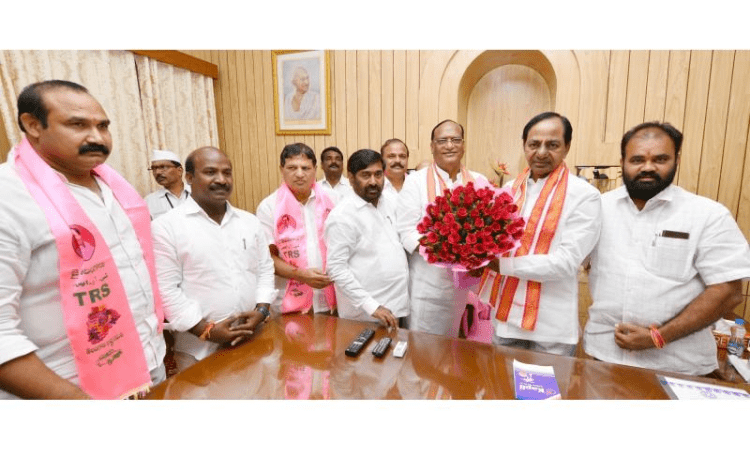
The coronavirus pandemic, its impact on Telangana’s finances, challenges faced by the TRS government on various fronts, floods in Hyderabad, and BJP’s emergence as the main opposition party marked 2020 in Telangana.

Like in other states of the country and other parts of the world, Covid dominated everything else during the year. Its impact on the state’s revenues also created a host of problems for the state.

One of the first states to report Covid-19 cases, Telangana did well to keep the situation under control. The state initially came under flak from public health experts and also faced the ire of the state high court on several occasions for fewer testing. However, the authorities later ramped up testing and also took effective steps.

Health Minister Eatala Rajender claimed that Telangana was the first state in the country to announce lockdown and it was also the first state to alert the Centre over the spread of the virus by the Tabilighi Jamaat conclave in Delhi.

After the public uproar overexploitation of the pandemic situation by the corporate hospitals, the government stepped in to fix the tariff both for the Covid diagnosis and treatment.

The state government also claimed to have set an example for others by making all arrangements to send back migrant laborers to their respective states by special trains. The state government footed the bill for the same.

Hyderabad, known as the bulk drug capital of India, was also in the news for manufacturing of lifesaving Covid-19 drugs like Remdesivir, Hydroxychloroquine, and Favipiravir by some of the top pharma companies based here.

Subsequently, the city also described as the vaccine capital of the world, hit the headlines for the development of vaccines for Covid-19. At least four companies based here are developing Covid vaccines. Bharat Biotech is working on India’s first indigenous Covid-19 vaccine Covaxin.

Another city-based firm Biological E last month initiated a clinical trial of its subunit vaccine candidate in India following approval from the Drugs Controller General of India (DGCI).

BE is making the vaccine in collaboration with Dynavax Technologies Corporation (Dynavax), a US-based vaccine focused biopharmaceutical company, and Baylor College of Medicine, a health sciences university in Houston.

Envoys of over 60 countries also visited the facilities of the two companies early this month. The visit was organized by the Ministry of External Affairs (MEA) and it was part of India’s efforts to develop partnerships for the manufacture and delivery of vaccines.

In October, Hyderabad saw one of the worst floods in the city’s history due to heavy rainfall. At least 50 people were killed in and around the city. Hundreds of colonies were inundated.

The TRS government came under criticism from the opposition for its failure to handle floods but the government defended itself saying there is no city in the country which is not affected by floods.

Telangana also claimed to be the only state in the country to provide financial assistance of Rs10,000 each to all the families affected. The government has so far spent over Rs 600 crore for distributing assistance among 6.64 lakh families.

The state’s relations with the Centre also came under strain with Chief Minister K. Chandrasekhar Rao alleging that the state received no funds from the Centre for tackling the pandemic and for relief and rehabilitation in the flood-affected Hyderabad. He also slammed the Centre for not coming forward to help the states facing financial problems due to the pandemic.

A war of words also broke out between the TRS and the BJP leaders over the Central funds. While the BJP leaders claimed the Centre provided funds for the state’s schemes, the TRS countered saying the state contributed much more to the Centre in the form of taxes than what it received.

The ruling party faced the toughest challenges since the formation of the Telangana state in 2014. The BJP emerged as the main opposition party with its victory in the Dubbak Assembly bypoll and impressive performance in Greater Hyderabad Municipal Corporation (GHMC) elections.

Despite the impact of a pandemic on its economy, the state continued the implementation of various welfare schemes. It set up purchasing centers in villages to buy paddy and maize from farmers to ensure that they don’t suffer losses during the pandemic.

The state also continued to attract investment despite the challenges. Several firms, including marquee names, announced investments of over Rs 30,000 crore over the last six months.

The state also took initiatives to expand information technology to tier-II cities. Within Hyderabad, the government took measures to disperse IT growth beyond the clusters of Hitec City and Gachibowli.

Under its ambitious plans to take IT growth to all corners of the city, the government announced GRID (Growth in Dispersion) policy. Authorities issued orders to convert as many as 11 industrial parks into IT parks.

Telangana clocked over Rs 1.28 lakh crore of IT exports during 2019-20, a growth of nearly 18 percent over the previous year. This growth was registered despite the onset of the Covid-19 during the last quarter of 2019-2020.

The growth rate was more than double the national average of 8.09 percent and more than two-and-a-half times the rest of the nation’s average of 6.92 percent.

The number of jobs in the IT sector in the state went up from 5,43,033 to 5,82,126, a growth of 7.20 percent compared to the national average of 4.93 percent.

The year saw no major law and order problems. However, Maoists continued their attempts to revive their activities in the districts bordering Chhattisgarh and Maharashtra. They tried to regroup themselves by taking advantage of the pandemic situation.

In September and October, 10 Maoists were killed in separate exchanges of a gunfight with police. Most of the killings happened in Bhadradri Kothagudem district bordering Chhattisgarh.

Maoists also killed a worker of the ruling TRS and a couple of others branding them as police informers.

The state also brought a new Revenue Act to usher in a new era of land transactions. Dharani portal was launched as a one-stop solution for all land-related transactions. The aim was to provide a transparent and corruption-free system.

The registration process was stopped to ensure a smooth transition to the new system. Though registration of the agricultural land resumed in October in a smooth manner, the process for non-agricultural properties was delayed. The government had to revert to the old system after the high court ruled that the government can’t insist that the applicants submit their Aadhaar card details. The hiccups dented the state’s revenues.

The Land regularisation Scheme (LRS) scheme announced by the government also evoked criticism with the opposition targeting the government for trying to fill the coffers by burdening people during the pandemic.

The government also came under attack for the demolition of the old secretariat to construct a new building during the pandemic.

As one of the 10 buildings in the complex was a heritage structure built in 1888 the demolition was strongly opposed by groups working for heritage conservation. The demolition of two mosques and one temple in the secretariat premises also triggered an outrage.

The strong reaction by Muslim groups forced the government to announce that the place of worship will be rebuilt. For the first time in six years, the TRS came under the sharpest attack from the Muslim groups, who lodged their protest over the government organizing birth centenary celebrations of former Prime Minister P. V. Narasimha Rao.

Earlier this year, the KCR government was hailed by the community when the state legislature passed a resolution opposing the Citizenship Amendment Act (CAA), National Population Register (NPR), and National Register of Citizens (NRC).

Chandrasekhar Rao stated that the CAA and the other two processes are methods being used to ‘tinker with the inclusive and non-religious nature of citizenship.

The year also saw the end of the bonhomie witnessed between the Telangana and the Andhra Pradesh governments since May 2019 when YSR Congress Party stormed to power in the neighboring states. They accused each other of building illegal projects over the Godavari and Krishna rivers and sought the Centre’s intervention.

The year saw Hyderabad Metro Rail becoming the second largest metro rail network in the country with a 69.2 km operational distance when the stretch from Jubilee Bus Station (JBS) to Mahatma Gandhi Bus Station (MGBS) was thrown open.


Two Cong MLAs, BPF leader join BJP in Assam

Two Congress MLAs and a Bodo outfit’s senior leader on Tuesday joined the BJP in Assam, months ahead of the Assembly elections.

Former Assam PWD Minister and Congress MLA from Golaghat Ajanta Neog, Congress’ Lakhipur MLA Rajdeep Gowalla, and senior Bodoland People’s Front (BPF) Bolendra Mushahary joined the ruling party in the presence of its state president Ranjeet Kumar Dass and Minister Himanta Biswa Sarma.

Mushahary is a former MLA of the BPF, an ally of the BJP since 2016. Gowalla was also Chairman of the Public Accounts Committee of the Assembly.

With the exit of these two MLAs and the deaths of former Assam Chief Minister Tarun Gogoi and ex-Speaker Pranab Gogoi, both Congress legislators, the strength of the Congress in the Assembly has come down to 20.

Neog and Gowalla had met with Union Home Minister Amit Shah during his two-day visit to Guwahati on Saturday and Sunday. On Friday, Congress President Sonia Gandhi had expelled Neog for alleged anti-party activities.

Political observers felt that the exit of two senior Congress leaders was a major setback for the Congress ahead of the Assembly polls likely to be held in April-May next year.

After joining the BJP, Neog said the Congress was a “leaderless and directionless organization that works as a private limited party”.

She even condemned the Congress’ association with All India United Democratic Front (AIUDF), a Muslim-dominated party in Assam.

Welcoming the new BJP members, Sarma said that Assam’s two famous and skilled politicians had joined the BJP and “we warmly welcome them. From now on, we expect that they will keep in mind the party’s welfare, and be driven to work for the people”.

Sarma is the convener of the BJP-led anti-Congress alliance, the North East Democratic Alliance (NEDA).

Infra development should be above politics: Modi

Prime Minister Narendra Modi on Tuesday asserted that the development of infrastructure should be kept above politics and if there has to be a competition among political parties on infrastructure, it should be on its quality, speed, and scale.

Modi was speaking after inaugurating the 351-km New Bhaupur-New Khurja section of the Eastern Dedicated Freight Corridor (EDFC) and Operation Control Centre (OCC) at Prayagraj in Uttar Pradesh through videoconference.

“Our past experiences tell us that the infrastructure projects related to the country’s development should be kept out of politics. The country’s infrastructure is not tied to any party’s ideology. It is not meant for five years, but a mission to benefit the people of the country.”

He added: “If any political party has to do a competition on the issue, it should be on the infrastructure’s quality, speed, and scale.”

Pointing out that public property is damaged during protests or agitations on a number of occasions, the Prime Minister said that one should remember that this infrastructure does not belong to any political party or anyone, but to every citizen of India.

Highlighting the role of the Railways as the country’s lifeline, he said that it helped transport food, essential commodities, and other help across the country during the coronavirus pandemic.

“The country will always remember the help the Railways extended to the people. It ferried lakhs of people to their homes and also provided employment of more than one lakh hour Mondays,” he said.

Citing the reforms in the Railways in the last six years, Modi said: “After 2014, we have done away with a separate rail budget. We ended the politics of ‘announcing and forgetting’, we eliminated thousands of unmanned level crossings, increased the speed of trains, did electrification and doubling of railway tracks.”

He said that the national transporter also started ‘Vande Bharat’ Express trains, India’s first semi-high speed trains, and made rail travel safer.

“In the last few years, reforms have been carried in all aspects of railway operations, whether it is cleanliness or safety, etc. Even in manufacturing, we took a big leap towards ‘self-reliant India’ as we are now manufacturing coaches and also exporting the same to other countries,” the Prime Minister said.

Highlighting the importance of EDFC, Modi said: “After Independence, we are witnessing the inauguration of the most advanced rail section in the country. The first goods train on the New Bhaupur-Khurja section will give out a message of ‘Atmanirbhar Bharat’ (self-reliant India). The new operation control center in Prayagraj is one of the best in the world.”

The Prime Minister pointed out that at a time when India is moving towards becoming an economic power in the world, the best connectivity is its priority.

“With this ideology, we have worked on every aspect of modern connectivity in the country over the last six years,” Modi said.

The Dedicated Freight Corridor is one of the largest rail infrastructure projects undertaken by the government, entailing a cost of around Rs 81,459 crore.

The Dedicated Freight Corridor Corporation of India Limited (DFCCIL) has been set up as a Special Purpose Vehicle to plan, develop, mobilize financial resources, construct, maintain, and operate the EDFC.

In the first phase, the organization will construct the Western DFC (1,504 route km) and Eastern DFC (1,856 route km), a total of 3,360 route km.

The Prime Minister said that special corridors for freight trains would ensure that passenger trains run on time. “It will also ensure that carriage trains run at thrice the speed and carry double their load capacity,” Modi said.

He said that the ‘Kisan rail’ would also benefit from these freight corridors.

Meanwhile, Alain Sphor, Alstom Managing Director for India and South Asia, said that the company teams had done an outstanding job, with many firsts in India on this first fully electrified section of DFC.

“This is a good reference for Alstom’s commitment to ‘Make in India’ initiative. The design and engineering for OHE electrification, civil, power supply, and signaling have been done indigenously. This begins a new era of freight rail revolution that all stakeholders have envisioned jointly. It is indeed an honor to be partnering in India’s Make in India mission,” Sphor added.

In 2015, Alstom won a contract worth over 200 million euros for electrification, signaling, and telecommunications system work on the 343-km eastern portion of the DFC.

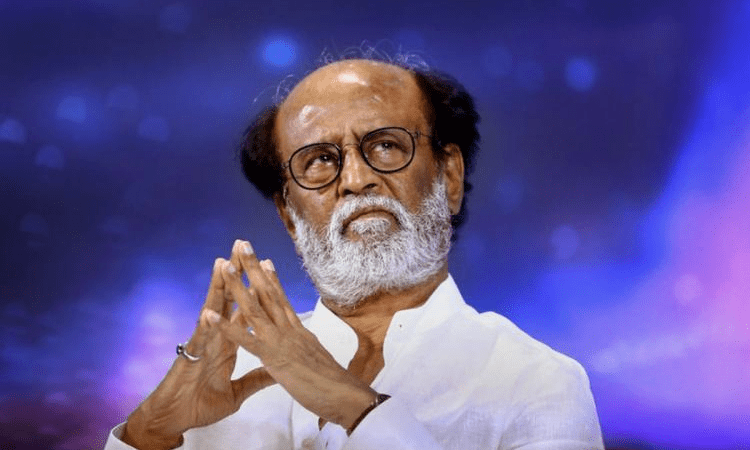
Rajinikanth decides not to enter politics

In an anti-climax to his much expected political plunge, actor Rajinikanth on Tuesday announced his decision to back out citing his health condition.

In a three-page letter posted on his Twitter handle, Rajinikanth said despite severe precautions taken at the shooting of “Annatthe” movie four persons tested positive for coronavirus.

The actor said while he tested negative for coronavirus, his blood pressure fluctuated, and hence was hospitalized in Hyderabad.

Rajinikanth said the doctors had advised him that fluctuating blood pressure will affect his transplanted kidney.

He said the movie shooting got postponed resulting in the loss of crores of rupees and jobs for many.

“All because of my health condition. I am looking at this as a warning given to me by God,” Rajinikanth said.

The actor also said it is not possible to bring out an uprising amongst the people campaigning via social media after floating a party.

“I have to address public meetings, meet lakhs of people,” he said.

According to him, even in a group of 120 persons (movie shooting team) he was in the hospital for three days owing to some people testing positive for coronavirus. And now there is a new virus mutant.

Rajinikanth said as he is taking immunosuppressants, the anti-coronavirus vaccine may not be effective and if his health gets affected his fellow political passengers might face various problems.

“Hence with much regret I am saying that I am not in a position to start a political party and enter politics. Only I know the pain when I announce this,” Rajinikanth said. The actor said without entering politics he will serve the people.

Work on to develop 21st century attractions in Delhi: Modi

Prime Minister Narendra Modi on Monday said efforts were being made to modernize the national capital so that it could reflect the grandeur of 21st century India.

The Prime Minister also said that “each and every city of the country, big or small, is going to be the hub of India’s economy”.

The Prime Minister was speaking after inaugurating the first-ever driverless Metro operation and launched the expansion of the National Common Mobility Card to the Airport Express Line of the Delhi Metro via video conference.

“Old infrastructure of the capital is being transformed into infrastructure based on modern technology. This thinking is reflected in the provision of better living conditions to slum dwellers through regularization of hundreds of colonies and in turning old government buildings into environment-friendly modern structures,” the Prime Minister said.

“Along with Delhi being an old tourist destination, work is on for developing 21st-century attractions in the city.”

The Prime Minister said as Delhi is becoming a favored destination of international conferences, international exhibitions and international business tourism, the country’s largest center is being constructed in the Dwaraka locality of the capital.

Similarly, work for the new Parliament building has commenced along with a very big Bharat Vandana Park, said Modi, adding this will not only give employment to thousands of people from Delhi but will also change the face of the city.

While congratulating the citizens of the national capital for the first-ever driverless Metro operations and launching of the expansion of the National Common Mobility Card to the Airport Express Line of Delhi Metro, the Prime Minister said “Delhi is the capital of a big economic and strategic power of more than 130 crore people, its grandeur should be evident here.”

Metro service in more than 25 cities by 2025: Modi

Prime Minister Narendra Modi on Monday inaugurated India’s first-ever driverless train operations on Delhi Metro’s Magenta Line, along with the fully operational National Common Mobility Card service, and said that India will have the metro service in more than 25 cities by 2025, as against in 18 cities currently.

A fully automated driverless train will run on the 37-kilometer long Magenta Line from Janakpuri West to Botanical Garden. It will eliminate the possibility of human error. After the start of driverless services on the Magenta Line, the Pink Line of the Delhi Metro is expected to have driverless operations by the mid of 2021.

“The first metro in the country was started with the efforts of Atal Ji. When our government was formed in 2014, only five cities had metro services and today 18 cities have metro rail services. By 2025, we will take this service to more than 25 cities,” the Prime Minister said after virtually inaugurating the driverless metro.

He further said that the country had a metro network of 248 kilometers when his government was formed in 2014, which has tripled today and will expand further to 700 kilometers by 2025. “In 2014, 17 lakh people used to travel by metro. Today, the footfall has increased by five times. This is the evidence of ease-of-living.”

He also inaugurated the National Common Mobility Card, which will be fully operationalized on the Airport Express Line to enable anyone carrying a RuPay-Debit Card issued from any part of the country to travel on the Airport Express Line using that card. This facility will become available on the entire Delhi Metro network by 2022.

“This shows how India is fast moving towards a smart system. Urbanization should not be thought of as a challenge but an opportunity, which can be used to have better infrastructure in-country and increase ease-of-living,” he added.

Alluding to the erstwhile United Progressive Alliance government, he added, “That time, no one paid heed to the future’s requirement, work used to be done half-heartedly and there was a delusion. The result was such that in various parts of the country, a huge gap came in the infrastructure demand and fulfillment.”

The Prime Minister said that his government was able to overcome these challenges despite having the same bureaucracy and people. “How did this change come about? We thought of urbanization, not as a challenge but an opportunity. Earlier, our country did not have any policy regarding the metro. Politicians and governments used to make false promises. Our government made policy and implemented it.”

Sonia expels Assam MLA Ajanta Neog for anti-party activities

Congress President Sonia Gandhi on Friday expelled Assam MLA Ajanta Neog for allegedly indulging in anti-party activities.

Her expulsion from the party comes amid reports that former Assam Public Works Department minister Neog plans to join the ruling BJP during the visit of Union Home Minister Amit Shah.

In a statement, Congress General Secretary K. C. Venugopal said, “Congress President has approved the proposal of the expulsion of Neog from the primary membership of the party for indulging in anti-party activities, with immediate effect.”

If Neog joins the BJP, it will be a major setback for the Congress in Assam.

Before the 2016 assembly elections in the state, senior Congress leader and former Minister in the Tarun Gogoi government Himanta Biswa Sarma had also joined the BJP along with several of his party colleagues.

The Grand Old Party is yet to recover from the setback it received in 2016.

Rakesh Tikait: You can’t expect Rahul Gandhi to resolve the farmers issues

Even as demonstrations against farm laws continued on the borders of the national capital, Prime Minister Narendra Modi addressed farmers of several states and said that canards are being spread over the agricultural laws. Speaking about the PM’s address, Bharatiya Kisan Union national spokesperson Rakesh Tikait told IANS, “Of course the Prime Minister and the government of India will have to find a solution to this issue. You can’t expect the opposition or Rahul Gandhi to do it. It has been a month and the farmers won’t return home. First, sit down and resolve the issue by withdrawing farm laws.”

Tikait further said, “We are ready to discuss the agricultural laws, but they haven’t said they will repeal the agricultural laws. We are also ready for talks, but they are putting up a condition that they won’t repeal the contentious laws.”

“Nobody is misleading farmers. The only motive of farmers gathered here is to have a legislation on MSP and repeal of these agricultural laws.”

“The Prime Minister mentioned farmers in his address. The government must farmers sit down and have discussions with farmers sitting on the borders of Delhi.”

In fact, under the PM-Kisan scheme, Prime Minister Modi transferred an amount of 18,000 crore rupees into the accounts of nine crore farmers on the occasion of the birth anniversary of former prime minister Atal Bihari Vajpayee. The PM also attacked the opposition by accusing them of running a political agenda.

Mayawati demands dropping of ‘politically motivated cases’ in UP against opposition

The Yogi government of Uttar Pradesh has filed a petition to withdraw “politically motivated cases” against three Bharatiya Janata Party (BJP) MLAs which has turned into a political slugfest since the decision was announced by the U.P government.

The opposition Bahujan Samaj Party (BSP) Chief Mayawati has now raised the demand to withdraw cases of ‘political vendetta’ against the leaders of all opposition parties in the state.

Mayawati on Friday tweeted, “With the withdrawal of politically motivated cases filed against the BJP leaders in U.P, similar cases slapped on all opposition party leaders must also be withdrawn. This is the BSP’s demand.”

The Yogi government has filed a petition to withdraw cases of ‘political malice’ filed against its three-party MLAs including several other party leaders. Some of the BJP leaders include Sangeet Som, Suresh Rana, Kapil Dev Agarwal, including firebrand Hindutva leader Sadhvi Prachi, were slapped with alleged charges of making inflammatory speeches and confronting the state administration, etc.

Government counsel, Muzaffarnagar, Rajeev Sharma said the current BJP government has filed a petition in the court to withdraw the case registered against all its leaders.

Trinamool claims Mamata not invited at Vishva Bharati centenary

West Bengal’s ruling Trinamool Congress on Thursday claimed that Chief Minister Mamata Banerjee was not invited by the authorities of Visva Bharati University on the occasion of centenary celebrations of the central varsity founded by Nobel laureate Rabindranath Tagore.

West Bengal Minister for Science and Technology Bratya Basu said that Banerjee was not invited at the centenary celebrations which were virtually addressed by Prime Minister Narendra Modi.

“Mamata Banerjee is the Chief Minister of West Bengal and inviting her at the occasion is very much under the official protocol. We have not received any official communication from the university authorities. Is this the way to treat the Chief Minister of a state?” Basu said.

Asked about the letter that was signed by the vice-chancellor and sent to the CM’s office, the minister said: “Do they have the receipt copy of the letter? The vice-chancellor signed the letter and kept it with him only.”

Meanwhile, the CM tweeted on the occasion of centenary celebrations at the Visva Bharati this morning and said the vision and philosophy of Tagore at Santiniketan must be preserved.

“Visva Bharati University turns 100. This temple of learning was Rabindranath Tagore’s greatest experiment on creating the ideal human being. We must preserve the vision and philosophy of this great visionary,” Banerjee said.

Located at Santiniketan in West Bengal’s Birbhum district, Visva Bharati was established in 1921 and it received the status of a central university by an Act of Parliament in 1951.

Tagore’s vision was the essence of ‘Aatmanirbhar Bharat’: Modi

Prime Minister Narendra Modi said the founder of Visva Bharti University Rabindranath Tagore’s vision was the essence of “Aatmanirbhar Bharat” (self-reliant India) and said the varsity embodied Indian nationalist sentiment during Independence with his guidance.

Modi made the remarks while addressing the centenary celebrations of the iconic Visva-Bharati University, Santiniketan, which is among the premium centers of learning and is closely associated with Rabindranath Tagore.

Modi said, “Guided by Gurudev (Rabindranath Tagore) Visva Bharati presented a strong image of Indian nationalist sentiment during Independence. Gurudev wanted the entire humanity to benefit from India’s spiritual awakening. Atmanirbhar Bharat (self-reliant India) vision is also a derivative of this sentiment.”

“Be it the Visva Bharati University, Banaras Hindu University, Aligarh Muslim University, Delhi University, Jamia Millia Islamia University, Andhra University, Anna Malai University, and several others premier institutions, these came up around the same time, in the same era, and gave momentum to India’s thirst for knowledge,” he said.

The Prime Minister said that today, as more and more people are getting a good education, we now have to work to build a strong and wise nation – one that is self-reliant.

“We must take inspiration from all those who have contributed to making India great over the centuries and millennia. We must also keep in mind the India that our freedom fighters envisioned when they fought for our independence. That is why we are now at the stage to create an Aatmanirbhar Bharat,” the Prime Minister further said.

He also said that one must remember the circumstances which led to the establishment of this university. It was not just British rule but, in the background, were our rich ideas and history of hundreds of years of the movement, he said.

He also said that ‘Bhakti Andolan’ brought us all together, then the ‘Gyan Andolan’ gave us knowledge, and finally the ‘Karm Andolan’ helped us execute our plans to take the nation forward beginning with our struggle for independence.

“Learning not just from what is happening in India, India has always been open to learning from the world over. Take your university’s name for example. That itself shows India’s approach and views on education – Visva Bharati – which joined ‘Maa Bharati’ (motherland India) with the Visva (world) and we as a people have always pursued education and greatly valued it,” Modi said.

Modi said, “India is playing a huge role in the world for environmental protection through the International Solar Alliances. India is the only major country in the world which is moving fast on the right track to meet the Paris Accord’s environmental goals.”

He also said that Visva-Bharati’s milestone is a moment of pride for all of us.

“Its 100-year journey is historic. Visva-Bharati is a true embodiment of Gurudev’s contemplation, vision, and hard work for Mother Bharati,” Modi said.

Modi said, “Visva-Bharati was a true embodiment of Gurudev’s contemplation, vision, and hard work for motherland India. For India, the dream that Gurudev had seen, is a kind of adorable place to give continuous energy to the country to embody that dream.”

The Prime Minister further stated that the work of ‘Gramodaya’ of Visva-Bharati has always been admirable. “The Yoga department that was started in 2015 is also growing in popularity. Visva-Bharati University campus is an example of both study and life together with nature,” Modi said.

In May 1951, Visva-Bharati was declared a central university and an institution of national importance by an Act of Parliament.

Govt committed to development without religious discrimination: PM

Prime Minister Narendra Modi said on Tuesday that his government was committed to ushering in development in the country without any discrimination on the basis of religion.

“I assure you that nobody will be left out and not discriminated against on religious lines. Everyone will move forward by enjoying the Fundamental Rights given in the Constitution,” Modi said while addressing through videoconference the centenary celebrations of the Aligarh Muslim University in Aligarh in Uttar Pradesh.

Modi is only the second Prime Minister to address an AMU function after Lal Bahadur Shastri 56 years ago.

The Prime Minister pointed out that during the nationwide lockdown due to the coronavirus pandemic, the Union government did not discriminate against anyone and gave free food grains to 80 crore poor.

He said that the Union government had also got opened 40 crore bank accounts, given houses to 2 crore persons, and built toilets for 10 crore others under the ‘Clean India Mission’.

“Developmental issues should not be looked at from the political angle. The new India will shun the narrow political outlook,” Modi remarked.

Due to government policies, the dropout rate among Muslim women, which was 70 percent in the last many decades, had now dropped to only 30 percent due to an increase in the number of toilets constructed in educational institutions, he added.

During his speech, Modi recalled the AMU’s rich heritage of 100 years.

Modi quoted Sir Syed Ahmed Khan — who set up the Muhammadan-Anglo Oriental College that later became the AMU — that a person who loved his country will think of the welfare of the people without any prejudice.

He said that there may be ideological differences but the new India will offer a common ground to all, as was the case during the freedom struggle.

The Prime Minister congratulated the university for increasing the number of female students to 35 percent, adding that the government had provided 1 crore scholarships for such students.

Education leads to employment and entrepreneurship which in turn results in economic independence, he pointed out.

Modi said that during the pandemic, the AMU served the needy and even donated money in the PM-CARES fund to show their responsibility towards the nation.

Hailing the university for promoting diversity, the Prime Minister also said that it was one of the strengths of the country.

The AMU had helped India strengthen its relations with Muslim countries and nearly 1,000 foreign students were currently on its rolls. The Prime Minister said that the university should strengthen its soft power.

Modi said that the country was moving ahead after the ban on instant Triple Talaq.

The Prime Minister also released a postal stamp at the event, where University Chancellor Syedna Mufaddal Saifuddin and Union Education Minister Ramesh Pokhriyal Nishank were also present.

Telangana reverts to old system for registration of properties

Registration of non-agricultural properties in Telangana began on Monday with the old system, following High Court orders not to insist on the Aadhaar details of the applicants.

Long queues of the applicants were seen at the offices of the sub-registrars across the state for registration under the Computer-aided Administration of Registration Department (CARD).

Following the High Court orders, authorities have stopped slot bookings in advance for registration. The applicants also do not have to furnish Aadhaar details.

The High Court had on December 17 directed the government to stop forthwith collecting personal details of family members and Aadhaar card particulars even for slot bookings to register non-agricultural properties.

The court made it clear that the state government cannot adopt surreptitious means to collect such details of people either through the Dharani portal or even through the old method of registration.

Registration of non-agricultural properties had resumed on December 14 after a gap of more than three months following the High Court orders permitting the commencement of registrations with 100 percent advance slot booking.

The court had directed the government not to insist on the Aadhaar number and other details for the Dharani portal.

The government had promised that the new system will ensure increased transparency and no discretion at any level.

A total of 2,599 slots were booked for registrations and 1,760 registrations were completed.

However, as the government continued to insist on Aadhaar details of the applications, some individuals filed Public Interest Litigations (PILs).

Though Chief Minister K. Chandrasekhar Rao was scheduled to hold a review meeting on December 19 to decide whether to file an appeal against the High Court order or prepare guidelines as per its direction, the meeting was canceled.

The government made an announcement that registrations will resume under the CARD system without slot bookings.

The registration of both agricultural and non-agricultural land was stopped in the first week of September to facilitate the transition to the online process following the enactment of the New Revenue Act.

The registration of agricultural lands had commenced in October with the launch of the Dharani portal, a single-window for all property transactions.

Meanwhile, the state government on Monday filed a petition in the High Court to vacate the stay on seeking Aadhaar details of all property owners for the Dharani system.

The government, in its petition, argued that it can seek Aadhaar details in case of cultivable lands as a subsidy scheme for such lands is under implementation.

The court asked the petitioners to submit their objections, if any, by December 31.

PM mourns Congress veteran Motilal Vora’s demise

Prime Minister Narendra Modi on Monday expressed grief over the demise of Congress veteran and Gandhi family loyalist Motilal Vora at a private hospital here earlier in the day.

In a tweet, the Prime Minister said: “Shri Motilal Vora Ji was among the senior-most Congress leaders who had vast administrative and organizational experience in a political career that spanned decades. Saddened by his demise. Condolences to his family and well-wishers. Om Shanti.”

Vora passed away at the age of 93, a day after celebrating his birthday.

Vora began his political career as a Congress councilor, and became a Chief Minister, Union Minister, Governor, and Congress Treasurer during his political career. His Rajya Sabha term ended in March this year.