10K new Covid cases in Karnataka, 5k in B’luru

0

With over a lakh testing on a single day, Karnataka registered a whopping 10,947 new cases, including 5,000 in Bengaluru on Tuesday, taking its COVID tally to 6,68,652 and active cases to 1,16,153.

“With 9,832 patients discharged in the last 24 hours, 5,42,906 recovered to date across the southern state, while 9,574 succumbed to the infection, including 113 on Tuesday,” said the state health bulletin on Wednesday.

Bengaluru’s COVID tally rose to 2,62,241 with 5,000 fresh cases, and active cases increased to 58,624, while 2,00,426 recovered, including 2,057 in the last 24 hours. With 55 died of the virus, the city’s death toll rose to 3,190.

Of the 841 patients in the intensive care units (ICUs), 303 are in Bengaluru hospitals, followed by Dharwad 93, Ballari 80, Hassan 54, Kalaburagi 29, and Bagalkote 27.

Of the 1,04,348 tests conducted on Tuesday, 48,658 were through rapid antigen detection and 55,690 through RT-PCR.

Among the new cases from the districts, Mysuru reported 979, Hassan 471, Uttar Kannada 462, Dakshina Kannada 447, Ballari 258, and Tumakuru 250.

Of the cases discharged in the districts, Mysuru reported 1,317, Dakshina Kannada 1,214, Uttara Kannada 818, Belagavi 529, Chikkamagaluru 478, Hassan 386 and Haveri 300.

No decision yet on reopening of schools, cinemas in Telangana

0

The Telangana government on Wednesday issued guidelines under ‘Unlock 5’ but no decision has been taken on re-opening of schools and cinema theatres.

According to the Government Order (GO) issued by Chief Secretary Somesh Kumar, separate orders will be issued regarding the date of opening of schools and coaching institutions.

In colleges/higher education institutions, online/distance learning shall continue to be the preferred mode of teaching and shall be encouraged, it says.

Higher education institutions only for research scholars (Ph.D.) and postgraduate students of technical and professional programs – requiring laboratory/experimental works are permitted to open from October 15.

Separate orders will be also issued regarding the date of opening for cinema theatres, multiplexes, entertainment parks, and similar places.

The guidelines were issued in line with those issued by the Ministry of Home Affairs on September 30 to reopen more prohibited activities in areas outside containment zones and to consolidate the measures related to lockdown in the state.

In areas outside containment zones, all activities permitted prior to the introduction of lockdown measures will be allowed. However, certain activities shall be allowed to function with the stipulation of standard operating procedures (SoPs).

Swimming pools being used for training of sportspersons will be permitted to open from October 15, for which SOPs will be issued by the government.

Business to Business (B2B) exhibitions will be permitted to open from October 15, for which also SOPs will be issued.

Social/academic/sports/entertainment/cultural/religious/political functions and other congregations with a ceiling of 100 people and by following health protocol will be permitted outside containment zones with a mandatory wearing of face masks, social distancing, provision for thermal scanning, and hand wash or sanitizer.

Marriage related gatherings shall be permitted with a maximum of 100 participants. Funeral/last rites related gatherings with a number of persons not exceeding 100 will continue to be allowed.

Persons above the age of 65 years, persons with co-morbidities, pregnant women, and children below the age of 10 years are advised to stay at home, except for essential and health purposes.

In respect of containment zones, strict lockdown shall be in force till October 31. Only essential activities shall be permitted.

According to the GO, buffer zones shall be identified outside the containment zones, where new cases are more likely to occur. Within the buffer zones, restrictions, as considered necessary, may be put in place by the district authorities.

SAP pips Oracle, Adobe in B2B digital commerce market: Report

0

Enterprise software major SAP has piped giants like Salesforce, Oracle, and Adobe when it comes to serving the B2B digital commerce market globally, according to the IDC.

After a thorough evaluation of SAP’s strategies and capabilities, IDC has positioned the company in the Leaders’ category within its latest ‘2020 IDC MarketScape for B2B digital commerce platforms’.

According to the IDC report, SAP offers a broad and deep portfolio of customer experience applications, including CRM, marketing, CPQ, and service.

“Customers we interviewed rated SAP above average when asked whether SAP Commerce Cloud is ‘built for the future’. One customer commented, ‘This is where SAP is really good. They were a bit late to market here but have gotten ahead,” the report mentioned.

The company’s B2B digital commerce product, SAP Commerce Cloud, is a B2B and B2C digital commerce platform that was originally acquired by SAP with the acquisition of hybris in 2013.

SAP has launched a new multi-tenant SaaS and microservices-based digital commerce application in June 2019 called “SAP Upscale Commerce” (which was not considered in this IDC report).

“Consider SAP if you are an enterprise looking for an all-in-one digital commerce platform that can handle complex enterprise requirements and can support both B2B and B2C business models or you use SAP for other CX applications,” the IDC MarketScape report mentioned.

“Selecting the right cloud B2B digital commerce platform can be extremely hard; there isn’t a one-size-fits-all vendor, and the market is evolving extremely fast,” said Jordan Jewell, research manager, Digital Commerce programme at IDC.

According to the IDC, SAP’s context-driven services provide deep personalisation capabilities to tailor commerce experiences.

There are, however, some challenges too.

“SAP Commerce Cloud can be deployed in the cloud, but it is not yet fully multi-tenant SaaS. While SAP still sees demand for its offering, IDC firmly believes the future of B2B digital commerce is multi-tenant SaaS,” said the report.

SAP in May announced the launch of SAP Commerce Cloud and S/4 HANA Cloud on their India data center to help enterprises meet end-to-end customer demands, make commerce frictionless while ensuring compliance with the Personal Data Protection Bill.

As enterprises go digital in the Covid-19 era, SAP Commerce Cloud will offer a comprehensive, end-to-end commerce solution powering real-time, intelligent customer engagement with personalized experiences.

In July, the enterprise software major appointed former Adobe executive Kulmeet Bawa as President and Managing Director for the India subcontinent.

Ananya Panday believes in ‘less attitude, more gratitude’

Actress Ananya Panday has shared a mantra she believes in on social media.

Ananya took to Instagram, where she is seen posing on a beach with the sea in the backdrop.

In the picture, she looks stunning in a casual white and navy blue sweatshirt.

“Less attitude, more gratitude,” wrote the actress alongside the image, who is currently in Goa to shoot for Shakun Batra’s untitled film.

Ananya’s latest release is “Khaali Peeli”. The film also stars Ishaan Khatter.

She will also be seen in a pan-Indian film opposite Vijay Deverakonda.

9 in 10 Indian workers seek robots to support their mental health

0

As Covid-19 takes its toll on the mental health of people globally, over 9 in 10 people in India think robots can support their overall well-being much better than humans, a new Oracle study said on Wednesday.

A whopping 91 percent of the Indian workforce surveyed said they would prefer to talk to a robot over their manager about stress and anxiety at work, according to the study by Oracle and Workplace Intelligence, an HR research and advisory firm.

The study of more than 1,000 employees, managers, HR leaders, and C-level executives across 11 countries found that the Covid-19 pandemic has increased workplace stress, anxiety, and burnout for people all around the world, and they prefer robots instead of other people to help.

Nearly 93 percent of people said their mental health issues at work negatively affect their home life while 95 percent of those surveyed believed companies should be doing more to support the mental health of their workforce.

For the Indian workforce, 65 percent feel that they are working more than 40 hours per month and 32 percent feel the burnout from overwork.

“There is a lot that can be done to support the mental health of the global workforce and there are so many ways that technology like AI can help. But first, organizations need to add mental health to their agenda,” said Emily He, senior vice president, Oracle Cloud HCM.

While 70 percent of people globally have had more stress and anxiety at work this year than any other previous year, 84 percent of the Indian workforce felt more stress and anxiety.

This increased stress and anxiety have negatively impacted the mental health of 78 percent of the global workforce, causing more stress (38 percent), a lack of work-life balance (35 percent), burnout (25 percent), depression from no socialization (25 percent), and loneliness (14 percent).

“The pandemic situation has witnessed HR dealing with a crisis which has no precedence to draw wisdom from. HR is coordinating communication, facilitating remote working, helping keep workers stay productive, and assisting with mental wellbeing needs,” said Shaun Khanna, head of HCM applications, Asia Pacific, Oracle.

The new pressures presented by the pandemic have been layered on top of everyday workplace stressors, including pressure on the global workforce to meet performance standards (42 percent), handling routine and tedious tasks (41 percent), and juggling unmanageable workloads (41 percent).

The most common repercussions globally were sleep deprivation (40 percent), poor physical health (35 percent), reduced happiness at home (33 percent), suffering family relationships (30 percent), and isolation from friends (28 percent).

As boundaries have increasingly blurred between personal and professional worlds with people working remotely, 35 percent of people are working 40+ more hours each month and 25 percent of people have been burned out from overwork.

“Despite perceived drawbacks of remote work, 62 percent of people globally find remote work more appealing now than they did before the pandemic, saying they now have more time to spend with family (51 percent), sleep (31 percent), and get work done (30 percent),” the findings showed.

Nearly 76 percent of people globally believe their company should be doing more to protect the mental health of their workforce, the report mentioned.

Flipkart expands supply chain in India to meet festive demands

0

E-commerce platform Flipkart said on Wednesday that it has added over 3.4 million square feet of space across its supply chain assets including fulfillment centers, mother hubs, and delivery centers throughout the country in preparation for the upcoming festive season and the Big Billion Days sale event.

With this addition, the total warehousing space for Flipkart now totals to over 18 million square feet in addition to lakhs of square feet of assets from partner brands.

Flipkart said that it has increased its last-mile reach with more than 3,000 facilities across the country to provide a fast and efficient e-commerce experience to consumers this festive period.

This expansion will also help lakhs of sellers, MSMEs, and artisans from smaller towns to connect with a pan-India consumer base through Flipkart’s supply chain.

“The pandemic has accelerated the expansion of our supply chain across the country, particularly smaller cities, to meet growing demands for e-commerce services,” Amitesh Jha, Senior Vice-President, Ekart, and Marketplace, Flipkart, said in a statement.

“Also, keeping in mind the growth of e-commerce over the next few years, this expansion will enable us to connect millions of consumers across the country with lakhs of sellers and artisans in a fast and efficient manner.”

Flipkart said that it is creating nearly 70,000 direct jobs and lakhs of indirect seasonal jobs through its pan-India supply chain as it gears up for the festive season and the Big Billion Days sale from October 16-21.

“During the festive season, this additional space and infrastructure investment will also boost local employment, particularly for people who went back to their hometowns due to the lockdown, and create opportunities for local businesses to scale up their operations significantly with Flipkart,” Jha said.

Redmi SonicBass Wireless Earphones, Earbuds 2C launched in India

0

Xiaomi subsidiary Mi on Wednesday launched two new audio products SonicBass Wireless Earphones and Redmi Earbuds 2C in the Indian market.

Redmi SonicBass Wireless Earphones will be available in black and blue colors for an introductory price of Rs 999 starting October 7. Post the introductory offer, the device will be available for Rs 1,299.

Redmi Earbuds 2C will be available for an introductory price of Rs 1,299 starting October 7 and post the introductory offer, they will be available for Rs 1,499.

“With the launch of Redmi SonicBass Wireless Earphones and Redmi Earbuds 2C, we hope to further provide more options in the audio segment, making technology accessible to all consumers catering to increased consumption needs,” Sneha Tainwala, Redmi India Lead, said in a statement.

Redmi SonicBass Wireless Earphones is an in-ear neckband styled audio device.

It houses on-board volume controls and a multi-function button for ease of access to various multimedia controls and comes with anti-wax silicone ear tips with magnetic earbuds.

The earphones feature dual mics coupled with ENC (Environmental Noise Cancellation). The dual mics work in tandem with the onboard ENC to suppress any ambient noise and provide clear call quality at the receiving end.

Meanwhile, Redmi Earbuds 2C features silicone tips that allow passive noise isolation. It features improved ENC (environmental noise cancellation) that allows crystal clear call quality with its built-in microphones.

Along with 12 hours of usage with the charging case, Redmi Earbuds 2C also comes with an IPX4 rating, making it sweat and splash resistant.

In Covid times, I-T refunds Rs 1.22L Cr to 36L taxpayers

0

In pursuance of the exercise to meet the liquidity needs of taxpayers during the Covid-19 pandemic, the Income Tax Department has fast-tracked its tax refund process and processed 35.93 lakh cases amounting to more than Rs 1,21,607 crore up to October 6 in FY21.

The Income Tax Department has worked at breakneck speed to process the refund claims. It issued tax refunds at a speed of 76 cases per minute between April and June and continued the momentum well into October.

In a tweet, the Income Tax Department said that between April 1 and October 6, tax refunds of Rs 33,238 crore have been issued in 34,09,246 cases and corporate tax refunds of Rs 88,370 crore have been issued in 1,83,773 cases.

Refunds of this magnitude and numbers have been issued completely electronically and have been directly deposited into the bank accounts of the taxpayers.

Unlike what used to happen some years ago, in these refund cases, no taxpayer had to approach an officer of the department to request for release of refund. They have got a refund directly into their bank accounts.

Finally, Rhea gets bail, Showik plea rejected

The Bombay High Court has granted conditional bail to Bollywood actress Rhea Chakraborty, and two others, but rejected the bail plea of her brother Showik, her lawyer Satish Maneshinde said here on Wednesday.

Justice S.V. Kotwal, who had completed the hearing on the bail applications on September 29 and reserved his ruling, pronounced the much-anticipated order this morning.

The Court granted bail of Rs one Lakh to Rhea and for Rs 50,000 each to Dipesh Sawant and Samuel Miranda.

However, Justice Kotwal rejected the bail pleas by Showik Chakraborty and Abdul Basit Parihar.

The five accused had sought bail from the high court after the Special NDPS Court here rejected their applications last month.

They were among the 20 arrested by the Narcotics Control Bureau (NCB) in connection with the drugs angle probe into the death of Bollywood actor Sushant Singh Rajput.

Arrested by the NCB late night on September 8 in the drug-related case, Rhea has spent 28 days in custody to date, though she was sent to extended judicial custody by a Special NDPS Court till October 20, on Tuesday.

Additional Solicitor-General Anil Singh, appearing on behalf of NCB pleaded for a stay on the operation of the order, but Justice Kotwal declined it.

Rhea and Showik’s advocate Maneshinde, and lawyers for the other co-accused Rajendra Rathod, Tariq Sayed, and Subhodh Desai had strongly argued in the case of bail for their clients.

Among other things, they contended that the NCB lacked jurisdiction to probe the matter in view of the Supreme Court order of August 19 directing to hand over all investigations in the Sushant case to the CBI, the offenses under which the accused were nabbed by the NCB were bailable and the charges under the NDPS Act Section 217A against the accused did not have supporting evidence.

Countering the defense lawyers’ arguments, Singh maintained that the NCB had jurisdiction in the probe and had sufficient evidence to prove that the accused were part of a larger narcotics syndicate.

Welcoming the court order this morning, Maneshinde said, “Truth and justice have prevailed and ultimately the submissions on facts and law have been accepted by Justice Kotwal.

“The arrest and custody of Rhea were totally unwarranted and beyond the reach of the law. The hounding and witch hunt by three Central agencies — the CBI, ED, and NCB — of Rhea should come to an end. We remain committed to Truth. Satyameva Jayate,” said Maneshinde.

Among the conditions listed for Rhea’s bail were depositing her passport with the NCB, reporting to the local police station daily for 10 days, not leaving Mumbai without informing the NCB, etc.

Similarly, Sawant and Miranda have also been asked to submit their passports as per the conditions.

In an unprecedented swoop to “uproot the Bollywood drug citadel”, the NCB had made the sensational arrest of Rhea, Showik, drug peddlers and narcotics suppliers, and persons linked with the film industry during August-September in connection with the drugs angle which surfaced during the investigations of Sushant’s death case.

The 18 others arrested till September-end are: Dipesh Sawant, Samuel Miranda, Abbas Lakhani, Karan Arora, Zaid Vilatra, Abdul Basit Parihar, Kaizen Ebrahim, Anuj Keswani, Ankush Arenja, Kamarjeet Singh Anand, Sanket Patel, Sandeep Gupta, Aftab Ansari, Dwyane Fernandes, Suryadeep Malhotra, Chris Costa, Rahil Vishram and Kshitij R. Prasad.

Some of the accused have been granted bail, others remain in custody for varying periods as the NCB probe continues along with the questioning of several leading actresses.


10% of world population infected with Covid-19, says WHO

0

Roughly 10 percent of the world’s population may have been infected with the Coronavirus, leaving the vast majority vulnerable to the Covid-19 disease, the World Health Organization has said.

“Our current best estimates tell us about 10% of the global population may have been infected by this virus. It varies depending on the country, it varies from urban to rural, it varies depending on groups. But what it does mean is that the vast majority of the world remains at risk,” Mike Ryan, the WHO’s top emergency expert said on Monday.

The world, he said, is now heading into a difficult period as the disease continues to spread.

He noted the surge of cases in parts of Southern Asia, and rise of deaths across Europe, and the eastern Mediterranean region is cause for concern, a report of the World Economic Forum said.

Ryan was addressing WHO’s executive board, where the United States took a dig at China for its “failure” to provide accurate and timely information on the outbreak.

The WHO has submitted a list of experts to take part in an international mission to China to investigate the origin, for consideration by Chinese authorities, Ryan said, without giving details.

U.S. assistant health secretary Brett Giroir said that it was critical that WHO’s 194 member states receive “regular and timely updates, including the terms of reference for this panel or for any field missions so that we can all engage with the process and be confident in the outcomes”.

Germany, speaking for the EU, said the expert mission should be deployed soon, with Australia also supporting a swift investigation.

Meanwhile, Alexandra Dronova, Russia’s deputy health minister, called for an evaluation of the legal and financial repercussions of the Trump administration announcing the US withdrawal from the WHO next July, the WEF reported. The United States has decided to not pay around $80 million it owes the WHO, the WEF said.

Airtel, Ericsson extend ties to deploy 5G-ready radio network

0

Bharti Airtel and Ericsson on Wednesday announced to renew their multi-year contract to supply and deploy 5G-ready radio and transport solutions from the Swedish telecommunication giant.

The ‘Make in India’ 5G-ready Ericsson radio system products will enhance the network experience of Airtel customers, the companies said in a statement.

“We are delighted to deepen our partnership with Ericsson as part of our endeavor to build a network ready for 5G and beyond,” said Randeep Sekhon, CTO, Bharti Airtel.

In July this year, Bharti Airtel renewed another agreement with the Swedish gear maker to provide pan-India managed network operations. The three-year deal will see Airtel launching ‘Ericsson Operation Engine’ this year.

“The products manufactured in India will continue to benefit Indian users by enhancing Airtel’s network capacity and enabling it to cater to the country’s fast-growing data traffic needs,” said Nunzio Mirtillo, Head of Ericsson South East Asia, Oceania and India.

The agreement builds on the 25-year collaboration between Ericsson and Airtel in India.

Airtel and Ericsson’s long-standing technology and services partnership has spanned 2G, 3G, 4G provision, and more recently, live 5G trials.

ISRO plans to test ground landing of ‘desi’ space shuttle

0

The Indian space agency is likely to test its reusable launch vehicle’s (RLV) landing on the ground sometime in November or December 2020, said a senior official.

The Indian Space Research Organisation (ISRO) is targeting to build RLV similar to the USA’s space shuttle to put into orbit satellites and come back to land for the next mission. This in turn would bring down the satellite launch costs.

The two Indian rockets in service – Polar Satellite Launch Vehicle (PSLV) and Geosynchronous Satellite Launch Vehicle (GSLV) – and also the upcoming Small Satellite Launch Vehicle (SSLV) – are expendable ones.

“We are planning to test the Reusable Launch Vehicle’s landing in Chitradurga District in Karnataka. We want to do the test in November/December this year,” S. Somanath, Director, Vikram Sarabhai Space Centre (VSSC) — part of ISRO — told IANS.

As per plans, the RLV will be lifted up by a helicopter and from the height of four km, it will be released.

Post-release by the helicopter, the RLV will glide and navigate towards the runway and land on its own in an airfield in Chitradurga District deploying its parachute, Somanath said.

According to ISRO, the RLV Interface System (RIS) for interfacing with the helicopter and Qualification Model of the landing gear has been realized.

Simply put, RLV will ascend to orbit, stay there, re-enter and land on a runway like an aircraft. The technology has the challenges of meeting the complexities of both — a rocket and an aircraft.

According to Somanath, about 30-40 ISRO officials have to be taken to Chitradurga and stay there for about two weeks.

In 2016, ISRO successfully tested RLV’s descent from an altitude of 65 km, its atmospheric re-entry at around Mach 5 (five times the speed of sound).

According to ISRO, the vehicle’s navigation, guidance, and control system accurately steered the vehicle during this phase for a safe descent.

After successfully surviving high temperatures of re-entry with the help of its Thermal Protection System (TPS), the vehicle successfully glided down to the defined landing spot over the Bay of Bengal, at a distance of about 450km from Sriharikota in Andhra Pradesh.

The total flight duration from launch to landing of this mission lasted for about 770 seconds.

HC notice on interfaith couple’s plea against 30-day notice period

0

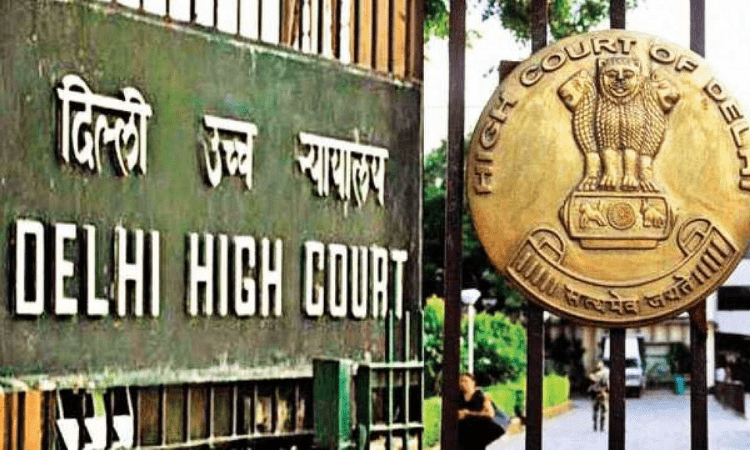
The Delhi High Court on Wednesday issued a notice on a petition filed by an interfaith couple challenging the procedure of issuance of public notice inviting objections to the registration of the marriage for a period of 30 days under the Special Marriage Act.

A division bench of the high court presided by Chief Justice D. N. Patel and Justice Prateek Jalan directed the Centre and the Delhi government to file its response over the petition filed by the couple and listed the matter for further hearing on November 27.

The petition, filed through advocates Utkarsh Singh, Mohd. Tauheed and Mohd Humaid sought the setting aside of the impugned procedure of issuance of public notice for 30 days inviting objections to the marriage solemnization and registration under the Special Marriage Act, 1954.

“The petitioners, being directly affected and aggrieved by the impugned procedure for applying for registration of marriages under Sections 6 and 7 of the Special Marriage Act, 1954 wherein public notice is issued inviting objections mentioned in section 4 of the SMA, 1954 to the marriage for next 30 days. They are praying for declaration of said the impugned procedure for applying for registration of marriages under the Special Marriage Act, 1954 as Null and Void and ultra vires to the constitution of India as the same is grossly illegal, arbitrary and ultra vires to the Constitution of India,” the plea said.

It stated that objections mentioned in section 4(b)(c) of the SMA, 1954 can be ascertained on the basis of certificates issued from a government hospital or any prescribed authority, the objection under section 4(d) of the SMA, 1954 is inapplicable to inter-religious marriages, therefore the 30 days’ notice period directly impinges upon the fundamental rights of the petitioners.

TikTok preferred more than Instagram by US teens: Report

0

Snapchat and TikTok are more popular social media apps than Instagram among US teenagers, said a new report.

While Snapchat is the favorite social media platform, Instagram fell from the second spot to third as TikTok moved up to No. 2, said the latest semiannual Taking Stock With Teens survey from Piper Sandler, a leading investment bank and institutional securities firm.

Concerns about TikTok’s future in the country increased after US President Donald Trump issued an executive order threatening a ban unless it quickly divests its US operations.

The survey found that 34 percent of the participants picked Snapchat as their favorite social app, while 29 percent preferred TikTok.

About 25 percent of teenagers in the US chose Facebook-owned Instagram as their favorite social media app, according to the survey, published on Tuesday.

However, in terms of engagements, Instagram topped the list, followed by Snapchat and TikTok.

The Piper Sandler Taking Stock With Teens survey is a semi-annual research project that gathers input from thousands of teenagers with an average age of 15.8 years.

Among other findings, the report said that teenagers in the US spend 34 per cent of their daily video consumption on Netflix followed by YouTube.

Delhi air turns ‘very poor’ as stubble burning begins

0

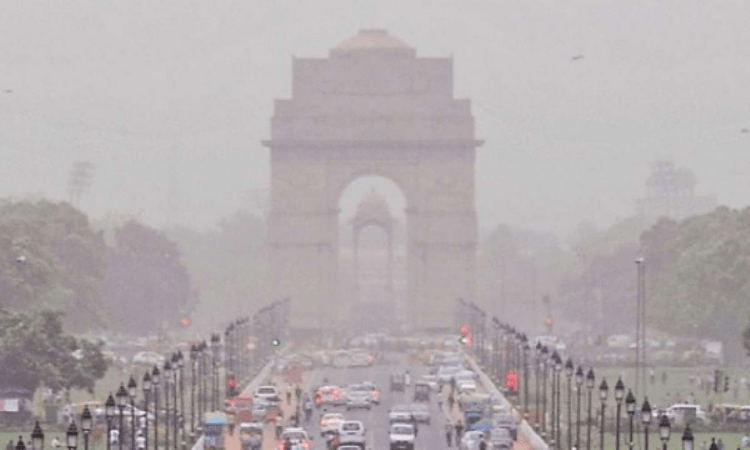
With the smoke from the burning of paddy stubble in Punjab and Haryana blowing to the national capital and its surrounding regions, the air quality of the region dipped to the ‘very poor’ category on Wednesday. This marks the beginning of the highly-polluted season that goes on to last for about three months.

With stubble burning, the air pollution reaches a crescendo in Delhi-NCR every winter, when pollutants combine with the suspended water droplets in the lower atmosphere to form a thick blanket of noxious smog, thus creating health hazards for the residents.

According to the data of the Central Pollution Control Board, out of 35 pollution monitoring stations, the air quality index in as many as 22 stations, including R.K. Puram, Rohini, was in the poor category. Twelve stations, including one at IGI airport, JNU, etc., recorded the index in the moderate category, while one station logged the ‘very poor’ category.

The overall air quality near Mundka in West Delhi stood at 308 micrograms per cubic in the very poor category, followed by 290 at Delhi Technical University (DTU) area. Very poor air quality causes respiratory illness on prolonged exposure, warned CPCB.

The synergized fire counts aggregated over Punjab, Haryana, and neighboring border regions were found to be 336, as per the System of Air Quality Weather Forecasting And Research (SAFAR).

“The boundary layer wind direction and speed are favorable for slow transport from the external emission sources and local conditions are conducive for the accumulation of pollutants in Delhi,” air quality forecasting system stated in their daily bulletin.

“Reduction in wind speed and lowering temperature between October 15 to 20 would further aggravate the situation, resulting in deterioration of the air quality,” Head of the IMD’s regional forecasting center Kuldeep Srivastava told IANS.

Kamal Narayan, CEO of Integrated Health and Wellbeing Council said that there is a need to tackle air pollution during Covid-19 times as a combination of both can have a far more damaging impact on people’s health. “They need to develop an economical alternative to stubble burning and making it available to farmers is the need of the hour.”

Burning of stubble in the agricultural states surrounding Delhi marks the beginning of a highly-polluted period. The farmers harvest paddy in October, which leaves them about three weeks before the next round of wheat sowing is to begin.

With cheap labor no longer available, and with machinery to extract the crop residue or stubble expensive or unavailable, the farmers resort to the easiest possible option, which is to burn the fields.

According to the National Academy of Agricultural Sciences, burning of one tonne of rice crop residue releases about 13 kilograms of particulate matter, 60 kg of carbon monoxide, and 1,460 kg of carbon dioxide and other harmful gases.

With the pollution mounting to dangerous levels, the Centre and state governments have also leaped into action. The Centre has deputed 50 Central Pollution Control Board teams to monitor stubble burning and help in implementing measures to combat pollution in Delhi-NCR.

Whereas the Delhi government started preparing a liquid solution for spraying it on the 700 hectares of farm fields in the national capital to soften the stubble to curb stubble burning. The spraying of this solution will start on October 11.

The Supreme Court-appointed Environment Pollution (Prevention and Control) Authority, in a report submitted to the top court on September 30, said that the state governments should take action to provide the assistance to farmers to carry out smart straw management and impose strict enforcement against violators.

Realme 7i with Snapdragon 662 SoC, quad rear camera launched in India

0

Chinese smartphone maker Relame on Wednesday launched its new smartphone ‘Realme 7i with’ a quad rear camera setup, a high refresh rate screen, and an octa-core processor.

Realme 7i will be available in 4GB+64GB at Rs 11,999, and 4GB+128GB priced at Rs 12,999: up for on sale on October 16 on realme.com, Flipkart, and offline stores.

“The Realme 7 series re-established our strong footing in the mid-range segment and the launch of Realme 7i, with best in segment quad-camera and display, and Realme 7 Pro Sun Kissed edition will enthuse fans further,” Madhav Sheth, Vice President, Realme and Chief Executive Officer, Realme India and Europe, said in a statement.

It features a 6.5-inch HD+ (720×1,600 pixels) display with a 90Hz refresh rate and a 90 percent screen-to-body ratio.

The smartphone is powered by an octa-core Qualcomm Snapdragon 662 SoC with 4GB of LPDDR4x RAMA and has up to 128GB of onboard UFS 2.1 storage that is expandable via microSD card.

The smartphone packs a quad rear camera setup that houses a 64MP primary sensor with an f/1.8 lens, an 8MP sensor with an ultra-wide-angle f/2.2 lens, a 2MP monochrome sensor with an f/2.4 lens, and a 2MP sensor with an f/2.4 lens.

At the front, you get a 16MP selfie shooter with an f/2.1 lens housed inside a hole-punch cutout.

Connectivity options include 4G LTE, dual-band Wi-Fi, Bluetooth 5.0, GPS/ A-GPS, a USB Type-C port, and a 3.5mm headphone jack.

The device is backed by a 5,000mAh battery that supports 18W fast charging.

In addition, the company also launched Realme 7 Pro Sun Kissed edition, priced at Rs 19,999 for 6GB +128GB and Rs 21,999 for 8GB +128GB features an eco-friendly vegan micro-grain leather, with the iconic Realme logo molded separately.

Humans can transmit Covid-19 virus to wildlife: Study

0

In a major study, researchers have found that there’s considerable risk that humans transmit SARS-CoV-2, the virus that causes Covid-19, to wildlife.

The study, published in the journal Mammal Review, noted that if SARS-CoV-2 were to infect and spread among wild mammals, it could potentially cause disease in some populations, in turn further endangering already threatened species.

“We really should avoid turning our pandemic into a multi-species problem,” said study lead author Sophie Gryseels from the University of Antwerp in Belgium.

For the findings, the research team regularly searched the studies with different combinations of the keywords: SARS-CoV-2, infection experiment, animal model, mammal, susceptibility, ACE2, cell line, coronavirus, wildlife.

Thet particularly checked ProMED, a community-driven platform that scans infectious disease news and reports every instance of non-human animals naturally infected by SARS-CoV-2.

Though most people very rarely come into close contact with live wild animals, the transmission of SARS-CoV-2 from humans could readily occur during (field) activities.

Also, if SARS-CoV-2 could be sustainably transmitted among some mammalian populations or communities, this would create new animal reservoirs that could repeatedly source new outbreaks in humans and other animals.

The researchers urge people to take sanitary precautions when in direct or indirect contact with wild or feral mammal species to prevent human-to-wildlife SARS-CoV-2 transmission.

“It’s difficult enough to control the SARS-CoV-2 in human populations–imagine what it will be like if it spreads among wild mammals,” said study researcher KU Leuven from the University of Arizona in the US.

“They could also get sick and form a reservoir from which they can then again infect humans, but we can’t ask animals to wear face masks and keep physical distance,” Leuven noted.

Liverpool’s Marko Grujic joins FC Porto

0

Liverpool midfielder Marko Grujic has joined FC Porto in a season-long loan deal, the Premier League club has confirmed.

The 24-year-old completed a move to the reigning Portuguese champions on Tuesday evening, ahead of the Primeira Liga’s transfer deadline.

He will spend the remainder of 2020-21 with Porto, who have started the domestic campaign with six points from their opening three matches and will also compete in the Champions League group stage.

The Serbia international, who joined Liverpool in 2016 and made two Carabao Cup appearances this term, spent the previous two seasons on loan with Hertha BSC in the Bundesliga.

The Reds are currently standing at the fifth spot in the points table with three wins from four games. They will next take on Everton on October 17.

Samsung to launch Galaxy Fit2 band in S.Korea this week

0

Samsung Electronics on Wednesday said its new wristband will be launched in South Korea this week as the tech firm tries to boost sales of wearable devices.

The Galaxy Fit2 will hit local shelves Thursday with a price tag of 49,500 won (US$42), reports Yonhap news agency.

The Fit2 wristband, which was unveiled last month, can automatically track up to five different types of activities and provides fitness information, such as calories burned, heart rate, and distance. It also monitors and analyzes users’ sleep patterns.

The band features a 1.1-inch AMOLED display in 3-D glass and offers more than 70 different face options. It comes in two colors: black and scarlet.

Samsung said Fit2 can run up to a maximum of 21 days on a single charge depending on settings and conditions.

According to market researcher International Data Corporation (IDC), Samsung was the fourth-largest wearable vendor with a market share of 8.3 percent in the second quarter of the year.

Previous coronaviruses infection may lessen severity of Covid-19

0

Being previously infected with coronaviruses that cause the ‘common cold’ may decrease the severity of (SARS-CoV-2) infections, the virus behind Covid-19, say, researchers, including one of Indian-origin.

The study, published in the Journal of Clinical Investigation, however, also demonstrated that the immunity built up from previous non-SARS-CoV-2 coronavirus infections does not prevent individuals from getting Covid-19.

The findings provide important insight into the immune response against SARS-CoV-2, which could have significant implications on Covid-19 vaccine development.

“Our results show that people with evidence of a previous infection from a “common cold” coronavirus have less severe Covid-19 symptoms,” said study author Manish Sagar from Boston University in the US.

While SARS-CoV-2 is a relatively new pathogen, there are many other types of coronaviruses that are endemic in humans and can cause the “common cold” and pneumonia.

These coronaviruses share some genetic sequences with SARS-CoV-2, and the immune responses from these coronaviruses can cross-react against SARS-CoV-2.

In this study, the researchers looked at electronic medical record data from individuals who had a respiratory panel test (CRP-PCR) result between May 18, 2015, and March 11, 2020.

The CRP-PCR detects diverse respiratory pathogens including the endemic “common cold” coronaviruses. They also examined data from individuals who were tested for SARS-CoV-2 between March 12, 2020, and June 12, 2020.

After adjusting for age, gender, body mass index, and diabetes mellitus diagnosis, Covid-19 hospitalized patients who had a previous positive CRP-PCR test result for a coronavirus had significantly lower odds of being admitted to the intensive care unit (ICU), and lower trending odds of requiring mechanical ventilation during COVID.

The probability of survival was also significantly higher in Covid-19 hospitalized patients with a previous positive test result for a “common cold” coronavirus.

However, a previous positive test result for a coronavirus did not prevent someone from getting infected with SARS-CoV-2.

Another interesting finding, the authors noted, is that immunity may prevent disease (Covid-19) in ways that are different from preventing infection by SARS-CoV-2.

This is demonstrated by the fact that the patient groups had similar likelihoods of infection but differing likelihoods of ending up in the ICU or dying.