
Nokia launches 2 affordable smartphones

0

The HMD Global-owned smartphone maker Nokia has launched two new budget smartphones Nokia 2.4 and Nokia 3.4 in Europe.

The Nokia 3.4 comes with triple rear cameras as well as sport a hole-punch display design. The Nokia 2.4, on the other hand, comes with a waterdrop-style display notch and houses dual rear cameras.

“For us, it’s truly been a transformational year, and we’ve adapted to the changing times. I am extremely excited to broaden our value-add services for enterprise with the introduction of HMD Connect Pro, offering unprecedented levels of flexibility and security,” Florian Seiche, Chief Executive Officer, HMD Global, said in a statement late on Tuesday.

The Nokia 3.4 will be available globally from early October in 3/32GB, 3/64GB, and 4/64GB memory and storage configurations, starting at an average global retail price of 159 euros.

The Nokia 2.4 will be also available globally from the end of September and in 2/32GB and 3/64GB memory and storage configurations starting at an average global retail price of 119 euros.

Nokia 3.4 features a 6.39-inch HD+ (720×1,560 pixels) display with a 19.5:9 aspect ratio and 400 nits of peak brightness.

Under the hood, there is an octa-core Qualcomm Snapdragon 460 SoC, coupled with 3GB and 4GB RAM options.

The Nokia 3.4 comes in 32GB and 64GB storage variants both of which support expansion via microSD card (up to 512GB) through a dedicated slot.

The device houses a triple rear camera setup that includes a 13MP primary sensor, 5MP ultra-wide-angle shooter, and a 2MP depth sensor.

For selfies, the phone comes with an 8MPselfie camera sensor at the front. The selfie camera is available under the hole-punch display design.

Connectivity options include 4G LTE, Wi-Fi 802.11 b/g/n, Bluetooth v4.2, GPS/ A-GPS, USB Type-C, FM radio, and a 3.5mm headphone jack.

The smartphone packs a 4,000mAh battery that supports 10W charging.

Nokia 2.4 features a 6.5-inch HD+ (720×1,600 pixels) display that has a 20:9 aspect ratio. The phone measures 165.85×76.30×8.69mm and weigh 189 grams.

The phone is powered by an octa-core MediaTek Helio P22 SoC, paired with 2GB and 3GB RAM options.

The smartphone houses a dual rear camera setup that includes a 13MP primary sensor with an f/2.2 lens and a 2MP depth sensor. There is also a 5MP selfie camera sensor at the front.

Connectivity options include 4G LTE, Wi-Fi 802.11 b/g/n, Bluetooth v5.0, GPS/ A-GPS, NFC, FM radio, Micro-USB, and a 3.5mm headphone jack.

In addition, the Nokia 2.4 packs a 4,500mAh battery.

India with over 56L Covid cases, goes past 90K deaths

0

India’s tally on Wednesday crossed 56 lakh cases following a spike of 83,347 fresh coronavirus infections reported in 24 hours, according to data from the Ministry of Health and Family Welfare.

There were 1,085 new deaths as the toll in past more than eight months reached 90,020 and the total cases mounted to 56,46,010.

India is the second worst-hit country by the pandemic just behind the US, where they have recorded 2 lakh deaths.

Out of the total cases in India, 9,68,377 are currently active, and 45,87,613 have been discharged, making the rate of recoveries best in the world.

While the recovery rate stands at 81.25 percent, the fatality rate has come down to 1.59 percent.

Maharashtra continues to be the worst-hit with a total of 12,42,770 cases, including 33,407 deaths, followed by Andhra Pradesh, Tamil Nadu, Karnataka and Uttar Pradesh.

According to the data from the Indian Council of Medical Research (ICMR), India conducted 9,53,683 sample tests in a single day on Tuesday, taking the total number of samples tested so far to 6,62,79,462.

The Union Health Ministry had said that it has increased the testing infrastructure exponentially. Till July 7, India had tested 1 crore samples and it took us 27 days to add 2 crore tests. By August 3, we had tested 3 crore samples. During this period, the laboratories were increased from 1,100 to 1,300 in the country.

On Tuesday, the Indian Council of Medical Research (ICMR) said that the efficacy of the Covid-19 vaccinein India might not reach 100 per cent. “We are aiming for 100 per cent efficacy but may land between 50 to 100 per cent. However, it still would be an effective vaccine against the virus,” Balram Bhargava, ICMR Director General said.

International flights from UP’s Kushinagar by Diwali

0

Chief Minister Yogi Adityanath has announced the start of international flights from the Kushinagar airport by Deepawali.

The airport is located about 52 kilometers east of Gorakhpur, the home district of the Chief Minister.

Talking about the strategic importance of the Kushinagar airport, located close to the International Border, the Chief Minister said in a statement, that this entire region is part of the ‘Buddha Circuit’ and this facility will increase the inflow of foreign tourists.

He said there is an immense potential of tourism in the eastern Uttar Pradesh region and officials have been directed to prepare an action plan in consultation with the public representatives to showcase it as an international tourist hub.

With a growing number of youths from Bihar and eastern Uttar Pradesh flying to various Gulf countries for employment, this airport would also become handy for them in reaching their destinations.

It may be recalled that the union cabinet in June this year, had decided to recognize Kushinagar as an international airport — the 29th in the country and fourth in Uttar Pradesh, including the upcoming Jewar airport.

Meanwhile, the Chief Minister also announced that his government would celebrate the upcoming centenary of the 1922 Chauri Chaura movement with much fanfare.

The incident involving freedom struggle had taken place at Chauri Chaura in Gorakhpur district on February 4, 1922, when a large group of protesters, participating in the non-cooperation movement, had clashed with police, which had opened fire on them, killing three civilians.

The demonstrators, in retaliation, attacked and set afire the Chauri Chaura police station, killing all its 22 occupants.

Following the violence in Chauri Chaura, Mahatma Gandhi had halted his nationwide non-cooperation movement.

The Chief Minister has also made two crucial announcements while reviewing the developmental projects of the Gorakhpur division, comprising eastern districts of Gorakhpur, Deoria, Kushinagar, and Maharajganj.

Yogi Adityanath also directed officials to make an integrated action plan to devise a permanent solution to the nagging flood menace in the eastern part of the state. He asked officials to undertake dredging of rivers in the region to extract dual benefit — relief from floods and availability of sand which will fetch revenue for the district administration.

He said his government has controlled the Japanese Encephalitis (JE) and Acute Respiratory Syndrome (AES) to a great extent. He also said pure water is the key to effective control over JE and other communicable diseases. “Make a project for house-to-house water supply in every JE-affected village,” he said.

Muslim education in India: Need for private and public sector investment

0

Eminent columnist Swaminathan A. Aiyar called upon Wakf boards and wealthy Muslims to finance the development of “a string of world-class education institutions” that would attract foreign students and Indian Hindus as well. His article was written in response to Member of Parliament Asaduddin Owaisi’s recommendation for “government scholarships for all” to deal with the “literacy and attendance gaps” of Muslims and other communities.

The proposal was driven by his opinion that “the quality of government schools is so poor that giving more government scholarships will do little for Muslims or any other community”. And, that “Christians have long created their own educational institutions of excellence”.

There is no argument that Christians have created good educational institutions — as have Muslims and others I might add — and that government-supported schools need to be improved. But, a programme of the scope and nature that the article suggests would do nothing to address the very real problem that Owaisi has identified.

That problem is that Muslims and others in the weaker sections still lag far behind those in other religious groups in terms of their development. The development deficit occurs at points all along the educational continuum from pre-school through higher education.

The Sachar Committee Report of 2006 disclosed this “development deficit” for minorities in many areas. The report resulted in the creation of an across the board programme for the development of minorities in India.

Some progress has been made since then but much remains to be done:

* In the 2011 census, the overall literacy rate for Muslims went up substantially to 68.5 percent from 59.1 percent in 2001. The rate for Muslim females was much lower at not quite 52 percent.

* A study released by the US India Policy Institute at the end of 2013 states that since 2006, “… the literacy level and the quantum of improvements for Muslims were modest compared to other populations.”

* That same study showed that only 11 percent of Muslims in India pursue higher education compared to a national average of approximately 19 percent and that participation in the “general category of Muslims in higher education” had actually declined by 1.5 percent for the period studied.

* The National Sample Survey Office (NSSO)’s 75th round report cited by MP Owaisi showed that 22 percent of Muslim girls aged 3 to 35 have never enrolled in a formal educational course.

These are troubling findings that frame the continuing needs of Muslims and others in the weaker sections. What should be done to address those needs?

In my opinion, the answer must be a comprehensive and collaborative effort financed and supported through public and private sector investment.

That effort should improve educational opportunity and quality at all levels. Educational literacy should be the starting line and higher education of some form should be the finish line.

For students at the primary and secondary levels, the Indian government needs to continue to upgrade its educational improvement initiatives to ensure basic knowledge, skills, and abilities in language, science, mathematics, and technology. Although madrasas educate only between 2-4 percent of Muslim children and youth, they need to modernize their curriculum and move away from Islam centric or Islamic-only education to a holistic approach that enables these students to integrate fully into Indian society.

Higher education should not be solely the province of four-year colleges or universities. It should include technical, vocational, and professional education at the secondary and post-secondary levels.

Education in those areas provides avenues for participation in 21st-century careers, the competencies to compete in a global economy, and the capacity to contribute to lifting Muslims and those in the weaker sections out of poverty and deprivation.

I know from my personal involvement that Muslims are already making commitments to assist in providing educational opportunities for Muslims at all these levels. For example, the American Federation of Muslims of Indian origin supports hundreds of schools and scholarships for underprivileged Muslims and others throughout India.

The Duty Society of Aligarh Muslim University (AMU) has numerous members who have focused on educational development for those in the weaker sections and placed an intensified organizational focus there in 2016, its 125th anniversary year.

I myself have supported AMU with initiatives that enhance higher education opportunities for Muslims and others including the funding of a new Management Complex, an Entrepreneurship Center, and an auditorium for the Mass Communications Department. At the dedication of the Frank and Debbie Islam Management Complex, I said, “From this Management Complex will come the future leaders who will make India and the world a better place. It will be an educational empowerment zone.”

I have had a lifelong passion and commitment to improving girls’ access to and participation in meaningful education. If we empower girls through education, they are most likely to control their own destiny. Education prepares the girl to become a change agent. Too many families are trapped in poverty because of a lack of education. With her own education, the girl who becomes a woman and a mother can educate and equip her children to escape that trap. This is why my wife Debbie and I have also committed to supporting the development of a technical school for women in Azamgarh UP. Those women graduates will make invaluable contributions to making India and the world a better place as well.

Addressing the development needs of Muslims and others in the weaker sections is a strategic investment. It is a hand-up and not a hand-out. Those who get that hand-up will extend their hands to help others up. As a result, the return on these public and private investments will be exponential for the Indian economy and society.

Digital India bats for Amazon, JioMart, payTM, Byju’s: BofA-Survey Monkey

0

A 16-page survey by Bank of America (BofA) identifies Amazon, Jio, Paytm, and Byju’s as the stars that Indian consumers prefer in these times of Covid-19.

Seventy-one percent of users preferred Amazon over rival Flipkart which stood at 22 percent. Only 5 percent of those surveyed preferred to go basis price alone.

In the lucrative online grocery sweepstakes, 67 percent said they had tried JioMart. Of these 47 percent said they will go to the app again, while 20 percent were iffy. 21 percent preferred Grofers/Big Basket.

In digital payments, 53 percent preferred Paytm, while 28 percent batted for Google Pay. 14 percent lean towards PhonePe.

Sixty-eight percent said they were comfortable with digital payments.

As for streaming habits, 53 percent said they preferred YouTube mainly. 15 per cent/13 percent/ 10 percent pitched for Netflix/Amazon Prime/Disney. 6 percent preferred Jio TV/Jio Cinema.

In music streaming, JioSaavn was preferred by 31 percent even as Spotify and Gaana were not too far at 26 percent and 25 percent respectively. 11 percent preferred Bharti Wynk.

In their online food habits, as many as 69 percent confirmed that they have increased online ordering from eateries. 56 percent displayed an intent to continue doing so for the next six months.

Seventy percent showed adaptation to edu-tech. Here Byju’s lead the pack at 38 percent. Unacademy and Vedanta were at 35 percent and 29 percent. Embibe, owned by Reliance, was being used by 9 percent.

Seventy-eight percent of those surveyed were already doing online gaming in some form. Fifty-four percent preferred mobile games, while 16 per cent/8 percent preferred fantasy gaming/e-sports.

Forty-nine percent were using smartwatches to map their health while 20 percent were tracking via mobile phones.

Cab hailing was equally split between Ola and Uber. Indicative of these times, 52 percent felt they wouldn’t come near a shared cab.

Structurally, BofA researchers reported higher propensity among those surveyed to shop online, use digital payments, and continue work from home (WFH) even post COVID. They saw this adaptation as positive for valuations of Bharti and Jio Platforms.

BofA commissioned Survey Monkey for this research.

A thousand folks were interviewed. Of these 51 percent were males. Twenty percent were between 18-29 years old. Forty-six percent were between 30 and 44. Twenty-three percent were between 45 and 60. The rest (3 percent) were above 60. As for income, 17 percent made more than Rs 75,000 per month. Twenty-five percent earned between Rs 50,000 and Rs 75,000; 35 per cent had an income between Rs 25,000 and Rs 50,000, and 22 per cent earned less than Rs 25,000.

Torrential rains paralyse Mumbai

0

Heavy overnight rains lashed Mumbai and districts in the Mumbai Metropolitan Region, seriously disrupting road and rail traffic, and affecting the movement of people manning essential services, officials said here on Wednesday.

According to IMD, the city recorded over 12.20 cms rain while the suburbs notched over 27.50 cms rain most of it during the night.

The IMD Mumbai has forecast another wet day with heavy rain as the civic authorities urged people to avoid stepping out unless necessary.

Heavy water-logging was reported from the traditional flood-prone areas of central Mumbai like Sion, Matunga, Kurla, Chunabhatti, Mazagaon, Masjid Bunder, and Byculla.

Besides several areas in the suburbs like Goregaon, Malad, Dahisar, Kurla, Ghatkopar, Mulund experienced waterlogging.

The Central Railway has suspended suburban services from Chhatrapati Shivaji Maharaj Terminus to Thane and Vashi. Special mail/express trains have been rescheduled, said CR Chief Spokesperson Shivaji Sutar.

Similarly, submerged tracks compelled the Western Railway to suspend all suburban services between Churchgate to Andheri.

“Heavy rains have been reported from Mumbai and Thane suburbs in last 12 hours with some places recording 150 mm plus rainfall,” said KS Hosalikar, deputy director-general of meteorology, IMD.

Mumbai’s public bus service operator BEST has canceled or diverted its operations in several routes.

Now travel by plane if you don’t get a confirmed railway seat

0

Railey, a Mumbai-based start-up, has launched India’s first ‘Waitlist and RAC Protection’ service, aimed towards tackling the problems faced by the passengers traveling by trains after being put on the waiting list.

Trains remain the most preferred option for the majority of passengers mainly since tickets are less expensive compared to flights.

Unfortunately, on some occasions, passengers need to cancel their journey if their names do not appear in the journey chart, even after being put on the waiting list.

However, by using the Railofy app, or by visiting its website, a passenger can enter the PNR number of their ticket. The traveler also needs to pay a fee, which is determined according to each trip.

After this, Railofay keeps tracking the passenger’s waiting list tickets. If the passenger’s ticket is not confirmed until the last minute, the app provides a flight ticket to the passenger, at the same price as that of the train’s.

Deepika Agarwal, a passenger, told IANS: “We had to travel from Mumbai to Delhi, and the tickets for six passengers were on the waiting list. After our tickets were not confirmed even at the last minute, we completed our journey through this app.

“The price of Tatkal ticket was Rs 4,000 and a flight ticket was around Rs 5,000. We took the waitlist protection from Railofy. We got a flight ticket for just 2,000 rupees after the chart was made.”

“About 30 crore passengers in India face the problem of being put on the waiting list. We want travellers to have no hassles during the journey. We started the app in January 2020 and in the first few months, only about 100 passengers availed our services and completed their journey,” Rohan, a founding member of Railofy, told IANS.

“Railofay service is currently available for all trains and across all its classes. The migrant laborers also took advantage of our facility amid the corona pandemic. Those who are returning to work again are also completing their journey through us,” he said.

Rohan said Railofy also helps those passengers whose towns or villages are away from the airport.

He said though Railofy is making the long-distance journey easier, it has also started providing bus facilities for shorter routes so that passengers have the least trouble.

Putin urges to remove barriers to medical cooperation

0

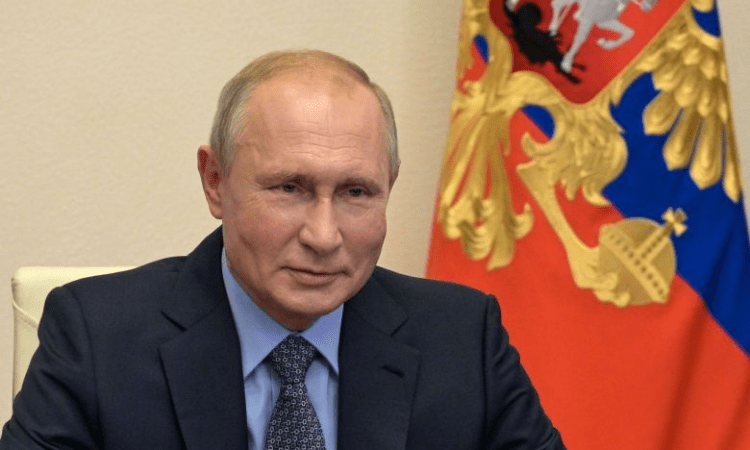
Russian President Vladimir Putin on Tuesday called for the removal of barriers to cooperation between countries in the field of medicine.

“As to healthcare, just like in economy, we now need to remove, as many as possible, obstacles to partner relations,” Putin said at the general debate of the 75th session of the United Nations General Assembly, Xinhua news agency reported.

Russia has been actively contributing to global and regional efforts to counter Covid-19, providing assistance to most affected states both bilaterally and within multilateral formats, the president said, according to a Kremlin transcript of his speech.

“In doing so, we first of all take into account the central coordinating role of the World Health Organization (WHO), which is part of the UN system. We believe it essential to qualitatively strengthen the capability of WHO,” Putin said.

“This work has already begun, and Russia is genuinely motivated to engage in it,” he added.

Putin recalled that during the pandemic, doctors, volunteers, and citizens of various countries have been showing examples of mutual assistance and support, and such solidarity defies borders.

Many countries have also been helping each other selflessly and open-heartedly, he said.

“However, there have been cases showing the deficit of humanity and, if you will, kindness in the relations at the official inter-State level,” he added.

“We believe that the UN prestige could strengthen and enhance the role of the humanitarian or human component in multilateral and bilateral relations, namely in people-to-people and youth exchanges, cultural ties, social and educational programs, as well as cooperation in sports, science, technology, environment and health protection,” Putin said.

The president reiterated that Russia is completely open to partner relations and willing to cooperate.

“In this context, we are proposing to hold an online high-level conference shortly for countries interested in cooperation in the development of anti-coronavirus vaccines,” he said.

Have worked hard on fitness, power hitting: Samson

0

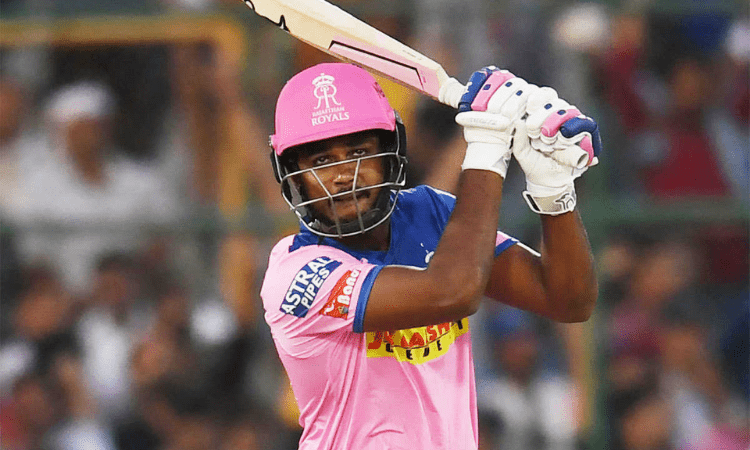
Sanju Samson said that he has worked hard on his power-hitting in recent months. Samson played a starring role in Rajasthan Royals’ 16-run win over Chennai Super Kings on Tuesday, smashing 74 off 32 balls as RR scored a mammoth 216/7.

“My game plan is to stand and deliver. If it’s in the arc I go for it, and it’s very important to keep the intent to hit the ball if it’s there to be hit,” said 25-year-old Samson in the post-match presentation ceremony in which he was declared player of the match.

“I’ve been working hard on my fitness, diet, and training, and on my strength, because my game relies a lot on power hitting. I think range-hitting is what the game demands in this generation. I had time to work out in these 5 months, and I think I’ve increased that ability.”

Additionally, Samson took two catches and stumped two batsmen in CSK’s chase. RR already has another wicketkeeping option in Robin Uthappa and Jos Buttler, the latter of whom is yet to join the team.

“Everyone likes to keep wickets (about Buttler and Uthappa as alternate options) and no one likes running around, but it’s up to the coach. We are happy to bring smiles on the fans’ faces and we hope to continue doing so,” said Samson

Samson, Smith, Tewatia shine as Royals stun CSK by 16 runs

0

Sanju Samson’s blistering 32-ball 74 at No.3, fast bowler Jofra Archer’s fireworks with the bat — he carted four consecutive sixes in the last over — and leggie Rahul Tewatia’s three-wicket burst propelled Rajasthan Royals (RR) to a comfortable 16-run win over Chennai Super Kings (CSK) in an IPL match here on Tuesday.

RR, champions in the first IPL edition in 2008, posted a gigantic 216 for seven wickets in 20 overs after being asked to bat by CSK captain Mahendra Singh Dhoni who won the toss. Chasing, three-time champions CSK finished with 200 for six wickets in 20 overs, despite a late surge from Faf du Plessis, who hammered a 37-ball 72 at the Sharjah International Stadium.

After some blistering batting display by Samson and captain, Steve Smith took their side to a big total, the Rajasthan Royals bowlers also stepped up and comfortably defended the target as their side started their campaign with a win.

Chasing the massive 217-run target, CSK were off to a flying start, with openers Shane Watson and Murli Vijay taking their team past the 50-run mark in 5.5 overs.

Rahul Tewatia drew the first blood for RR as he packed back Watson (33) in the seventh over with CSK’s scorecard reading 56/1. Just before CSK could add a couple of runs to their total, Shreyas Gopal sent back Vijay (21).

CSK then lost Sam Curran (17), Ruturaj Gaikwad, who departed without scoring, and Kedar Jadhav (22) at regular intervals. However, it was du Plessis who kept CSK’s hopes alive.

With the required run-rate continuously mounting up, du Plessis showed his prowess after clobbering the Royals bowlers all around the park.

The South African, however, failed to convert it into a win as he was dismissed by Archer in the 19th over. du Plessis 37-ball 72 knock contained a boundary and seven sixes. After the South African’s departure, the ‘Yellow Brigade’ needed 38 off the final over, Dhoni showed glimpses of his vintage batting as he smashed Tom Curran for three back to back sixes.

However, Dhoni’s pyrotechnics weren’t enough to help his team across the line, falling short by 16 runs in the end. Dhoni’s unbeaten 29 runs came off 17 deliveries.

Tewatia was the wrecker-in-chief for RR with figures of 3/37 while Tom Curran, Gopal, and Archer bagged a wicket each.

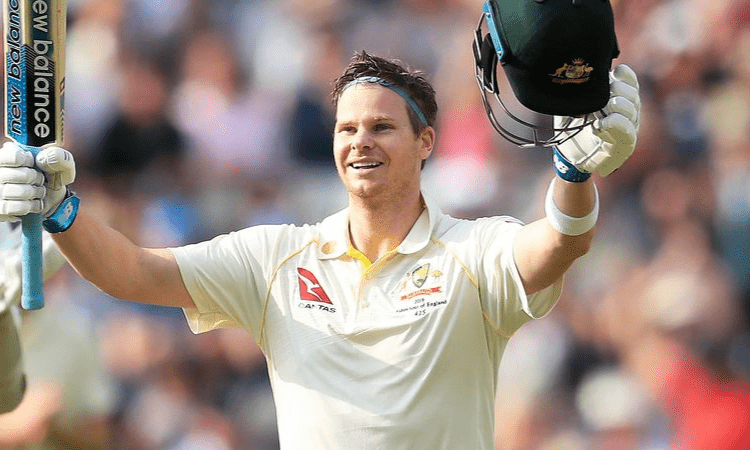
Earlier, half-centuries from Sanju Samson (74) and Steve Smith (69) along with Jofra Archer’s (27 not out) late fireworks propelled Rajasthan Royals to a huge 216/7 in 20 overs.

Asked to bat, RR lost their opener Yashasvi Jaiswal (6), who fell to Deepak Chahar in the third over with just 11 runs on board.

However, Samson, who then joined his skipper Smith, looked in no mood to spare any CSK bowler. There was no looking back for the pair as they kept the scorers busy denying their opponents making any further inroads. The duo steered their side to 40/1 in the first five overs before they swiftly accelerated the run rate to help RR reach 119/1 in 10 overs.

The Smith-Samson pair was involved in a crucial 121-run partnership for the second wicket. CSK pacer Lungi Ngidi finally came with a breakthrough as he cut short Samson’s stay in the middle in the 12th overs with RR’s scorecard reading 132/2. Samson’s master class was laced with a boundary and nine sixes.

RR then lost David Miller, who failed to open his account, Robin Uthappa (5), and Rahul Tewatia (10) in quick succession as RR was reduced to 167/5 in 16.2 overs.

Next batsman Riyan Parag (6) also failed to make an impact after being dismissed in the same over by Sam Curran. Despite these hiccups, Smith continued to keep the scorers busy.

While trying to switch gears, Smith lost his wicket in the 19th over before Archer began the carnage. The RR skipper’s knock, which came off 47 balls, was decorated with four boundaries and as many hits over the rope.

Ngidi had a forgettable day as he became the main victim of Archer, who carted four consecutive maximums in the final over. Archer’s eight balls 27 was enough to take RR to a massive total.

During Tom Curran’s brief innings there was drama as umpire Chettithody Shamshuddin declared him out off pacer Deepak Chahar after Dhoni ‘wrongly’ claimed a catch in the 18 over of the innings. Replay, however, showed that the ball had bounced before Dhoni took the catch, and Curran, who had walked some distance, returned to resume his innings. He scored an unbeaten 10 off nine balls.

Tom’s brother Sam Curran was the pick of CSK bowlers with figures of 3/33 while Chahar, Ngidi, and Piyush Chawla settled with a wicket each.

Brief scores: RR 216/7 in 20 overs (Samson 74, Smith 69; S Curran 3/33) beat CSK 200/6 in 20 overs (Faf du Plessis 72, Shane Watson 33; Rahul Tewatia 3/37) by 16 runs

Long gap, 14-day quarantine doesn’t help: Dhoni on staying at No.7

0

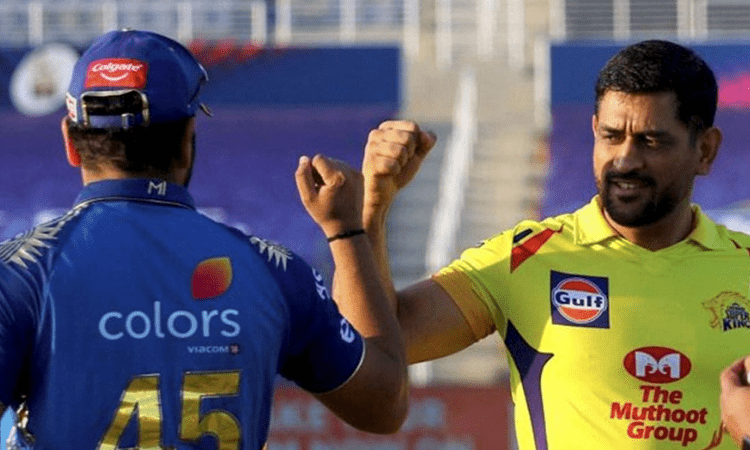
Mahendra Singh Dhoni said on Tuesday that he decided to stay at number seven, as Chennai Super Kings fell short by 16 runs while chasing Rajsthan Royal’s total of 216 runs, due to the long gap the 39-year-old wicketkeeper-batsman had before the ongoing season of the Indian Premier League (IPL), and also to give Sam Curran more chance higher up the order.

Dhoni hit three consecutive sixes in the last over but it was not enough as CSK fell 16 runs behind in a high scoring fixture at the Sharjah Cricket Stadium.

“I haven’t batted for a long time. Fourteen-day quarantine doesn’t help,” said Dhoni at the post-match presentation ceremony.

“Also, we wanted to try different things, give opportunities to Sam (Curran). We have the opportunity to try different things. If they don’t work, you can always go back to your strengths,” the CSK skipper said.

Dhoni said that CSK did not get a good start considering the size of the target. He also felt that his bowling unit could have done better to restrict the opposition.

“With 217 as the target, we needed a very good start which was not the case. Steve (Smith) and (Sanju) Samson batted very well. Need to give credit to their bowlers. Once you’ve seen the first innings, you know the length to bowl. Their spinners did well to bowl away from the batsman. Our spinners made the error of bowling too full. Had we restricted them to 200, it would’ve been a good game,” he said.

Royals captain Steve Smith was all praise for Sanju Samson, who smashed 74 off just 32 balls. Jofra Archer later provided the apt finishing touch, smashing 27 off eight deliveries thanks to Lungi Ngidi bowling consecutive no balls in the final over.

“Sanju Samson played an unbelievable knock. Felt like everything he was hitting went for six. I was just giving Sanju the strike, wasn’t I? He was middling everything. I hope this sets him up for a big IPL,” said Smith.

Social distancing costs a German football team 37-0 defeat

0

A lower-league amateur football team in Germany suffered a humiliating 0-37 defeat after only fielding seven players in a bid to maintain social distancing against their opponents as they feared contracting the coronavirus.

On September 13, SG Ripdorf/Molzen II faced their city rivals SV Holdenstedt II in the 3. Kreisklasse, one of the lowest leagues in the German system and lost the match by a margin of 0-37, as per a report in ESPN. Holdenstedt were ruthless in their approach and scored 37 goals, one nearly every two minutes.

Coming into the game, Ripdorf players had asked for a postponement when they heard the Holdenstedt players had been exposed to an opponent with coronavirus in the previous weekend’s game. While the Holdenstedt squad later tested negative for the virus, the Ripdorf players did not feel safe due to the 14-day infection period.

Fearing infections with Covid-19, several players did not want to take to the pitch and in the end, only seven players — the minimum number required for a football match — appeared for Ripdorf.

“We tried to postpone the match,” Ripdorf co-chair Patrick Ristow told ESPN. “But Holdenstedt wanted to play.”

“When the game kicked off, one of our players passed the ball to the opponent and our team walked to the sidelines. Holdenstedt scored, but the referee booked our captain for unsportsmanlike conduct,” he added.

He further said as his team didn’t want to risk anything, the players returned to the field but they only stood on the pitch. “They did not go into direct duels and observed the social distancing rules, keeping two meters between them and Holdenstedt players.”

The biggest known defeat for a football team is 149-0, a remarkable score that occurred in a 2002 game between the AS Adema and SO l’Emyrne clubs in Madagascar.

Covid bonanza for health insurers, 25% growth recorded

0

The Covid-19 pandemic has increased the propensity of consumers to opt for a comprehensive health insurance product that gives proper financial protection for meeting any medical emergencies.

Accordingly, overall growth in the health business of general insurers was strong at 25 percent YoY in August (13 percent YoY in 5MFY21) with strong performance reported in retail health and government business at 40 percent yoy each, according to an analysis report by Kotak Institutional Equities.

Group health insurance, however, was muted at 12 percent.

“Increasing risk aversion among consumers, a strong uptick in demand for new COVID-related policies (‘Corona Kavacha’ and ‘Corona Rakshak’) and penetration among mass segments through the newly launched ‘Arogya Sanjeevni’ plans were likely drivers,” the report said.

In the health insurance category, people preferred taking policies from entities having expertise in this line of operation. Accordingly, standalone health insurers reported a 39 percent YoY increase in health premiums led by a 51 percent YoY increase in the retail health business. Private players were up 16 percent YoY in the health business (up 40 per cent in retail health) while PSUs were up 21 percent YoY.

Investment by health insurers in the digital renewal of policies has likely paid off. Private players witnessed a 40 per cent YoY increase in retail health insurance premiums on the back of 1.1X YoY growth for Reliance General, 66 per cent YoY growth for Tata AIG, and 65 per cent YoY growth for Iffco Tokio. Chola MS, ICICI Lombard, and Bajaj General reported 62 percent YoY, 28 percent YoY and 35 percent YoY growth, respectively, the brokerage report said.

On an overall basis, General insurers reported 10 percent YoY growth in premiums (excluding crop) in August 2020 (7-8 per cent in the past two months) led by 29 per cent YoY growth in fire and robust 40 per cent YoY growth in retail health. The motor continues to drag growth (down 2 percent YoY).

Among key players, SBI reported stellar growth across most segments (up 25 per cent ex-crop) while ICICI and Tata AIG were up 12 per cent and 11 per cent YoY (ex-crop). Bajaj’s ex-cop business remained weak, down 8 percent you. Chola MS was muted at 1 percent YoY (ex-crop).

Democrats unveil stopgap funding bill

0

Democratic lawmakers from the US House of Representatives have introduced a stopgap funding bill, known as the continuing resolution legislation, to keep the federal government open until December 11.

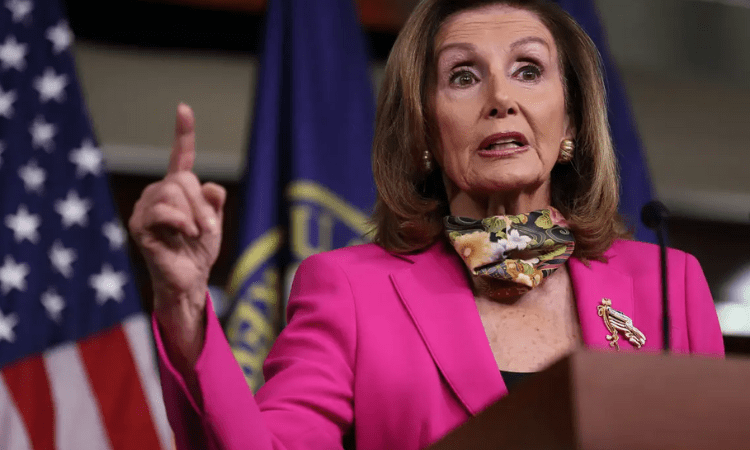
“The Continuing Resolution introduced today will avert a catastrophic shutdown in the middle of the ongoing pandemic, wildfires, and hurricanes, and keep the government open until December 11, when we plan to have bipartisan legislation to fund the government for this fiscal year,” House Speaker Nancy Pelosi said in a statement on Monday.

“We continue to believe that the Congress should complete its work by passing full appropriations bills by December, which the House has already done,” Xinhua news agency quoted the Speaker as saying.

The current federal government funding is slated to run out on September 30, leaving just nine days for both parties to avoid a potential government shutdown at a time when lawmakers remain deadlocked over the next Covid-19 relief package.

“We must continue to work to reach agreement on a coronavirus relief package that meets the health and economic needs of the American people,” Pelosi said.

However, Senate Republicans quickly opposed to the stopgap funding bill, as it does not contain a provision to provide aid for farmers impacted by the pandemic.

The House plans to pass the government funding legislation as soon as Tuesday and send it to the Senate.

Republicans in the Senate could block the bill or seek to amend it and send it back to the House, according to The Washington Post.

Both the House and Senate must pass identical versions of the bill for President Donald Trump to sign it.

It’s not clear whether the two parties could avoid a government shutdown before the November 3 presidential election.

Last week, the Senate failed to advance a scaled-down Republican Covid-19 relief proposal, which contained roughly $650 billion in total spending.

House Democrats had unveiled a $3 trillion relief proposal in May, which didn’t gain support from the Republicans.

Senate Republicans released they’re $1 trillion proposals in late July, but lawmakers failed to bridge their differences before the August recess.

Pakistani banks named in global money laundering list

0

At least six Pakistani banks have been named in an investigation on the role global banks play in money laundering, which makes up to at least $2.5 million.

The International Consortium of Investigative Journalists (ICIJ) and Buzzfeed News carried out an investigation and found that at least 29 suspicious transactions worth about $2.5 million related to Pakistani banks, that may have been used for money laundering.

The six banks are Allied Bank, United Bank Limited (UBL), Habib Metropolitan Bank, Bank Alfalah, Standard Chartered Bank Pakistan, and Habib Bank Limited.

As per the investigation, all 29 suspicious transactions were done during the years 2011 and 2012.

The investigation details by Buzzfeed News, shared with the ICIJ revealed that global banks to the US Treasury Department’s Intelligence Unit, the Financial Crimes Enforcement Network known as FinCEN, filed over 2,100 suspicious activity reports.

The report revealed that global banks moved more than $2 trillion between 1999 and 2017 in suspicious payments, flagging clients in more than 170 countries, identified as being involved in the illicit transactions.

As per revealed data on Pakistani banks, out of the 29 suspicious transactions to and from Pakistan, received transactions amounted to $1,942,560 while the sent transactions were $452,000, which include at least 12 suspicious transactions by Allied Bank, eight flagged transactions by United Bank Limited, three by Bank Alfalah, four transactions by Standard Chartered Bank and one by Habib Bank Limited.

The report has put another dent on the global image of Pakistan’s crippling economy and its position on money laundering.

It comes at a time when Pakistan is working hard towards fulfilling the 27-point-action plan of the global watchdog on terror financing and money laundering, the Financial Action Task Force (FATF).

Pakistan currently is in the grey list of the FATF and is working on compliance of the action plan to ensure that it saves itself from being pushed ahead into the blacklist, which would attract global financial sanctions.

Prem Chopra: Talent is not dependent on age

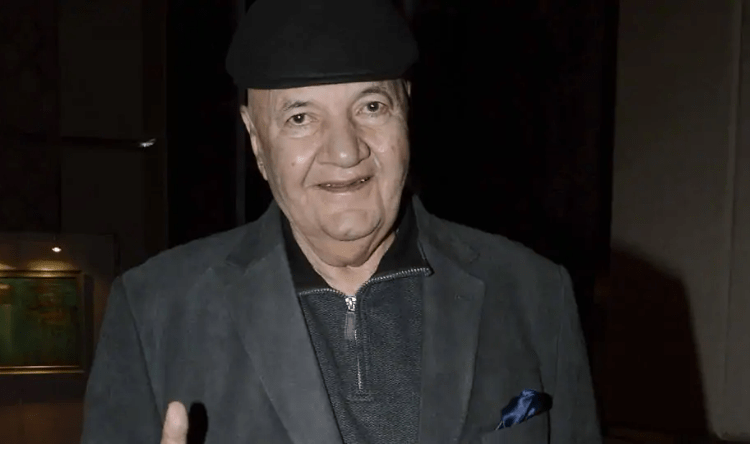
Veteran actor Prem Chopra, who will turn 85 on September 23, feels that talent has nothing to do with age.

Chopra has played roles of every shade over the decades in more than 360 films, and notably “Bobby”, “Kati Patang” and “Do Raaste”. He was one of the most popular screen villains in Bollywood during the 1970s and 1980s.

While he has worked for over six decades, he feels an actor never retires, and there is always work if a person is willing to work hard.

“Talent is not dependent on age. If you are talented and deliver on whatever character is given to you, you will always be in demand,” he said.

Talking about a regular day in his life, Chopra shared that he does yoga each morning and likes to swim occasionally to stay fit. He also talked about his love for poetry, while opening up on the show “Zindagi ek Safar” on Tata Sky Seniors.

3 B’deshi banks reportedly linked to illicit fund flow

0

Three Bangladeshi banks have been reported to have links with global networks of illicit fund flow, with their names, have appeared in suspicious transactions.

Of the three, two Islamic banks brought home $337,733 through four transactions — three with an Australian and one with a Latvian bank.

The third state-owned bank sent $495,204 from the country through four transactions — all in September 2016 –with a German bank.

These eight transactions were extracted from the US Treasury Department’s Financial Crimes Enforcement Network, or FinCEN Files as samples to show how suspicious transfers flowed to and from Bangladesh.

The sample disclosure links Bangladesh with a global network of fund flow of more than $ trillion, which suspects to have been laundered or spent in criminal activities between 1999 and 2017.

However, the Bangladeshi banks’ amount of suspicious transactions was very insignificant compared to those of banks in other South Asian countries such as India, Pakistan, and Afghanistan.

The amount reported for Bangladesh was $8 million, equivalent to above Tk7 crore, while the transaction value was $888.46 million in India, $2.39 million in Pakistan, and $99.94 million in Afghanistan, according to the report.

The transactions of Bangladeshi banks were processed via two US-based banks, which filed suspicious activity reports with the FinCEN.

The money from this sample of transactions moved between Bangladesh, the US and three other countries between 2014 and 2016, according to the report.

The documents, known as suspicious activity reports, were obtained by BuzzFeed News and shared with a worldwide consortium of journalists. The more than 2,100 suspicious activity reports, filed by the major US and international banks, relate to more than $2 trillion of transactions between 1999 and 2017.

Banks are required to file the reports with the FinCEN about transactions that they believe could be part of a money-laundering scheme, fraud, or other illegal activity.

Following the revelation, the Bangladesh Financial Intelligence Unit said it will investigate if there was any rule breach or money laundering through the transactions.

“These are suspicious transactions and it has not been confirmed that the money-laundering rule was breached. These also can be normal business transactions. So, we need to investigate to confirm if there was illicit fund flow,” the unit’s chief Abu Hena Mohd Razee Hassan said.

DGCA to SC: Tickets booked before, during lockdown refundable

0

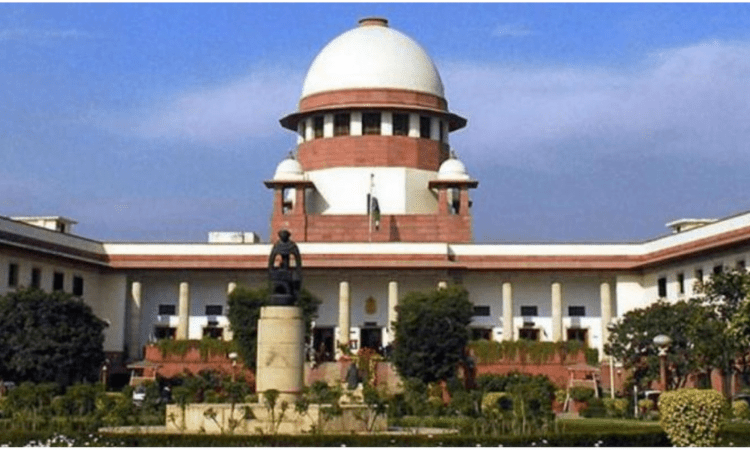
The Directorate General of Civil Aviation (DGCA) has informed the Supreme Court that people who had booked air tickets during the lockdown are entitled to immediate refunds.

The DGCA also clarified that in case of tickets booked prior to the lockdown up to May 24, the refund would be governed by the credit shell and incentive scheme.

The Centre had earlier introduced an incentive scheme by which 0.5 percent interest will accrue on the original fare lying in the credit shell from the date of cancellation of the flight till June 30, 2020. Beyond this period, the passenger can avail 0.75 percent interest every month till March 31, 2021.

In a supplementary affidavit, the DGCA clarified that the refunds were broadly divided into three categories.

The first category is of those who booked tickets prior to the lockdown for travel up to May 24 (as calibrated domestic operation recommenced from May 25, 2020), who will be governed by the proposed credit shell and incentive scheme.

In the second category, passengers who booked tickets during the lockdown will be entitled for an immediate refund of fares by the respective airlines as the latter were not supposed to book such tickets.

In the third category are persons who booked tickets at any point in time, but for travel after May 24, to whom refunds will be governed by CAR (Civil Aviation Requirement) provisions.

Advocate Jose Abraham, representing petitioner Pravasi Legal Cell, said: “The present affidavit filed by the Union of India clarifies that the scheme for full refunds is applicable to all tickets booked prior to the lockdown, which was not clear earlier on. Tickets booked during the lockdown are also entitled to immediate refunds… It is definitely a welcome stand as far as the petitioners are concerned.”

On September 9, the Centre had assured the Supreme Court that there was no catch in its proposal with regard to the refunds for tickets booked during the lockdown.

Solicitor General Tushar Mehta, representing the Centre, told a bench comprising Justices Ashok Bhushan, RS Reddy, and MR Shah that if the tickets were booked on March 15, before the lockdown, even then these would be fully refunded.

In the case of tickets booked through tour operators, the Centre clarified that if such operators had already paid the money to the airlines for tickets but the clients were yet to pay the operators, the tickets will remain in the name of the prospective passengers on cancellation and converted to credit shell. In case the prospective travelers utilize the credit shell, they will pay the money to the tour operator/agent and not the airlines.

The Centre had proposed that full refunds be given by airlines within 15 days for tickets booked during the lockdown. If any airline was in financial distress, a credit shell should be provided up to March 31, 2021, on the routes of passengers’ choice, it said. The full refunds were proposed for tickets booked with domestic and foreign airlines.

In an affidavit in the Supreme Court, DGCA OK Gupta said full refunds should be given immediately by domestic airlines if tickets were booked directly with it or through agents during the first lockdown period, that is, March 25 to April 14 for journeys to be undertaken in both first and second lockdown (March 25 to May 3) periods in all such cases.

Govt lists 4 Bills for passage in LS on Tuesday

0

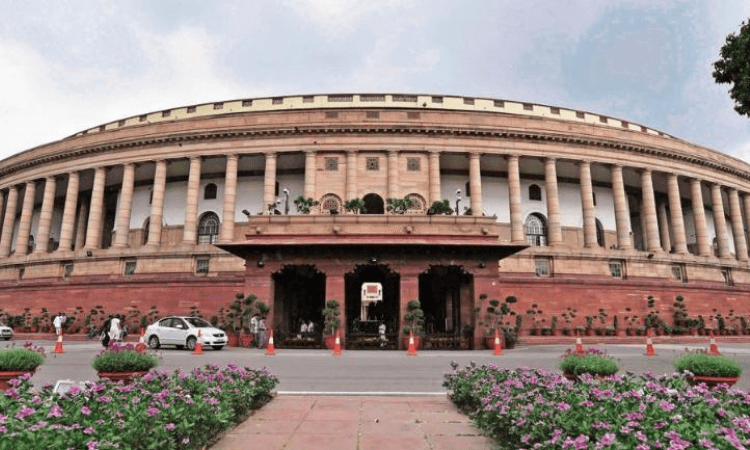
The Central government has listed three Labour Bills and one Finance Bill for passage in the Lok Sabha during the ongoing session of Parliament on Tuesday.

The Occupational Safety, Health And Working Conditions Code, 2020; Code On Social Security, 2020; Industrial Relations Code, 2020; and Factoring Regulation (Amendment) Bill, 2020 are among the Bills listed in the Legislative Business.

The Bills will be moved after the House will assemble for the day at 3 p.m.

Union Labour and Employment Minister Santosh Gangwar will move the ‘Occupational Safety, Health And Working Conditions Code, 2020’ to consolidate and amend the laws regulating the occupational safety, health and working conditions of the persons employed in an establishment.

The Minister will also move the Bill on the ‘Code On Social Security, 2020’, which seeks to amend and consolidate the laws relating to social security. The aim of the Bill is to extend the security to all employees and workers either in the organized or unorganized or any other sectors.

He will also move the ‘Industrial Relations Code, 2020’ Bill to consolidate and amend the laws relating to Trade Unions, conditions of employment in an industrial establishment or undertaking, investigation, and settlement of industrial disputes.

The government on Saturday introduced three Bills related to the labor laws, including on industrial relations, in the Lok Sabha amid opposition from the Congress and a few other parties. He had also withdrawn the three Bills that were introduced last year. The Minister then said that over 29 labor laws have been merged into four codes and that one of them has already been passed.

The Code on Wages Bill, 2019 was passed by Parliament last year. Gangwar had noted that the government engaged in wider consultations over these Bills with various stakeholders and that more than 6,000 comments were received online on the Bills.

These Bills were later sent to the Standing Committee and 174 of its 233 recommendations have been accepted, the Minister had said.

Finance Minister Nirmala Sitharaman will move the Factoring Regulation (Amendment) Bill, 2020 to amend the Factoring Regulation Act, 2011.

Diesel prices fall for 6th day, petrol trims marginally

0

Diesel prices continued to decline for the sixth consecutive day on Tuesday as the product prices fell globally while crude prices remained steady.

Along with diesel, oil marketing companies also gave marginal relief to petrol consumers by reducing its pump prices after keeping the prices unchanged for the previous three days.

In the national capital, diesel prices fell by 15 paise per liter to Rs 71.28 a liter down from Rs 71.43 per liter on Monday. Similarly, petrol prices also fell marginally by 8 paise per liter to Rs 81.06 per liter.

In the other metros of Mumbai, Chennai, and Kolkata, diesel prices fell between 13-15 paisa per liter while petrol prices came down by 7-8 paisa per liter.

With the price cut on Tuesday, diesel has now become cheaper by Rs 2.28 per liter in Delhi this month. The petrol price fall has been relatively slower at Rs 1.04 per liter in September.

The price fall is on the back of expectation of slowing demand for oil globally as the second wave of coronavirus spike threatened further derailment of economic activity. Though crude prices revived slightly on Tuesday after falling continuously for the last few days, it is expected to remain soft on-demand expectations.

For domestic auto fuel consumers, the price fall has been a bonanza amid the current tough economic conditions.