

After FB and Insta, YouTube blocks Russian news outlets RT, Sputnik

0

After Facebook and Instagram, Google-owned YouTube on Tuesday said it has also blocked Russian news outlets RT (formerly Russia Today) and Sputnik across Europe in response to Russia’s invasion of Ukraine.

The Alphabet-owned company confirmed the news on Twitter.

“Due to the ongoing war in Ukraine, we’re blocking YouTube channels connected to RT and Sputnik across Europe, effective immediately. It’ll take time for our systems to fully ramp up. Our teams continue to monitor the situation around the clock to take swift action,” it posted.

Ursula von der Leyen, The president of the EU Commission, said the bloc would ban “the Kremlin’s media machine.

“The state-owned Russia Today and Sputnik, and their subsidiaries, will no longer be able to spread their lies to justify Putin’s war. We are developing tools to ban their toxic and harmful disinformation in Europe,” she said.

Earlier, Meta (formerly Facebook) blocked Russian state media outlets RT and Sputnik across the European Union.

RT and Sputnik pages aren’t visible in the EU on Facebook and Instagram anymore.

“We have received requests from a number of Governments and the EU to take further steps in relation to Russian state-controlled media,” Nick Clegg, president of global affairs at Meta, said on Twitter.

“Given the exceptional nature of the current situation, we will be restricting access to RT and Sputnik across the EU at this time,” he posted late on Monday.

The social network has also blocked Russian state media from advertising on the platform.

Meta earlier blocked access to several Russian state-controlled accounts in Ukraine. The social network said it was also reviewing other governments’ requests to restrict access to these accounts in their countries.

Hit by partial restrictions, Meta (formerly Facebook) had prohibited Russian state media from running ads or monetizing on its platform anywhere in the world.

Meta has also taken down a network for targeting people in Ukraine who posed as news editors, aviation engineers, and authors to spread misinformation around the Russian invasion across social media platforms.

The people ran websites posing as independent news entities and created fake personas across social media platforms including Facebook, Instagram, Twitter, YouTube, Telegram, and also Russian Odnoklassniki and VK apps, the company said.

This operation ran a handful of websites masquerading as independent news outlets, publishing claims about the West betraying Ukraine and Ukraine is a failed state.
Encrypted messengers, offline maps connecting Ukrainians amid Russian invasion

0

As Russia’s invasion of Ukraine entered its sixth day amid widespread cyber attacks, the citizens have turned to encrypted communication apps, offline maps, and Twitter to keep abreast with the latest news and connect with friends and families.

Currently, the top five apps in the country’s iOS App Store are Signal, Telegram, Twitter, and offline messengers Zello and Bridgefy. Maps. Me — and offline maps app — has taken over Google Maps that has blocked live traffic data in the country. Starlink’s app from SpaceX jumped up 39 spots after Elon Musk announced the satellite internet service was now active in the country, reports TechCrunch.

Telegram tops the charts across both App Store and Google Play. “The offline messaging app Bridgefy saw the largest percentage increase in new installs, growing a whopping 4,730.8 percent month-over-month from just 591 downloads during the same period last month to now 28,550 new installs over the past few days,” said the report. Another walkie-talkie app, Zello, grew downloads 99.3 percent. Streaming radio apps, Radios Ukraine and Simple Radio have moved higher on the App Store.

Since Russia has locked down access to news and social media, demand for VPN apps has grown.

To stay Ukrainians connected, Musk-run SpaceX has sent a truck full of Starlink user terminals to Ukraine amid the Russian invasion.

The satellites could keep Ukraine online if its Internet infrastructure is damaged by Russia’s attack.

Earlier, Google stopped live traffic data in Ukraine, apparently after reports claimed that people around the world were using the service to track the movements of troops and civilians during the Russian invasion.

Modi accuses Congress of nurturing militancy in Manipur

Prime Minister Narendra Modi on Tuesday accused the Congress of “nurturing and encouraging militancy in Manipur”.

Addressing an election rally in Manipur virtually from Delhi, Pm Modi hit out at the Congress accusing it of the instability, backwardness, and corruption in Manipur. He said people would not support the party again in this election. “In the first round of assembly elections in Manipur (on Monday), people gave their blessings to the BJP. With the enormous support in the second round of elections, the people would facilitate the double engine government in Manipur.”

The Prime Minister said that the people of Manipur sacrificed for India’s Independence, but the Congress did not give any importance to Netaji Subhas Chandra Bose and the other freedom fighters even as the Indian National Army first hoisted the national flag in Manipur’s Moirang.

The Prime Minister said that Manipur will be the export and international gateway of India and the state would be connected to the Asian and European countries through the Asian Highway project.

The Prime Minister said that under the Act East policy, the northeastern states would be linked with the Asian countries to boost trade and business.

Addressing an election rally in Manipur virtually from Delhi, Modi said that the under-construction of India’s first Sports University in Manipur would be made an international institute.

He said an AIIMS and a Skill University would be set up in Manipur and added that Indian boxing legend M.C. Mary Kom and weightlifter Mirabai Chanu from Manipur is India’s sports iconic personalities.

Modi said that former Prime Minister Atal Bihari Vajpayee for the all-around development of the northeastern region, established a separate ministry – Development of North Eastern Region (DoNER) – but the Congress-led previous UPA government kept the ministry inactive as they do not want the development of the region.

Saying that to take forward the development of the northeastern region, Central ministers are frequently visiting the region. He said the Manipur government’s “Go to Hills” and “Go to Village” programs exposed the Congress conspiracies and anti-development agenda.

Jr NTR and Ram Charan chillax between shots on ‘RRR’ shoot

A BTS (‘Between The Shots’) video featuring Ram Charan and Jr NTR from the sets of upcoming epic ‘RRR’ was released by the makers on Tuesday.

The duo, who enjoy an unending following among Telugu folks, are spotted chilling, during the intermissions of ‘RRR’ shooting, they relax in the shade of a tree on the grass.

Ram Charan and Jr NTR, who seem to be all ready for their next shot on the shooting site, are fully dressed, with makeup on. In between the shots, the Telugu stars are spotted lying down on the grass, scrolling their smartphones.

The makers of ‘RRR’ unveiled this picture from their BTS collection and captioned it with a witty quote.

“Scrolling when the camera isn’t rolling,” the caption reads.

After getting postponed multiple times, the makers have finally fixed the release date for S.S. Rajamouli’s directorial.

It is officially the release month for the magnum opus, and hence the makers have braced up the promotional activities.

‘RRR – Rise, Roar, Revolt’ is undoubtedly one of the most awaited pan-Indian movies, which is slated for a worldwide release on March 25.

‘RRR’ is produced by DVV Danayya of DVV Entertainments. Jayantilal Gada (PEN) has bagged the theatrical distribution rights across north India and has also bought worldwide electronic rights for all languages.

We are ‘triumphant Telangana’, says KTR

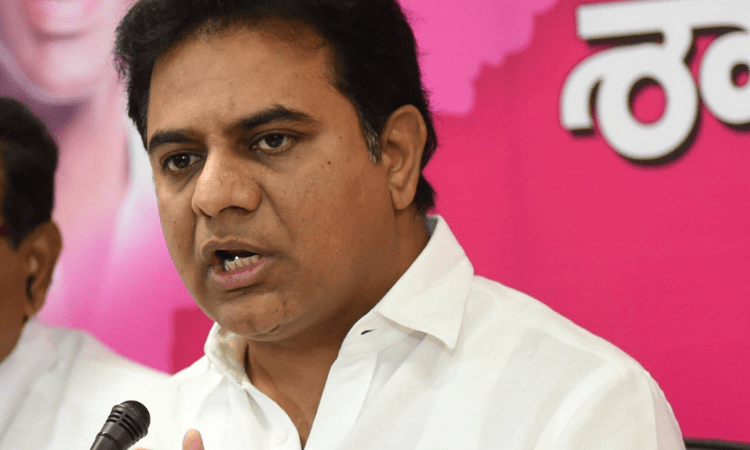
“We are not just vibrant Telangana, we are triumphant Telangana.” This was how Telangana’s Industries and Information Technology Minister K. T. Rama Rao reacted to the latest statistics about the state’s growth.

The minister tweeted that the State Gross Domestic Product (GSDP) of Telangana increased by 130 percent between 2014 and 2021 while per capita income grew by 125 percent during the same period.

The GSDP increased from Rs 5 lakh crore in 2014 to Rs 11.54 lakh crore in 2021. The per capita income increased from Rs 1,24,104 in 2014 to Rs 2,78,833 in 2021.

The minister posted a clipping of a report in a leading Telugu daily which quoted the statistics released by the Union Ministry of Statics and Programme Implementation. “The numbers speak for themselves,” tweeted KTR, as the minister is popularly known.

According to the report, Telangana registered the highest growth rate in GSDP in the country during 2021-22. While the GSDP increased by 19.10 percent over the previous year, the per capita income grew by 18.78 percent.

“This is the growth trajectory of the youngest state of India. This is despite massive hurdles such as bifurcation blues, demonetization, Corona pandemic, and zero support from the government of India,” tweeted KTR, who is also the Minister for Municipal Administration and Urban Development.

“Thank you KCR Garu for your amazing leadership,” added KTR who is the son of Chief Minister Chandrasekhar Rao, who is popularly known as KCR.

The news statistics came as a boost for Telangana ahead of the budget for 2022-23. Finance Minister T. Harish Rao is scheduled to present the budget in the Assembly on March 7.

Behind migration of Indian medical students, less fees or fake biz model?

0

Around thousands of Indian Medical Students, every year go outside the country to pursue medical education. China, Ukraine, the Philippines, Russia are some most favored destinations where Indian students prefer to study medicine.

War-torn Ukraine ranks fourth in Europe for having the largest number of graduate and post-graduate medical students. Around 18,095 Indian students are in Ukraine, some of them have been evacuated, as per Ukraine’s Ministry of Education and Science. In 2020, 24 percent of its overseas students were from India.

The paucity of medical seats in India’s government colleges and a higher levels of fees in private medical colleges can be the main reasons behind the migration of Indians. But, some say that there is a fake business model running parallel where agencies are working with foreign universities in different countries on around Rs 50,000 to Rs 1 lakh per candidate.

Omkar Jilla, hailing from Maharashtra, is a third-year medical student at Ivano-Frankivsk National Medical University. Talking to the interview, he said that students prefer to come here because of its affordable fees. “Where we have to spend Rs 10 lakh to Rs 15 lakh per annum in private medical colleges in India, where it costs Rs 3 to Rs 4 lakh only. However, I agree the studies here are not that good as compared to India, but still, we get our degree of MBBS after 6 years when we clear MCI/NEET,” he said.

“In India, we waste several years in preparations for NEET. In Ukraine, there are three options – National University, State University, and Private university, for students. The fee structures are more or less the same at all three levels”, he added.

However, Omkar says that on the quality parameter of the education, not much difference is there between India and outside. “We have to study 80 percent by ourselves from video lectures and book, which is mostly similar to India. Even in practical studies, no more options are available as India has”, he says. “Most importantly, we get the MBBS degree here,” he told me to interview. Omkar is stranded at the Bucharest airport at the moment.

On the contrary, Federation of All India Medical Association President, Dr. Rohan Krishnan says the main reasons for migration are not just the high fees of private medical colleges in India but there is a fake business going on in the country where many of the agencies are working with colleges in Ukraine, Russia, China, and the Philippines. “They are getting a good cut of around Rs 50,000 to Rs 1 lakh per candidate. So mainly they try to hack the mindset of young people. They show a delightful world of myths and fables to these teenagers and tell them that education quality is good there and they will pass Foreign Medical Graduate Examination in one go which is conducted by the Indian Government National Medical Commission (NMC).

Dr. Krishnan claims that this is just a daydream for most teenagers as the passing rate of FMGE in India is only 5 percent and there is literally no teaching for this exam in Russia, Ukraine, and other countries.

“However, the education is cheaper outside India but training is not as good as compared to India. Most of them have zero clinical experience and most of the Ukrainian patients don’t allow Indians to examine them. The training is so bad that the majority don’t even clear FMGE exams. The agents are the happiest in the process as they make money”, said Dr. Kabir Sardana, Director Professor, and Head Dermatology Department, RML hospital.

In order to get a medical degree, one has only three options — either, one has to pass the NEET with good marks to get enrolled in a government medical college or take admission in a private medical college. The last option is to go abroad which is also available at cheaper fees, says Dr Ashutosh Shukla, Senior Director Internal Medicine, Max Hospital. He says this is what attracts Indian students, but they also need to pass FMGE (Foreign Medical Graduates Examination) to practice in India.

Instagram says it will stop supporting IGTV app

0

In a bid to make a video as simple as possible to discover and create, the Meta-owned photo-sharing platform Instagram has announced that it will no longer be supporting a standalone app for IGTV.

The company said that, instead, it will focus on having all videos on the main Instagram app.

“We believe that this makes it easier for people to have all of these features and abilities in the main app, and are excited to continue to simplify and improve video in the main Instagram app over the coming months,” the company said in a blogpost.

Reels continues to be a growing and important part of Instagram and the company said it is exciting to invest even more in this format. Reels also continues to be the largest contributor to engagement growth on Instagram, as more people watch them be entertained, go deeper with their interests, or discover new creators.

Instagram also said that it is exploring more ways for creators to earn by creating reels that entertain the community. In addition to bonuses, later this year, it will begin testing a new ad experience on Instagram, which will allow creators to earn revenue from ads displayed on their reels.

“Over the coming months, you will see us continue to invest in simplifying our video formats, making it even easier to create and watch video on Instagram — the way you already do with Reels,” the company said.

Indian founder on the run in global $2.4 bn crypto ponzi scheme

Satish Kumbhani, a founder of cryptocurrency platform BitConnect who has been indicted in the US for running a $2.4 billion crypto Ponzi scheme, has likely “relocated from India to an unknown location” abroad.

A federal grand jury in San Diego last week indicted Kumbhani with orchestrating a global Ponzi scheme. BitConnect is an alleged fraudulent cryptocurrency investment platform that reached a peak market capitalization of $3.4 billion.

In total, Kumbhani, facing 70 years in prison if convicted, and his co-conspirators obtained approximately $2.4 billion from investors.

In the latest filing in the US Securities and Exchange Commission (SEC), Senior Trial Counsel Richard Primoff said that since November, “the commission has been consulting with that country’s (India’s) financial regulatory authorities in an attempt to locate Kumbhani’s address. At present, however, Kumbhani’s location remains unknown”.

Kumbhani, 36, “has likely relocated from India to an unknown address in a foreign country”, Primoff said in a court filing late on Monday.

While Kumbhani was charged criminally by the US Department of Justice, the SEC separately sued Kumbhani in September 2021, claiming he fraudulently raised more than $2 billion for BitConnect.

Primoff has now asked US District Judge for an extension until May 30 so that the “Commission may complete its investigation into their current whereabouts and, if it locates them within the United States, serve them in a timely fashion”.

“The Commission did not know the whereabouts of Kumbhani, an Indian citizen, at the time it filed this action, and BitConnect is an unincorporated entity the Commission must serve through its manager, Kumbhani,” said Primoff in the filing.

According to court documents, Kumbhani misled investors about BitConnect’s “Lending Programme.”

Under this program, Kumbhani and his co-conspirators touted BitConnect’s purported proprietary technology, known as the “BitConnect Trading Bot” and “Volatility Software”, as being able to generate substantial profits and guaranteed returns by using investors’ money to trade on the volatility of cryptocurrency exchange markets.

The indictment further alleged that, after operating for approximately one year, Kumbhani abruptly shut down the Lending Programme.

Kumbhani then directed his network of promoters to fraudulently manipulate and prop up the price of BitConnect’s digital currency, a commodity known as BitConnect Coin (BCC), to create the false appearance of legitimate market demand for BCC.

“Kumbhani and his co-conspirators also concealed the location and control of the fraud proceeds obtained from investors by commingling, cycling, and exchanging the funds through BitConnect’s cluster of cryptocurrency wallets and various internationally-based cryptocurrency exchanges,” according to the US Department of Justice.

“As cryptocurrency gains popularity and attracts investors worldwide, alleged fraudsters like Kumbhani are utilizing increasingly complex schemes to defraud investors, oftentimes stealing millions of dollars, a said Ryan L. Korner, Special Agent in Charge, of the IRS Criminal Investigation’s (IRS-CI) Los Angeles Field Office.

Kumbhani is charged with conspiracy to commit wire fraud, wire fraud, conspiracy to commit commodity price manipulation, operation of an unlicensed money transmitting business, and conspiracy to commit international money laundering.

If convicted of all counts, he faces a maximum total penalty of 70 years in prison.

Ajay Devgn: Actors never chase the box-office, superstars do

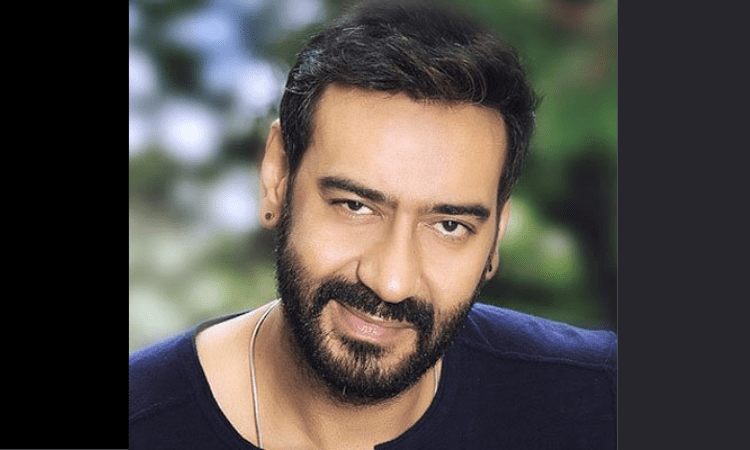
Ajay Devgn is all set to make his digital debut with the upcoming series ‘Rudra – The Edge of Darkness’, an Indian adaptation of the Idris Elba-starrer Luther’. The star has talked about how there is no pressure of chasing box-office figures with the massive growth of the webspace.

Ajay, who has entertained the audiences with his power-packed performances in his over the three-decade-long journey in Hindi cinema, says actors never chase the box-office, but superstars do.

Asked if there is no pressure of chasing box-office numbers any more courtesy of the massive growth of the OTT space and films taking the digital route for releases, Ajay in a conversation with IANS said: “Actors never chase the box office. Superstars do.”

For Ajay, it is the audiences’ love that matters.

“For me, a film’s success is not always about the box office. I want appreciation. I want my honesty to get noticed. I strive for quality. Of course, the ticket window sales do help. It’s a bonus. However, numbers alone can’t dictate the way I work or what I strive for. As far as OTT’s rise goes, it’s phenomenal. Certain films will go directly to streaming platforms and even there you are anxious to know how it has been received. An actor or a performer is always anxious,” added the 52-year-old star.

Ajay made his acting debut in 1991 with ‘Phool Aur Kaante’. He then rose to prominence as an action hero starring in successful films such as ‘Jigar’, ‘Sangram’, ‘Dilwale’ and ‘Diljale’. He went on to give blockbusters like ‘Zakhm’, ‘Hum Dil De Chuke Sanam’, ‘Company’, ‘Golmaal’ franchise, ‘Singham’ franchise, ‘Bol Bachchan’ and ‘Tanhaji: The Unsung Warrior’.

How does he maintain staying ahead of the curve when it comes to his craft?

The actor, who has won National Film Awards, said: “Staying ahead of a curve is not always a conscious decision. It’s all about accepting roles that I found attractive. When one breaks stereotypes, sometimes you tend to fall flat on the face. At other times, you soar. It’s a gamble. Yes, in my three-decade-long career, I’ve taken chances and I’ve followed my heart as far as what is right for me is concerned.”

With tasting the highs of highs in success, what’s his biggest fear?

Pat came to the reply from Ajay: “Any performing artist has only one fear. It goes-let my work find appreciation.”

Moving forward, Ajay, who was he was honored by the Government of India with the Padma Shri in 2016, has a motley of releases film lined up. He will be seen in ‘RRR’, ‘Runway 34’, ‘Maidaan’, ‘Cirkus’, ‘Thank God’ and ‘Drishyam 2’.

Ajay feels no work pressure!

He said: “I love work pressure. During the Pandemic when we were forced to sit back, I hated the slow, languid pace. I’m a person who performs best under pressure.”

CryptoWire pacts with Bitbns to commence trading on crypto index IC15 from April

0

CryptoWire, a global crypto super app, on Tuesday announced that it has entered into an agreement with Bitbns exchange, one of the leading cryptocurrency exchanges of the country, to commence trading on India’s first global crypto index IC15 next month.

With the commencement of trading on IC15, around 4 million users of Bitbns will get the benefit of trading on IC15. Market participants – individuals and institutions – get the advantage of spreading their risks by taking a view on the entire market versus concentrated risk on a single currency.

The company said IC15 will now be traded on Bitbns from the first week of April, giving its users greater market leverage.

It pointed out that liquidity-related risks would be mitigated by trading on the index. It will broaden the product offerings through Exchange Traded Funds (ETFs) and other wealth management products, derivatives, and basket trading for arbitrage benefits.

This arrangement is similar to Trading of S&P-Dow Jones and FTSE equity indices or ETF products, which trade on NYSE, CME, Nasdaq, and London Stock Exchange, it stated.

Commenting on the strategic partnership of CryptoWire with Bitbns, CryptoWire Managing Director and CEO Joseph Massey said: “IC15 is India’s first Global Index of Crypto-currencies, and it represents more than 80 percent of crypto assets by market capitalization. As the crypto-currency market develops and widens, the participants would find the IC15 index offering of much greater institutional use through ETF and alternate wealth management product.”

The licensing arrangement by CryptoWire would entail royalty payments consisting of a mix of fixed and revenue dependent variable charges to cover and support research and development work, Massey said, reiterating that CryptoWire is neither a crypto exchange nor a crypto-currency.

An Index is the most visible barometer representing the business dynamics happening in the underlying real and digital economy. The IC15 index represents crypto-currencies that have a large value chain integrating the real economy with blockchain and digital economy.

Bitbns Founder and CEO Gaurav Dahake said: “Trading in IC15 index will bring India on the global crypto map as the index prices will be seen globally and enable the industry to monitor broad-based movement in the crypto industry. The index will also show the market price implications of various news and policy decisions taken globally.”

Dahake stated Bitbns licensing arrangement with CryptoWire will meet the much-desired need of the trading community for trading in IC15 index which allows clean trading on prices of underlying without the challenges of the taking delivery in individual crypto-currency.

Bitbns has 4 million users and 156 coin-pairs traded on the exchange. “We believe that our users will derive great benefit from IC15,” he added.

Meta now blocks key Russian media outlets RT, Sputnik in EU

0

Meta (formerly Facebook) has now blocked Russian state media outlets RT (earlier called Russia Today) and Sputnik across the European Union.

RT and Sputnik pages aren’t visible in the EU on Facebook and Instagram anymore.

“We have received requests from a number of Governments and the EU to take further steps in relation to Russian state-controlled media,” Nick Clegg, president of global affairs at Meta, said on Twitter.

“Given the exceptional nature of the current situation, we will be restricting access to RT and Sputnik across the EU at this time,” he posted late on Monday.

The social network has also blocked Russian state media from advertising on the platform.

Meta earlier blocked access to several Russian state-controlled accounts in Ukraine. The social network said it was also reviewing other governments’ requests to restrict access to these accounts in their countries.

Hit by partial restrictions, Meta (formerly Facebook) had prohibited Russian state media from running ads or monetizing on its platform anywhere in the world.

Meta has also taken down a network for targeting people in Ukraine who posed as news editors, aviation engineers, and authors to spread misinformation around the Russian invasion across social media platforms.

The people ran websites posing as independent news entities and created fake personas across social media platforms including Facebook, Instagram, Twitter, YouTube, Telegram, and also Russian Odnoklassniki and VK apps, the company said.

This operation ran a handful of websites masquerading as independent news outlets, publishing claims about the West betraying Ukraine and Ukraine being a failed state.

‘Russian forces to continue operation in Ukraine until goals achieved’

0

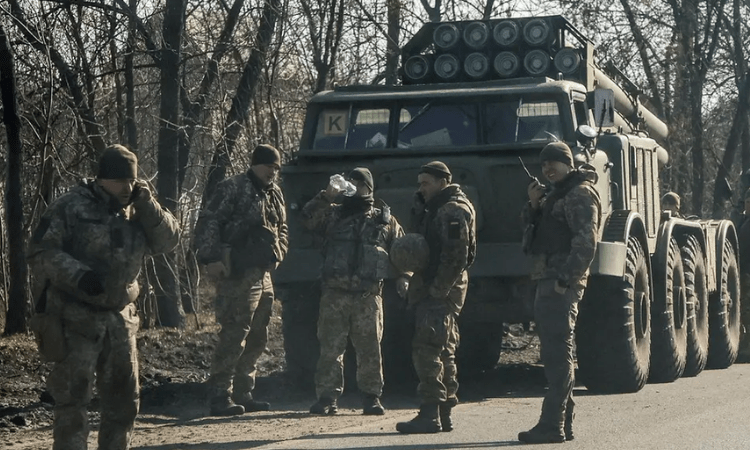
Russia will continue its special military operation in Ukraine until it achieves the main goal of defending Russia from Western threats, Defence Minister Sergei Shoigu said on Tuesday.

Both the countries concluded their first round of negotiations in Belarus on Monday with no clear breakthrough, Xinhua news agency reported.

While the talks were going on, Russian President Vladimir Putin held a telephone talk with French President Emmanuel Macron, reiterating that a settlement would only be possible if Russia’s security concerns were taken into account.

Putin said it was important to recognize “Russia’s sovereignty over Crimea,” as well as the country’s commitment to solving the tasks of Ukraine’s “demilitarisation” and “denazification”, and the issue of Ukraine’s neutral status.

182 students return safely from war-torn Ukraine

0

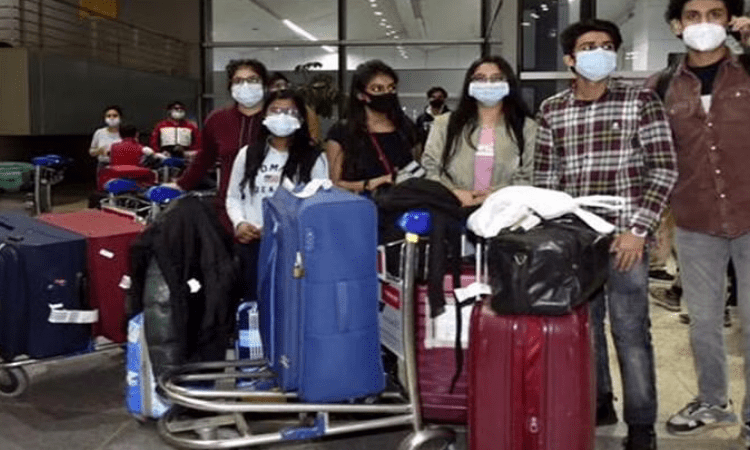
An Air India Express flight carrying 182 students stranded in the war-hit Ukraine reached here on Tuesday morning as part of the Operation Ganga evacuation process, officials said.

The AIE flight IX-1202 arrived here from the Henri Coanda Airport in Bucharest (Romania) and the evacuees — including around 24 from Maharashtra — were welcomed by Union MSME Minister Narayan Rane.

This is the second flight airlifting Indian nationals from Ukraine that has reached Mumbai, the first arriving here on February 26 with 219 relieved evacuees from the war-raged nation, besides other flights to New Delhi in the past few days.

Hundreds of anxious parents and relatives waiting outside the Chhatrapati Shivaji Maharaj International Airport had a tearful reunion with their children.

Around 1,200 persons from Maharashtra, mostly students, are among the large number of Indians, who have been stuck in Ukraine after Russia launched its military operations on Europe’s second-biggest country on February 24.

Chief Minister Uddhav Thackeray has directed the state authorities to coordinate with the Centre on the evacuation operations and extend all help to the evacuees returning here.

In the past few days, many students had issued SOS via social media, desperately seeking help and evacuation as the situation continued to worsen with shortages of even basics like food-water-medicines.

Twitter labels tweets from Russian state media outlets

0

Micro-blogging site Twitter is now adding prominent labels to tweets from Russian state media outlets as it tries to limit the publications’ reach on its platform.

“Today, we are adding labels to Tweets that share links to Russian state-affiliated media websites and are taking steps to significantly reduce the circulation of this content on Twitter,” Yoel Roth, the company’s head for site integrity tweeted.

“We will roll out these labels to other state-affiliated media outlets in the coming weeks,” Roth added.

Roth mentioned that as people look for credible information on Twitter regarding the Russian invasion of Ukraine, Twitter understands and takes its role seriously.

“Our product should make it easy to understand who’s behind the content you see, and what their motivations and intentions are,” Roth said.

Roth said that the micro-blogging site has seen more than 45,000 tweets a day sharing links to Russian state-affiliated media outlets.

“While we have labeled the accounts of hundreds of global state media outlets for years, Tweets sharing their content lacked visible context,” Roth wrote.

S.Korean Prez calls for Japan to look squarely at history

0

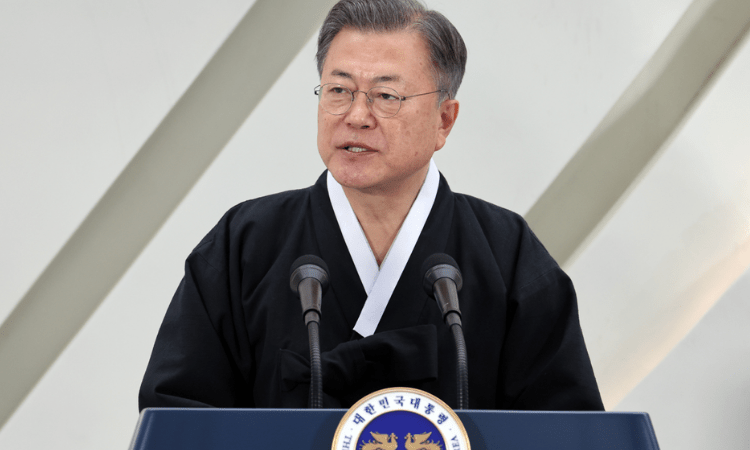
South Korean President Moon Jae-in on Tuesday called for Japan to look squarely at history and show a humble attitude over its wartime past in order for the two countries to overcome historical feuds and move forward for cooperation.

In a speech marking Korea’s 1919 nationwide uprising against Japan’s 1910-45 colonial rule, Moon said South Korea remains open to dialogue with Japan to work together on various regional and global issues, such as Covid-19 and supply chains, Yonhap news agency reported.

South Korea and Japan “should be able to overcome the ‘history of a once unfortunate past’ and cooperate toward the future,” Moon said, describing the two nations as “close neighbors”.

“To that end, Japan must look squarely at history and be humble before history.”

Moon said Japan can become a “trusted nation” only if it “can sympathize with the wounds of the people of its neighboring country”.

Diplomatic tensions between Seoul and Tokyo have run deep since 2019 when Japan imposed a set of export restrictions against South Korea in a move seen as economic retaliation for South Korean court rulings against Japanese firms involved in forced labor during Japan’s colonial rule.

ISL 2021-22: East Bengal and NorthEast United share points after 1-1 draw

0

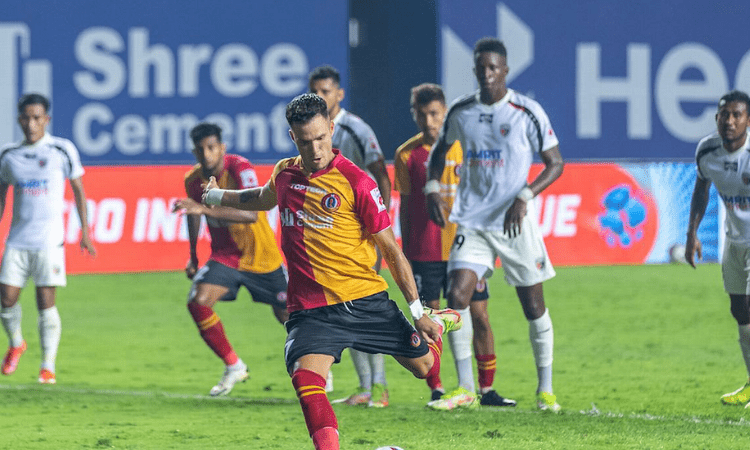
NorthEast United played a 1-1 draw in their final league game of the season against fellow strugglers SC East Bengal in the Indian Super League (ISL) at the Tilak Maidan Stadium, here on Monday.

Goals from Marco Sahanek and Antonio Perosevic managed to split the points either way as Khalid Jamil’s men ended the season with only three wins. As for SC East Bengal, their winless run extended to seven matches.

Marco Sahanek (45+1′) scored his first goal for NEUFC to give them the lead in the first half but the equalizer came through Antonio Perosevic (55′ P) who scored from a precise penalty.

Two good chances fell East Bengal’s way in the early stages with Lalrinliana Hnamte making the goalkeeper pull off a good save and Mahesh Naorem Singh hitting the crossbar from long-range. NEUFC survived another scare after the half-hour mark as a volley by Antonio Perosevic missed the target by a whisker.

However, it was the Highlanders that took the lead just a minute before the half-time whistle. A header from Deshorn Brown hit the left post and fell kindly to Marco Sahanek who made no mistake and buried his left-footed shot into the bottom-right corner. Thanks to that goal, NEUFC went into the break with their noses in front.

The second half did not begin according to plan for Khalid Jamil and co as Patrick Flottmann’s push on Fran Sota during an aerial battle was deemed as a foul in the box, leading to a penalty. Perosevic scored the equalizer from the penalty spot, after sending Mirshad Michu the wrong way.

Marcelinho came off the bench for NEUFC to inject some energy in the final third and combined with Suhair but the latter’s volley was expertly punched away by Sankar Roy in goal. Four minutes were added for stoppages but neither team had the cutting edge to score the winner in the end. With nothing to separate the teams, the game ended in a draw, much to the disappointment of both sets of players.

SC East Bengal will pull the curtains on their ISL season by playing Bengaluru FC at the Tilak Maidan Stadium on Saturday while No’thEast United’s campaign has come to an end.

Price pressures subdue India’s Q3FY22 GDP growth sequentially, lowers FY22 forecast

0

Commodity cost pressure, as well as high base effect, subdued India’s Q3FY22 GDP growth rate on a sequential basis, thereby, lowering the 2021-22 growth forecast to 8.9 percent.

Besides, a marginal rise in manufacturing and a contraction in construction activity flattened outgrowth in Q3FY22.

National Statistical Office (NSO) data showed that India’s Q3FY22 GDP growth rate stood to 5.4 percent on a year-on-year basis.

The Q3FY22 GDP, at constant prices of 2011-12, is estimated at Rs 38.22 lakh crore, as against Rs 36.26 lakh crore during the corresponding period of 2020-21. On a YoY basis, India’s GDP growth rate had inched up by 0.7 percent during the corresponding period of the previous fiscal.

However, on a sequential basis, the GDP growth rate during Q3FY22 was slower than the rise of 8.5 percent recorded for Q2FY22 and 20.3 percent in Q1FY22.

Further, the data estimated a rise in GVA at Basic Prices at constant (2011-12) prices in Q3 2021-22 to Rs 35.26 lakh crore, as against Rs 33.66 lakh crore in Q3 2020-21, showing a growth of 4.7 percent. The GVA includes taxes but excludes subsidies.

On a year-on basis, there was a sharp increase in GVA of public administration, defense, and other services, which recorded a growth of 16.8 percent from (-)2.9 percent in the like quarter of the previous fiscal and 19.5 percent in Q2FY22.

The Q2 GVA for 2021-22 from the agriculture, forestry, and fishing sector showed a growth of 2.6 percent, as against 4.1 percent in the corresponding quarter of 2020-21 and 3.7 percent in Q2FY22.

Similarly, the GVA in Q2FY22 from the manufacturing sector grew by 0.2 percent, as compared to a growth of 8.4 percent in the like quarter of the previous fiscal and 5.6 percent in Q2FY22.

The mining and quarrying sector increased by 8.8 percent against the previous fiscal’s contraction of (-)5.3 percent and 14.2 percent in Q2FY22.

“The quarterly GDP growth numbers of FY22 is heavily influenced by the base effect, yet it indicates that the recovery in 3QFY22 can yet now be called a robust recovery,” said Sunil Kumar Sinha, Principal Economist, India Ratings and Research.

“Several indicators used in the estimation of 3QFY22 GDP such as consumption of steel, sale of commercial or passenger vehicles, cargo handled at seaports are either showing negative or low growth despite the extraordinary low base of FY21. The situation is unlikely to be very different even in 4QFY22 due to the third wave of Covid.”

Furthermore, the lower than expected print for Q3FY22 along with the revision in growth for Q1-Q2FY22 led to a lowering of the FY22 GDP growth forecast to 8.9 percent from an initial estimate of 9.2 percent.

In 2020-21, India’s economy had contracted by 6.6 percent.

On Monday, the ‘Second Advance Estimates of National Income for the financial year 2021-22’, which were released along with the quarterly numbers estimated that ‘Real GDP’ or ‘GDP at Constant Prices’ (2011-12) in the year 2021-22 will rise to Rs 147.72 lakh crore from the ‘First Revised Estimate of GDP’ for 2020-21 at Rs 135.58 lakh crore.

As per the estimate, real GVA at basic prices is estimated at Rs 136.25 lakh crore in 2021-22, as against Rs 125.85 lakh crore in 2020-21, showing a growth of 8.3 percent. In terms of sectors, the estimates showed growth from agriculture, forestry, fishing, mining, quarrying, manufacturing, and construction at 3.3 percent, 12.6 percent, 10.5 percent, and 10 percent, respectively.

The GVA at basic prices for 2021-22 from the electricity, gas, water supply, and other utility services sector is expected to grow by 7.8 percent.

In addition, the GVA from trade, hotels, transport, communication, and services related to broadcasting, financial, real estate and professional services, and public administration, defense, and other services grew at 11.6 percent, 4.3 percent, and 12.5 percent, respectively.

“The growth estimates for the full fiscal are broadly in line with expectations. However, to achieve 8.9 per cent growth, the Q4 GDP has to grow by 4.8 per cent. This looks challenging given the fact that the third wave of the pandemic had caused considerable restrictions,” said M. Govinda Rao, Chief Economic Adviser at Brickwork Ratings.

“In addition, the ongoing geopolitical tensions, persistent supply bottlenecks, coal, power, and semiconductor shortages too have been pronounced. The effect of semiconductor shortages is already evident in the weak 0.2 percent growth in the manufacturing sector in Q3.”

He also said that the third wave largely impacted the economic activities in the fourth quarter.”We expect the full fiscal growth may undergo revisions. Finally, the higher crude oil prices are also likely to adversely impact both growth and inflation.

Global Covid caseload tops 436.3 mn

0

The global coronavirus caseload has topped 436.3 million, while the deaths have surged to more than 5.95 million and vaccinations to over 10.53 billion, according to Johns Hopkins University.

In its latest update on Tuesday morning, the University’s Center for Systems Science and Engineering (CSSE) revealed that the current global caseload and the death toll stood at 436,385,844 and 5,955,315, respectively, while the total number of vaccine doses administered has increased to 10,534,752,479.

The US continues to be the worst-hit country with the world’s highest number of cases and deaths at 79,035,756 and 950,408, according to the CSSE.

The second worst-hit country in terms of cases is India (42,924,130 infections and 513,843 deaths), followed by Brazil (28,796,571 infections and 649,676 deaths).

The other countries with over 5 million cases are France (22,877,926), the UK (19,021,005), Russia (16,161,596), Germany (14,824,923), Turkey (14,089,456), Italy (12,782,836), Spain (10,977,524), Argentina (8,900,656), Iran (7,051,429), the Netherlands (6,242,946), Colombia (6,064,583), Poland (5,667,054), Mexico (5,506,105) and Indonesia (5,564,448), the CSSE figures showed.

The nations with a death toll of over 100,000 are Russia (344,655), Mexico (318,086), Peru (210,538), the UK (161,934), Italy (154,767), Indonesia (148,335), Colombia (138,767), France (139,382), Iran (136,838), Argentina (126,152), Germany (122,766), Ukraine (112,459) and Poland (111,317).

Millennials have more faith in Indian Covid vax than Gen Z: Report

0

About 43 percent of millennials have increased faith in Covid vaccines developed in India, more than Gen Z (30 percent), according to a report.

Millennials are people born between 1977 and 1995, while Gen Z is those born between 1996 and 2015.

The report also showed that 88 percent of Millennials in India agreed with the role of the Covid vaccine than Gen Z (81 percent) and others.

In general, 85 percent of people considered Covid vaccines to be safe and effective, and a majority considered Indian vaccines safer than those developed in other countries (67 percent).

Gen Z (below 25 years) and Millennials (26-41 years) also mentioned the World Health Organisation as their most trusted source of information about vaccines.

The report is based on a survey by HEAL Foundation in collaboration with Saizen Global Insights & Consulting.

The survey included 1,106 respondents across nine metro cities of India.

More than 90 percent believe in vaccines and understand/appreciate the role of vaccines in the fight against Covid-19.

About 80 percent are also optimistic about life getting back to normal in the next 2-5 years from Covid impacts.

Unvaccinated people showed higher concerns, while females were also found somewhat more worried or less sure about vaccine safety and efficacy than males.

Side effects are a top concern across generations. Boomers (58-76) have a somewhat low belief in vaccine efficacy and its concern.

Delhi HC rejects ‘revenge taking plea’ against Army official, slaps fine

0

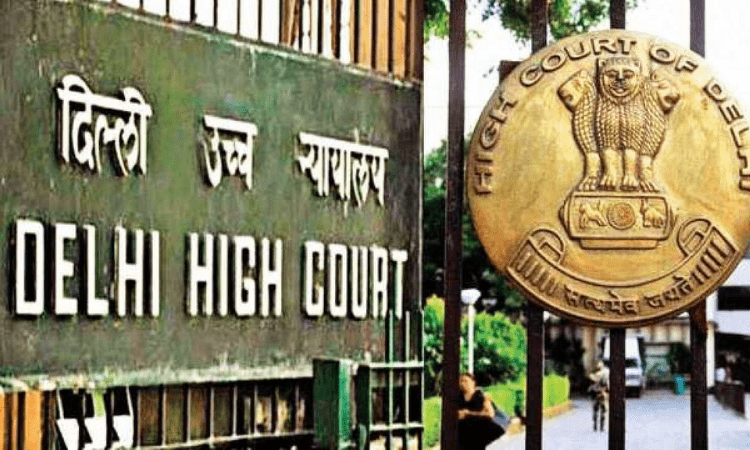
The Delhi High Court on Monday refused to entertain a plea filed against an Army official and imposed cost on the petitioner, who has also alleged an employment fraud in the Indian Army.

Noting the plea was filed in the garb of a Public Interest Litigation (PIL), the division bench of Chief Justice D.N. Patel and Justice Neena Bansal Krishna termed it as a “revenge taking type of petition” against the Army official, who joined the force in 2015.

In the plea, the petitioner alleged that the army official had produced false certificates for securing employment, and sought that his appointment be canceled.

The bench, after hearing his argument, pointed out the gross and unexplained delay of seven years as his allegations date back to 2015.

Pointing out that the accused official is not joined as a party in the writ petition, the court said that no writ petition can be allowed in the absence of a candidate or an employee whose appointment is sought to be terminated, saying he should be heard by the court.

Accordingly, the plea has been dismissed and a cost of Rs 25,000 was imposed on the petitioner.