

Recovery rate of Covid patients in Agra goes up to 80%

0

The Agra district administration’s concerted efforts and coordinated execution of the multi-dimensional strategy to combat the spread of COVID-19, has begun to show results. On Monday, the number of containment zones came down to 54 from 64. And the city reported a recovery rate of over 80 percent.

District Magistrate P.N. Singh is being credited for being proactive and taking effective steps to bridge the communication gaps, though problems and complaints about testing facilities continue to pour in. “It has taken 100 days to learn and gear up to respond effectively to situations. Better monitoring and prompt response of the medical teams are now helping us control the community spread,” a senior official said.

Though communication and mobility have increased and the bazaars have more or less resumed normal operations, the transmission of the infection has largely been controlled to identified hotspots. “But this is not to say that there are no problems. A visit to the district hospital and the sample collection center nearby, tells the sordid story. People have to wait endlessly without basic facilities to give samples. A large number of patients are sent back home as their symptoms are not considered worth sampling,” a medical activist Shravan Singh said.

With nine new cases of COVID-19, the total number of cases in the Taj city has gone up to 1,219 in the last 24 hours. However, there has been no increase in the number of fatalities which stand at 85.

The total number of patients discharged so far is 1,017. Health officials said the number of samples tested is 22,063.

The health activists, however, have questioned the administration about the decreasing number of tests, especially when the facilities for testing have increased. Against the capacity of 800 to 1,000 only around 350 samples were being tested daily, said the activists. The nodal officer denied the charge and clarified that so far 25,000 samples had been tested, and as per the need the size would be increased.

The district authorities said the focus now would be on pool sampling. From July 5, the state government has directed a survey of all families. The Health department teams will go from home to home, thermal screening and measuring oxygen levels in each member of the family. On Monday, the department claimed more than 10,000 people in over 2,500 families had been tested and provided medical consultation.

Equity indices in green, metal stocks surge

0

The key Indian equity indices rose on Tuesday morning with the BSE Sensex rising over 200 points.

The domestic indices rose in line with the Asian markets. Healthy buying was witnessed in metal stocks and banking.

At 10.12 a.m., Sensex was trading at 35,169.64, higher by 208.12 points or 0.60 percent from the previous close of 34,961.52.

It opened at 35,168.30 and has so far touched an intra-day high of 35,233.91 and a low of 35,108.50.

The Nifty50 on the National Stock Exchange was trading at 10,385.10, higher by 72.70 points or 0.70 percent from its previous close.

The top gainers on the Sensex were Tata Steel, ICICI Bank, and HDFC. On the other hand, Sun Pharmaceuticals, HDFC Bank, PowerGrid and Bajaj Finserv were the major losers so far.

Italy registers record low COVID-19 deaths

0

Italy registered a record low of six COVID-19 fatalities over the past 24 hours, national health authorities said.

The country had not seen such a limited daily death figure since February 24 — in the very first phase of the pandemic at the national level — when it had registered five fatalities within a total of 219 cases assessed, reports Xinhua news agency.

With Monday’s daily increase, the country’s death toll reached 34,744.

Active infections dropped to 16,496 cases, down by 185 compared to Sunday, according to the Health Ministry.

The regions with the highest concentration of active infections were northern Lombardy (10,823) and Piedmont (1,490), and central Emilia Romagna (1,032).

Those with the lowest level of active cases were: northwest Aosta Valley (3), southern Basilicata (3), central Umbria (9), the Sardinia Island (14), and southern Calabria (26).

Of all those active infections, only 96 patients are currently in intensive care (down by 2 from Sunday) and 1,120 hospitalized with symptoms (down by 40).

The remaining 15,280 were isolated at home because they are asymptomatic or with mild symptoms.

The Health Ministry also stated 305 more recoveries in the same 24 hours, which took the total to 189,196 since the pandemic officially broke out in the northern regions of the country on February 21.

As of Tuesday morning, the overall number of COVID-19 cases in Italy stood at 240,436.

Global COVID-19 cases top 10.3mn: Johns Hopkins University (Ld)

0

The overall number of global coronavirus cases has increased to over 10.3 million, while the deaths have soared to more than 505,000, according to the Johns Hopkins University.

As of Tuesday morning, the total number of cases increased to 10,302,052, while the fatalities stood at 505,505, the University’s Center for Systems Science and Engineering (CSSE) revealed in its latest update.

The US accounted for the world’s highest number of infections and fatalities with 2,590,552 and 126,140, respectively, according to the CSSE.

Brazil came in second place with 1,368,195 infections and 58,314 deaths.

In terms of cases, Russia ranks third (640,246), and is followed by India (566,840), the UK (313,470), Peru (282,365), Chile (275,999), Spain (248,970), Italy (240,436), Iran (225,205), Mexico (220,657), Pakistan (209,337), France (201,522), Turkey (198,613), Germany (195,042), Saudi Arabia (186,436), South Africa (144,264), Bangladesh (141,801) and Canada (105,830), the CSSE figures showed.

The other countries with over 10,000 deaths are the UK (43,659), Italy (34,744), France (29,816), Spain (28,346), Mexico (27,121), India (16,893) and Iran (10,670).

India’s 17% coal fleet set to become uncompetitive: Researchers

0

In India, 17 percent of the 283 GW coal fleet is set to become uncompetitive in 2020, rising to 50 percent in 2022 and 85 percent in 2025, international researchers said on Tuesday.

They say phasing-out and replacing uncompetitive coal plants with renewable energy plus storage would generate savings of $2 billion in 2020, $8 billion in 2022, and $17 billion in 2025.

Researchers of Rocky Mountain Institute, Carbon Tracker Initiative, and Sierra Club in a report offer financial data and specific tools for making global coal phase-out feasible.

The report, ‘How to Retire Early: Making Accelerated Coal Phase-Out Feasible and Just’, reveals that new renewable energy is already cheaper than continuing to operate coal plants in much of the world.

It lays out specific financial strategies that utilities and policy-makers can use to engineer a faster phase-out of coal in various regions of the world.

This new analysis shows that new renewable energy is not only cheaper than new coal plants virtually everywhere, but that it is already cheaper to build new renewable energy capacity, including battery storage than to continue operating 39 percent of the world’s existing coal capacity.

The share of uncompetitive coal plants worldwide will increase rapidly to 60 percent in 2022 and to 73 percent in 2025.

Replacing the entire global coal fleet with clean energy can be done at net savings to society as early as 2022.

“A faster transition from coal to clean energy is within our grasp and we show how to engineer that transition in ways that will save money for electricity customers around the world, while aiding a just transition for workers and communities,” Rocky Mountain Institute, Managing Director, Paul Bodnar said in a statement to IANS.

The authors estimate that replacing the entire fleet of global coal plants with clean energy plus battery storage could be done at net annual savings as early as 2022.

The rapidly declining costs of renewables push net annual savings to $105 billion in 2025.

All this, the report states, is before considering coal’s dire health, climate, and environmental impacts, or accounting for the social and environmental benefits of reducing pollutants.

Currently, coal phase-out hasn’t kept pace with eroding economics.

To keep the Paris Agreement’s temperature targets within reach, global coal use must decline by 80 percent below 2010 levels by 2030, requiring rapid transition in Organisation for Economic Co-operation and Development (OECD) countries over the next decade and phase-out in the rest of the world by 2040.

India has already set aggressive targets for renewable energy development, aiming to increase clean energy output from 86 GW in 2019 to 175 GW by 2022, and 450 GW by 2030.

Although India expects continued growth in energy demand, the government has identified almost 23 GW of obsolete coal plants to be considered for retirement by 2022, and an additional 25.6 GW to be considered for retirement by 2027.

Aside from meeting growing demand, coal also employs hundreds of thousands of people in India, both directly and indirectly.

Therefore, just transition for affected workers will be of particular importance.

Today, 17 percent of the Indian coal fleet is uncompetitive compared with renewables with storage, and the immediate phase-out and replacement of this portion of the fleet could bring India $2 billion in annual savings, says the report.

The remaining 83 percent could be phased out and replaced at a cost of $23 billion immediately.

However, these numbers are rapidly changing: by 2022, 50 percent of the Indian coal fleet will be uncompetitive, and 85 percent by 2025.

In 2025, savings from retiring uncompetitive plants will increase nearly nine-fold compared with 2020, to $17 billion per year.

The remaining 15 percent would cost $2 billion to replace in 2025.

Google allowing scam ads as Americans search for how to vote: Report

0

Despite making claims its protecting people from harm and abuse during elections, Google is allegedly helping scammers target Americans as they search for information on voting before the November presidential election.

According to a report by Washington-based Tech Transparency Project (TTP), Google is allowing scammers to prey on Americans seeking information about how to vote in the upcoming election, undercutting the company’s claims that it’s helping people navigate the process of registering to vote, securing a mail-in ballot or finding their polling place.

The analysis found that nearly one-third of the ads – 189 out of 613 – directed users to sites that try to extract personal information for marketing purposes, install deceptive browser extensions, or bombard people with misleading or useless ads.

The citizens who turn to Google for answers could be discouraged or misled by scam ads that pop up as they search for how and where to vote in 2020, said the report.

Search terms like “register to vote,” “vote by mail,” and “where-is my polling place” generated ads linking to websites that charge bogus fees for voter registration, harvest user data, or plant unwanted software on people’s browsers.

Google as yet to issue an official statement on the report.

“Such ads could have a suppressive effect on voters. Users searching for guidance about elections who instead find themselves on manipulative or confusing sites may eventually give up on finding the information they need,” said the TTP report.

That’s a far cry from Google’s commitment to “protect our users from harm and abuse, especially during elections.”

The ads identified by TTP appear to violate Google’s policies that prohibit misrepresentation, collecting user data for unclear purposes and unwanted software.

They may also run afoul of the US Federal Trade Commission (FTC) regulations banning “unfair or deceptive advertising.”

TTP also found that Google served 43 ads for so-called browser hijackers alongside the search terms “vote by mail,” “register to vote,” “absentee ballot,” “how to vote,” and “find a polling place.”

These browser extensions often use the promise of government forms or other useful information to induce people to install unwanted software that routes them to sites that serve more ads or harvest their data.

“Some people may find it difficult to distinguish Google ads from other kinds of content because as of January, search ads on Google feature the same typeface and color scheme as organic search results,” the report noted.

Goa Oppn demands longer monsoon session to discuss budget

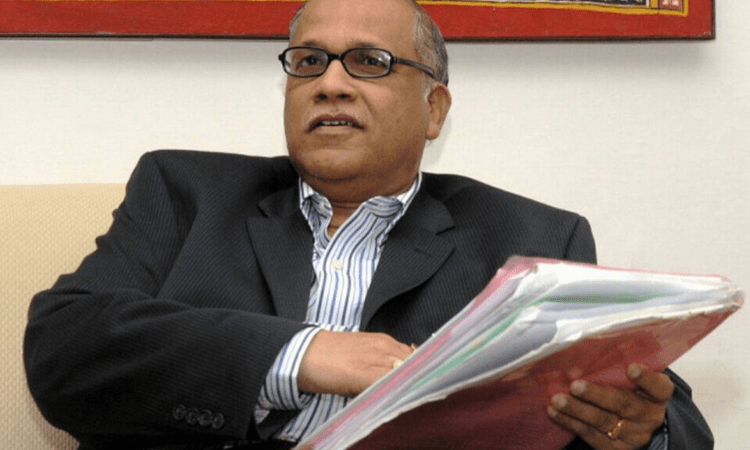
The Opposition in Goa has demanded a longer session of the state legislative assembly, in order to have a detailed discussion on budgetary demands, Leader of Opposition Digambar Kamat said on Tuesday.

Kamat’s demand comes days after Governor Satya Pal Malik summoned the state legislative assembly for an 11-day monsoon session, beginning from July 27.

“The assembly should be held for more number of days because the full budget is to be discussed,” Kamat told reporters.

“When the business advisory meeting is held, we will raise this issue,” the Leader of Opposition also said.

The upcoming monsoon session of the state assembly is the first legislative session since the Covid-19 pandemic broke out.

ODI series between Australia & Zimbabwe postponed due to COVID-19

0

The three-match ODI series between Australia and Zimbabwe, scheduled to be played Down Under in August, has been postponed due to the COVID-19 pandemic, Cricket Australia confirmed on Tuesday.

The three ODIs were scheduled to take place on August 9, 12, and 15.

In a statement, CA said: “The boards of both cricket bodies have come to the mutual conclusion due to a combination of factors including the short length of the series, the significant bio-security measures that would need to be implemented prior to August, and concern for the health and safety of players, match officials, and volunteers.”

“While we are disappointed to postpone the series, CA and ZC agree that in the best interest of players, match officials, volunteers as well as our fans, that this is the most practical and sensible decision,” Interim Cricket Australia CEO, Nick Hockley, said.

“We are committed to working with Zimbabwe Cricket on alternative dates to reschedule,” he added.

The last time Australia hosted Zimbabwe for a bilateral series was in 2003-04 when the two teams participated in a two-Test series which was then followed by a tri-series involving India as the third team.

Acting Zimbabwe Cricket Managing Director, Givemore Makoni, said: “We were excited about facing Australia but, given the circumstances, deferring the tour was the only option. We are, however, looking forward to the rescheduling of the series as soon as practically possible.”

For Zimbabwe, this is the second high-profile assignment that they have lost due to the ongoing health crisis that has already seen the India series getting postponed.

Rita Ora using LED therapy for skincare

0

Singer Rita Ora is currently using LED therapy for skincare.

Rita has been using a device that gives off full-spectrum LED light, thermo-therapy, cyro-therapy, and advanced T-sonic pulsations, to help with her dry skin, reports femalefirst.co.uk.

“It gives red light LED therapy which helps the skin absorb the moisture more, which for me is amazing because I have such dry skin. With the amount I travel, I can literally just take this with me everywhere and it’s so easy. It also pulses, which I love because it makes me feel like I’m having a massage. And it’s so nourishing, so rejuvenating, it makes me feel like I am ready for bed,” Rita shared.

The singer has observed a lot of changes on her skin after using the therapy.

Rita admits looking after her skin is a “big one” for her. “Looking after yourself and skin is a big, big, big one for me…. it really does make me feel like I’ve had a facial. It opens all my pores and gets all my excess make up off that I’ve missed with me just washing my face with my hands and a scrub,” she said.

Pakistan violates ceasefire in J&K’s Kupwara

0

Pakistan resorted to an unprovoked ceasefire violation on the Line of Control (LoC) on Tuesday in Jammu and Kashmir’s Kupwara district.

Army sources said Pakistan initiated an unprovoked ceasefire violation along the LoC in the Naugam sector of Kupwara district on Tuesday morning.

“They used firing by small arms and shelling by mortars to violate the ceasefire in the Naugam sector today morning. Indian army has retaliated befittingly”, a source said.

Pakistan had also violated the ceasefire on Monday in the Tangdhar sector of the LoC in the same district.

Thai PM defends decision to extend state of emergency

0

Thai Prime Minister Prayut Chan-o-cha has defended his government’s decision to extend the national state of emergency until the end of July, noting that there was still a high risk of a second wave of COVID-19 infections.

While the country has entered the 5th phase of lockdown relaxation, Prayut on Monday said the decree had nothing to do with his government clinging onto power, reports Xinhua news agency.

“The presence of emergency decree will empower the government the legal means to contain COVID-19,” explained Prayut.

“For example, state agencies can take immediate steps including the closure of Thailand’s borders, businesses, and leisure activities should a second wave occur.”

Prayut also praised the Thais’ collaborative effort in helping the country stay free from local COVID-19 transmission for more than 30 days.

“The state of emergency will only be for pre-emptive purposes only,” said Prayut, noting that the government has already relaxed almost all restricted measures imposed previously to stem the virus.

Meanwhile, the Center for COVID-19 Situation Administration (CCSA) spokesman Taweesin Visanuyothin said on Monday that pubs, bars, karaoke bars, massage parlors, internet, and game cafés and tea houses can resume businesses, but only under certain conditions.

“Bars, pubs and karaoke bars can operate up to midnight, but they must observe social distancing, with each table separated by at least two meters, each chair by one meter and each group must not exceed five people,” said Taliesin.

Convenience stores can operate 24/7, but shopping and community malls must close no later than 10 p.m.

Thailand has reported a total of 3,169 COVID-19 cases, with 58 deaths.

Living with COVID-19 to be new normal as global cases top 10 mln: WHO

0

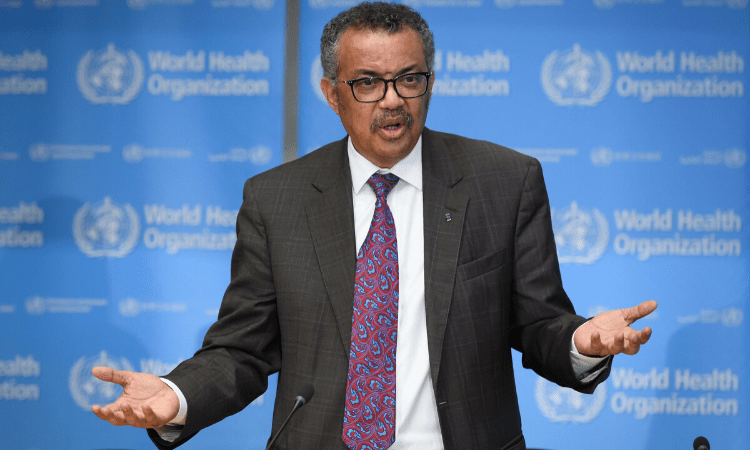
The chief of the World Health Organization (WHO) said that all countries living with COVID-19 will be the new normal in the coming months, as the pandemic had already infected more than 10 million people worldwide, including more than 500,000 deaths.

“The critical question that all countries will face in the coming months is how to live with this virus. That is the new normal,” said WHO Director-General Tedros Adhanom Ghebreyesus at a daily press briefing on Monday, Xinhua news agency reported.

He added that although many countries have made some progress against the COVID-19, the pandemic is speeding up globally.

According to the latest WHO numbers, as of 2 a.m. IST on Monday, the total infected population worldwide had reached 10,199,798, including 502,947 deaths.

“Six months ago, none of us could have imagined how our world — and our lives — would be thrown into turmoil by this new virus,” the WHO chief said.

“The pandemic has brought out the best and the worst of humanity,” he continued. “All over the world, we have seen heartwarming acts of resilience, inventiveness, solidarity, and kindness. But we have also seen concerning signs of stigma, misinformation, and the politicization of the pandemic.”

He urged all countries to prioritize five sets of measures to save lives, including empowering communities and individuals to protect themselves and others, suppressing virus transmission, saving lives with oxygen, and dexamethasone, for instance, accelerating research on COVID-19 and strengthening political leadership and solidarity.

Tedros also announced an updated and detailed timeline of the WHO’s response to the pandemic for the public to understand how the UN health body has been responding to the outbreak.

Shilpa Shetty Kundra: This time with my son and newborn daughter is so precious

Bollywood actress and entrepreneur Shilpa Shetty Kundra finds the current time of staying home precious as she can spend many more moments with her son Viaan and her newborn daughter Samisha, whom she welcomed via surrogacy in February.

“I couldn’t have timed it better. It’s God’s grace, it worked perfectly in my scheme of things. This time is so precious with my son and with my newborn. I can only be thankful and have the utmost gratitude for the way things have panned out,” Shilpa told IANS.

However, she shared that despite being caught up with work she ensures that she makes time for her family.

“Despite being busy, I would still make time for family, but not like this. I just feel that it’s really what I wanted so badly and I feel in a way I manifested it,” she said.

What has this pandemic taught Shilpa? “The universe knows how to reset, to teach us patience and value for what we have. Hope we learn from this experience and come out stronger,” she told IANS.

On the film front, Shilpa is all set to make her comeback as an actress with roles in the upcoming films, “Nikamma” and “Hungama 2”.

Film is dead: Filmmaker Q

India’s most subversive filmmaker Q is planning something different this time. Not a film, but a form he is experimenting with that will thematically emerge from the changing conditions in the country where people are aspiring — even if not for normalcy, at least a way that can be deciphered.

“We are facing a sociopolitical and a health crisis, not just in India but across the world. There seems to be a pattern, like a writer Arundhati Roy says, that the pandemic is a portal, an opportunity because the consciousness that existed pre-COVID 19 was something that was rooted in the hierarchical order of things. Now, every little factor of human existence will have to be questioned. The change will have to be pivotal and architectural. We need changes from the ground-up. Why not research on the fact that for the last 10 years many people have been talking about a pandemic?” said the director whose controversial first film ‘Gandu’ premiered at Berlinale and was screened at 60 festivals worldwide.

Stressing that what he wants to say now cannot be through a film, Q adds that for a person like him, it makes very little sense to make a movie now. “The OTT finally killed the movie. Our company’s ‘Oddjoint’ was making films because we were protesting and had immense success abroad by positioning ourselves when there was no reference point. But that was an exercise purely in understanding different artistic and technical drives. We were the first ones to shoot with a DSLR, first to proclaim that distribution will be digital,” said the director whose film ‘Brahman Naman’ was the first Asian original to be acquired by Netflix.

Q, three of whose films are now on an OTT platform (uncensored) and who received a National Award for ‘Love in India’, says that digital platforms have become completely industrial now. Insisting that they have their integrity intact everywhere else, but in India, he adds that either one can get depressed about it or understand that this was bound to happen.

“In our industry, we don’t make new stuff, just recycle. Somebody else applies the mind, does the research and development, and we reproduce. As a filmmaker, I have always tried to mesh the different forms that existed within cinema.”

Stating that there is historical evidence that whenever any new kind of new distribution pipeline arrives, and technological breakthroughs happen, we eventually hand it over to the powers that be, he said that no one wants to change the equilibrium and disturb the status quo. “The mainstreaming of OTT is a perfect example,” he said.

For him, despite a rich history of political filmmaking in India, of late the plot seems to have been completely lost, thanks to the complete dependence on the market.

“Our promoters never saw the merit in developing a parallel market. Even Japan has a pop culture driven by the market, but that has not stopped its cinema to function in various ways — smaller studios and a diverse distribution system. Here, if you are attempting something different, you don’t have to make only films but an entire pipeline.”

Adding that in India, all social dynamics in art and culture have been systematically eradicated, the filmmaker, a strong supporter of the idea of co-production says that it is sad that it remains unheard of in the country.

“That is the way the whole of Europe has made cinema over the last 40 years. They don’t believe in placing something in the marketplace as a product when it is obviously not one. Sadly, we believe in the dynastic system and are convinced that a small number of people should get the benefit of the system.”

For someone whose films are released in some of the best theatres across the world doesn’t really miss releases in India. “The people who are watching there are real cinephiles. Watching a movie with them is very different from the pop culture theater experience here, which I was never fond of. I have trained myself by watching films that were not evenly distributed in the country — through pirated DVD copies and VHS. I have seen them for free, and my films have been seen for free in India — cool, we are even now.”

Stressing that his greatest “political achievement” has been that his films can’t be bought, he adds that If one wants to watch his films — it can either be on Netflix or at a festival.

“Therefore I am not part of the market place and can’t be looked at as a commodity supplier. As a company, it’s our greatest achievement — we have been able to exist in this hostile environment even as the immediate marketplace can’t even place our movies on the shelves.”

US Senate Majority Leader strongly calls for mask wearing

0

US Senate Majority Leader Mitch McConnell said that wearing a mask cannot be stigmatized, calling for facial masks in public amid the coronavirus pandemic.

“We must have no stigma, none, about wearing masks when we leave our homes and come near other people,” McConnell said from the Senate floor on Monday, Xinhua news agency reported.

“Wearing simple face coverings are not about protecting ourselves. It is about protecting everyone we encounter,” he added.

He said that until there is a vaccine Americans needed to find a “middle ground” with “new routines, new rhythms and new strategies” between widespread lockdowns and life pre-coronavirus, wearing a mask is part of it.

The top Senate Republican’s remarks came after a number of Republican senators have suggested President Donald Trump to promote wearing masks or wear a mask himself when appropriate.

Republican Senator Lamar Alexander, the chairman of the Health, Education, Labor, and Pensions Committee, told CNN on Sunday that if Trump wore a mask in public it would encourage his supporters to also wear masks so as to slow the spread of the coronavirus.

Senator Marco Rubio, a Republican from Florida, said last week that he would “prefer” that Trump wore a mask “because people would follow” his example, according to a report from The Hill.

Vice President Mike Pence said on CBS News on Sunday that the White House was trying to defer to governors and other local officials on wearing a mask.

Also on Sunday, House Speaker Nancy Pelosi said a federal mandate to wear masks in public was “long overdue” and faulted the president for not setting an example by wearing one in public himself.

Trump has been under growing pressure from both Republicans and Democrats to set an example for the country by wearing a face mask amid the current surge of the number of US coronavirus cases, local analysts observed.

India bans 59 Chinese apps over national security concerns

0

The Indian government on Monday banned nearly 59 Chinese apps including TikTok, WeChat, and UC Browser and Xiaomi’s Mi Community over national security concerns as India-China bilateral relations remain strained after the death of 20 Indian soldiers in the Galway Valley clash with Chinese PLA troops in eastern Ladakh.

The Ministry of Electronics and Information Technology (MeitY) has issued a list of 59 Chinese apps that are now banned in the country.

“These measures have been undertaken since there is credible information that these apps are engaged in activities which are prejudicial to sovereignty and integrity of India, defense of India, the security of the state and public order,” said a MeitY statement.

The ministry received complaints from various sources including several reports about the misuse of some mobile apps available on Android and iOS platforms for stealing and surreptitiously transmitting users’ data in an unauthorized manner to servers that have locations outside India.

“The compilation of these data, its mining, and profiling by elements hostile to national security and defense of India, which ultimately impinges upon the sovereignty and integrity of India, is a matter of very deep and immediate concern which requires emergency measures,” the statement read.

The MeitY said the move will safeguard the interests of crores of Indian mobile users.

“There have been raging concerns on aspects relating to data security and safeguarding the privacy of 130 crore Indians. It has been noted recently that such concerns also pose a threat to sovereignty and security of our country,” said the government.

Other Chinese apps in the banned list are Club Factory, SHAREit, Likee, Mi Video Call (Xiaomi), Weibo, Baidu, Bigo Live, and more.

Earlier this month, Indian intelligence agencies red-flagged these Chinese apps over the safety and privacy issues of users.

The government needs to either block access to these apps or advise people to stop their use, according to the intel inputs, said the agencies.

The report comes amid growing chorus from Indian activists to boycott Chinese products due to the border tensions between the two countries in Ladakh.

The recommendations of the intelligence agencies have the backing of the National Security Council Secretariat which determined that certain China-linked applications could be detrimental to the country’s security, said the report citing an unnamed government official.

It is digital ‘Aatma Nirbhar’ moment: Indian app makers

0

After the Indian government banned 59 Chinese apps over national security concerns, desi app developers on Monday hailed the move, saying this will help the Indian app ecosystem prosper.

The Indian government banned popular Chinese apps like TikTok, WeChat, UC Browser, and Xiaomi’s Mi Community and more to safeguard the interests of crores of Indian mobile users.

“This is a welcome move from the government against platforms that have had serious privacy, cybersecurity, and national security risks. We expect the government to continue their support for the Indian startup ecosystem,” Berges Malu, Director, Public Policy, ShareChat, told IANS.

ShareChat is an Indian video creation app similar to short-video making app Tiktok. The app allows users to communicate and interact with other users on the platform.

ShareChat currently serves more than 60 million monthly active users in 15 different Indian languages. Most of its active users hail from tier-2 and tier-3 cities (like TikTok), with the majority of them relying on 2G networks.

Naveen Tewari, Founder, and CEO, InMobi Group said that this is the digital ‘Aatma Nirbhar’ moment that most Indians have been rooting for.

“As the number one top video app on the Google Play Store, Roposo is very well positioned to lead this movement. Roposo will continue to build on the trust and love that 55 million Indian users have placed in us,” said Tewari.

The government banned the Chinese apps after it received complaints from various sources including several reports about the misuse of some mobile apps available on Android and iOS platforms for stealing and surreptitiously transmitting users’ data in an unauthorized manner to servers that have locations outside India.

“Banning Chinese apps is a great initiative to ensure the privacy of the Indian users’ data and to protect the country against the potential threat these apps pose to our national security,” said Piyush, CEO & Founder, Rooter.

“The Indian technology ecosystem has come a long way in the last 5-6 years and is at par with the capabilities of any other startup ecosystem in the world,” he added.

Other Chinese apps in the banned list are Club Factory, SHAREit, Likee, Mi Video Call (Xiaomi), Weibo, Baidu, Bigo Live, and more.

COVID-19: Under pressure English FA cuts 82 jobs after losses

0

Citing a shortfall of 300 million pounds ($370 million) over four years due to the COVID-19 pandemic shutting down the sport and restarting behind closed doors with no fans in stadiums, the English Football Association is set to make 82 people redundant, it said in a statement.

“COVID-19 has had a significant impact on The FA and we now have a greater understanding of the long-term and irreversible effect of the pandemic on our finances,” the statement on FA’s official website, thefa.com, read.

“The high level of uncertainty in our landscape means that we have had to plan for a whole range of potential scenarios. As previously communicated, we are currently planning for potential losses of approximately £300million. As a not-for-profit organization, this will hit us hard.

“Following much consideration of the situation we find ourselves in, we have reached a position where we have formulated proposals to begin a consultation process around reducing the size of our overall team at The FA. These proposals are to reshape the organization with the level of resources available in this smaller budget.

“Today we are proposing to make 124 positions redundant. Because we halted recruitment the day we left the offices in March, we are able to take 42 vacant positions out of the structure, which means that we are proposing to remove 82 roles from the organization.

“We recognize that this is an incredibly difficult time for those employees who have been affected by these proposals and we will do everything we can to support them during a consultation period, which will start soon,” the statement from Mark Bullingham, FA chief executive, added.

The FA owned Wembley Stadium was due to host seven games at the European Championship including the semifinals and finals next month but the tournament was postponed by a year.

The events such as concerts and two NFL regular-season games, that were due to be staged at English soccer’s 90,000-capacity national stadium this year have also been called off.

Alia Bhatt: Would love to do investigative limited TV show

Actress Alia Bhatt is looking forward to making her digital debut with the premiere of her film “Sadak 2”, and says she is open to the idea of diving deep into the streaming platform.

She even shared the genre on her wishlist: An investigative limited TV show.

“Actors not only in the West but over here also are working directly on the OTT. (Web) has created a huge opportunity for actors to showcase their talent,” she said while using the recent success of web series like Sushmita Sen-starrer web series “Aarya” and “Special Ops” series to support her point.

“If I’m offered something that I connect with, I would love to do an investigative type limited TV show. It would be quite interesting,” she added.

Alia’s “Sadak 2” is skipping the traditional theatrical route, and going for a digital platform.

The film marks the return of Mahesh Bhatt as director after two decades and is a sequel of the 1991 hit “Sadak”, which featured Pooja Bhatt and Sanjay Dutt in the lead roles.

Without revealing much about the plot, the actress said that “Sadak 2” is not a recreation.

“The film has different love stories and also has (an element of) thrill. The villain is someone very different and totally unexpected,” Alia said.

“Sadak 2” also stars Aditya Roy Kapur.

The actress said that working on the film was a homecoming in its true sense.

“That the whole family is coming to make a film together. That emotion is of another level altogether… I always wanted to be picturized in a song from the Bhatt camp, which has been famous for its music,” she added.

Alia also released the first poster of the film, which showed Mount Kailash at the end of a long road. She also read out a message from her father, which explained the thought behind the poster.

“Mount Kailash, the ageless mountain, has the footprints of gods and sages. It is the abode of the god of all gods, Lord Shiva. So do we really need anything else or actors in that sacred space? Since the beginning of time humanity found its shelter in Kailash. This is a place where all search ends. ‘Sadak 2’ is the road to love,” she said.

On the personal front, the actress said she is spending her lockdown period by learning guitar and doing meditation.

“I thought learning guitar would be easy, but it is hard. I have also started taking meditation classes and helps me keep calm during this time.. I have also spent my time watching content on my TV,” she said.

“Sadak 2” will release on the streaming platform Disney+ Hotstar under Disney+ Hotstar Multiplex.

Google tests tool to show COVID-19’s impact at community level

0

Google on Monday said it is piloting a new feature in partnership with local news publishers to understand how COVID-19 is impacting different communities.

The company said it would test the News feature in a few geographic areas in the US and Canada in the COVID-19 special section of the app, where users can view community reopening timelines, plus updates around business and school openings.

They can also see the status of the local healthcare infrastructure, public transportation, events, and sections with resources for residents looking for or wanting to help families in need.

“We will also continue to expand our coverage across the U.S. and Canada, and plan to bring this feature to products beyond the Google News app in the future,” the company said in a statement.

Google said it is also working to ensure that reliable local news and information about the coronavirus is easily discoverable in Google Search and Google Assistant.

“When people look for coronavirus information in Search, they’ll see the existing top stories carousel of articles, in addition to a new dedicated local news carousel highlighting timely, accurate news about their community,” the company announced.

It has also expanded a new carousel highlighting tweets from local and health authorities so these important and up-to-date announcements are more easily available. This feature is now available in more than 30 countries.

Google has also seen a significant uptick in people tuning in to local radio on Google Assistant.

The company recently provided emergency funding for more than 5,300 local news organizations and launched a Support Local News campaign to encourage people and businesses to subscribe, donate and advertise across local news outlets in the US and Canada.

As traditional media outlets urge social media giants to give their dues for using their news content especially during the difficult Covid-19 times, Google last week announced a new licensing program to pay publishers for high-quality content.

To be launched later this year, the program will help participating publishers monetize their content through an enhanced storytelling experience that lets people go deeper into more complex stories, stay informed and be exposed to a world of different issues and interests.