Equity indices fall tracking decline in Asian markets

0

The Indian equity market opened on a negative note on Thursday, with the BSE Sensex falling over 400 points.

The Nifty50 on the National Stock Exchange also plunged over 100 points to trade below the 9,300 mark.

The decline in the domestic indices is in line with the plunge in the Asian stock markets, analysts said.

Around 9.42 a.m., Sensex was 31,600.62, lower by 407.99 points or -1.27 per cent from the previous close of 32,008.61.

It had opened at 31,466.33 and so far touched an intra-day-high of 31,628.56 and a low of 31,344.50.

The Nifty50 was trading at 9,266, lower by 117.55 points or 1.25 per cent from the previous close.

Interestingly, the fall comes a day after Finance Minister Nirmala Sitharaman announced several liquidity measures for MSMEs and NBFCs.

EU plan looks to reopen borders for tourism amid pandemic

0

The European Commission has offered a tourism and transport package, aimed to provide guidance for the European Union (EU) member states to gradually lift the internal travel restrictions and restar tourism, two months after strict measures were introduced to contain COVID-19.

The package included an overall strategy towards future recovery, a common approach to restoring free movement within the EU, a framework to support the gradual reestablishment of safe transport, a recommendation aiming to help protect consumers’ rights concerning cancelled trips due to the pandemic, and criteria for restoring tourism activities while ensuring health safety, reports Xinhua news agency.

The guidance was made to “offer people the chance to get some well-needed rest, relaxation and fresh air”, and to allow people to visit their friends and family within the EU, the Commission in a statement on Wednesday.

It also aimed to help EU tourism, one of the hardest-hit sectors, to recover from the pandemic by supporting businesses.

Most of the controls are still valid until mid-May.

Appearing at a joint video press conference on Wednesday, Ylva Johansson, EU Commissioner for Home Affairs, proposed the common approach that comprises three stages.

In phase zero, transport, frontier, posted and seasonal workers should be allowed to access their work. In phase one, smooth transit should be facilitated for professionals and for personal reasons as well as for tourism.

In phase two, travel for all purposes should be permitted throughout the bloc.

Although giving no timing for entering phase one, EU Commissioner for Health and Food Safety Stella Kyriakides said that a coordinated approach should be taken by starting “lifting restrictions between areas or member states with sufficiently similar epidemiological situations”.

“This summer will not be a summer like all the others, and we’re going to have to adapt to the new reality,” Kyriakides told reporters.

She called for a responsible way of easing the restrictions: “We mustn’t ever forget all the sacrifices that citizens have been taking for the last few months in terms of the change in their everyday life.”

The Commission reassured its support for the tourism industry and offered to promote patronage voucher schemes through which consumers can support their favourite local tourism businesses.

It would also promote lesser-known European destinations.

5.69 lakh elderly, differently-abled get advance pension in Himachal

0

Amid the lockdown over the coronavirus pandemic, the Himachal Pradesh government has provided a special relief to 5.69 lakh social security pensioners by making an advance payment of Rs 217.86 crore, officials said on Thursday.

The pension has been given for six months in advance for those settled in remote areas and three months to other beneficiaries.

It was a big challenge to disburse the pension, particularly those residing in the remote areas, due to the lockdown, a government official said.

But it has been performed effectively by the state Social Justice and Empowerment Department and the Indian Postal Service Department.

It brought cheers on the face of wizened Shankaru Devi, 90, of Guhan village in Jaisinghpur area in the Kangra district when the postman reached her home amid the curfew with a pension of Rs 4,500 for three months that too in advance.

The social security pension is the only financial support for her who is alone at home in this old age. She manages her medicines and food with the monthly pension.

Shankaru Devi is not an exception. As per the official records, there are 3.85 lakh old age people in the state who are entitled for pension of Rs 154.24 crore.

In addition, about 1.20 lakh widows have been provided social security pension of Rs 40.21 crore, while 63,495 persons with disabilities have been issued social security pension of Rs 23 crore.

Providing door-to-door pension to the beneficiaries in remote areas during the curfew has been a daunting task which has been carried out efficiently by the postal department.

At present, there are 4.75 lakh savings accounts in the post offices of the social security pension beneficiaries and 93,768 beneficiaries have accounts in banks in the state.

In the tribal areas of Pangi, Bharmour, Lahaul-Spiti and Kinnaur districts, 14,379 social security pension beneficiaries have been provided the pension with an outlay of Rs 10.39 crore.

In this time of crisis, the timely and advance distribution of pension comes as a big succour for the elderly, in particular.

During the lockdown, the state government led by Chief Minister Jai Ram Thakur has also approved 43,026 new cases of pension.

Also, the social security pension of widows and the persons with disabilities have been increased from Rs 850 to Rs 1,000 per month from April 1.

In addition, in view of COVID-19 a total of 111,863 national social security beneficiaries of the state have been provided Rs 500 per beneficiary under the Pradhan Mantri Garib Kalyan Yojana by the Central government.

For this, Rs 5.59 crore has been sanctioned to the state.

Additional Rs 500 per beneficiary will be released to these beneficiaries soon, said an official.

Fourth evacuation flight to Karnataka lands in B’luru

0

The fourth evacuation flight to Karnataka landed in this tech city from Singapore, with 149 returnees, said an official on Wednesday.

“The Airbus A320-251N of Air-India (AI 1379) landed at the city international airport at 9.51 p.m., with 149 passengers from Singapore,” the official told IANS here.

The foreign returnees were stranded overseas for about 50 days due to the suspension of international air services by the government since March 23 and extended lockdown since March 25 to contain the coronavirus spread across the country.

“The passengers to the southern state included women, senior citizens, students, tourists and professionals, who were held up in Singapore and South East Asia during the lockdown, as no overseas and domestic commercial flights were operated since March 23,” said the official.

The flight was over two hours behind scheduled arrival of 7.45 p.m. due to delayed departure from Changi airport in Singapore.

The passengers were received by the state health department and the state-run A-I officials in the arrival terminal.

The returnees were given new masks to wear and sanitizer to wash their hands and told to maintain social distancing till they exit the airport.

“As per the standard operating procedure and protocols to be observed by all foreign returnees, the passengers were screened and tested to ensure they were asymptomatic and free from the Covid-19 virus,” a state official told IANS.

After completing the formalities, the passengers were ferried in state-run chartered buses in batches for the mandatory 14-day quarantine in star hotels booked for them in the city.

Passengers who did not have an Indian mobile connection were given a new sim card by the local operators and got it activated to download the mandatory quarantine app — the Aaroygya Sethu app and Apthamitra app before leaving the airport.

As part of the government’s evacuation programme ‘Vande Bharat Mission’, two more repatriation flights are due to land in Bengaluru from San Francisco and another from Jeddah in Saudi Arabia by May 15.

Of the 691 returnees to the state till date, 514 landed in Bengaluru in three flights since Monday and 177 in Mangaluru port city, about 360 km away, in the fourth flight on Tuesday.

The first evacuation flight to Karnataka from London landed in Bengaluru on early Monday, with 326 returnees, including three infants.

The second evacuation flight to the southern state was an Air-India Express that landed in Bengaluru on Tuesday night from Singapore, with 42 passengers.

The third repatriation flight to the state landed at Mangaluru on the west coast of the state from Dubai on Tuesday night, with 177 passengers, including 88 men, 84 women, 5 children and 2 infants.

Necessary steps, but doubts over implementation, effectiveness: Economists

0

As Finance Minister Nirmala Sitharaman on Wednesday announced the first phase of the economic package with liquidity measures for MSMEs and NBFCs, economists, although describing the measures as necessary, have cast doubt over their eventual implementation and effectiveness.

Speaking to IANS, former Chief Statistician Pronab Sen agreed that the announcements are “sensible” and the government is trying to ensure that MSMEs do not run into financial trouble and survive the lockdown period.

Among several other measures, the minister announced Rs 3 lakh crore “collateral-free automatic loans” for businesses, including MSMEs. She further announced another scheme worth Rs 20,000 crore for “subordinate debt for stressed MSMEs”.

Further, she has also announced Rs 45,000 crore partial credit guarantee scheme for NBFCs, among other liquidity measures for stressed NBFCs.

Sen, however, noted that the announcements should have been made much over a month ago. “I just wished it had happened a month and a half ago. Already some damage has already happened,” he said.

“At the end of the day, how it gets implemented that will eventually matter,” Sen added.

N.R. Bhanumurthy, Professor at the National Institute of Public Finance and Policy, noted that it is a welcome step but is “slightly delayed”.

He said that it depends upon how the whole scheme is going to be implemented and the success of that depends on to what extent the banks will respond to the measures.

“I am not sure whether private sector banks will be part of this in very big way… ultimately it will fall on the public sector banks, where they may be forced to provide loans, with no collateral,” Bhanumurthy told IANS.

Abheek Barua, Chief Economist with HDFC Bank, was of the view that although similar measures for NBFCs were announced last year without much movement on the ground, this time around, the measures may bear fruit as the crisis is much bigger.

“The fact that the government will provide guarantee of loans or bonds for both MSMEs and NBFCs will induce banks to lend to these segments. So these segments were obviously suffering from liquidity problems which would have morphed into solvency problems… that problem might be taken care of through this mechanism,” he said.

“Banks have been asking for guarantees in order to lend to these segments,” Barua added.

He also pointed out that the Rs 45,000 crore partial credit guarantee scheme for MSMEs was the one announced previously in the budget, but did not take off.

He noted that some measure will be “quite effective” while others such as the Rs 50,000 crore “Fund of Funds” for MSMEs may not yield the intended results.

Terming the Rs 90,000 crore liquidity injection plan a “big positive” for stressed power discoms, Barua told IANS that there should be fundamental changes in the operations of power distribution companies or they would be stuck in a vicious cycle of debt and eventual support from the government and banks.

Sen, who is a noted economist, was of the view that the announcements made on Tuesday were only short-term measures and the government will have to come up with further measures to boost demand in the economy.

“More will have to come and that more will have to be pretty large… Already had seven weeks of nationwide lockdown, and many states have done various degrees of lockdown before that. Over this period of time we have already suffered a production loss of Rs 18-19 lakh crore, thereby an income loss of the same amount. Even after opening up, the demand will be muted. So, for that, there will have to be a demand stimulus,” Sen said.

Bhanumurthy said: “It is not really a fiscal stimulus for the overall economy so that it would boost the economy. Now this is basically being supplied by the PSBs, without much impact on the overall economy.”


Hockey post COVID-19: Players asked to carry own towels & bottles

0

No physical contact other than in normal play, training in “groups of maximum four to six people in an area of 40x20m” and mandatory usage of the Aarogya Setu app are among the measures listed out in Hockey India’s Standard Operation Procedure (SOP) once training and competitions restart post the lockdown imposed to deal with the coronavirus pandemic.

“Training in groups of maximum 4-6 people per area of 40x20m, this will create an environment with few people in big areas of play,” says Hockey India in its 20-page SOP and guidelines to associations.

“Full pitch could be divided into 4 parts, and a maximum of 3-4 players could use each part with a minimum of 1 meter space between each player. The same set of 3-4 players should train together at all times to avoid any spread of infection if in case any one is affected at some point.”

High-fives and fist bumps are prohibited and players will have to arrive at the training ground in their full kit so as to minimise the usage of changing rooms and bathrooms. They are expected to bring their own towels and water bottles.

“Between training efforts, maintain a distance of at least 1.5m (e.g. in the gym, pool, between sets or efforts). Any tasks that can be done at home, should be done at home (e.g. recovery sessions),” says HI.

Groundsmen are to carry out their preparations before the players and staff arrive at the field or after they leave only. All equipment that is used will be wiped down and sanitised at the end of training.

HI also says in the SOP that ‘all member units’ staff and teams should download the Aarogya Setu app on their mobile phones.

“Before leaving for the upcoming event, all players and staff must review their status on ‘Aarogya Setu’ and travel only when the app shows ‘safe’ or ‘low risk’ status.”

The senior men’s and women’s hockey team probables have been at the Sports Authority of India centre in Bengaluru throughout the lockdown which was imposed first on March 25 and has since been extended twice.

In a Special Congress Meeting that was held on Wednesday, the federation proposed that players continue their preparations for the postponed Tokyo Olympics from July to the end of 2020. It also finalised venues for the restructured national calendar during the meeting.

UN slashes India’s growth rate to 1.2% for 2020-21

0

The UN on Tuesday slashed India’s economic growth projection for the current fiscal year to 1.2 percent, which would still be the second-highest growth rate among major economies, trailing only China.

The mid-year World Economic Situation and Prospects (WESP) update expects India’s rate of gross domestic growth to increase to 5.5 percent in the next fiscal year.

The growth rate for the world ravaged by Covid-19 is projected to shrink by 3.2 percent this year, with the developed countries bearing the brunt with their economic growth dropping by 5 percent, according to the update.

The 1.2 percent estimate for India for the current year is a drastic Covid-19-fuelled cut from the 6.6 percent made in January made by the UN Department of Economic and Social Affairs.

China is expected to grow by 1.7 percent this year and increase its rate to 7.6 percent next year.

The WESP update reduced India’s growth rate for the last fiscal year to 4.1 percent from the 5.7 percent estimated in January.

The UN projection for the current fiscal year is less than the 1.9 percent made by the International Monetary Fund (IMF) last month.

The UN expects South Asia’s economies overall to shrink by 0.6 percent during the current year.

The UN update said, “The global economy is expected to lose nearly $8.5 trillion in output over the next two years due to the Covid-19 pandemic, wiping out nearly all gains of the previous four years. The sharp economic contraction, which marks the sharpest contraction since the Great Depression in the 1930s, comes on top of anaemic economic forecasts of only 2.1 percent at the start of the year.”

Del Monte forays into health and wellness space

0

Food brand Del Monte has forayed into the health and wellness space with the launch of cholesterol-reducing fruit juice.

Del Monte also announced the launch of Del Monte’s ACE, a 100 percent mixed fruit juice fortified with Vitamins A, C, E and rich in antioxidants that help in boosting immunity.

“Del Monte’s Heart Smart — a 100 percent mixed fruit juice with Reducol, is a natural plant-based ingredient that is clinically proven to reduce cholesterol in 8 weeks,” the company said in a statement.

The juices will be available online on Amazon exclusively, and subsequently, they will be available across all leading supermarkets on e-commerce portals across top cities including Delhi-NCR, Mumbai and Bengaluru.

Both the products have a shelf life of 12 months, it said.

“We have always given the highest priority to quality and healthy options while bringing new products to the market. We hope to create new benchmarks in this segment as our beveragewith Reducol will be India’s first juice that helps lower cholesterol. We are focused on helping consumers improve their health through our products,” said Yogesh Bellani, CEO FieldFresh Foods Pvt. Ltd, that manages the Del Monte brand in India.

Govt to use Rs 3,100 cr from PM-CARES for ventilators, migrants’ welfare

0

The Centre allocated Rs 3,100 crore from the PM CARES (Prime Minister’s Citizen Assistance and Relief in Emergency Situations) Fund on Wednesday evening to fight against COVID-19.

The bulk of it, Rs 2,000 crore, will be spent to buy ventilators, while a significant Rs 1,000 crore is being earmarked for the migrant labourers. As much as Rs 100 crore is kept for supporting vaccine development.

To ramp up the health infrastructure, as much as 50,000 ‘Made in India’ ventilators will be purchased from PM CARES Fund at a cost of about Rs 2,000 crore. These ventilators will be provided to government-run COVID hospitals in all states and Union Territories for better treatment of critical COVID-19 cases.

Also to address one of the most pressing humanitarian crisis of our time, a lump-sum assistance of total Rs 1,000 crore from the Fund is earmarked for the welfare of the migrant labourers. The money will be given to different states and UTs. The money is meant to strengthen districts’ efforts in providing accommodation facilities, making food arrangements, providing medical treatment and making transportation arrangements of the migrants.

But which state will get how much? “State/UT-wise funds will be released on the weightage of (a) population of the state/UT as per 2011 Census — 50% weightage (b) Number of positive COVID-19 cases as on date — 40% weightage and (c) equal share (10% weightage) for all states/UTs to ensure basic minimum sum for all states.

“The fund will be released to the District Collector/District Magistrate/Municipal Commissioner through the State Disaster Relief Commissioner of the States/UTs concerned,” said a government statement.

Meanwhile, Rs 100 crore is kept for developing a vaccine for COVID-19. Indian academia, start-ups and industry have come together in cutting-edge vaccine design and development an the money is meant to support their research and development. However, it will be utilized under the supervision of the Principal Scientific Advisor.

The PM-CARES was formed on March 27 this year, three days into the lockdown, and is headed by Prime Minister Narendra Modi. Other ex-officio members of the trust are Defence Minister Rajnath Singh, Home Minister Amit Shah and Finance Minister Nirmala Sitharaman.

Borrow gold from religious trusts for public benefit: Maha ex-CM

0

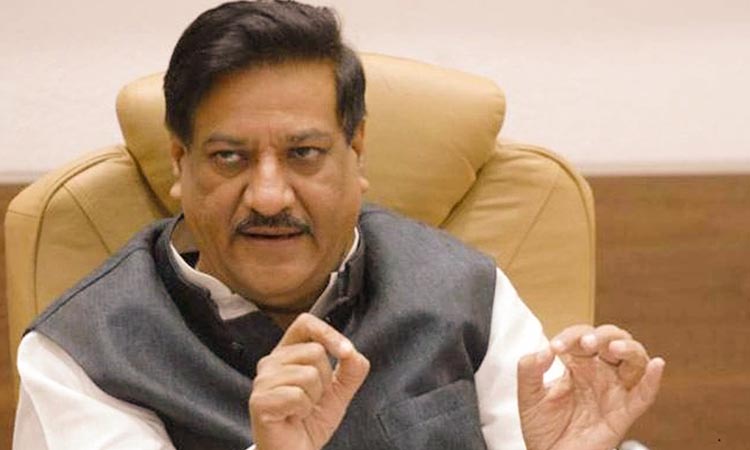
In a potentially controversial statement, senior Congress leader and former Maharashtra Chief Minister Prithviraj Chavan on Wednesday suggested that the government should utilise the huge quantities of gold lying with various religious trusts in the country to finance the rebuilding of the economy post-Covid-19 pandemic.

He urged that the gold should be deployed to tide over the current financial crisis that has gripped the country in the wake of the Covid-19 pandemic.

“Government must immediately appropriate all the gold lying with all the religious trusts in the country, worth at least USD One Trillion, according to the World Gold Council. The gold can be borrowed through gold bonds at a low interest rate. This is an emergency,” Chavan said in a tweet, where he tagged Prime Minister Narendra Modi.

He made it clear that when he mentioned religious trusts, it was cutting across religions.

“As per the WGC, the gold is worth around Rs 75 lakh crore. When the country needs it, it must be used,” said Chavan in his series of tweets.

It could be done through a gold bond scheme with a small interest paid on it, and since it (the gold in religious trusts) is the nation’s property, there’s no harm in using it for public benefit, he added.

“During wars that India has seen, people have come out and given their gold to the government. We can have a scheme and even give them (the religious trusts) a small interest on it,” said Chavan.

The technocrat-turn-politician who is a former Union Minister pointed out that since the past nearly two months, he had been advocating a stimulus package of at least Rs 20 lakh crore and welcomed the PM’s announcement of Tuesday evening.

Sameera Reddy: Parenting not easy journey with 2020 generation

0

Actress Sameera Reddy, also a mother, says parenting is not easy journey with kids of the 2020 generation.

“Parenting is not an easy journey with the 2020 generation. It’s the only role you play with no script in place. Right from getting your child to sleep through the night, to equal parenting, to raising a picky eater, body shaming, to rediscovering yourself after motherhood is all exhausting and few speak about it,” she said.

She added on the subject: “I think just knowing that there are so many parents who face this day in day out, really helps. Being aware, and knowing you are not alone helping. Digital platforms spreading awareness on these topics is growing and this seems like a great idea for parents to just unwind, learn and connect with so many parents across the country.”

Sameera was speaking on the “Raising Parents” podcast of JioSaavn. The podcast is for young adults and new parents, facing the expectations and challenges of parenthood. She was the first guest on the show.

ICMR fast-tracks roll out of global Covid-19 ‘Solidarity’ trial

0

The Indian Council of Medical Research (ICMR) has fast-tracked the roll out of global ‘Solidarity’ trial launched by the World Health Organisation (WHO), to help find an effective treatment for Covid-19.

‘Solidarity’ is an international clinical trial to compare four treatment options against standard of care to assess their relative effectiveness against Covid-19.

By enrolling patients in multiple countries, the solidarity trial aims to rapidly discover whether any of the drugs slow the disease’s progression or improve survival. Importantly, this initiative provides for both speed and scale.

About India’s participation in this global endeavour, ICMR’s Director General, Dr. Balram Bhargava, said: “ICMR is working relentlessly to implement scientific interventions to combat the Covid-19 pandemic. The decision to join the WHO solidarity trial is an important step in this endeavour.”

“The ICMR-National AIDS Research Institute (NARI) is the national coordination site for the trial in India. Four potential anti-viral agents, Remdesivir, Chloroquine/Hydroxychloroquine, Lopinavir-Ritonavir and Lopinavir-Ritonavir with Interferon (I1a) are to be evaluated in the trial.”

Welcoming India’s participation in the WHO global solidarity trial, WHO Representative to India, Dr. Henk Bekedam, said: “We congratulate the Government of India, particularly ICMR for joining the global Solidarity trial. Through this collaboration, Indian researchers and institutions will participate in a global initiative to find effective treatment options for Covid-19.”

India plays a critical role in both research as well as in manufacturing once trials conclude successfully. WHO India is extending the required support to conduct the trial in India, he added.

The trial has begun recruiting Covid-19 patients in the country. Elaborating on the progress, Dr Sheela Godbole, Senior Scientist, NARI and National Coordinator for the Solidarity trial in India, said: “The required regulatory and ethical approvals have already been obtained and clinical trial sites have started to recruit patients in the trial.”

Till now a total of 9 sites have been approved. The Solidarity trial provides simplified procedures to enable even overloaded hospitals to participate. Over 100 countries have requested participation to find effective therapeutics as soon as possible, via the trial.

The participation of multiple clinical trial units or hospitals in multiple countries will ensure adequate enrolment of participants in the shortest possible time. This will help fast-track identification of correct treatment options for the Covid-19 disease.

Centre’s package gives impetus to MSMEs: Haryana Deputy CM

0

Haryana Deputy Chief Minister Dushyant Chautala on Wednesday expressed gratitude to Prime Minister Narendra Modi for announcing a financial package of Rs 20 lakh crore for giving impetus to industrial growth, especially small, micro and medium enterprises (MSMEs), closed due to the nationwide lockdown.

The announcement is sure to rejuvenate the GDP after the second quarter of fiscal year 2020-21, he said in a statement.

The Deputy Chief Minister, who also holds the charge of the Department of Industry and Commerce, said MSMEs are the backbone of a country or a state’s economy and the package announced by the Prime Minister would serve as a booster dose for industrial growth.

He said following the guidelines issued by the Union Home Ministry to revive these industries in a phased manner during the lockdown, most of the industries in the state had become operational.

He said in the fourth phase of nationwide lockdown which is expected to start from May 17 the government’s priority would be that small, micro and medium enterprises start their operations and production as before.

He said it is mandatory for workers to download the Aarogya Setu app on their mobile phones and to follow the social distancing norms, including the use of masks, sanitization, etc.

Chautala said the MSME entrepreneurs should pay their workers salaries for the lockdown period, for which Haryana has taken an important decision according to which the interest benefit will be granted to MSMEs for six months on working capital loan for paying salaries to their workers up to Rs 20,000 per worker.

Haryana is the first state in the country to do so, he added.

The Deputy Chief Minister said that the state has set up a bank grievance information centre in the Finance Department for quick resolution of all the issues related to MSMEs and the decision to give state guarantee for bank loans to MSMEs has already been taken.

Chautala said state’s new Enterprises Promotion Policy – 2020 is proposed to be prepared by August, for which suggestions will be taken from all stakeholders so that Haryana can formulate the country’s most industry and business friendly policy.

The lockdown period will also be taken into consideration in the new industrial policy, he added.

Maharashtra allows 65,000 industries to resume operation

0

Nearly two months after lockdown, the country’s biggest industrialized state has started limping back to normalcy with the government permitting around 65,000 industries to resume operations, according to Industry Minister Subhash Desai, here on Wednesday.

Of these, over 35,000 industries have already started production with over 9,00,000 employees reporting for work.

The Minister expressed the hope that Maharashtra would benefit in a big way from the Rs 20 lakh crore package announced by Prime Minister Narendra Modi on Tuesday.

Last week, Desai had announced resumption of the industrial sector with conditions in view of the Covid-19 pandemic to kick-start production and ensure jobs.

Reviewing the scenario with the Aurangabad district authorities, Desai announced a special task force, comprising senior officials, to attract investment to the state.

“They will negotiate with industry representatives and officials from the USA, Japan, the UK, Germany, Japan, Taiwan and other nations for investment in Maharashtra,” Desai said.

In anticipation of the flood of investors, the state has reserved some 40,000 hectares land to cater to their needs through the Maharashtra Industrial Development Corporation.

Various formalities and clearances required to set up units would also be expedited with minimum time delays to ensure that the industries become functional quickly, the Minister said.

The government is making special efforts to ensure availability of skilled, semi-skilled and other workers for new industries.

‘Nothing for states’: Mamata dubs Centre’s stimulus ‘big zero’

0

Terming the economic stimulus package announced by the Centre as “a big zero”, West Bengal Chief Minister Mamata Banerjee on Wednesday said it was nothing but an “eyewash” and full of “misleading information”.

“In the name of lockdown, the Centre is trying economically cripple all the state governments. The announcement made by the Union Finance Minister was full of misleading information. It is nothing but a big zero as the states have got nothing,” Banerjee told a press conference at the state secretariat Nabanna here.

She said that the economic activities and the lives of common people have virtually come to a standstill across India, but there was nothing in the stimulus package.

“Democracy has also come to a halt. The Centre is misleading us with false figures. The recession has already started. And the Central government has not mentioned anything about the special package for Covid-19 crisis, no funds for healthcare sector’s revival, job creation, market development, any waiver for the farmers and special grants to the MSME (micro, small and medium enterprises) sector,” she said.

Banerjee said that, meanwhile, her government has taken up a series of revolutionary steps for reviving the economic conditions of the rural folk. The decisions were taken to observe the 9th year of the Trinamool Congress’ government.

“We came to power and formed our government on May 13, 2011. Thus, we decided to take a few revolutionary steps across the state. This initiative will include measures of developing about 50,000 acres of land sprawling over six districts – Bankura, Purulia, Jhargram, Birbhum, West Midnapur and West Burdwan,” she said.

The state government will develop these huge acres of land which is not agriculturally fertile, the Chief Minister said, adding that activities such as animal rearing and fisheries will be carried out involving the self-help groups (SHG) to generate income for the local people.

“We don’t indulge in tall talk of being self-reliant. Rather we try to prove it. We have already readied at least 550 micro-plans, covering about 6,500 acres of land sprawled across these six districts,” she said, indirectly taking a jab at Prime Minister Narendra Modi’s address to the nation Tuesday night.

Banerjee also announced that her administration would carry out sentinel survey across Bengal to understand the nature of Covid-19 spread in various districts. “Four of our green zone districts have already turned orange. Our challenge is to make then green once again,” she added.

India’s $45 billion PE/VC deals in 2019 highest in 10 years

0

With more than 1,000 private equity (PE) and venture capital (VC) deals valued at $45 billion, the highest in the last decade, India continued to be the second largest deal market in Asia-Pacific in 2019, said a Bain & Company report on Wednesday.

In 2019, India saw an increase in the number of large deals greater than $100 million, a rise in their average deal size and a surge in VC investments, said the “India Private Equity Report 2020”.

India’s share of the Asia Pacific deal market increased to nearly 25 percent in 2019 and investment value was about 70 percent higher than 2018 and nearly 110 percent higher than the previous five-year average.

The top 15 deals in India, which constituted more than 35 percent of total investment value in 2019, five were in real estate; three in IT and IT-enabled services (ITES); and the rest across banking, financial services and insurance (BFSI), telecommunications, energy and consumer technology.

However, exit value in 2019 decreased, finishing at nearly $13 billion, compared to $17 billion in 2018 (excluding Flipkart’s exit), but was still the third-highest for the last decade, said the report.

The dip over last year was driven by a decrease in the number of exits from 265 to 200.

With an unpredictable public market, strategic sales became the preferred mode of exit, accounting for about 50 percent of exit volume.

According to Bain’s analysis, India-focused dry powder will remain healthy, but a potential reduction in investments could occur in the first half of 2020, accompanied by a price correction across the board due to COVID-19 disruptions.

“From an investment perspective, we will likely see a short-term dip in investment activity with Covid-19, as already evidenced globally,” Arpan Sheth, Partner, Bain & Company and one of the lead authors of the report, said in a statement.

“However, this imminent price correction across the board will present an investment opportunity. Investors need to triage their portfolio and take actions to adapt to the changes in the economy which includes taking immediate actions to ensure business continuity and plan for value creation to retool their businesses for the future,” Sheth added.

The report added that Software as a Service (SaaS) and cross-sector technologies will be the most attractive opportunities for investors in the future, expected to grow around 50 percent annually from nearly $6 billion in 2019 to over $20 billion in 2022.

“The market disruption caused by Covid-19 could lead to growth in select pockets such as e-commerce, enterprise technology/SaaS, healthcare, on-demand services,” Sheth said.

Haryana to provide potable water to rural households by 2022

0

Haryana is geared up to provide tap water connection to all rural households by December 2022, ahead of the national goal by 2024-25, a statement said on Wednesday.

The state provided 1.05 lakh tap connections during 2019-20 under the Jal Jeevan Mission (JJM). Now the state is planning 100 percent coverage by December 2022, a government statement said.

By doing so, Haryana will be among the leading states to accomplish the ambitious target of providing tap connection to each rural household.

Presenting their action plan to the Department of Drinking Water and Sanitation on Tuesday for achieving the goal of every household with tap water supply under the JJM, state officials said there are 28.94 lakh households in Haryana, out of which 18.83 lakh are already provided with functional household tap connection.

Out of the remaining 10.11 lakh households, the state plans to provide tap connections in seven lakh households by 2020-21.

In the current year, the state is planning for 100 percent coverage of one district and 2,898 villages out of total 6,987 villages.

More emphasis has been given to cover rural households in drought prone areas and aspirational districts. The state is likely to get Rs 290 crore as Central share under JJM for this fiscal, which will be supplemented by same amount of state’s matching share.

The state is eligible for additional allocation based on physical and financial performance.

Out of 44 water testing laboratories, the state plans National Accreditation Board for Testing and Calibration Laboratories (NABL) accreditation of 18 labs in the current year.

Field testing kits will be provided at community level for testing of water quality for taking corrective measures. The state has planned to provide drinking water to all 35 quality-affected habitations.

During this testing time of Covid-19 pandemic, such attempts to provide household tap connections in rural areas will definitely improve the ease of living especially the women and girls, reducing their drudgery, making them safe and lead a dignified life.

The government of India is implementing the Jal Jeevan Mission (JJM) in partnership with states to ensure every rural household in the country has functional household tap connection for drinking water in adequate quantity of prescribed quality on regular and long-term basis at affordable service delivery charges leading to improvement in their living standards.

Discoms to get Rs 90K liquidity support to clear dues

0

In a bid to save the financially stressed discoms from further crisis, the central government on Wednesday announced a Rs 90,000 crore liquidity injection plan that would allow these entities to clear their dues towards power generation companies.

Finance minister Nirmala Sitharaman said that the liquidity window for discoms was essential as its revenue has plummeted and they are in the midst of unprecedented cash flow problem accentuated by demand reduction during the current lockdown.

Under the plan unveiled by the Finance Minister, power sector financiers — PFC and REC will infuse liquidity of Rs 90,000 crore to DISCOMs against receivables. Loans will be extended against State guarantees for exclusive purpose of discharging liabilities of Discoms to Gencos.

Discoms dues towards gencos have risen to Rs 94,000 crore and this was making operations unsustainable as unpaid power producers were looking to stop power supplies to states.

As with earlier power sector reform initiatives, the loans will be given to discoms against specific activities and reforms: digital payments facility by Discoms for consumers, liquidation of outstanding dues of State Governments, Plan to reduce financial and operational losses.

To make the exercise beneficial even to power consumers, it has been decided that Central Public Sector Generation Companies shall give rebate to Discoms on clearance of their dues, which shall be passed on to the final consumers (industries) by way of rebate of power tariff.

The Covid-19 outbreak and subsequent lockdown has squeezed power demand sharply in months of March and April and the fall has been such sharp that demand for full year 2020-21 is set to report 1 per cent decline, first time in almost 36 years.

Not only this, with expectation that the lockdown may continue in large parts of the country for some more time, the discoms are set to return of yesteryears of adding losses after losses every year making their operations unviable. Extension would also impact demand further.

According to an analysis done by rating agency Moody’s unit ICRA, expected losses at state-run electricity distribution utilities (DISCOMs) would rise two-thirds to Rs 50,000 crore in FY21 with an addition of Rs 20,000 crore in book level losses in current year itself.

Discoms have already been reeling under low demand conditions for some time and this has impacted their revenue and ability to service payment dues to generators. Accordingly, the debt-laden DISCOMs’ overdue payment to electricity generators had risen to Rs 94,000 crore now, more than 50 percent higher compared with the same period last year.

What has added to problems of discoms is that the lockdown has resulted in consumption decline from the high tariff paying industrial and commercial consumers (tariff almost twice that for households) and the likely delays in cash collections from other consumer segments.

Covid-19 impact leads to liquor prices hiked up to 35% in Kerala

0

The Kerala cabinet meeting held here on Wednesday decided to hike the tax rates on liquor, beer and wine ranging from 10 to 35 per cent.

The office of Chief Minister Pinarayi Vijayan said that this has been done to tide over the difficulties faced on account of the lockdown and an ordinance to this effect will be issued soon.

“The tax rate on beer and wine would go up by 10 per cent, while all forms of liquor will be taxed by an additional 35 per cent,” said Vijayan.

The liquor vends and bars are all closed and in all likelihood, might open very soon.

The state exchequer has been reeling under lack of revenue and last month all what the state government could collect from various sources was a mere Rs 250 crore.

For fund-starved Kerala, revenue from liquor and beer is one of the biggest cash cows and in the last fiscal, garnered it a total of Rs 14,504.67 crore and hence the devolution of IT into Bevco, would be a big relief for the state’s finances.

The profile of liquor users in the state, in a study conducted earlier, reveal that around 32.9 lakh people – 29.8 lakh men and 3.1 lakh women – out of the state’s 3.34 crore population consume liquor.

Around five lakh people consume liquor on a daily basis. Of this, 83,851 people, including 1,043 women, are addicted to alcohol.

2 killed in reactor blast at biofuel plant in Telangana

0

Two workers were killed and another injured in a reactor blast at a bio-diesel plant near Zaheerabad town in the Sangareddy district of Telangana on Wednesday, the police said.

The incident occurred when workers were doing repair work at the reactor in the plant, which was getting ready to re-open after the lockdown.

According to the police, the reactor’s roof exploded and the workers were thrown away. Ghousuddin (35) and Saber (33) died on the spot, while Krishna Reddy was admitted to a hospital with injuries.

The bodies were shifted to a government-run hospital for autopsy.

After the accident, locals gathered at the plant and demanded compensation for the victims’ families and the injured.

Local legislators Manik Rao and Mohammed Fareeduddin visited the plant and assured the aggrieved families of all help from the government.

The Telangana accident has occurred after an industrial disaster in Andhra Pradesh, which claimed 12 lives and injured hundreds due to gas leak from a chemical plant near Visakhapatnam on May 7.

The styrene gas leak from LG Polymers affected people in five villages. The accident occurred after the plant was re-opened after 40 days due to the lockdown.

The officials suspect the gas leak was caused by the initiation of polymerization of styrene in liquid form due to prolonged storage during the lockdown. The safety system failed to prevent the gasification of styrene, causing its leak.