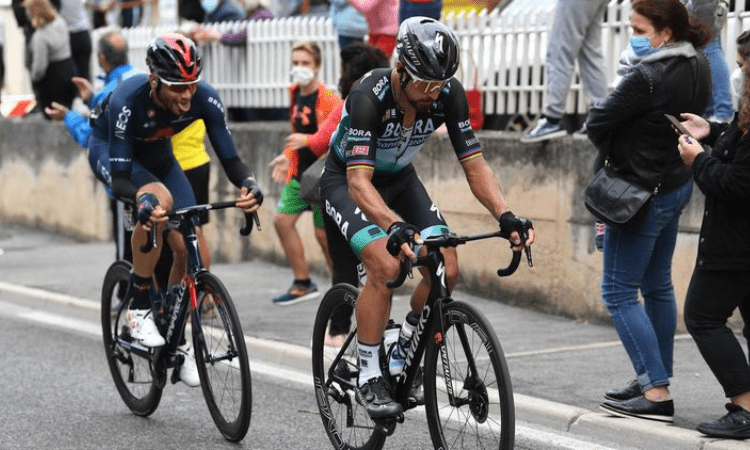


Kohli criticised for sending Sundar, Dube ahead of AB against KXIP

0

Royal Challengers Bangalore (RCB) captain Virat Kohli’s decision to send AB de Villiers in at No. 6 against Kings XI Punjab (KXIP) was slammed by former cricketers as the Bengaluru-based franchise lost their IPL 2020 match by eight wickets on Thursday.

de Villiers, who batted at No. 4 against Kolkata Knight Riders and smashed 73 off 33 in his 100-run stand with Kohli in their last game, was surprisingly demoted while Washington Sundar and Shivam Dube were sent ahead of him.

Both Sundar and Dube did nothing spectacular as RCB managed to get to 171/6 in 20 overs, thanks only to Chris Morris’s late-order hitting.

At the innings break, former England batsman and Kohli’s former RCB teammate Kevin Pietersen questioned the decision.

The decision may have been made due to AB’s recent weakness against spin bowling, away from turning ones in particular. Most of his dismissals in T20 cricket have come against this kind of bowling, delivered by leg-spinners and left-arm orthodox.

Whatever be the reason, it didn’t go down well with Pietersen who thought being an experienced batsman, the former Proteas captain should have been sent up.

“AB de Villiers has been playing cricket for 15 years. He has faced all kinds of bowlers. Your best batsman should be facing maximum deliveries. If he had faced the 24-25 balls that those two batsmen (Dube and Sundar) had faced, the ball he got out to would’ve gone out of the ground,” Pietersen said during the innings break.

Sundar, who batted at No. 4, made 13 off 14 whereas Dube, who came in at No. 5, made 23 off 19 deliveries.

de Villiers could come in only in the 17th over and ended up with two off five balls as pressure to up the tempo on arrival mounted.

Former India captain Sunil Gavaskar said during commentary, “He (Dube) has scored eight off 10 balls. He has taken away two overs of AB de Villiers’s mayhem.”

“It was a bizarre decision to hold back de Villiers and send Sundar and Dube ahead of him,” said former Indian cricketer Aakash Chopra in a video on his YouTube channel.

Kohli conceded after the match that the decision did not come off.

“We had a chat, it (AB batting at no. 6) was a message about the left-hand, right-hand combination. Sometimes these decisions you make, don’t come off. But I think 170 was a decent score,” Kohli said.

The RCB captain said that he wanted Sundar and Dube to go after the bowling attack with big shots. “That’s the idea, get your eye in, and start hitting. But we were not able to put them under pressure,” the 31-year-old added.

RCB has so far won five games of the eight matches in the ongoing tournament and will next take on Rajasthan Royals in Dubai on Saturday.
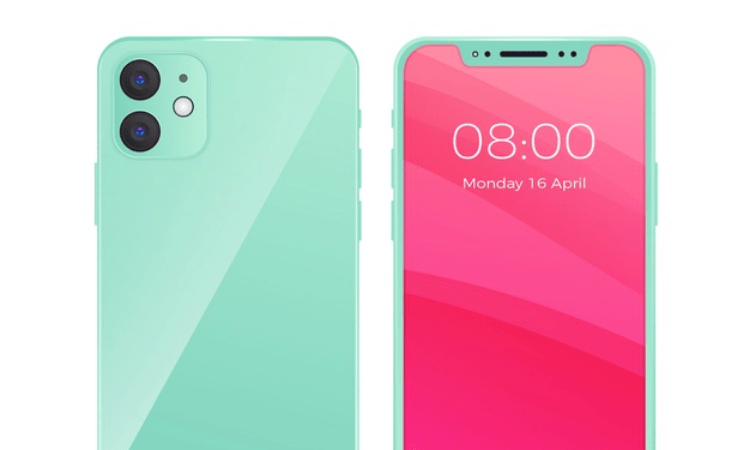

Samsung launches Galaxy S20 FE 256GB variant in India

0

Samsung on Friday launched the 256GB variant of Galaxy S20 FE (Fan Edition) for Rs 53,999 in India.

Pre-booking of S20 FE (8GB+256GB) in Cloud Navy color will be available from October 17 on Samsung.com and leading offline and online retail stores in the country. The delivery will commence on October 28.

Meanwhile, S20 FE (8GB+128GB) variant went on sale from Friday.

“Customers can avail exciting offers on purchase of the flagship smartphone including Rs 4,000 cashback on HDFC Bank cards and Rs 4,000 voucher on Samsung e-store,” the company said in a statement.

The smartphone has a 6.5-inch Infinity-O Super AMOLED display with 120 Hz super smooth scrolling display, an AI-powered camera, advanced Exynos 990 chipset, a 4500mAh battery, and expandable storage.

The Galaxy S20 FE is water and dust resistant IP68 rated.

Housing 30X Space Zoom, Galaxy S20 FE brings a pro-grade triple camera at the rear (12MP Ultra Wide camera, 12MP Wide-angle camera, and 8MP Telephoto camera), along with the 32MP selfie camera that includes tetra-binning technology that will let the users instantly capture a post-worthy picture.

Galaxy S20 FE features large image sensors including AI multi-frame processing. With Night Mode, one can take clearer images, even in low light.

The device is powered by a 7nm Exynos 990 processor and comes with a 4500mAh battery that lasts all day.

Arjun Mathur pledges to be an organ donor

Actor Arjun Mathur has pledged to donate his organs and says he also wishes to encourage young people and bust myths around the cause.

For Arjun, getting associated with a cause of organ donation was more of a personal affair. His elder brother suffered from an ailment that left him in the need of a kidney. They had to wait for many years to find a donor. In early 2020, the actor’s family managed to find the right match, and his brother was operated on.

“Organ donation is a cause I feel strongly about. It’s disturbing to see a noble cause like this still being clouded by myths and misinformation that is leading to reluctance and apprehension among people. It is about time we, as a society, work towards fixing this issue and trigger a positive change,” said Arjun, who is the cause ambassador for “MTV-ORGAN Daan”.

Recently, Arjun was nominated for an International Emmy Award at the upcoming 2020 edition of the global gala. He made the cut in the Best Performance By An Actor list for his role of the gay wedding planner Karan Mehra in the web series “Made In Heaven”.

Arjun will soon shoot for season two of “The Gone Game”.

Manushi Chhillar: Was excited to be on sets with Akshay sir

Former beauty queen and Bollywood debutante Manushi Chillar says she was excited to be on a film sets with superstar Akshay Kumar.

Manushi makes her Bollywood debut opposite Akshay in the upcoming historical drama, “Prithviraj”.

“I’m thrilled to be back on the sets of ‘Prithviraj’ as I awfully missed the set life. I look forward to being on shoot every day because I’m absorbing a lot and I’m loving it. I was excited to be on sets with Akshay sir because I’ve learned so much from him and there is so much more to learn,” Manushi said.

Manushi revealed that Akshay is very encouraging of her work and she is grateful for it.

“I consider myself fortunate to be working with the team and everyone has been wonderful. It is daunting when you debut and you want to do your best and give it you’re all. Everyone including Akshay sir is very supportive and encouraging,” she said.

“Prithviraj”, based on the life and heroism of Prithviraj Chauhan. The film had completed a major chunk of its filming before the coronavirus pandemic hit the nation.

The film is directed by Dr. Chandraprakash Dwivedi, who helmed television epic “Chanakya” and the period drama “Pinjar”.

JGU student receives US & India patents

0

In an unprecedented development, an Indian law student of O.P. Jindal Global University (JGU) has received both the Indian and the US Patent for a technology he invented entitled ‘Method and System for Managing the Usage of a Plurality of Battery Units to Power an Electric Vehicle.

This technology aims to make the usage of electric vehicles more practical, flexible, and economical in India and other developing countries. Devansh Manoj Jalan is currently pursuing his law degree at the Jindal Global Law School.

Devansh worked on developing this technology for a while and in July 2019, filed for a provisional patent with the Indian Patent Office. After fine-tuning the technology, he applied for patents in the Indian Patent Office and in the United States Patent and Trademark Office.

After due process and hearings, Devansh received the US Patent in September 2020 and the Indian Patent in October 2020.

The PCT application also reserves for him, the right to patent this technology in 153 other countries.

C. Raj Kumar, Founding Vice-Chancellor of O.P. Jindal Global University lauded Devansh Manoj Jalan’s feat and said, “At JGU, we always nurture our students to evolve into leaders with a vision for the future of our world. Typically, such achievements relating to patents are witnessed in institutions that offer STEM disciplines. However, the institutional ecosystem at JGU has enabled non-STEM students like Devansh to think out of the box and pursue innovation and entrepreneurship opportunities that transcend disciplinary boundaries.’

“It reinforces the importance of the multi-disciplinary education and nurturing of leadership talent that JGU offers, which has created transformative opportunities for its students and enabled them to create impact. This is a rather unique and extraordinary achievement and I am very proud of Devansh,” he added.

Hitherto known charging techniques in vehicles utilize battery swapping and plug-in charging methods to overcome issues involved with depletion in charge levels of a single battery source for power.

However, these techniques have not been efficiently exploited for use in electric vehicles, owing to the size and charge capacity of battery units required by the electric vehicles(EV) for a reasonable driving range or mileage.

Besides these, there are several other charging related issues including long charging time needed presently for plug-in charging methods.

There exists a need for a method and system for managing, optimizing, and charging battery units in electric vehicles in an efficient, convenient and economical manner, so that the electric vehicles are powered for long distances without experiencing a total power drain, and for efficiently charging the batteries, thus reducing the cost losses incurred.

The new technology combines the advantages of both series and parallel formations.

The technology selects a pre-determined number of battery units (initial set) to be discharged from the plurality of battery units. Once one or more battery units in the initial set fall below a certain charge percentage, the technology facilitates a seamless handover of the power source from the initial set to a new initial set based on pre-determined criteria.

The handover is conducted in a manner to keep the energy flow to load continuously.

A regenerative braking system selects battery units to be charged based on certain criteria.

Multiple smaller and lighter battery units may be used in electric cars (and other electric vehicles) while giving the user-customizable range (not available in electric cars and not practical with a parallel formation), flexible charging options (swap, plug-in or charge from a standard charger at home) and a substantially increased range gain per charge.

Using multiple smaller batteries also substantially reduces the capital cost, something that makes up the main chunk of an EV’s cost. This technology may also be used in smart grid systems.

Commenting on his achievement, Devansh Manoj Jalan observed, “While in the last leg of my five-year journey and taking stock of the time spent here, I am grateful that at JGU, the education I received not only has given me a strong foundation for my future but also taught me to cogitate. Coming here from a schooling system which was more a process of learning by rote, having to churn one’s mind and think beyond the confines of one’s horizon was a stimulating change at JGU. Although my invention is technology-based, it is the legal education, and more so the tutelage and worldliness at JGU, which has taught me to challenge the intellect’

During his internship in the Office of the Chief Minister of Maharashtra in 2018, Devansh worked on a project to promote and integrate electric vehicles in Mumbai and Maharashtra.

He applied his observations and experiences of electric vehicles and researched the technology in Germany, Israel, and the USA to understand the functioning of electric vehicles and their limitations.

Vivo V20: Taking selfies becomes pure delight

0

There are some smartphone brands that release new products as they have 3D printers to do the job while there are some who aim to be perfectionists, with a couple of strategic launches throughout the year, and Vivo is one such player that goes slow but steady with powerful offerings.

Ahead of the festive season, the company has launched the stylish ‘Vivo V20’ which is a selfie-centric smartphone featuring a massive 44MP front-facing camera with an ‘Eye-Focus’ tracking system.

Vivo V20 price in India has been set at Rs 24,990 for the base 8GB + 128GB storage variant, while the 256GB storage option is priced at Rs. 27,990.

It comes in three distinct colors — midnight Jazz, Moonlight Sonata and Sunset Melody.

We used the 256GB variant in sunset melody color for a couple of days and here is what we think about the device.

The USP of Vivo has always been cameras and the V20 comes with a 44MP selfie shooter that captures vibrant images irrespective of the light.

One has to admit that selfie cameras are yet to come of age, like the rear ones, and this device aims to fulfill the gaps.

The front camera features a unique and segment-first ‘Eye Autofocus’ (AF) advanced algorithm to track and focus on the eye of the subject irrespective of movement.

Thanks to the unique Eye-Detection algorithm, the front camera of the V20 keeps the subject in sharp focus by automatically locking onto eyes, giving good clarity to videos, and stills.

The front camera is also packed with a host of additional features like Art Portrait videos, Slo-Mo Selfie Video, 4K Selfie Video, and Super Night Selfie 2.0 and they performed well in most of the conditions.

The smartphone offers a triple camera setup at the rear that includes a 64MP primary sensor with an f/1.89 lens.

The setup also houses an 8MP secondary sensor with an f/2.2 ultra-wide-angle lens and a 2MP monochrome sensor with an f/2.4 lens.

With the above combination, the smartphone will definitely impress you with clear pictures and videos.

The rear camera offers Super Night Mode, Tripod Night Mode, Motion Autofocus, Ultra Stable Video, Super Macro, Bokeh Portrait, and more.

The smartphone comes with a matte surface and doesn’t attract fingerprints as readily as a glossy finish would.

The device also sports an ultra-slim and light design, measuring 7.38mm thin and weighing only 171 grams.

The phone has a Type-C port at the bottom along with a 3.5mm headphone jack, a mono speaker unit, and a microphone.

The right side has volume rockers and the power button while the SIM card tray with a dedicated microSD housing is positioned on the left side.

The smartphone features a 6.44-inch full-HD+ AMOLED display running at a resolution of 1080×2400 pixels. The display uses a now normal 20:9 aspect ratio.

The display has good peak brightness, meaning a user can comfortably use the device outdoors for texting, reading, and other day-to-day tasks without any issue.

During our review, we used the smartphone to stream several videos on YouTube and other OTT platforms, and seriously loved the way the display performed.

Under the hood, the phone will come with an octa-core Qualcomm Snapdragon 720G processor paired with 8GB RAM and up to 256GB onboard storage which can be expanded further using a MicroSD card to provide ample storage for games, files, photos, and videos.

The UI navigation, app scroll speed, and other general phone related tasks such as texting, calling are really smooth.

The Vivo V20 also brings Android 11 out of the box with Funtouch OS 11 skin over it.

With Funtouch OS 11, you will witness the new UI design and desktop icons, improved dark mode, new live wallpapers, improved Jovi virtual assistant and several customization options.

The device features an in-display fingerprint scanner and faces unlock for securely unlocking the device.

On the charging front, the smartphone houses a 4,000mAh battery that has ample juice to keep up with daily tasks.

The phone also comes with a 33W FlashCharge inside the box.

Conclusion: The smartphone looks stunning with almost perfect in terms of specification, but no doubt will face stiff competition from OnePlus Nord, Redmi K20 Pro, and Galaxy M51.

The device ensures smooth multitasking and lag-free performance and for selfie lovers, it offers the best results among all its nearest competitors in the mid-price segment.

Australian Open golf cancelled for 1st time since WWII

0

Australia’s three biggest golf tournaments have fallen victim to the Covid-19 pandemic as it was announced on Friday that men’s and women’s Australian Open and the PGA Championship have been canceled.

All were due in February. It is for the first time since 1945 that the men’s Open will not be played. In the final year of the Second World War, the men’s Open was not staged; it’s the first time since 1995 that the PGA will miss; and the first time since 2006 that the women’s Open will not be contested.

“It’s unprecedented and a real blow for Australian golf and its fans,” PGA of Australia chief executive Gavin Kirkman said in a news release on Friday.

“We have collectively spent months in exhaustive consultation with all relevant authorities and our sanctioning partners to try to find a way to stage all three events safely. But even with multiple contingency plans, it has reached a point where decisions have to be made and this, regrettably, is the one we’ve had to take,” he added.

Australia has closed its international borders to most travelers as part of its effort to stem the spread of novel coronavirus.

The Australian Open and Australian PGA Championship – the feature events on the PGA Tour of Australasia – were originally slated for a late November and early December window, to be played at Melbourne’s Kingston Heath and Brisbane’s Royal Queensland, respectively.

Both were postponed in recent months in the hope a late-summer timeslot – potentially near the Women’s Australian Open – would buy time to host the time-honored tournaments. But the impacts of Covid-19, most notably in assembling international fields and ensuring the safety of players, spectators, and officials, have forced the decision.

“We look forward to bringing all three tournaments alive again when they return as normal for summer 2021-22,” Kirkman said.

“The events rely on significant support from players and tours around the world, so given current quarantine restrictions, we believe the field strength of all three events would be severely compromised,” said Golf Australia’s new chief executive James Sutherland.

Third-party sellers made over $3.5bn from Prime Day: Amazon

0

Third-party sellers surpassed $3.5 billion in sales on Prime Day, a nearly 60 percent year-over-year increase, Amazon said after wrapping up the two-day event across 19 countries.

In addition, Prime members around the world saved over $1.4 billion during the event, securing deep discounts and getting a jump start on their holiday shopping, Amazon said on Thursday.

The e-commerce giant held its Prime Day event separately in India in August.

The 19 countries that the October 13-14 Prime Day event covered included the US, the UK, the United Arab Emirates (UAE), Turkey, Spain, Singapore, Netherlands, Mexico, Luxembourg, Japan, Italy, Germany, France, China, Canada, Brazil, Belgium, Austria, and Australia.

Amazon said that this Prime Day delivered the two biggest days ever for third-party sellers, nearly all of which are small and medium-sized businesses.

“We are thrilled that Prime Day was a record-breaking event for small and medium businesses worldwide, with sales surpassing $3.5 billion — an increase of nearly 60 percent from last year,” Jeff Wilke, CEO Worldwide Consumer at Amazon, said in a statement.

“We’re also proud that Prime members saved more than $1.4 billion, and we look forward to providing more opportunities for our selling partners to grow and customers to save throughout the holiday season.”

Amazon said that Prime members shopped and found great deals across a variety of categories from small businesses to top brands, with home, electronics, nutrition and wellness, and arts, crafts, and sewing as some of the best-selling categories.

Amazon said it is on track to invest $18 billion this year to help small and medium-sized businesses succeed in its store, and designed this Prime Day to support small businesses even more — including funding a promotion that helped drive over $900 million in sales for small businesses in the two weeks leading up to Prime Day.

On Prime Day, the fastest delivery was delivered in 29 minutes and 54 seconds, and included Febreze Car Air Freshener Vent Clips, Amazon said.

Hockey India to conduct online course for aspiring coaches

0

Hockey India on Friday announced they will conduct the Hockey India Coaching Education Pathway Level ‘Basic’ Coaching Course (online) through the virtual medium.

This is the first-time Hockey India has called for applications of interested and aspiring coaches to apply through an open forum and only 60 slots will be available for the online course. Candidates will be chosen on a first-cum-first-serve basis and minimum criteria to apply requires an applicant to have coached either a district, school, or university hockey team for at least three years or he/she should have played national level/all India university level for at least three years.

The Hockey India Coaching Education Pathway, which was launched in March last year, is a simplified education structure that consists of a combination of web-based modules and face-to-face interactive courses, underpinned by a competency-based assessment process which helps the coaches in progressing to higher levels.

Candidates who successfully pass the course would become eligible to attend the Hockey India Level ‘1’ Coaching Course in the future. Only those candidates who successfully complete the Level ‘1’ course will be provided the necessary certification.

“Since the launch of Hockey India Coaching Education Pathway in 2019, over 700 coaches from across India have benefitted from the program and we are pleased to be conducting this program again in 2020 to continue to provide a well-designed platform to young coaches from across the country and help them in being well-versed with the modern hockey environment,” stated Gyanendro Ningombam, Officiating President, Hockey India.

The Pathway is divided into seven levels: Hockey India Level ‘Basic’, Hockey India Level ‘1’, Hockey India Level ‘2’, FIH Level 1, FIH Level 2, FIH Level 3, and FIH High Performance. The course aims to help in developing coaches from the grassroots level into world-class coaches of the high performance/international level.

Once a candidate progresses from the Hockey India Levels, they are then eligible to enroll for the FIH Academy Level 1 Course, and so on.

WhatsApp working on in-app support feature to report bugs

0

WhatsApp is reportedly working on a new feature that will make it possible for users to directly report bugs and issues in the app.

According to WABetainfo, a website that tracks WhatsApp in Beta, the feature can only be accessed and used by the beta testers and the messaging app is currently working on it and will make the feature public once the testing is over.

The new bugs report file feature would be available under the new Contact us page. There is a new text box under the ‘Contact Us’ section where users can write about the problems they are facing on WhatsApp.

Users will also get an option of including device information from if he is reporting issues with the app.

The user will get a reply from WhatsApp in a WhatsApp Support chat, which will allow him/her to communicate with the technician. Once the conversation is over, WhatsApp will automatically mark the chat as closed.

“In this section, the user will be able to add the report filling that text field, and he can choose to include device information if he is reporting issues. Device information like system details and logs can help WhatsApp to investigate, giving the best answer for you,” Wabetainfo report states.

WhatsApp has also enabled multiple features like ‘Always Mute option’, a new Storage Usage UI along with accompanying tools as well as new Media Guidelines to its Android beta user base.

Homegrown PLAY launches new audio products for festive season

Domestic consumer technology brand PLAY co-founded by Vikas Jain, Founder of Micromax, on Friday launched two new affordable audio products.

The wireless neckband ‘PLAYGO N82′ and in-ear ultra-light earbuds ‘PLAYGO T20; are priced at Rs 2,999 and Rs 1,999, respectively.

“Both our new products are engineered to include ANC or ENR features to enhance the experience of today’s millennials and Genz and cut out the noise from their uninterrupted quality auditory experience,” Jain said.

PLAYGO N82 comes with active noise cancellation (ANC) and features 13mm enhanced bass, extra loud (EBEL) drivers, dual equalizers, IPX5 water, and sweat-resistant feature.

PLAYGO T20 features an in-ear silicon design, claims to support up to 16 hours of playtime.

It comes with IPX4 water-resistant feature, sensitive touch controls, voice assistant feature and Bluetooth 5.0 makes it a necessary buy for any audiophile.

In addition, the company also announced film actor, producer, and humanitarian Sonu Sood as its brand ambassador.

“Sood has been an inspiration for the youth of India with his work, both on and off-screen and we are hopeful that our products will follow a similar journey in the active lifestyle of our consumers,” Jain said.

Google Assistant arrives on Samsung smart TVs

0

Google Assistant is now available on new Samsung smart TVs in the US and would roll out to more countries soon.

According to Google, the Assistant will be available on Samsung 2020 smart TV models, including the 2020 8K and 4K QLED models, the 2020 Crystal UHD TVs, 2020 Frame, and Serif sets, and 2020 Sero and Terrace models.

On Samsung TVs, the users can press down on the remote control’s mic button and can use the voice to ask Google to change channels, adjust the volume, control playback, open apps, and all sorts of other things.

The new Lenovo Smart Clock Essential with Google Assistant is also available at major retailers in the US like Best Buy and Walmart.

“Coming this winter, Google Assistant on the new Fitbit Sense and Fitbit Versa 3 smartwatches brings more convenience to your wrist, making it easy to start a Fitbit Exercise,” Google informed on Thursday.

“Music lovers will definitely want to check out the new Nest Audio available on Google Store and other retailers or Xiaomi’s Mi Smart Speaker now available for sale in India, both of which offer rich sound,” the company said.

For the home theatre, customers can try the Bose Smart Soundbar 300, which comes with all the helpful voice capabilities from Google.

Encounter underway in Kashmir’s Budgam

0

An encounter between terrorists and security forces started in central Kashmir’s Budgam district on Friday, officials said.

The gunfight began at Chadoora after a cordoning operation was launched in the area during a search operation based on specific inputs of terrorist presence.

As the security forces zeroed in on the spot where terrorists were hiding they came under a heavy volume of fire that triggered the encounter.

“Encounter has started at Chadoora area of Budgam. Police and security forces are on the job,” police said.

China’s Covid-19 vax is safe, prompts antibody response: Lancet

0

Chinese Covid-19 vaccine candidate — BBIBP-CorV — that is expected to completely inactivate the SARS-CoV-2 virus, is safe and elicits an antibody response, a study published in The Lancet has found.

A previous clinical trial reported similar results for a different vaccine that is also based on inactivated whole SARS-CoV-2 virus, but in that study, the vaccine was only tested on people aged under 60 years.

The latest study reported in The Lancet Infectious Diseases journal included participants aged between 18 and 80 years and found that antibody responses were induced in all recipients.

Participants aged 60 and over were slower to respond, taking 42 days before antibodies were detected in all recipients compared with 28 days for participants aged 18-59.

“Protecting older people is a key aim of a successful Covid-19 vaccine as this age group is at greater risk of severe illness from the disease,” said study author Xiaoming Yang from the Beijing Institute of Biological Products Company Limited in China.

However, vaccines are sometimes less effective in this group because the immune system weakens with age.

“It is therefore encouraging to see that BBIBP-CorV induces antibody responses in people aged 60 and older, and we believe this justifies further investigation,” Yang added.

The BBIBP-CorV vaccine used in the study reported here is based on a sample of the virus that was isolated from a patient in China.

Stocks of the virus were grown in the lab using cell lines and then inactivated using a chemical called beta-proprionolactone.

BBIBP-CorV includes the killed virus mixed with another component, aluminum hydroxide, which is called an adjuvant because it is known to boost immune responses.

The first phase of the study was designed to find the optimal safe dose for BBIBP-CorV.

It involved 96 healthy volunteers aged between 18 and 59 years and the second group of 96 participants aged between 60 years and 80 years.

Within each group, the vaccine was tested at three different dose levels, with two vaccinations administered on day zero and 28.

The fourth group within each age group (24 participants in each age group) were given two doses of a placebo vaccine. In total, in phase 1 of the study, 144 participants received the vaccine and 48 received the placebo.

The second phase of the study was designed to identify the optimal timing schedule for vaccination.

Participants were asked to report any adverse events for the first seven days after each vaccination and these were verified by the research team.

“No serious adverse events were reported within 28 days of the final vaccination. There were no instances of clinically significant changes in organ functions detected in laboratory tests in any of the groups,” the authors wrote.

Global Cloud spending to surpass $1 trillion in 2024: IDC

0

Accelerated by Covid-19 disruption, the global spending on overall Cloud services will surpass $1 trillion in 2024, sustaining a double-digit compound annual growth rate (CAGR) of 15.7 percent, according to a new IDC report.

The total worldwide spending includes the hardware and software components underpinning cloud services and the professional and managed services opportunities around cloud services.

The strongest growth in cloud revenues will come in as a service category — public (shared) cloud services and dedicated (private) cloud services.

This category, which is also the largest category in terms of overall revenues, is forecast to deliver a five-year CAGR of 21 percent, accounting for more than 60 percent of all cloud revenues worldwide by 2024, the whole cloud forecast from IDC said late on Thursday.

“Cloud in all its permutations — hardware/software/services/as a service as well as public/private/hybrid/multi/edge — will play ever greater, and even dominant, roles across the IT industry for the foreseeable future,” said Richard L Villars, group vice president, Worldwide Research at IDC.

“By the end of 2021, based on lessons learned in the pandemic, most enterprises will put a mechanism in place to accelerate their shift to cloud-centric digital infrastructure and application services twice as fast as before the pandemic,” he added.

The services category, which includes cloud-related professional services and cloud-related management services, will be the second-largest category in terms of revenue but will experience the slowest growth with an 8.3 percent CAGR.

This is due to a variety of factors, including greater use of automation in cloud migrations.

The smallest cloud category, infrastructure build, which includes hardware, software, and support for enterprise private clouds and service provider public clouds, will enjoy solid growth (11.1 percent CAGR) over the forecast period, the IDC said.

The Covid-19 pandemic has largely proven to be an accelerator of cloud adoption and extension and will continue to drive a faster conversion to cloud-centric IT.

“The adoption of cloud services should enable organizations to shift IT from the maintenance of legacy IT to new digital transformation initiatives, which can lead to new business revenue and competitiveness as well as create new opportunities for suppliers of professional services,” the IDC report mentioned.

Hybrid Cloud has become central to successful digital transformation efforts by defining an IT architectural approach, an IT investment strategy, and an IT staffing model “that ensures the enterprise can achieve the optimal balance across dimensions without sacrificing performance, reliability, or control”.

iPhone 12 series may see 80 million unit shipments in 2020

0

Apple iPhone 12 series shipments are expected to reach as many as 80 million units by the end of the year owing to a more affordable pricing strategy, the media reported.

Shipments of the new iPhone lineup, including the iPhone 12, iPhone 12 mini, iPhone 12 Pro, and iPhone 12 Pro Max, will at least top 70 million units by the end of 2020, with the possibility of hitting 80 million barring a further escalation of the US-China trade conflicts, reports DigiTimes.

The report said that Apple may well be able to entice users with older iPhones to upgrade with a more affordable pricing strategy that includes the iPhone SE, iPhone 11, and iPhone 12 mini.

Apple this week launched four new iPhone 12 models with 5G capability.

The top versions — iPhone 12 Pro and iPhone 12 Pro Max — will be available in 128GB, 256GB, and 512GB models in graphite, silver, gold, and pacific blue, starting at Rs 119,900 and Rs 129,900, respectively.

iPhone 12 and iPhone 12 Mini will be available in 64GB, 128GB and 256GB models in blue, green, black, white, and red colors, starting at Rs 79,900 and Rs 69,900, respectively.

Foxconn remains Apple’s main iPhone assembler and has secured the bulk of orders for the new iPhone 12 series through the first quarter of 2021.

Foxconn is also the sole supplier of the 6.7-inch iPhone 12 Pro Max and is estimated to be handling over 70 percent of the orders for the 6.1-inch iPhone 12 and iPhone 12 Pro, the report said.

Giro D’Italia: Jhonatan Narvaez wins Stage 12

0

Fresh in the tyre tracks of teammate Richard Carapaz, the winner of last year’s Giro D’Italia, 23-year-old Jhonatan Narvaez became the third Ecuadorian to win a stage of La Corsa Rosa after an epic ride over the undulating training roads of the late Marco Pantani around Cesenatico.

Narvaez’s win on Thursday was helped by an untimely mechanical glitch sustained by his fellow escapee Mark Padun of Bahrain-McLaren, as the Ukrainian required a bike change with 25km remaining of the 204km stage following a broken front wheel on the descent of the fifth and final categorized climb.

The determined Padun time-trialled himself to within nine seconds of the lone leader on the flat run back towards the Adriatic coast – but once the elastic snapped, Narvaez was able to ride clear to win by a yawning gap of just over a minute.

Padun cut a lonely figure as he waved to the crowd to secure a second place, while third went to Australia’s Simon Clarke who was almost seven minutes behind on a day his EF Pro Cycling team called for the Giro, being broadcast on Eurosports network, to be stopped early after 11 positive Covid-19 tests across five teams on the first rest day.

Victory for Narzaez was a third for Ineos Grenadiers following a brace by the Italian FilippoGanna as the British team continued their positive response to the disappointment of losing team leader Geraint Thomas to injury in the opening week.

“I’m really happy. In the last days, I tried to get into the breakaway but it was too difficult and the peloton was too strong. Today it was again the same but I was able to get up the road and I’m so happy to win from the break,” said Narvaez.

Virat Kohli 1st to play 200 games for a single IPL franchise

0

Virat Kohli has added yet another feather to his already illustrious cap by becoming the first player to play 200 matches for a single Indian Premier League (IPL) franchise.

Kohli achieved the feat during Royal Challenger Bangalore’s game against Kings XI Punjab which his side lost by eight wickets at the Sharjah Cricket Stadium on Thursday evening.

He has played 185 matches for RCB in the IPL, in addition to 15 appearances for the Bengaluru-based franchise in the now-defunct Champions League T20. The 31-year-old is the leading run-scorer in the IPL history, accumulating 5,716 runs in 185 matches.

“RCB means a lot to me, not many understand that emotion. 200 games for them is unbelievable, I wouldn’t have believed it in 2008. It is an honor, they’ve kept me and I have stayed on,” Kohli had said before the start of RCB’s game against Kings XI.

Kohli’s RCB has not been able to win the IPL trophy even once in the past 12 editions, a stat which he is eager to change in the ongoing IPL edition. So far, RCB have won four games of the eight matches and stand at the third spot in the points table in IPL 2020.

They will take on Rajasthan Royals in their next encounter in Dubai on Saturday.

India’s Covid tally nears 74L, nearly 65L cured

0

With a spike of 63,371 coronavirus cases and 895 deaths in 24 hours, India’s tally reached 73,70,469 cases, the Union Health Ministry data said on Friday.

Out of these, 64,53,779 have been discharged, 8,04,528 are currently active while 1,12,161 lost the battle against the pandemic.

According to the Ministry, India continues to have one of the lowest deaths per million population globally, presently pegged at 80.

“Some states and UTs are performing better and reporting much lower deaths per million population than the national average,” it said in a statement.

While the recovery rate stands at 87.56 percent, the fatality rate is 1.52 percent, the data from the Ministry of Health and Family Welfare said.

India’s doubling time has sharply increased to 70.4 days. This indicates a substantial fall in the daily new cases and the consequent increase in time taken to double the total cases.

Maharashtra continues to be the worst-hit with a total of 15,64,615 cases including 41,196 deaths; followed by Andhra Pradesh, Tamil Nadu, Karnataka, Uttar Pradesh, and Delhi.

According to the data from the Indian Council of Medical Research (ICMR), India conducted 10,28,622 sample tests in a single day on Thursday, taking the total number of samples tested so far to 9,22,54,927.

Song stuck in your head? Just hum to search on Google

0

In a delight for music lovers, Google has announced a new capability where you can hum, whistle, or sing a melody to find out the song that has been stuck in your head — no lyrics, artist name, or perfect pitch required.

On your mobile device, open the latest version of the Google app or find your Google Search widget, tap the mic icon and say “what’s this song?” or click the “Search a song” button.

Then start humming for 10-15 seconds.

On Google Assistant, it’s just as simple. Say “Hey Google, what’s this song?” and then hum the tune.

“This feature is currently available in English on iOS, and in more than 20 languages on Android. And we hope to expand this to more languages in the future,” Google announced during its virtual ‘Search On’ event on Thursday.

“After you’re finished humming, our machine learning algorithm helps identify potential song matches. And don’t worry, you don’t need a perfect pitch to use this feature. We’ll show you the most likely options based on the tune,” said Krishna Kumar, Senior Product Manager, Google Search.

You can select the best match and explore information on the song and artist, view any accompanying music videos or listen to the song on your favorite music app, find the lyrics, read analysis and even check out other recordings of the song when available.

According to Google, a song’s melody is like its fingerprint.

“We’ve built machine learning models that can match your hum, whistle or singing to the right fingerprint,” Kumar said.

When you hum a melody into Search, the machine learning models transform the audio into a number-based sequence representing the song’s melody.

The models are trained to identify songs based on a variety of sources, including humans singing, whistling, or humming, as well as studio recordings.

“The algorithms also take away all the other details, like accompanying instruments and the voice’s timbre and tone. What we’re left with is the song’s number-based sequence or the fingerprint,” Kumar explained.

Similarly, the machine learning models recognize the melody of the studio-recorded version of the song, which “we can use to match it with a person’s hummed audio”.

The new feature builds on the work of the Google AI Research team’s music recognition technology.

The company launched ‘Now Playing’ on the Pixel 2 in 2017, using deep neural networks to bring low-power recognition of music to mobile devices.

In 2018, the company brought the same technology to the SoundSearch feature in the Google app and expanded the reach to a catalog of millions of songs.

“This new experience takes it a step further because now we can recognize songs without the lyrics or original song. All we need is a hum,” Google said.