Fidel Edwards not to feature in Hampshire’s 2020 season

0

West Indies fast bowler Fidel Edwards will not feature for Hampshire in 2020 but will return for a testimonial match in 2021.

Edwards joined the club as a Kolpak player in 2015 and picked up 45 first-class wickets in just eight matches at an average of 20.80 in his debut campaign. After suffering a season-ending injury early in 2016, the right-arm seamer returned to pick up 33 wickets at an average of just 24.06 in 2017. He scalped 50 and 48 wickets in the following seasons.

“The mutual decision, which was made in agreement with Edwards and his management, comes as a result of the COVID-19 pandemic which has caused significant difficulties with the availability of players who do not permanently reside in the UK, the club has announced.

“This, coupled with the changing status of Kolpak players from the 2021 season, means that it’s likely the popular 37-year-old has played his last competitive game for Hampshire,” it added.

Giles White, Hampshire’s Director of Cricket, said, “Circumstances have conspired against a return for Fidel and sadly, it may be that he has played his last game for the club. Personally, I can’t speak highly enough of Fidel and the impact that he has had. He’s been an unbelievable player over his whole career but most recently with us.

“We will miss him in every way, he’s been a great teammate and a wonderful performer, and we all look forward to welcoming Fidel back next year to pay tribute to his outstanding contribution to the club.”

Edwards, on his part, said: “It’s a bit sad that my Hampshire career looks to be ending in these circumstances, during the pandemic, but there is a lot to celebrate and remember from my days at Hampshire.

“I hope this isn’t it for me and county cricket, but for now I am proud to have pulled on the Hampshire shirt and look forward to returning for my testimonial match in 2021,” he added.

Microsoft to open offices on January 19, 2021: Report

0

Microsoft has reportedly chosen January 19, 2021, as the date for reopening its US offices.

According to The Verge, the tech giant is planning a “hybrid workplace” for a six-phase reopening of its offices.

“Stage six will be when offices are ready to fully reopen for employees to return to work,” the report said on Friday.

The six stages are: Closed; Mandatory working from home; Working from home strongly encouraged; Soft opening; Open with restrictions and finally, Open.

“In the US, we have established that the earliest possible date for Stage 6 is now January 19, 2021,” read an internal memo from Kurt DelBene, Microsoft’s head of corporate strategy.

“Our goal for Stage 6 is to return to normal operations while being prepared to back off to an earlier stage, if a significant resurgence in the virus occurs,” the memo added.

Google is planning to keep its employees working remotely until July 2021 while Apple employees will not return to offices until early next year.

With the COVID-19 pandemic hardly showing any sign of slowing down, Google said it would allow employees to work from home till the middle of next year if their roles permit.

“To give employees the ability to plan ahead, we are extending our global voluntary work from home option through June 30, 2021, for roles that don’t need to be in the office,” Google CEO Sundar Pichai said in an email to employees, according to a CNBC report.

In May, Facebook CEO Mark Zuckerberg laid out a detailed remote-working plan to make half of his 50,000-strong workforce work from home by 2030. According to him, about half of Facebook employees would work from home five to 10 years from now.

While Amazon and Apple expect their employees to return to their respective offices in January, most other tech companies have also allowed work from home till the end of the year.

Shweta Tiwari’s daughter Palak opens up on her Bollywood debut

Palak Tiwari, daughter of TV star Shweta Tiwari, is all set for a Bollywood debut in a horror-thriller film franchise based on true events in Gurugram. The debutante says she feels like she has been ready to take this step for a while now.

Titled “Rosie: The Saffron Chapter”, Palak’s debut project is directed by Vishal Mishra.

“For ‘Rosie’, I’ll say the movie picked me. After I heard the synopsis of the story it was hard for me not to want to be a part of it. Our director sir’s vision for ‘Rosie’ is crafted with poise and mystique. It’s a vision I’m fortunate to be portraying,” Palak told IANS.

Palak is nervous about her debut in Hindi cinema. “Your debut is your first impression, it’s an everlasting association but I’ve also felt like I’ve been ready to take this step for a while. I have dreamed of this day my whole life and now that it’s finally here, there’s nervousness and there’s pressure to make everyone that has believed in me proud and give others a reason to believe in me,” she said.

Having a renowned television actress like Shweta at home, does Palak take any acting tips from her mother?

“One thing that I truly appreciate about mom is how she approaches helping me with acting,” replied Palak, adding that she is shy to perform in front of her mother.

“Whenever and if ever a scene is a little perplexing, or if I’m just feeling stuck, our way to do it is I record myself performing the scene, the best way I know how to because I get so nervous performing in front of mom. She will then watch the video — only after I’ve left the room because again she makes me very, very nervous and shy for some reason — and once she’s done she’ll call me back and tell me everything I can improve on,” said Palak.

Palak says her mother Shweta will never do a scene for her and then ask her to emulate that.

“What she has always taught me is ‘if you’ll ever make it will be because of your style of acting and the approach and perspective you bring to it’. So, she has always taught me to never leave my way of acting, she has never asked me to do it her way. Only, (she tells me) how I can better myself,” Palak added.

The first part, “Saffron Chapter” is based in the Saffron BPO, considered as one of the most haunted places in Gurugram.

The story revolves around a girl called Rosie who was an employee in the office.

Neha Kakkar is pop star of the country: Yasser Desai

Singer Yasser Desai feels Neha Kakkar is the pop star of this country.

Yasser and Neha have collaborated on an upcoming single titled “Dil ko kara aaya”. The song is penned by Rana and composed by Rajat Nagpal.

“I think Neha completely deserves all the success coming her way. From where she came, what she has achieved is completely phenomenal. She is the pop star of this country and she deserves to be at that spot, which she has earned with hard work and dedication,” said Yasser.

Talking about their new collaboration, he added: “This is the second time I have sung with Neha. We both sang together for the first time in ‘Fukrey Returns’, for the song ‘O meri mehbooba’. But this is my first duet with Neha, so I am looking forward to it. It’s a beautiful romantic song, with a video featuring Sidharth Shukla and Neha Sharma.”

Talking about his upcoming projects, Yasser said: “A lot of my projects are stuck due to this coronavirus pandemic, so I hope that this lockdown ends as soon as possible. I have sung songs for big projects with well-known composers but currently, I can’t disclose the names. As far as individual projects are concerned, I am working on a few singles in which I will be featuring as well. Let’s see when they come out.”

“Dil ko karaar aaya” releases on July 31, on YouTube.

Twitter says phone spear phishing attack led to massive hack

0

The massive Twitter hack earlier this month that spread a cryptocurrency scam by hijacking accounts of high-profile celebrities, politicians, and businesses was a result of a phone spear-phishing attack, the social media platform has revealed.

“A successful attack required the attackers to obtain access to both our internal network as well as specific employee credentials that granted them access to our internal support tools,” Twitter said in an update on its investigation to the issue on Thursday.

The attackers targeted 130 Twitter accounts, ultimately tweeting from 45, accessing the DM (Direct Messages) inbox of 36, and downloading the Twitter Data of 7.

In the incident that occurred on July 15, accounts of major public figures including Barack Obama, Elon Musk, Bill Gates, Jeff Bezos, US Democratic presidential candidate Joe Biden, Apple, Uber were simultaneously hacked by attackers to spread a bitcoin scam.

The incident raised concerns around Twitter tools and levels of employee access.

Twitter said it has “zero tolerance” for misuse of credentials or tools, actively monitors for misuse, regularly audits permissions, and takes immediate action if anyone accesses account information without a valid business reason.

“Since the attack, we’ve significantly limited access to our internal tools and systems to ensure ongoing account security while we complete our investigation,” Twitter said.

As a result, some features — namely, accessing the Your Twitter Data download feature — and processes have been impacted.

Twitter said it will be slower to respond to account support needs, reported tweets, and applications to its developer platform.

“We’re sorry for any delays this causes, but we believe it’s a necessary precaution as we make durable changes to our processes and tooling as a result of this incident,” Twitter said.

“We will gradually resume our normal response times when we’re confident it’s safe to do so,” the company added.

Twitter said its investigation is ongoing, and it is working with the appropriate authorities to ensure that the people responsible for this attack are identified.

Odisha’s Covid-19 tally increases to 31,877

0

The tally of Covid-19 positive cases has gone up to 31,877 in Odisha with the detection of as many as 1,499 cases in the last 24 hours, informed the health department on Friday.

The number of COVID deaths rose to 177 with eight more fatalities in the last 24 hours.

While four deaths were reported from Ganjam, one each was reported from Khordha, Nayagarh, Sundargarh, and Gajapati.

Out of the fresh cases, while 914 cases were reported from quarantine, the remaining 585 are local contacts.

Contact tracing and followup action are underway, said the department.

The highest 368 cases are from the hotspot Ganjam district, followed by 214 in Khordha, 97 in Gajapati, and 92 in Dhenkanal.

With this, the number of active cases in the state rose to 11,918 while 19,745 patients have recovered so far.

New study claims kids can spread Covid-19 as much adults

0

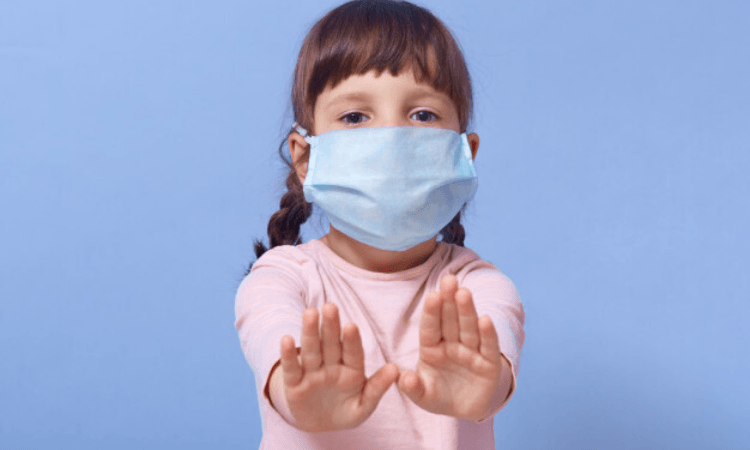
Contrary to the previous findings which stressed that children are not a major source of Covid-19 transmission, a new study has now claimed that young kids can spread coronavirus as much as older children and adults.

The research, published in the journal JAMA Pediatrics, discovered that children younger than five years with mild to moderate Covid-19 have much higher levels of genetic material for the virus in the nose compared to older children and adults.

“We found that children under five with Covid-19 have a higher viral load than older children and adults, which may suggest greater transmission, as we see with a respiratory syncytial virus, also known as RSV,” said study lead author Taylor Heald-Sargent from the Northwestern University Feinberg School of Medicine.

For the results, the research team analyzed 145 cases of mild to moderate Covid-19 illness within the first week of symptom onset.

They compared the viral load in three age groups – children younger than 5 years, children 5-17 years, and adults 18-65 years.

According to the researchers, the current findings point to the possibility that the youngest children transmit the virus as much as other age groups.

The ability of younger children to spread Covid-19 may have been under-recognized given the rapid and sustained closure of schools and daycare during the pandemic.

“This has important public health implications, especially during discussions on the safety of reopening schools and daycare,” Heald-Sargent said.

“Our study was not designed to prove that younger children spread Covid-19 as much as adults, but it is a possibility,” Heald-Sargent added.

“We need to take that into account in efforts to reduce transmission as we continue to learn more about this virus,” the study authors wrote.

Recently, a study from McMaster University in Canada, revealed that especially below 10 years, are not a major source of transmission of Covid-19.

Another study published earlier this month in the journal Pediatrics stated that children infrequently transmit Covid-19 to each other or to adults and schools can and should reopen in the fall while adhering to social distancing guidelines.

NASA Perseverance Mars rover in standby mode, but healthy

0

NASA has confirmed that it’s Mars 2020 Perseverance rover is healthy and on its way to the Red Planet even after entering into a standby mode due to a temporary issue that involved temperature on the spacecraft.

The team controlling the rover is now conducting the operations necessary to move the spacecraft back out of this standby mode, known as “safe mode”, and into normal cruise mode, NASA said late on Thursday.

When a spacecraft enters safe mode, all but essential systems are turned off until it receives new commands from mission control.

“We have received telemetry (detailed spacecraft data) down from the spacecraft and have also been able to send commands up to the spacecraft. Perseverance is healthy and on its way to Mars,” NASA Administrator Jim Bridenstine said in a tweet.

The US space agency launched the rover on Thursday on a United Launch Alliance Atlas V rocket from Space Launch Complex 41 at Cape Canaveral Air Force Station in Florida.

The spacecraft faced two issues during launch operations, according to the team controlling the Mars 2020 Perseverance rover which is based at NASA’s Jet Propulsion Laboratory in Southern California.

“First, the proximity of the spacecraft to Earth immediately after launch was saturating the ground station receivers of NASA’s Deep Space Network. This is a known issue that we have encountered on other planetary missions, including during the launch of NASA’s Curiosity rover in 2011,” Matt Wallace, the mission’s deputy project manager, said in a statement.

The Perseverance team worked through prepared mitigation strategies that included detuning the receivers and pointing the antennas slightly off-target from the spacecraft to bring the signal within an acceptable range, Wallace said.

“We are now in lock-on telemetry after taking these actions,” Wallace added.

The second issue involves the temperature on the spacecraft.

“As the spacecraft entered into Earth’s shadow, the Sun was temporarily blocked by Earth, and the outlet temperature dropped. This caused the difference between the warm inlet and cooler outlet to increase. This transient differential tripped an alarm and caused the spacecraft to transition into the standby mode known as ‘safe mode,'” Wallace said.

NASA could not create this exact environment for tests prior to launch, nor did it have flight data from Curiosity, because its trajectory had no eclipse.

“Safe mode is a stable and acceptable mode for the spacecraft, and triggering safe mode during this transitional phase is not problematic for Mars 2020,” Wallace said.

Reliance Power, JERA sign loan deed for full financing of gas-fired thermal power project in B’desh

0

Reliance Power Limited and JERA Co., Inc. through their project company, is developing a new gas-fired power generation project in Bangladesh.

The project company has now signed a loan agreement for full financing totaling $642 million with a group of banks that includes the Japan Bank for International Cooperation (JBIC).

According to a Reliance Power filing with the exchanges, this project is to build, own, and operate a 745 MW (net output: 718 MW) natural gas combined-cycle power project in Meghnaghat, Naranganj, located approximately 40 km southeast of Dhaka.

The electricity generated will be sold under a long-term power purchase agreement with the Bangladesh Power Development Board (BPDB) for a period of 22 years from the start of commercial operation. Reliance Power and JERA have taken the initiative in promoting the project.

The project company agreed on an EPC contract with Samsung C&T in July 2020. With this loan agreement, all major contracts required for the development of the Project have been completed. Going forward, Reliance Power and JERA will focus on full-scale construction and work steadily towards achieving commercial operation in 2022.

“We are delighted to achieve financing tie-up for this landmark project, which is the largest foreign direct investment and the largest IPP in Bangladesh, with a consortium of banks led by JBIC. It represents one of the largest funding tie-ups for a project in Bangladesh’s Power Sector,” said Anil D. Ambani, Chairman of Reliance Power.

“In Bangladesh, where the high growth in electricity demand is expected to accompany the steady economic development, we aim to contribute to the country’s economic expansion through our participation in power generation and infrastructure businesses, including this Project,” said Satoshi Onoda, President of JERA.

While Reliance power holds 51 percent, JERA holds the remaining 49 percent equity in the project company, Reliance Bangladesh LNG and Power Limited. As per the power purchase agreement, it will sell to Bangladesh Power Development Board for 22 years with Government Guarantee.

As per the Gas Supply Agreement, it will purchase from Titas Gas Transmission and Distribution Company (Titas) for 22 years.

The commercial operation date planned is the year 2022.

Cong preferred votes over lives of Muslim women: Smriti

Union Women and Child Development Minister Smriti Irani on Friday accused the Congress of preferring vote bank over the rights of the Muslim women in the country.

“Congress got an opportunity to rule in favor of the Muslim sisters in the 1980s. But votes were more important for the party than the lives of these women. The real battle was fought by women who approached the courts against the injustice. This day is not only meant for Muslim women but all women who want respect for their gender every day,” Irani said on the Muslim Women Rights Day.

Irani was among the three Union Ministers who addressed Muslim women across the country through videoconference on the first anniversary of the passage of The Muslim Women (Protection of Rights on Marriage) Bill, 2019 by Parliament.

The law made the practice of instant Triple Talaq a criminal offense.

She pointed out that though it is generally believed that women came forward to fight for their rights, but the country’s history and its culture and traditions had many examples where men too have been at the vanguard of such battles.

Law Minister Ravi Shankar Prasad said it was an occasion to thank Prime Minister Narendra Modi as it was due to him that the Muslim women were rid of the practice of instant divorce. He said that Modi had brought significant changes in the country since 2014.

Minister Mukhtar Abbas Naqvi said that after the passage of the law, there has been 82 percent decrease in Triple Talaq cases in the country.

The three Ministers interacted with Muslim women in Lucknow, Varanasi, Mumbai and other places, during which the latter shared their experiences vis-a-vis Triple Talaq.

SC asks why quarantine period of doctors, health workers treated as leave

0

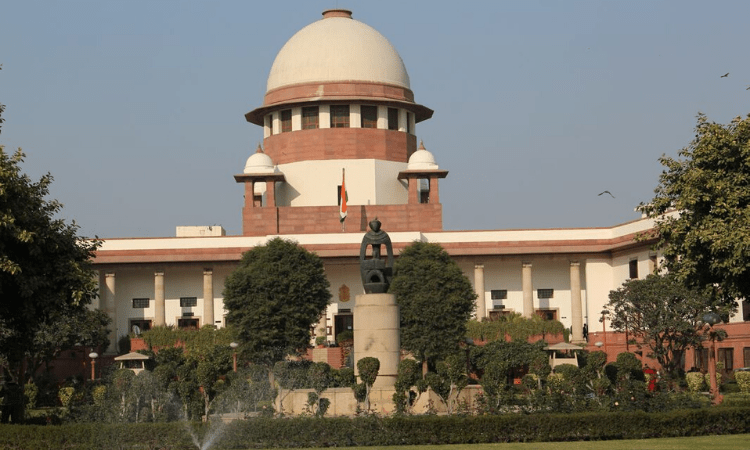
The Supreme Court on Friday said the Centre is not powerless to ensure that state governments obey its directive in connection with the release of salaries of doctors and healthcare workers, and also asked why quarantine period of doctors and health workers is treated as leave.

The Centre informed the apex court that some state governments have not paid salaries to doctors and health workers regularly despite the Centre’s directive.

A bench headed by Justice Ashok Bhushan said that the Centre is not powerless to ensure states obeyed its directive and asked the Centre’s counsel to ensure that doctors and health care workers are paid their salaries. The top court has listed the matter for further hearing on August 10.

On the non-payment of salaries, the apex court told the Centre’s counsel, “You are not helpless. You have to see to it that your order is implemented. You have powers under the DM Act. You can take steps also.”

The apex court also asked the Centre why the quarantine period for doctors and health workers is being treated as a period of leave.

Solicitor General Tushar Mehta, representing the Centre, contended before the bench that it should be treated as on duty. The bench asked Mehta to provide the necessary clarification.

The apex court said the Centre should apprise its stand on this issue on the next date of hearing.

The observations were made by the bench during the hearing of a petition seeking timely payment of salaries to frontline Covid-19 warriors and doctors. The Centre had informed the top court that it has written to states but all haven’t replied.

B’desh has world’s 4th highest death rate due to lead exposure

0

Bangladesh has the world’s fourth-highest death rate due to lead exposure with an average population blood lead level of 6.83 µg/dL, which is the 11th highest globally, according to the Institute of Health Metrics Evaluation.

Bangladesh is the fourth most-seriously hit in terms of the number of children affected as lead poisoning is affecting them on a massive and previously unknown scale in the world, says a new global report.

In Bangladesh, areas are considered to be a major source of lead exposure due to illegal recycling of used lead-acid batteries in the open-air and close to the homestead.

This poses a significant health risk for both children and adults.

The report estimates that the economic loss due to lead-attributable IQ reduction in Bangladesh is equivalent to 5.9 percent of the country’s GDP.

“Lead exposure has severe and long-lasting health and development effects on children, including lifelong learning disabilities and their capacity to earn an income when they grow up. UNICEF will be working with the concerned actors to help address dangerous metal waste and lead pollution and the toll it takes on children,” said Tomoo Hozumi, UNICEF Representative in Bangladesh.

“With few early symptoms, lead silently wreaks havoc on children’s health and development, with possibly fatal consequences,” said Henrietta Fore, UNICEF Executive Director.

Richard Fuller, President of Pure Earth said: “There is good news to hope. The good news is that lead can be recycled safely without exposing workers, their children, and their surrounding neighborhoods. Lead-contaminated sites can be remediated and restored.

“People can be educated about the dangers of lead and empowered to protect themselves and their children. The return on the investment is enormous: improved health, increased productivity, higher IQs, less violence, and brighter futures for millions of children across the planet.”

Childhood lead exposure is estimated to cost lower- and middle-income countries almost $1 trillion due to the lost economic potential of these children over their lifetime.

Knowing how widespread lead pollution is – and understanding the destruction it causes to individual lives and communities – must inspire urgent action to protect children once and for all.

The report notes that lead is a potent neurotoxin that causes irreparable harm to children’s brains.

The research also found that high concentrations of lead were found in spices in Bangladesh.

Lead chromate, which is used to enhance the color and weight of turmeric as a sign of quality, contributes to the elevated lead blood levels in children and adults alike.

Children’s exposure to lead pollution undermines a generation of potential is an analysis of childhood lead exposure undertaken by the Institute of Health Metrics Evaluation and verified with a study approved for publication in Environmental Health Perspectives.

The first of its kind, says that around 1 in 3 children – up to 800 million globally – have blood lead levels at or above 5 micrograms per deciliter, the level at which requires action. Nearly half of these children live in South Asia.

According to one study, some concentrations exceeded the national limit by up to 500 times.

Lead poisoning hampers children’s ability to fully develop and prevents them from taking the maximum advantage of the opportunities in life.

The report notes that informal and substandard recycling of the lead-acid battery is a leading contributor to lead poisoning in children living in low and middle-income countries, which have experienced a three-fold increase in the number of vehicles since 2000.

The increase in vehicle ownership, combined with the lack of vehicle battery recycling regulation and infrastructure, has resulted in up to 50 percent of lead-acid batteries being unsafely recycled in the informal economy.

Workers in dangerous and often illegal recycling operations break open battery cases, spill acid and lead dust in the soil, and smelt the recovered lead in crude, open-air furnaces that emit toxic fumes poisoning the surrounding community.

Often, the workers and the exposed community are not aware that lead is a potent neurotoxin.

Other sources of childhood lead exposure include lead-in water from the use of leaded pipes; lead from active industry, such as mining and battery recycling; lead-based paint and pigments; leaded gasoline, which has declined considerably in recent decades, but was a major historical source; lead solder in food cans; and lead in spices, cosmetics, ayurvedic medicines, toys and other consumer products.

Parents whose occupations involve working with the lead often bring contaminated dust home on their clothes, hair, hands, and shoes, thus inadvertently exposing their children to the toxic element.

While blood lead levels have declined dramatically in most high-income countries since the phase-out of leaded gasoline and most lead-based paints, blood lead levels for children in low- and middle-income countries have remained elevated and, in many cases, dangerously high even a decade after the global phase-out of leaded gasoline.

The report features case studies from five countries where lead pollution and other toxic heavy metal waste have affected children.

These are Kathgor, Bangladesh; Tbilisi, Georgia; Agbogbloshie, Ghana; Pesaran, Indonesia; and Morelos State, Mexico.

The report notes that governments in affected countries can address lead pollution and exposure among children using a coordinated and the concerted approach across monitoring and reporting systems including building capacity for blood lead level testing.

Prevention and control measures including preventing children’s exposure to high-risk sites and products that contain lead, such as certain ceramics, paints, toys, and spices.

Management, treatment, and remediation including strengthening health systems so that they are equipped to detect, monitor and treat lead exposure among children; and providing children with enhanced educational interventions and cognitive behavioral therapy to better manage the negative effects of lead exposure.

Public awareness and behavior change including creating continual public education campaigns about the dangers and sources of lead exposure with direct appeals to parents, schools, community leaders, and healthcare workers.

Legislation and policy including developing, implementing, and enforcing environmental, health and safety standards for manufacturing and recycling of lead-acid batteries and e-waste, and enforcing environmental and air-quality regulations for smelting operations.

Global and regional activities including creating global standard units of measure to verify the results of pollution intervention on public health, the environment, and local economies; building an international registry of anonymized results of blood lead level studies; and creating international standards and norms around recycling and transportation of used lead-acid batteries.


Global smartphone market declines at fastest ever rate in Q2

0

The global smartphone market slumped 24 percent year-over-year in the second quarter of this year to 271.4 million units, registering the fastest ever rate of decline, a Counterpoint Research report said on Friday.

Riding on growth in China, Huawei, even after struggling with US sanctions, surpassed Samsung to become the top player in the global smartphone market for the first time in Q2.

Samsung declined 29 percent year-over-year as its core markets including Latin America, India, Europe, and the US were struggling from the effects of the pandemic and lockdowns.

“Huawei was able to attain this feat due to a unique market scenario created because of Covid-19. China, Huawei’s largest market, is now recovering from the pandemic compared to other markets like Europe, LATAM (Latin America), and North America,” Tarun Pathak, Associate Director at Counterpoint Research, said in a statement.

“Smartphone shipments in China declined 17 percent YoY, a more modest decline than the rest of the world that declined 28 percent YoY,” Pathak said.

During the quarter, Realme was the only major brand to achieve double-digit growth – 11 percent year-over-year — as several markets in Europe and India recovered in June.

Apple iPhone shipments grew three percent YoY and revenues grew two percent YoY. The company saw sustained momentum of the iPhone 11 and a great sales start of the iPhone SE. All regions saw revenue growth.

Xiaomi declined 18 percent YoY during the quarter, although it continued to lead the Indian smartphone market in Q2 2020.

Vivo declined 18 percent YoY during the quarter, even though it has been steadily gaining market share in emerging markets, especially southeast Asia.

The V-series, with its unique positioning and price point, has helped the brand gain share in markets such as Indonesia, Vietnam, and India.

Oppo declined 20 percent YoY during the quarter, however, it performed well in the European market driven by its refreshed portfolio of A-series.

While the overall market declined, 5G continued to grow, driven by China.

“5G smartphone shipments continued their growth streak globally; growing more than 43 per cent sequentially for the quarter. The shipment penetration of 5G smartphones increased to over 11 percent of all smartphones in Q2 2020 from seven percent last quarter,” Abhilash Kumar, Research Analyst at Counterpoint Research.

“China now accounts for more than three-quarters of 5G shipments. The price of 5G phones is also trickling down with Huawei, OPPO, Vivo, Xiaomi all having 5G smartphones at mid-tier price points,” Kumar said.

Apple hits 550 million paid subscribers across Services

0

Paid subscriptions for Apple Services business reached a record high of over 500 million at the end of June, an increase of 35 million in the last quarter alone.

The company now has over 550 million paid subscriptions across the services on its platform, up 130 million from a year ago.

“With this momentum, we remain confident to reach our increased target of 600 million paid subscriptions before the end of calendar 2020,” Luca Maestri, Apple CFO, said during an earnings call on Thursday.

The wearables, home, and accessories established a new June quarter record with revenue of $6.5 billion, up 17 percent year-over-year.

Meanwhile, Mac revenue was $7.1 billion, up 22 percent over last year, and a June quarter record. The company grew double digits in each geographic segment and set all-time revenue records in Japan and the rest of Asia-Pacific as well as June quarter records in the Americas and Europe.

“iPad performance was equally impressive with revenue of $6.6 billion, up 31 percent and our highest June quarter revenue in eight years,” informed Maestri.

“As you know, last year we started selling new iPhones in late September. This year we project to supply to be available a few weeks later. We expect the rest of our product categories to have strong year-over-year performance,” Maestri added.

In addition, the Cupertino-based tech giant ended the quarter with almost $194 billion in cash plus marketable securities.

Getting back to rhythm will be tough but we have time: Sreejesh

0

It was in the first week of March that 32 players assembled for the men’s national camp at the Sports Authority of India’s (SAI) Bengaluru center. The target was to select a squad that would travel to Germany and England for India’s FIH Pro League ties against the respective national teams in the two countries.

Over the course of the next three weeks, the COVID-19 pandemic forced sports calendars to come to a grinding halt and a nation-wide lockdown was imposed on March 25. What was supposed to be a four-week camp for the players ended up becoming a nearly three-month-long stay within the campus with no scope for any regular training activities? The players were finally allowed to go home in mid-June.

“It was really different for us. We are used to being busy with activities, team meetings, and things like that,” veteran goalkeeper PR Sreejesh told IANS while describing what life was like inside the SAI center during the lockdown. “When the lockdown came around, our session timings got reduced. At best we used to get a training schedule and based on that we used to go out and do some basic training in small groups.

“So if we are not doing those activities we would be just sitting around. I used to wake up early because I read books and try to do something creative in my free time. I would do some yoga in the morning then have breakfast and then we would do our activities.

“Afternoon we would spend watching something on Netflix or anything like that. In the evening we would go for a walk in the campus. We would also do some training around that time, some running exercises or in the gym. So our training was really less compared to what we were doing earlier.”

Alight at the end of the tunnel on the hockey front for the players is that they now know the revamped schedule of the Pro League and the Tokyo Olympics, both of which have been postponed to next year. “That is what we are training for, the Olympics. We know now that which days we will be playing which teams. It is a big motivation for us to bounce back from this COVID-19 period because for four months we have not been playing any active sport. But when the schedule came out, it was good for us, it gave us something to work towards,” said Sreejesh.

The men’s team first match when the Pro League returns would be against Argentina in April 2021 and Sreejesh said that they are looking at the Asian Champions Trophy scheduled for November this year as a potential return to action. Because they now have a semblance of a schedule for tournaments as opposed to the complete obscurity of the last three months, Sreejesh said that players can now treat this period as a long injury break without the dire implications that come with it.

Sreejesh knows a thing or two about long injury breaks — an ACL injury that he sustained in May 2017 during the Sultan Azlan Shah Cup had kept him out for nearly a year.

“Back then also it took me almost six to seven months to get back to normal training,” he said. “But it was different; then we had at least a short term target. We knew when is our next tournament and I could target that to bounce back.

“But in this period you are healthy and so you have to maintain that fitness. Secondly, you don’t really know when the next tournament is happening. For us, hope is the Asian Champions Trophy which is happening in November. So all the players plan accordingly; that these four months we should focus more on our basics.

“Also, when you are at home or away from training, it is very important that you look at all the matches you played previously and find out your own mistakes. You can find out your mistakes better than anyone else. So this is a time for us to find those mistakes and strengthen our basics. Once the tournament starts then definitely we will be prepared because we won’t really be playing any of the top sides in the Asian Champions Trophy.

“It is going to be tough for everyone to get back into that rhythm for international hockey but I do believe have the time to get back to it.”

When asked if he and other senior players had an extra role to fulfill in keeping the youngsters in the camp focussed on the task at hand, Sreejesh said: “I think it is the other way around. The younger players have a hyper thing inside them. They are just starting off and they want to play matches. So they must have been waiting to get back on the field for more than us.

“We have been playing for a long time so it is way more important for us to focus than for youngsters. Experience helps us to understand what all we need to get to peak performance in time for a tournament so that we can help the younger players.”

Elite sports have made a partial comeback around the world over the course of the last three months but they have come with terms such as quarantine protocols and bio-secure bubbles. Australian cricketer David Warner had recently spoken about the extra time he may have to spend away from his family while on tours with the national team because of which he may re-evaluate his future in international cricket.

Sreejesh is aware of the challenges that come with traveling outside India in this situation but for now, he is focussing solely on getting back to the field.

“The first thing we are all eagerly waiting for is getting back to the field,” said the 33-year-old. “We are not even bothered about getting into quarantine, staying in the stadium, and all that. The first thing is to get back to playing in the tournaments. When you think about hockey, it is more complicated because it is a very physical sport.

“In Europe, it is easier for everyone to travel from one country to another and play a tournament. For us it will be tougher when we travel from India to any other country, it is a tricky situation. (But everyone knows) the health of the players is more important than anything. I think we should only be thinking about getting back to the field and not much else.”

Sergio Perez tests positive for COVID-19, to miss British GP

0

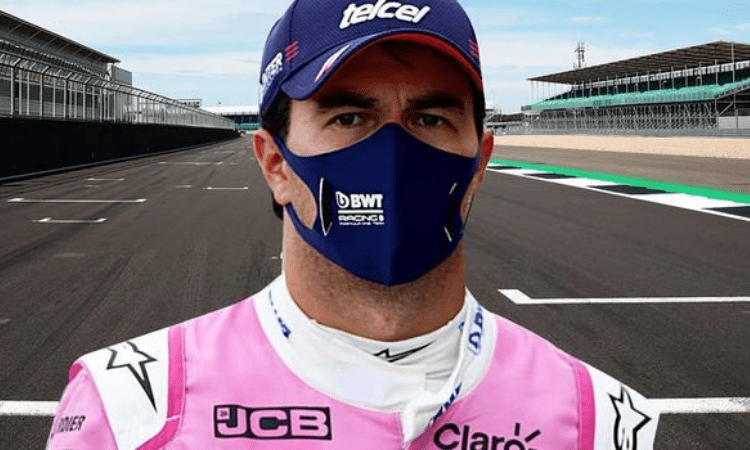
Racing Point driver Sergio Perez has tested positive for coronavirus and thus will not be able to race in this weekend’s British Grand Prix at Silverstone.

Perez was absent from the circuit on Thursday after self-isolating following what his team called an “inconclusive” test. But after being re-tested later in the day, it was confirmed he had registered positive for the virus.

“Perez has entered self-quarantine in accordance with the instructions of the relevant public health authorities, and will continue to follow the procedure mandated by those authorities,” read a statement issued by Formula 1 and the FIA.

“With the assistance of the local organizer of the British Grand Prix, local health authorities and the FIA COVID-19 delegate, a full track and trace initiative has been undertaken and all close contacts have been quarantined.

“The procedures set out by the FIA and Formula 1 have provided for swift containment of an incident that will have no wider impact on this weekend’s event,” it added.

Racing Point – who have confirmed that the Mexican driver is “physically well and in good spirits” – intend to still run two cars in this weekend’s race, with a revised driver line-up to be announced in due course.

OnePlus leads India premium smartphone market with 29.3% share

0

Global technology brand OnePlus emerged as the market leader in the Indian premium smartphone segment with a 29.3 percent market share in the June quarter, a new report said on Friday.

The OnePlus 8 device emerged as the top smartphone model in the premium segment (Rs 30,000 and above) in the second quarter (Q2) with a 19 percent market share, according to Counterpoint Research.

“As a brand, we are grateful to our Indian community for their sincere faith in our efforts. And we will continue to work closely with our community to create products that offer truly burdenless user experience with unparalleled quality,” said Vikas Agarwal, General Manager, OnePlus India.

The brand’s success was largely led by its recently launched flagship devices, OnePlus 8 Series 5G.

Launched in April, the OnePlus 8 Series 5G garnered a good response from the consumers in the Indian market.

The OnePlus 8 Pro became one of the top three best-selling smartphones in the ultra-premium segment.

According to Shilpi Jain, Research Analyst, Counterpoint, the OnePlus 8 series 5G rode on the momentum from 7 series and further strengthened its premium flagship image by bringing the latest features.

“Solid build and design, larger battery capacity, higher refresh rate with impressive Android UI (OxygenOS 10) helped it to gain share, even though it means a higher wallet share for consumers as compared to the previous OnePlus flagships,” she mentioned in the report.

Overall, the premium smartphone segment in India registered its highest ever recorded share in Q2 2020, with significant share from OnePlus as a brand.

The segment contributed 4 percent towards the total shipments for Q2 2020 as per the Counterpoint report.

TV actor Nishant Singh Malkani’s cosmic link with the film ‘Tamasha’

Telly star Nishant Singh Malkani says he relates to the character of Ved, played by Ranbir Kapoor, in the Imtiaz Ali-directorial, Tamasha, on a cosmic level.

Nishant has been busy shooting for “Guddan Tumse Na Ho Payega”, but has shared that he loves watching films whenever possible.

In fact, he feels that watching films helps him learn and better his craft. Furthermore, he revealed that “Tamasha” has impacted him a lot and has influenced his taste in cinema.

He even feels that his life is very similar to that of Ved in “Tamasha”.

“A movie that has influenced my taste in cinema has to be Imtiaz Ali sir’s ‘Tamasha’. I hold that movie very close to my heart, more so due to the striking similarities I share with the protagonist Ved. Just like Ved, I come from a smalltown family and my parents used to emphasize the importance that numbers, percentages, and academics hold in life and how they will singlehandedly ascertain the quality of life we all get to live in the future. This was certainly the biggest pressure I have lived with throughout my childhood,” he said.

“While I do not blame my parents for sharing their outlook, there is no denying the fact that there are some children who look at the world and everything around them through colored glass and their creativity overpowers the logical approach to life,” he added.

While growing up, Nishant had arguments with his parents who tried to guide him towards a more logical and practical way of life. These small quarrels used to leave him frustrated and he would find solace by watching movies and celebrating creativity and art.

“Back in school, when I did not score as well as my neighbor’s child or my friends, I felt useless and kind of a loser of sorts, which was a real bummer. I grew to despise it and got somewhat frustrated. But that is exactly what made me realize that I wasn’t built to do well in academics and something bigger and better was waiting for me out there,” said the actor.

“It is in fact a coincidence that I got a chance to act and I enjoyed the whole process of learning how to act. I practically discovered and accepted myself through this process and got in touch with my real emotions. Like Imtiaz Sir’s Ved, I realized quite late in my life that I was always meant to be an actor, and a door practically opened up for me to flourish and be out there in the world. I truly relate with the whole journey of Imtiaz Ali’s Ved on a cosmic level,” he added.

Telangana sees record single-day spike of 1,986 corona cases

0

In a steepest single-day jump so far, Telangana reported 1,986 new novel coronavirus cases and 14 deaths on Friday, officials said.

The new cases pushed the state’s total tally to 62,703 while the death toll mounted to 519.

The highest single-day jump so far was 1,924 recorded on July 8. Since then, the cases were on the decline and had stabilized around 1,500 per day.

However, for the last three days, the state has been witnessing a spike in new infections. The health officials attributed this to the increased number of tests.

The authorities conducted a record of 21,380 tests during the last 24 hours ending 8 pm on Thursday. For the first time, the state conducted over 20,000 tests.

According to a media bulletin released on Friday by Public Health and Family Welfare Director’s office, the daily testing target for the state as per the World Health Organisation (WHO) benchmark of 140 per million is 5,600 tests per day. Test results of 1,216 samples are awaited.

The officials also claim that at 0.82 percent, the fatality rate in the state is still much below the national average of 2.20 percent.

The percentage of deaths due to comorbidities is stated to be 53.87 percent.

The state also has recorded a high recovery rate of 72.3 percent as against the national average of 64 percent. As many as 816 patients recovered during the last 24 hours, taking the total recoveries to 45,388.

The total active cases stand at 16,796, including 10,632 individuals lodged in the home or institutional isolation. More than 84 percent of those under home isolation are asymptomatic.

The break-up of the positive cases shows that Greater Hyderabad, the epicenter of coronavirus infections, reported 586 cases. However, the state capital’s share in overall cases continues to decline due to a spike in other districts.

Both Rangareddy and Medchal Malkajgiri districts bordering Greater Hyderabad saw 205 and 207 new cases respectively. Sangareddy, another district that shares its border with Greater Hyderabad, reported 108 new infections.

Districts of Karimnagar and Warangal Urban saw a surge by 116 and 123 cases respectively.

HP appoints Ketan Patel to lead HP Greater India biz

0

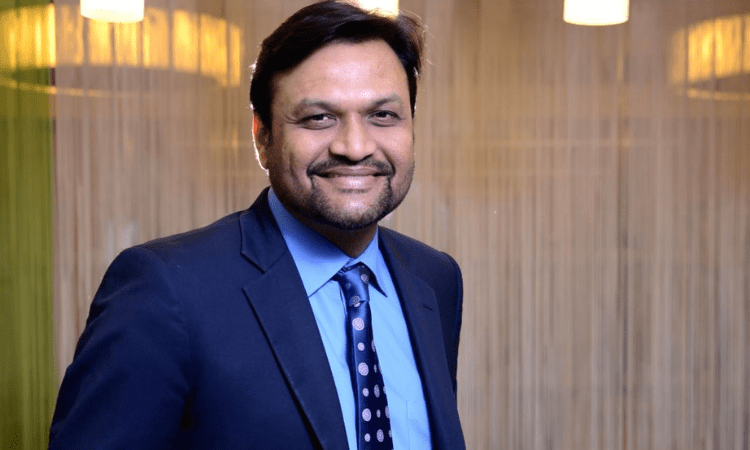
PC and printer major HP on Friday appointed Ketan Patel as the Managing Director of HP Greater India. He replaces Vinay Awasthi who is moving to a new role as head of print operations for the supply chain.

A long-time HP veteran, Patel would be responsible for the company’s business in India, Bangladesh, and Sri Lanka from August 1 and would report to Christoph Schell, HP Chief Commercial Officer, the company said in a statement.

“As one of the world’s fastest-growing economies, India is on the cusp of a digital transformation revolution, where technology will play a central role in how we work, live and play,” said Schell.

“As a proven leader with rich experience and a deep understanding of the market, I am confident that Patel will add immense value to our customer and partner ecosystem in the region.”

Patel was previously the Head of Personal Systems Category for Greater Asia, where he led the computing business that included hardware, services, and solutions across Japan, Australia, New Zealand, South East Asia, and Korea.

Patel joined HP in 2005 and has held various leadership positions across HP’s personal systems, print, and graphics solutions businesses.

From 2013 to 2017, he was Senior Director of Personal Systems at HP India.

Prior to joining HP, Patel held positions at Wipro Infotech, Wipro Peripherals, and TVS Electronics in India where he drove their printing business.