Instagram influencer trolls Katrina’s cooking skills, actress responds

Katrina Kaif was recently trolled by a social media influencer over her cooking skills. Katrina often shares pictures of delicacies that she bakes or cooks for her husband Vicky Kaushal.

Spinning the same around, Instagram influencer Freddy Birdy posted a few pictures of “easy recipes” in the story section of his Instagram to make an oblique comment on Katrina’s culinary skills.

He wrote on his pictures, “Easy recipes for @katrinakaif Chilly Cheese Toast (bread+cheese+chillies+toaster) (sic).” Taking notice of her mention in Freddy’s stories, Katrina replied to the story in question saying, “This is not easy.”

Freddy took the screenshot of Katrina’s message in his DM and again shared it in his stories, this time writing, “Why I (love, heart emojis) @katrinakaif. Also, she is as funny as she is beautiful.”

In the past, Freddy has also trolled Deepika Padukone over her film ‘Gehraiyaan’. The two had a proper social media showdown before the fire was eventually doused.

Swiggy, Zomato invest in restaurant management platform UrbanPiper

0

Restaurant management platform UrbanPiper on Monday announced it has raised $24 million led by existing investors Sequoia Capital India and Tiger Global, and new investors Swiggy and Zomato.

The platform aims to use the funds to scale its product and engineering teams and looks to expand to more than 200,000 restaurant locations globally in the next two years.

“With this investment, we will continue to widen UrbanPipera’s offerings to meet many more digital opportunities in the restaurant ecosystem, along with bolstering our platform capabilities,” said Saurabh Gupta, CEO, UrbanPiper.

UrbanPiper has restaurant chains such as McDonald’s, Pizza Hut, KFC, Subway, Cure Foods, Taco Bell, Rebel Foods, etc., among its user base.

It currently processes over 18 percent of all online food orders placed each month in India, and has achieved 10 times growth over the past two years, the company said in a statement.

Other investors also participated in the round, including Pankaj Chaddah (Shyft), Ankit Nagori (Curefoods), Saahil Goel, Vishesh Khurana (Shiprocket), Khadim Bhatti, and Vara Kumar (Whatfix), among others.

The restaurant management platform is live in more than 27,000 restaurant locations across eight countries.

Through UrbanPiper, restaurants can integrate aggregators onto a single dashboard and connect it with their points of sale resulting in a 70 percent decrease in an order failure.

It currently processes 14 million orders per month, which equates to approximately US $750 million of estimated order value annually.

“UrbanPiper is one of our key partners enabling us to seamlessly engage with restaurants and scale faster through their point-of-sale solutions,” said Sriharsha Majety, CEO, of Swiggy.

“Sequoia Capital India is excited to deepen the partnership with the UrbanPiper team as they build further on their mission to empower restaurants globally, and welcome Zomato and Swiggy to this partnership,” added Shraeyansh Thakur, Principal, Sequoia India.

UrbanPiper plans to increase its headcount in the country to more than 250 in the next year.

IPL 2022: Why Dinesh Karthik has set himself a short-term and a long-term goal?

0

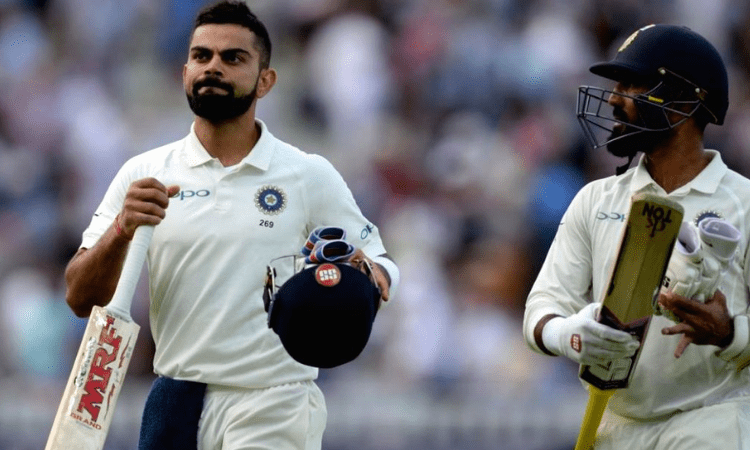
Royal Challengers Bangalore (RCB) wicketkeeper-batter Dinesh Karthik has said that he has set himself two goals this season — that of filling the void left by South African great AB de Villiers and, in the long-term, reclaim his place in the India team for the 2022 ICC T20 World Cup in Australia.

In a candid talk with former RCB skipper Virat Kohli on RCB Bold Diaries, Karthik added that his dream was to help India “cross that line” of winning the multi-nation tournament, which has eluded the country for a long time now.

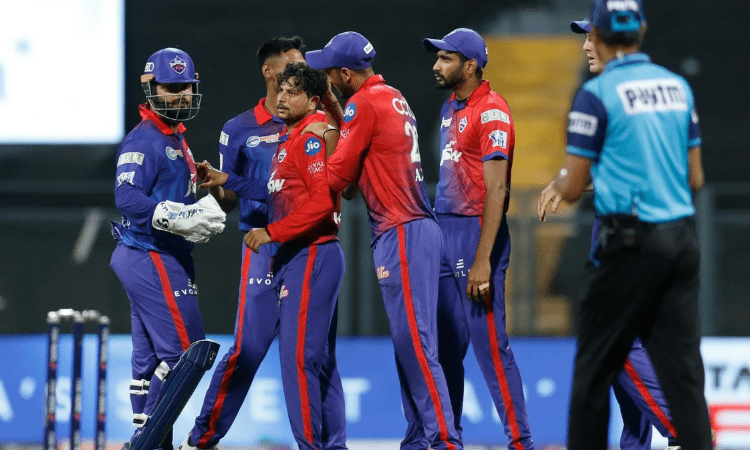
Karthik has been in sublimAe form in IPL 2022 and his batting prowess is one of the reasons behind RCB’s charge in this year’s tournament, the latest being his unbeaten 66 against Delhi Capitals where he hammered the rival bowlers for five fours and an equal number of maximums in just 34 deliveries.

That superlative knock saw RCB win at the Wankhede by 16 runs on April 16. Karthik came at a time when RCB was wobbling at 92/5.

Speaking about his goals, Karthik said, “There is a small-term goal and there’s a bigger vision as well. The small-term goal is to obviously do very well for RCB. I think credit to the RCB backroom staff. The day I got picked, Sanjay (Bangar) Bhai called me and said ‘DK you’ll be playing the finisher’s role’. We have lost out on AB; we can’t replace him with anybody half as good. We need 2-3 players to do that role’. He is that good. Then I took it upon myself to figure out that ‘okay, this is what I want to do’.”

Karthik said that his bigger vision was to play the T20 World Cup and make the country proud.

“The bigger vision is that I want to play for the country. I know there is a World Cup around the corner. I want to be part of that World Cup desperately and help India cross that line. It’s been a long time since India won a multi-nation tournament. I want to be that person who is helping India do that. For that, you need to be aware of so many things, try and be that player who people think ‘hey this guy is doing something special,” he said.

“Every day I practice with that intent in my mind. Credit to my coach who has put me through so many drills to make sure I get the best out of myself. As you grow older, it’s important to stay fit. I have tried my best to do it. I am so happy contributing to RCB. This is my second time with RCB and I wanted to do something special,” added the 36-year-old Karthik.

Delhi Capitals under quarantine following Covid scare; cancel travel to Pune: Reports

0

IPL 2020 runners-up Delhi Capitals had to cancel their scheduled travel to Pune ahead of their match against Punjab Kings on Wednesday due to a Covid-19 outbreak scare in their camp, says a report in Cricbuzz.

The report also said that the whole team is under quarantine with tests to take place on Monday as well as Tuesday after an unnamed player tested positive for Covid-19 on Rapid Antigen Test (RAT) and would undergo an RT-PCR test to confirm the result.

Delhi have been staying at The Taj Mahal Palace Hotel in Mumbai for playing in IPL 2022.

“They will be quarantined in their rooms with door-to-door Covid-19 tests scheduled for today and tomorrow. It is understood that another player has now tested positive on the Rapid Antigen Test and will undergo further RT-PCR test to confirm the result,” said the report.

Previously on Friday, the Board of Control for Cricket in India (BCCI) said that Delhi’s physiotherapist Patrick Farhart had tested positive for Covid-19 and was under isolation. “Delhi Capitals physio Patrick Farhart has been tested positive for COVID-19. He is being closely monitored by the DC Medical Team at the moment,” stated the release.

With another Covid-19 scare in the Delhi camp, the report said that the team’s next course of action is being discussed with the BCCI, especially with their match against Punjab scheduled for Wednesday at MCA Stadium.

In the points table, the Rishabh Pant-led side is placed at eighth place with four points from five matches and lost their last match to Royal Challengers Bangalore (RCB) by 16 runs at Wankhede Stadium on Saturday.

Pressure is at its highest now on Mumbai Indians, concedes Zaheer Khan

0

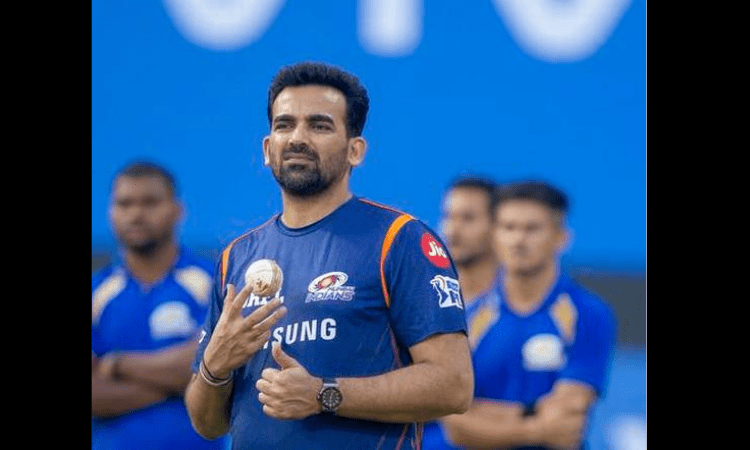
Mumbai Indians’ director of cricket Zaheer Khan has said that pressure on the five-time IPL champions is “at its highest” after a string of defeats, adding that the players will have to show the hunger to fight in order to bounce back in the tournament.

The Rohit Sharma-led Mumbai Indians are the only side in IPL 2022 who are yet to open their account on the points table after losing all their six matches so far. They are at the bottom of the 10-team table, which is led by newbies Gujarat Titans with five wins from six matches.

“This is a team sport so we have to stick together, have to find ways of coming together, and then become a force. Each season has its own challenges and the pressure is at its highest so we have to show that kind of character, that fight, and determination. You have to take the disappointing moments in your stride, that’s what cricket teaches you,” said Zaheer in his mid-season review.

The former India pace bowler indicated that Dewald Brevis and Tilak Varma had been the bright spots of the team so far.

“The partnership of the young guns — going out there and creating scenarios where they put bowlers under pressure — is something we look for, the spark that we talk about.” He also said that it was important now to back the team.

“The guys are keen on turning things around and we just have to back them. Not every day will be your day – but it’s about how you take it, what you learn from it and how you adapt. I have seen the disappointed faces but also the determined ones. It’s about how we come out of this, the kind of character we show is what I’m looking forward to,” he said.

He also stressed the essence of maintaining a much-needed balance and keeping in mind the long-term vision.

“Irrespective of wins and losses and how the season is going, we also have a long-term vision. So we keep the right kind of balance throughout the year,” added Zaheer.

This was the day that changed the landscape of Indian cricket: CSK reminisce IPL’s 14-year journey

0

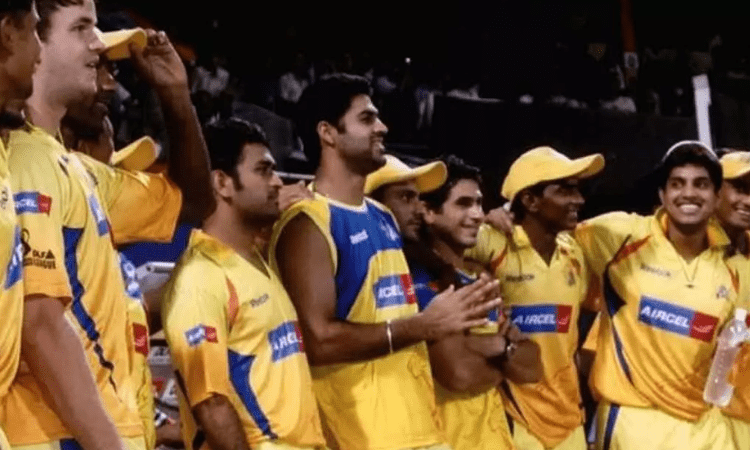
Four-time Indian Premier League champions Chennai Super Kings (CSK) have reminisced the lucrative league’s journey, which completed a memorable 14 years on Monday.

This was the day in 2008 that “changed the landscape of Indian cricket forever”, wrote CSK on their website. “It was a day when the first ball of the IPL was bowled, and from then on, the IPL has been at the forefront of Indian cricket and has grown by leaps and bounds with the passage of time.”

Several CSK cricketers, who have been part of the journey, said on Monday that the tournament had “done wonders for Indian cricket”, adding that the financial model set by the league was among the best in the world.

Vidyut Sivaramakrishnan, who was a part of the inaugural edition of the IPL for the CSK, told the website, “I don’t think there would have been a (Jasprit) Bumrah or a (Hardik) Pandya if not for the IPL. It would have taken 3-4 years extra for them to play for the country. The IPL has done wonders for Indian cricket. It is financially the best, and it is a festival time. It is the best compared to any other franchise league in the world.”

Recollecting an interesting anecdote about how the current CSK chief coach Stephen Fleming was always a couple of steps ahead in reading the game, and how the New Zealander helped him counter the legendary Australian pace bowler Glenn McGrath in 2008, Sivaramakrishnan said, “Fleming was a player at that time. I opened with Fleming as (Matthew) Hayden and (Michael) Hussey had gone to play The Ashes.

“In the first game, I got a 57, and in the 18th over, McGrath bowled short and I got out. It was a tired shot. But you won’t believe it, a few games got over, and again we were supposed to play the Delhi Daredevils in Delhi. Fleming called me and said ‘I am going to throw full toss balls, and I want you to come onto the front foot and pull it.

“And, he made me play 100 shots. After that, Fleming came and told me that McGrath is definitely going to bowl the first two balls short to you, and if you play the way you played here, I am sure you will get two boundaries. You won’t believe it, Fleming was such an unbelievable tactician, and the same thing happened. Fleming, one of the best leaders in the world was spending time with an unknown guy like me. It speaks volumes about the person he was,” added Sivaramakrishnan.

Palani Amarnath, who too featured in the inaugural edition of the IPL for CSK, said he learned a lot as a youngster from legends like Muttiah Muralitharan and Makhaya Ntini.

“Off the field Ntini and Muralitharan were fun. One day in South Africa during training, I and Ntini ran from the ground to the hotel. That was a memorable moment for me. I remember the game when Hussey scored the century. The previous evening at the hotel during dinner, Hussey and (New Zealander) Jacob Oram, in a light-hearted manner, told me ‘you’re playing tomorrow mate, against Yuvraj Singh!’. That built some pressure on me.

“So when Hussey scored the century, I realized batsmen hit like this in this level. But once we scored 240, the bowlers got confidence so it was a pressure relief for us.

“Discipline is what I learned from the senior players. They also taught me how to use the practice sessions. What I learned from them is, that once you are on the ground, your entire focus should be on practice. Everything else, including your family, is secondary. Muttiah and Ntini were intensely focused during practice,” said Amarnath.

Sivaramakrishnan felt that IPL was not all slam-bang batting, and those following textbook shots too could be succeeded. Brendon McCullum scored a blistering unbeaten 158 for KKR in the opening game of the IPL, while Hussey’s century the next day for CSK against Punjab Kings was all about timing.

Recollecting the two knocks, Sivaramakrishnan said, “I watched Hussey’s century against Punjab as a spectator. The way he played, that knock taught us that by playing good conventional cricket you can get a lot of runs in T20 cricket. McCullum, the previous day had scored a blazing century, but when we played the next day against Punjab, that knock from Hussey showed us that if you play proper cricketing shots, you can achieve a lot. That knock was a lesson for us,” said Sivaramakrishnan.

Arun Karthik, who played 17 IPL matches between 2010 and 2013, said that the fan base of cricket can be split into the pre-and-post-IPL phases.

“We didn’t think the IPL would become the brand it is now. We thought it would be a bigger version of the Ranji Trophy or Syed Mushtaq Ali Trophy. But it was much bigger than what we imagined.

“We can split the cricket fan base as before IPL and after IPL. Before IPL, we were all waiting to see India playing Pakistan or India versus Australia. We were eager to watch those matches. But post-IPL, the fan base for each franchise has grown tremendously, and because of this a healthy rivalry between franchises has developed,” said Karthik.

Chelsea vs Liverpool in FA Cup final; Arsenal, Tottenham give Man Utd top-four hopes

0

Chelsea will play Liverpool in the FA Cup final after a deserved 2-0 win against Crystal Palace on Sunday night.

Ruben Loftus-Cheek’s impressive 65th-minute shot, which took a slight deflection on its way to goal, and Mason Mount’s effort following a pass from Timo Werner with 15 minutes left to play, were a fair reward for Thomas Tuchel’s side against a rival that tried to soak up the pressure to play on the break.

Liverpool booked their place with a 3-2 win against Manchester City, who paid for first-half mistakes on Saturday afternoon.

In the Premier League, Tottenham missed a chance to strengthen their grip on fourth place when Leandro Trossard’s last-minute goal condemned them to a 1-0 defeat at home to Brighton, who had last weekend won away to Arsenal.

Arsenal slipped to sixth in the table after Jan Bednarek’s 44th-minute goal and a series of excellent saves from Fraser Forster condemned them to a 1-0 defeat away to Southampton.

Manchester United leapfrogged Arsenal thanks to Cristiano Ronaldo’s hat-trick in a 3-2 win at home to bottom side Norwich City, Xinhua reports. Ronaldo opened the scoring in the seventh minute and doubled his side’s advantage just after the half-hour, but United still lacked cohesion and Kieran Dowell and Teemu Pukki drew Norwich level before Ronaldo struck a 76th-minute free-kick through their defensive wall.

Burnley’s first game since Sean Dyche’s surprise sacking on Friday ended in a 1-1 draw away to West Ham, which does little to help their battle against relegation.

Wout Weghorst’s second goal since joining in January put Burnley in front, and it should have been 2-0, only for Maxwell Cornet to miss the chance to double the lead from the penalty spot.

Tomas Soucek leveled for West Ham in the 74th minute and the home side would have gone on to claim all three points but for some excellent saves from Burnley keeper, Nick Pope.

The game will also be remembered for a horrible ankle injury suffered by Burnley midfielder Ashley Westwood, which saw the game stopped for several minutes before the break.

Bruno Guimaraes’ 95th-minute header sealed Newcastle’s fightback after conceding an Ademola Lookman opener at home to Leicester City.

Guimaraes had leveled the score from close range in the 30th minute against a rival that rotated their side considerably after Thursday’s UEFA Conference League match.

Pontus Jansson’s 95th-minute winner gave Brentford a 2-1 win at Vicarage Road that secures their top-flight future but is a hammer blow to Watford, who have lost their last 10 home matches.

Christian Norgaard put Brentford ahead in the 15th minute, and although Emilio Bonaventura equalized 10 minutes into the second half, Jansson decided an entertaining game for the visitors.

Four overseas players’ rule prevented me from playing many more entertaining knocks: GT’s Miller

0

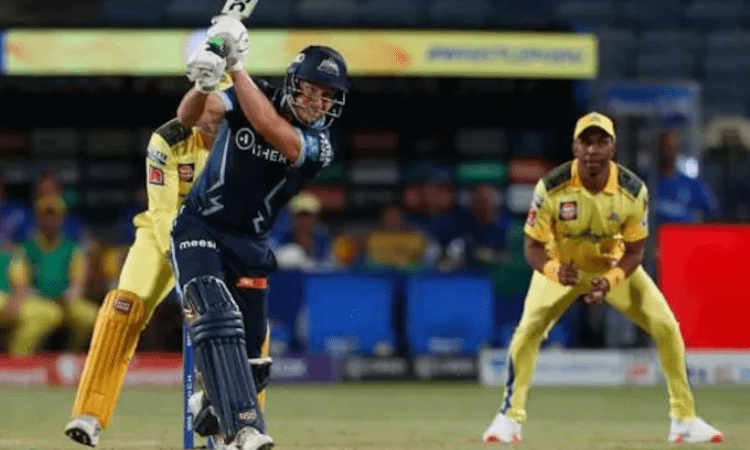
Gujarat Titans’ hero on Sunday night, South Africa’s David Miller, has said that the Indian Premier League’s rule capping the number of overseas players to just four in a match was one of the reasons why he was not able to play some more entertaining innings, adding that his below-par batting average in the lucrative league could also be attributed to that.

The 32-year-old Miller smashed an unbeaten 94 off just 51 deliveries in the chase as the Hardik Pandya-led Titans completed a thrilling win, chasing down Chennai Super Kings’ 169 with just one ball remaining at the MCA ground on Sunday. Miller was adjudged ‘Player of the match.

Asked for the reason behind the dip in his scoring rate from 2016 to 2021 and then the resurgence in 2022, Miller, attributed it to team dynamics. The South African spent more time on the bench in those six years than in the playing XI. But coming into the Titans’ setup, he was assured that he would be a regular starter.

Miller was also averaging 22.6 at a strike rate of less than 120 in the IPL from 2016 to 2021.

“The last two, three, four years, I’ve been playing really, really nice cricket. I’ve been feeling positive and I’ve been scoring really nicely — back at home, overseas and so on,” Miller, who has played 143 ODIs and 95 T20Is, averaging 40.73 and 31.89 respectively in the two formats, said after the game.

“Unfortunately, the last four to five years I haven’t really played as much IPL cricket as I would have liked to. The nature of the tournament is that there are only four overseas (players in the XI), and you know, overseas players are always going to miss out. And I’ve sort of found myself in between a place where I’ve been in and out, in and out — of Kings XI and then Rajasthan (Royals). I played some decent games there but I just felt like I couldn’t really get going.

“It’s been really, really encouraging to be a part of the Gujarat Titans and just know that I’m 100 percent backed. We’ve had a really nice environment, really enjoyed each others’ success. I think that goes a long way to doing well. But, more importantly, (it’s) been really nice to actually play every game.”

Dispatching Kuldeep towards the short boundary at Wankhede was my game plan: RCB’s Maxwell

0

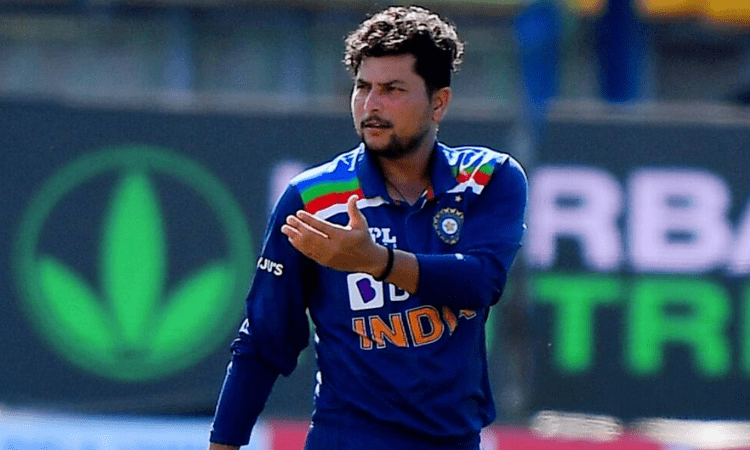
Australian limited-overs specialist Glenn Maxwell has revealed that he employed a very different strategy to counter Delhi Capitals’ Kuldeep Yadav at the Wankhede Stadium on April 16, saying that he aimed to hit the spinner towards the short boundary and was quite successful.

Maxwell smashed 55 off just 34 balls, while later in the innings Dinesh Karthik’s unbeaten 66 did the damage as RCB scored a competitive 189/5 and then restricted DC to 173/7 to make it four wins in six for the Bengaluru outfit.

Maxwell took 23 runs off Kuldeep Yadav in an over to begin RCB’s resurgence.

“When Kuldeep came on from that end, (I decided to) just hit it to the short boundary. I thought I’ll take him on that side, and I was able to get a hold of a few,” said Maxwell.

It was Kuldeep who proved to be Maxwell’s nemesis, though, when he came back to bowl as the Australian perished in the deep.

“But when he came back on the second time, we had lost that extra wicket, and that probably had taken away that aggressive intent which led to my downfall, being a little bit in two minds. So, good knowledge for next time, just sort of stay positive,” said Maxwell.

Maxwell said that he was really happy with the way Dinesh Karthik and Shahbaz Ahmed carried forward the momentum.

“DK (Dinesh Karthik) and Shahbaz (Ahmed) at the end were so good and got us to a total which we thought on this wicket was going to be really hard to chase, and once the dew came in, it evened up the battle again,” Maxwell said.

“The way our bowlers (also) performed, that was a really special effort with the ball. I think a lot of teams in the competition would’ve probably started using excuses of the wet ball, conditions, and the short boundary against them, but the way we were able to hold our nerve, was brilliant, and a real sign that the team is growing with confidence each game,” added Maxwell.

CSK’s Rayudu becomes 10th Indian cricketer in IPL to cross 4,000 runs

0

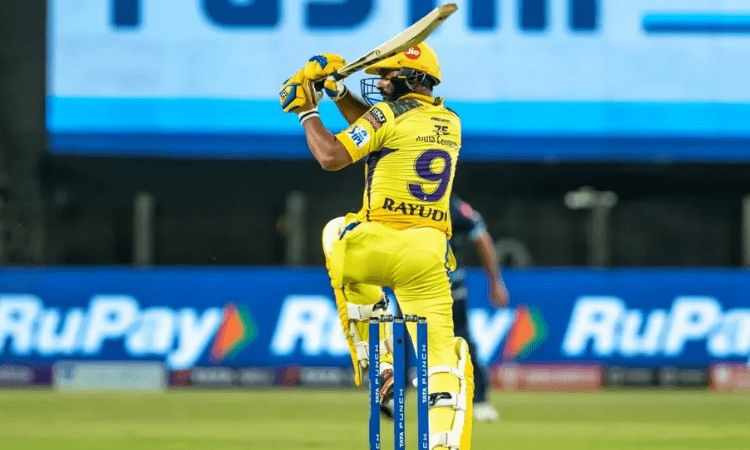
Four-time IPL champions Chennai Super Kings player Ambati Rayudu’s 46-run efforts against the Gujarat Titans might have gone in vain at the MCA Stadium here on Sunday night, but the right-hand batter managed to cross the magical figure of 4,000 IPL runs in the thrilling match.

The 36-year-old Rayudu became the 10th Indian batter overall to achieve the feat in the IPL.

Rayudu, who has played 55 ODIs and averages a commendable 47.05, was picked up by the Super Kings in 2018 and was once again picked by the team ahead of IPL 2022. He has scored 1,628 runs for the Super Kings at a strike rate of 127.88.

Rayudu scored his 46 off 31 balls in a losing cause.

Two other Super Kings who have managed the feat are Suresh Raina (5529) and former skipper Mahendra Singh Dhoni.

On Sunday, a fighting unbeaten knock by David Miller (94 off 51) and Rashid Khan’s late blitz powered Gujarat Titans to a memorable three-wicket win over CSK. With this win, Gujarat climbed to the top of the table with 10 points in six matches, while CSK slumped to their fifth loss in six outings.

Opener Ruturaj Gaikwad returned to run-scoring with an excellent half-century (73 off 48) and helped CSK post 169/5 in 20 overs. Apart from Gaikwad, Rayudu played a solid knock and both batters stitched a crucial partnership of 92 runs off 56 balls for the third wicket.

Chasing a par total, Gujarat were off to a terrible start as they lost the wickets of Shubman Gill (0), Vijay Shankar (0), and Abhinav Manohar (12) inside the powerplay, leaving them struggling at 16/3.

At 87/5 in the 13th over, Gujarat was tottering but Miller and stand-in skipper Rashid Khan had other plans.

Make Hindi the common language of the judiciary

0

The Father of the Nation, Mahatma Gandhi, in his address to the Gujarat Education Conference at Bharuch in 1917, stressed the need for a national language and firmly expressed that Hindi is the only language, which could be adopted as an ‘Official as well as National Language of India’ because it is the language spoken by a majority of the Indians. Hindi has the potential of being used as a social, economic, religious, and political communication link.

The Constitution makers had deliberated the issue of Official Language in detail at the time of framing the Constitution and it was decided that Hindi in Devanagari script shall be adopted as the official language of the Union. This is the basis of declaring Hindi as the official language of the Union under Article 343(1).

Moreover, Article 351 directs the Centre to take appropriate steps to promote and propagate the Hindi language so that it may serve as a medium of expression and connecting language for all the elements of composite culture.

A harmonious reading of language provisions, particularly Article 343, 344, 348, and Article 351 would show that the ultimate goal is the spread and development of Hindi and the gradual switchover to its use for official and legal purposes as a common language.

The last part of Article 351 says that in developing Hindi, the vocabulary shall be drawn, wherever necessary, primarily from Sanskrit and secondarily from other languages. Primacy has been given to Sanskrit because it is the oldest language in the world and other languages have sprung from Sanskrit.

It is also the fountain source of Indian culture and the world’s oldest scripture ‘Vedas’ are written in Sanskrit. Sanskrit has contributed the highest through poetry, philosophy, science, astronomy, and mathematics, to human civilization. It is also termed the Devavani i.e. language of Gods. As many western scholars have observed much that West today vaunts of was borrowed from Sanskrit. Maybe it is not a popular dialect today but it is the storehouse of immeasurable wealth that is an indispensable asset for regaining India’s status in the world. And, this is the reason why Dr. Ambedkar proposed Sanskrit as the official as well as the national language of India.

At the time of framing and adoption of the Constitution, it was envisaged that English will continue to be used for executive, judicial and legal purposes for an initial period of 15 years i.e. till 1965 only. However, it is very unfortunate that the executive legislature and judiciary have not taken appropriate steps to promote Hindi.

It is provided in the Constitution that the President may authorize the use of the Hindi language for some specific purposes. The period of 15 years was prescribed after detailed deliberation so that necessary arrangements could be made for a smooth language transition.

The Constitution makers were conscious that language transition in all the fields may not be possible by 1965. They also had the foresight to allow the use of English along with Hindi during the first 15 years. Article 351 of the Constitution speaks of the development of Hindi as the official language of the Union.

The framers of the Constitution had envisaged that Hindi with the help of other Indian Languages would evolve as a composite and connecting language, capable of being accepted by people living in non-Hindi speaking regions.

In 1963, the Official Languages Act was enacted providing for the continued use of English even after the year 1965. The Act also provided that the use of English for correspondence by the Union with the States may be discontinued only after the legislatures of all non-Hindi speaking States passed resolutions for such discontinuance and both Houses of Parliament passed similar resolutions.

However, the Executive neither declared Hindi as the national and connecting language of the country nor took appropriate steps so that all the citizens can read, write and speak Hindi and Sanskrit.

Article 348(1) of the Constitution of India provides that all proceedings in the Supreme Court and in every high court shall be in English until Parliament by law otherwise provides. Article 348 (2) provides that the Governor of the State may, with the previous consent of the President, authorize the use of Hindi language or any other language used for any official purpose of the State, in the proceedings of the high court having its principal seat in that State provided that decrees, judgments or orders passed by such high courts shall be in English.

The Official Language Act, 1963 reiterates this and provides under Section 7 that the use of Hindi or the official language of a State in addition to the English language may be authorized, with the consent of the President of India, by the Governor of the State for the purpose of judgments, decrees, etc. made by the High Court for that State.

However, no law has been made in this regard by the Parliament so far. Therefore, a foreign language “English” continues to be the language for all the proceedings of most of the High Courts as well as the Supreme Court of India.

The use of Hindi has been authorized long back in the proceedings as well in the judgments, decrees, or orders in the High Courts of the States of Rajasthan, Madhya Pradesh, Uttar Pradesh, and Bihar. If we take the example of the Allahabad High Court, people are allowed to argue in Hindi, if the judge is comfortable in the language. It is allowed there and benefits the litigants. Introducing Hindi will help the lawyers who face difficulties while speaking English.

The Hindi language is a highly emotional issue for 80 percent of citizens of India. It has a great unifying force and is a powerful instrument for unity and national integration. No foreign language should be thrust on Indian Citizens against their will since it is likely to become counterproductive. Language is not merely a vehicle of thought and expression, but for Judges at the higher level, it is an integral part of their decision-making process.

Judges have to hear and understand the submissions of both sides and apply the law to adjust equities. Presently arguments in higher courts are generally made in English and the basic literature under the Indian system is primarily based on English and American textbooks and case laws. Though, 80 percent of judges and advocates in the Supreme Court are proficient in reading, writing, and speaking Hindi. Therefore, advocates should be left free to evolve their own pattern of arguing in Hindi or English.

It is particularly important to note that in view of the national transfer policy in respect of the High Court Judges if any such Judge is compelled to deliver judgments in a foreign language with which he is not well-versed, it might become extremely difficult for him to work judicially.

On transfer from one part of the country to another, a Judge is not expected to learn a foreign language and to apply the same in delivering judgments. At any rate, no foreign language should be thrust upon Judges and they should be left free to deliver their judgments in Hindi. It is important to remember that every citizen has the right to understand the law laid down finally by the apex court and at present one should appreciate that such a language is only Hindi.

The use of the Hindi language also facilitates the movement of lawyers from high courts to apex courts since they are not confronted with linguistic problems and Hindi remains the language at both levels. Any survey of the society in general or its cross-sections will clearly substantiate the above proposition which does not admit much debate, particularly in the present political, social, and economic scenario.

Japanese is allowed in Japan’s highest court, Chinese is allowed in China’s highest court, French is allowed in France’s Highest Court but it’s very unfortunate that Hindi is now allowed in the Hindustan’s Highest Court and a foreign language English has primacy over the Indian Language Hindi, which is spoken by 80 percent citizens.


New trailer of Vijay Sethupathi-starrer ‘Maa Manithan’ released

The team of director Seenu Ramasamy’s eagerly-awaited family drama, ‘Maa Manithan’, featuring actors Vijay Sethupathi and Gayathrie in the lead, has released another trailer of the film.

While the first trailer of the film gave away the fact that actor Vijay Sethupathi plays a character called Radhakrishnan and actress Gayathrie plays his wife, the second trailer shows that Radhakrishnan leads a peaceful life as an auto driver. However, Radhakrishnan looks to take up another profession in order to get more income so that his children can get a better education. The trailer does not give away the details of the new profession but shows that invariably it gets Radhakrishnan into a lot of trouble.

Interestingly, while it was earlier announced that the film would release on May 6, the second trailer does not state so and only says ‘coming soon.

It may be recalled that the film has already been cleared by the Censor Board with a clean ‘U’ certificate.

The film has been garnering attention for a lot of reasons including the fact that this is the first film for which both music director Ilaiyaraja and his son Yuvan Shankar Raja have jointly scored the music.

3 Chinese astronauts return to Earth after 6-month in space station

0

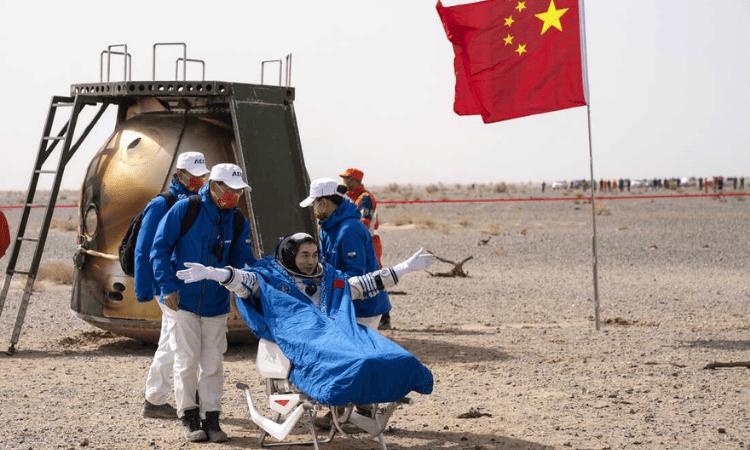
Three Chinese astronauts of the Shenzhou-13 manned spaceship have completed their six-month space station mission and returned to Earth safely on Saturday.

Shenzhou-13’s return capsule, carrying astronauts Zhai Zhigang, Wang Yaping, and Ye Guangfu, touched down at the Dongfeng landing site in north China’s Inner Mongolia Autonomous Region at 9:56 a.m. (Beijing Time), Xinhua news agency reported.

The mission marks that China has completed the verification of key technologies of its space station, and also sets a record for Chinese astronauts’ duration in orbit, said the China Manned Space Agency (CMSA).

The Shenzhou-13 manned mission was a complete success, the CMSA announced.

The return capsule separated from the spaceship’s orbiting capsule at 9:06 a.m. under the command of the Beijing Aerospace Control Center. The braking engine of the return capsule was ignited at 9:30 a.m., followed by the separation of the return capsule from the propelling capsule.

After the return capsule landed successfully, the ground search team arrived at the landing site. The medical personnel confirmed that the astronauts were in good health, after the hatch of the return capsule was opened.

The Shenzhou-13 spaceship was launched from the Jiuquan Satellite Launch Center in northwest China on October 16, 2021, and later docked with the space station core module Tianhe.

After the docking, the three astronauts entered the core module and began their six-month stay in space.

During the mission, the crew performed extravehicular activities (EVAs) twice. They conducted a number of scientific and technological experiments, including manual remote operation and module transfer supported by the robotic arm.

They verified crucial technologies for the construction and operation of the space station to support long-term stays by astronauts, the recycling and life-support system, supply of space materials, extravehicular activities and operations, and in-orbit maintenance.

The crew members also delivered two live classes from the space station and conducted a series of activities including science popularisation, the report said.

Carlos Pena returns to FC Goa as head coach

0

Indian Super League (ISL) club, FC Goa have appointed former player Carlos Pena as their new head coach, the club said in a statement on Saturday.

The 38-year-old returns to the Goan shores two years after finishing a trophy-laden spell as a player with the Club.

Speaking to FC Goa’s official website after signing the deal, Pena said, “I am delighted to be back at FC Goa as the head coach. It was a very easy decision. And whilst there were offers for me to choose a bigger role in Albacete and in other clubs in Spain, the offer to take charge of FC Goa was too good to pass on.”

“Having served as an assistant coach and head coach of youth teams over the past two seasons, I believe this is the perfect opportunity for me. Everyone knows my love for this club and the history that we share. My only focus now is to get FC Goa back to the top. I’m here to work hard and bring more success to the club and I can’t wait to get started,” he said.

FC Goa President Akshay Tandon also sounded delighted about the appointment. “We are very pleased to welcome Carlos Pena to FC Goa as our head coach. Carlos is a leader and a real student of the game. He has a wealth of knowledge and a great understanding of the club and our philosophy of football,” Tandon said.

“After 2 years with us as a player, during which he became a club icon, we believe this is the perfect time for him to return and are delighted he has done so. We will do our utmost to make sure he and his whole coaching team has the support he needs to be a huge success,” he said.

Pena, the 38-year-old from Spain who has represented Albacete, Real Valladolid, and Getafe FC among others, amassed 43 senior appearances for FC Goa as a player, helping the club establish itself as a real powerhouse due to his presence at the back.

75th Santosh Trophy: West Bengal beat Punjab 1-0 in the opener

0

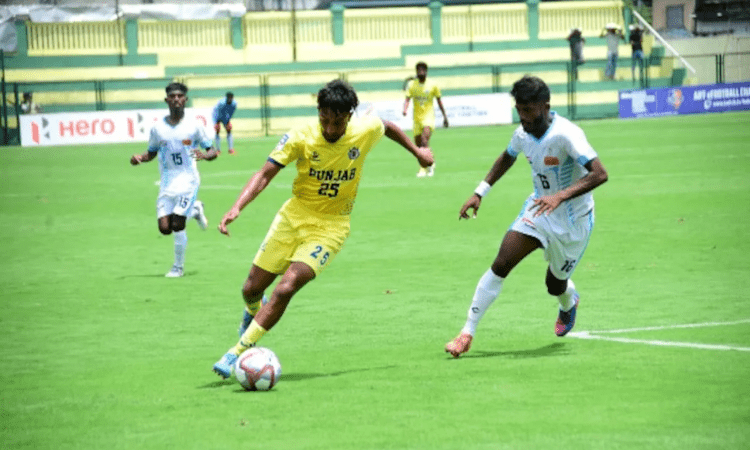
The 32-times winner West Bengal kicked off their campaign in the 75th Santosh Trophy with a narrow 1-0 victory over eight-time champions Punjab in the opening game of the national football championships here on Saturday.

Right from the start, the tournament’s two most successful teams attacked with fervor, intent on grabbing all three points to gain a strong foothold in Group A.

The chances flowed at both ends fairly quickly. In the 8th minute, Jashandeep Singh’s free-kick from the left, curved and dipped to force West Bengal goalkeeper Priyant Kumar Singh into a save. The rebound was too quick for Amarpreet Singh to capitalize as the ball rolled wide.

Punjab had not conceded a single goal through their qualifying campaign, but here against West Bengal they faced their stiffest test, conceding possession often in the first half, and goalkeeper Harpreet Singh was called into action from multiple corners. In the 20th minute, Harpreet made his first real save of the game, parrying Basu Deb Mandi’s long-range swerving shot to safety.

And yet, it was Punjab who could have gone into the break with the lead. A long ball from deep was misjudged by West Bengal captain Monotosh Chakladar in defense, and the ball fell to Tarun Slathia a few yards outside the box. Slathia collected it neatly and charged in, with only goalkeeper Priyant to beat, but dragged his shot wide. The two teams went into the break, locked goalless.

West Bengal took control of proceedings more forcefully in the second half, holding possession and stitching neater passes in midfield. They got their reward in the 61st minute, with the youngster Sajal Bag, drifting wide, beating his marker, and crossing into the box. His delivery found Shubham Bhowmick perfectly placed near the penalty spot and the forward’s first-time volley hit the inside of the far post and bounced in, leaving Harpreet Singh helpless.

Four minutes later, Bengal could’ve doubled their lead. Midfielder Tanmoy Ghosh — who was the main lynchpin for his side — collected the ball 30 yards out, looked up, and unleashed a superb shot, destined for the top corner, only for a diving Harpreet to palm it onto the crossbar and safety.

The save gave Punjab the impetus and thrust they had been lacking all game, and soon they started creating chances of their own. In the 75th minute, Rohit Sheikh’s chipped ball found Joginder Singh just outside the box, facing the goal. The U-21 player collected the ball perfectly and then unleashed a curling shot, only to be denied by a diving Priyant in the West Bengal goal.

As the minutes ticked by, both teams got more desperate, Punjab pouring forward in numbers, and West Bengal packing bodies to defend their slender lead.

With the last minute came the final bit of drama. Sheikh was again at the center of it, crossing perfectly from the left, to set up Akashdeep Singh inside the box. The forward had the goal at his mercy, the defenders and the goalkeeper beaten. Unfortunately, he couldn’t control his shot, or the pass, slicing wide and falling to the grass in despair.

West Bengal held on to ensure they had a winning start to the tournament.

Set worth Rs 7 crore being erected for Ravi Teja’s ‘Tiger Nageswara Rao’

If sources in the industry are to be believed, a massive set worth around Rs 7 crore is being constructed for the shooting of director Vamsee’s upcoming film, ‘Tiger Nageswara Rao’, featuring Ravi Teja in the lead.

Sources say production designer Avinash Kolla, who has previously worked on several superhit films like ‘Mahanati’, ‘Jersey’, ‘Evaru’ and ‘Shyam Singha Roy’, is currently overseeing the construction of a massive set depicting Stuartpuram in the seventies. The set, worth around Rs Seven crore, is being constructed near Shamshabad on five acres of land.

‘Tiger Nageswara Rao’ is a biopic on the notorious thief and is set in the seventies in a village named Stuartpuram.

Ravi Teja’s body language, diction, and getup will be completely different in the film. The role will be one that the actor has never essayed before.

Nupur Sanon and Gayathri Bharadwaj have been roped in to play the leading ladies.

The film will be made in Telugu, Tamil, Kannada, Malayalam, and Hindi.

R Madhya ISC is the cinematographer of the film for which music is being scored by GV Prakash Kumar.

Billie Jean King Cup: India beat New Zealand 2-1 to stay in Group I

0

The Indian women’s tennis team defeated New Zealand 2-1 in its fourth Billie Jean King Cup 2022 Asia/Oceania Group I tie and avoided relegation to Group II for next year, here.

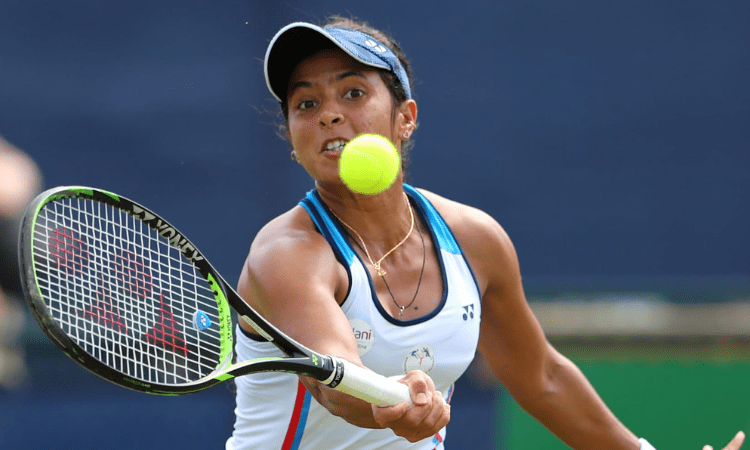
India’s No 1 player in women’s singles Ankita Raina and Rutuja Bhosale won their respective singles rubbers but Riya Bhatia and Sowjanya Bavisetti lost their doubles match on the clay courts of the MTA Tennis Academy.

The 26-year-old Bhosale ranked 477 in the world, played the opening singles match against world No 1342 Valentina Ivanov, and took the first set convincingly. The Indian faced stiff resistance in the second set but eventually won the match 6-1, 7(7)-6(3) in one hour and 20 minutes on late Friday.

Meanwhile, Ankita Raina, ranked 319, had to fight hard in the first set before cruising in the next for a 7-5, 6-3 win against Kiwi No 1 Paige Hourigan in a clash, which lasted for one hour and 34 minutes.

However, the Indian women’s doubles team of Sowjanya Bavisetti and Riya Bhatia faltered once again and lost the dead rubber to Paige Hourigan and Erin Routliffe 2-6, 0-6 in one hour and 3 minutes.

India will play their final tie against South Korea. However, with back-to-back wins against Indonesia and New Zealand, they have already secured a third or fourth finish in the pool of six teams. The Indian women’s tennis team had lost to Japan and China in its opening two matches.

Notably, the teams finishing in the top two are promoted to the play-offs while the fifth and sixth-placed teams are relegated to next year’s Group II. The teams finishing third or fourth will keep their places in next season’s Group I.

Japan and China, with four wins in as many ties, sit on top. South Korea and India follow with two wins and two losses while winless Indonesia and New Zealand are fifth and sixth, respectively, an olympics.com report said.

The Billie Jean King Cup, formerly known as the Fed Cup, is a world team championship for women’s tennis.

Last season, Sania Mirza helped India qualify for their maiden World Group play-offs with an unbeaten run in Group I. India, however, lost to Latvia 1-3 in the play-off tie and dropped back to this year’s Group I stage.

IPL 2022: Rahul smashes century in 100th IPL match as Lucknow post 199/4 against Mumbai

0

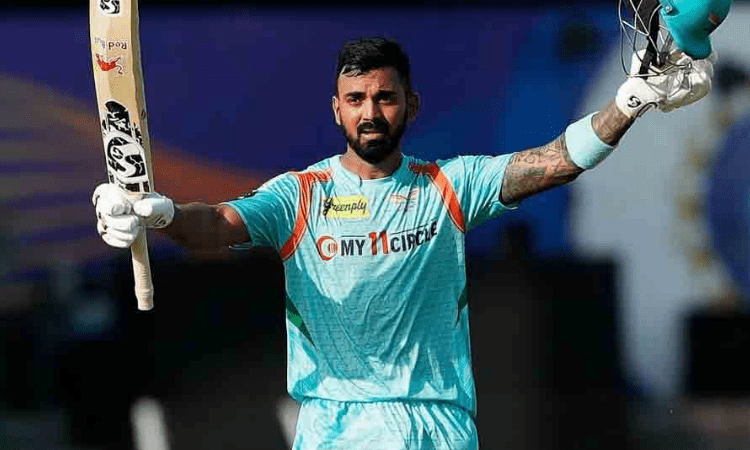
Lucknow Super Giants’ captain K.L Rahul marked his 100th IPL appearance with a swashbuckling century (103 not out) as Lucknow Super Giants posted 199/4 against Mumbai Indians at the Brabourne Stadium on Saturday.

On a hot Mumbai afternoon, Rahul put out a treat for fans with his free-flowing strokes as he carried his bat throughout the innings for registering his third IPL hundred, also his second ton in the mega event against Mumbai.

For the Rohit Sharma-led side, it was another poor day with the ball as Jaydev Unadkat took two wickets while Murugan Ashwin and Fabian Allen had one scalp each apart from multiple misfields on the field.

Rahul was cautious at the start when Quinton de Kock went after Mumbai’s bowling in the powerplay when the duo was involved in a 50-run opening stand–the third time in this season. After de Kock fell to Fabian Allen in the sixth over, Rahul stepped up to attack the bowlers but was cautious against pace spearhead Jasprit Bumrah.

Brief Scores: Lucknow Super Giants (K.L Rahul 103 not out, Manish Pandey 38; Jaydev Unadkat 2/32, Murugan Ashwin 1/33) against Mumbai Indians.

Russian troops to ban movement in Mariupol for ‘infiltration’ operation

0

Russian troops in Ukraine’s Mariupol will close all entries and exits to the city and also prohibit movement there from Monday, in order to carry out an “infiltration” operation among the city’s male population, some of whom will be mobilized, Petro Andriushchenko, Advisor to the Mariupol Mayor, posted on Telegram.

He said: “Occupiers report that on Monday they will not only finally close all entries and exits to the city for everyone, but will institute a ban for movement across all neighborhoods for a week. During this time, 100 percent of the city’s remaining male population will be “filtered”. To this end, they will all be moved to Novoazovsk.

“Some of the people are going to be mobilised to the Russian occupation corps, some will be forcibly deployed to clear the rubble, and those classified as unreliable will be isolated.”

According to Andriushchenko, the Russian troops are planning to allow only those men and women to remain in the city who will serve essential needs. The Mariupol authorities said that this is due to the inability of the Russian troops to maintain even the minimal living condition for civilians in the city, Ukrayinska Pravda reported.

Andriushchenko noted that the “infiltration” procedure is already at full speed.

Men at infiltration camps and checkpoints are first interrogated (which might include staged shooting), then their bodies are scanned and cell phones are examined. Those who do not “pass” the test will be taken to Dokuchaievsk and Donetsk.

Andriushchenko added that the conflict in Mariupol is getting worse as the Russian occupiers are deploying all available resources to storm the city, Ukrayinska Pravda reported.

The usage of TU bombers indicates the intention of the Russians to blast the Azovstal plant and Mariupol seaport.

Highlighting the fake information spread by Russian troops, he said: “To lift the spirits of the occupiers and intimidate the people of Mariupol, they announced the arrest of a NATO general in Mariupol and spread false information about the “atrocities of Azov and the Armed Forces of Ukraine.”

The humanitarian situation in Mariupol continues to be deteriorating in the absence of doctors in the city. Here medicine is also distributed chaotically and “without so much as a glimpse at a prescription or medical records,” the Mayor’s Advisor added.

Countries renewing efforts for wastewater analysis to detect Covid surge

0

A slew of countries, including Australia, South Africa, New Zealand, the US, and Canada, are increasingly turning towards analyzing sewage water, which plays an increasingly critical role in monitoring the transmission of the Covid virus and its variants within communities.

Monitoring of wastewater for the Covid virus began in late 2020 after several studies pointed out that sewer slime can accumulate SARS-CoV-2 RNA. It is because traces of SARS-CoV-2 can be isolated from what we flush down the toilet — and sometimes survive up to several days after leaving an infected person’s body.

According to New Zealand’s Institute of Environmental Science and Research, RNA from the SARS-CoV-2 virus was detected at all but one of the 120 wastewater sites from the week to April 10, NZ Herald reported.

The data showed that early in the year, just about 10 percent of the sites reported quantifiable amounts of virus. By mid-February, it shot to more than a quarter, and around mid-March, it was present in about 90 percent of them.

The latest data shows how daily cases in the region have tumbled to around 14 percent of the peak — fewer than 100 daily cases per 100,000, the report said.

Health authorities in Victoria in Australia detected the BA.4 or BA.5 sub-variant of the Omicron strain of Covid in wastewater samples taken from the Tullamarine catchment, ABC News reported. Wastewater testing in March revealed that BA.2 had become the dominant strain in Victoria.

A report from the South African Medical Research Council revealed that the analysis of wastewater samples in South Africa shows an increased incidence of Covid-19 in three provinces – Gauteng, eThekwini in KwaZulu-Natal and Bloemfontein in the Free State.

Samples from wastewater plants in Johannesburg and around Pretoria also show that Covid-19 fragments are increasingly common. The Omicron variant dominates all samples so far sequenced with the delta variant found in isolated samples, the report revealed.

“Wastewater is completely independent of whether you get tested or not – everybody poops,” Mark Servos, a professor at the University of Waterloo in Ontario, was quoted as saying to CTVNews.ca.

“Wastewater is really one of our only reliable tools to determine what’s going on in terms of community prevalence.”

As of April 2, the Canadian city of Waterloo’s weekly average for the number of N-gene copies (well-preserved in wastewater) per milliliter was about 415, representing a steady increase in Covid-19 concentration levels since mid-March.

A large driver of this growth has been the rapid spread of the Omicron BA.2 sub-variant within the province, Servos said.

“We’ve now seen that BA.2 is almost 100 percent in most of the wastewater [samples] that we’ve been studying,” Servos added.

Other provinces like Alberta and British Columbia are also seeing a rise in Covid in wastewater samples.

About a third of wastewater sampling sites across the US have shown an uptick in Covid-19 cases across the country, according to the latest data from the US Centres for Disease Control and Prevention (CDC).