

Australian watchdog sues Google over users’ personal data use

0

Australia’s anti-competition watchdog on Monday launched federal court proceedings against Google, alleging that the subsidiary of Sundar Pichai-run Alphabet misled consumers to obtain their consent to expand the scope of personal data and earn more via targeted advertising.

The conduct is likely to impact millions of Australians with Google accounts as the Search engine giant could collect and combine personal data about consumers’ internet activity, for other use by the company, including for targeted advertising.

The Australian Competition and Consumer Commission (ACCC) alleged in a statement that Google misled consumers when it failed to properly inform consumers, and did not gain their explicit informed consent in 2016.

The company then started combining personal information in consumers’ Google accounts with information about those individuals’ activities on non-Google sites that used Google technology, formerly DoubleClick technology, to display ads.

It meant that this data about users’ non-Google online activity became linked to their names and other identifying information held by Google.

Previously, this information had been kept separately from users’ Google accounts, meaning the data was not linked to an individual user, according to the ACCC.

Google was yet to address the concerns raised by the ACCC.

Google used newly combined information to improve the commercial performance of its advertising businesses, alleged the competition regulator, adding that Google also misled consumers about a related change to its privacy policy.

“We are taking this action because we consider Google misled Australian consumers about what it planned to do with large amounts of their personal information, including internet activity on websites not connected to Google,” said ACCC Chair Rod Sims.

Google significantly increased the scope of information it collected about consumers on a personally identifiable basis.

“This included potentially very sensitive and private information about their activities on third-party websites. It then used this information to serve up highly targeted advertisements without consumers’ express informed consent,” Sims added.

The use of this new combined information allowed Google to significantly increase “the value of its advertising products”, from which it generated much higher profits.

“The ACCC considers that consumers effectively pay for Google’s services with their data, so this change introduced by Google increased the “price” of Google’s services, without consumers’ knowledge

From June 28, 2016, until at least December 2018, Google account holders were prompted to click “I agree” to a pop-up notification from Google that purported to explain how it planned to combine their data, and sought the consumers’ consent for this.

The notification also stated, “More information will be available in your Google Account making it easier for you to review and control”; and “Google will use this information to make ads across the web more relevant for you.”

Before June 2016, Google only collected and used, for advertising purposes, personally identifiable information about Google account users’ activities on Google-owned services and apps like Google Search and YouTube.

The ACCC alleged that the “I agree” notification was misleading, because consumers could not have properly understood the changes Google was making nor how their data would be used, and so did not – and could not – give informed consent.

“We believe that many consumers if given an informed choice, may have refused Google permission to combine and use such a wide array of their personal information for Google’s own financial benefit,” said Sims.

In 2008, Google acquired DoubleClick, a supplier of ad-serving technology services to publishers and advertisers.


Bangladesh’s Kazi Islam handed 2-year-suspension for doping violation

0

Kazi Anik Islam, Bangladesh’s first-class cricketer who featured in the 2018 U-19 World Cup, has been handed a two-year-suspension for failing a dope test during the National Cricket League in November 2018. After failing the test, he was removed from every program of the Bangladesh Cricket Board (BCB) that he was part of.

Islam had tested positive for Methamphetamine(d-) — a substance included in ICC’s prohibited list of 2018 — during an in-competition test held in Cox Bazaar.

Subsequently in February 2019, the left-arm pacer had admitted the guilt and also accepted the provisional suspension that was meted out as per the Anti-Doping Code of the BCB.

However, given this was his first offense, the BCB in its latest press release said that it was decided that February 8, 2019 (the day Islam was provisionally suspended) be considered as the starting date of the suspension. He would be eligible to resume cricketing activities after February 7, 2021, the release added.

Islam was Bangladesh’s highest wicket-taker in the 2018 U-19 World Cup in New Zealand, scalping 10 wickets. In senior cricket, he has played four first-class matches, 26 List A games, and nine T20s picking up 15, 41, and 11 wickets respectively.

27-year-old doctor dies of COVID-19 after month-long struggle

0

After a month-long struggle, a 27-year-old doctor has succumbed to the deadly novel coronavirus at the Sir Ganga Ram Hospital (SGRH) in New Delhi.

Joginder Chaudhary had been battling the infection since June 28 after he was tested positive a day earlier.

He was a junior resident and worked on an ad hoc basis at the Delhi government-run Dr. Baba Saheb Ambedkar (BSA) Medical Hospital and College since October 2019. He worked in the flu clinic and then in its casualty ward until he developed a fever on June 23.

Chaudhary got himself tested as two of his colleagues had tested positive for COVID-19.

Four days later, he also tested positive and was admitted to the BSA hospital, where he complained about the difficulty in breathing. A day later, he was admitted to Lok Nayak Jai Prakash Hospital (LNJP).

However, his condition became critical and was later admitted to SGRH, said Rameshwar Sangha, Joginder’s uncle, who is a nursing officer at BSA.

“Joginder was admitted to BSA hospital on June 27, but the doctors there said that his condition was critical. He was shifted to LNJP hospital. On June 30, doctors at LNJP told his father that he had to be put on a ventilator as he has developed a hole in his lung. He was admitted to SGRH on July 7,” said Sangha.

The doctors at SGRH said that Joginder’s condition was already critical but started deteriorating further three days ago.

“He was intubated. His blood pressure was going down. He was also diagnosed with emphysema (a chronic obstructive pulmonary disease) and complained of extreme difficulty in breathing,” a doctor at the hospital said on the condition of anonymity.

Talking more about Joginder, Sanghwa told IANS that the doctor came from a very humble background.

“He was the only earning member of the family and belonged to a village in Neemuch district of Madhya Pradesh. Parents and two younger siblings survive him. His father, Rajinder Chaudhary, owns a small portion of land in which he does farming,” he said.

Sangha also said that while Joginder was admitted to SRGH, the family struggled a lot initially to arrange funds for his treatment as SRGH is a private hospital.

However, the contribution from Joginder’s colleagues and a few generous donations helped the family to continue his treatment.

“They raised over Rs 3 lakhs for his treatment. Later, the hospital came forward and waived off the treatment expenditure,” he added.

The hospital administration of SGRH waived off Joginder’s medical bills that amounted to over Rs 4 lakh and also assured him free treatment after they learned about the financial condition of his family.

His last rites were performed in Delhi on Sunday in his uncle and younger brother’s presence.

A role model for the community:

Sangha remembered Joginder as a role model for the entire village.

“Being the eldest one among the siblings, he took upon the responsibility of supporting his younger siblings’ education. Besides, he was the first in the village to become a doctor. The whole village is mourning this loss,” he said.

Apart from Joginder’s family and village, the medical fraternity is also saddened by losing a young doctor to the COVID-19 pandemic.

The Federation of Resident Doctors’ Association India (FORDA) put out a condolence letter for Dr. Joginder.

“FORDA deeply commiserates with the family of Late Dr Joginder. We are pained by this tragic incident and shaken to the core. There are no words to express sorrow to this loss,” the statement read.

Ayushmann Khurrana: I never take my characters back home

Ayushmann Khurrana is not a method actor and does not like to take his characters back home. The actor says he likes to explore new things without putting undue pressure on himself.

Ayushmann embarked on his Bollywood journey with offbeat roles, going on to become a poster boy of unconventional films and Bollywood’s most unconventional hit machine.

When the actor entered Hindi films with Shoojit Sircar’s “Vicky Donor” in 2012, he instantly won hearts with his charm and witty screen presence. He has been part of stories about flaws and imperfections and has delivered back-to-back hits while showing off his versatility as an actor.

Asked if his characters stay with him after work, Ayushmann said he can “switch on and switch off” with ease.

“I am not a method actor. I switch on and switch off very easily. So, I never take my characters back home,” Ayushmann told IANS.

“To evolve more as a person, I need to just move on and explore new things and learn new things. Of course, there are certain films like ‘Article 15’ or ‘AndhaDhun’. For ‘AndhaDhun’, I started taking piano lessons, so that was an evolution for me. For ‘Article 15’, I got aware of the caste system in India. So that was again, a kind of learning for me. In ‘Gulabo Sitabo’, more than the character, it was the learning experience with Mr. Amitabh Bachchan and Shoojit Sircar,” he added.

He might be touted as Bollywood’s hit machine, but he refrains from taking pressures from the expectations.

“The pressure is always there, but at the same time I enjoy whatever I’m a part of. I really enjoy the process and I don’t put undue pressure on myself. I don’t have to change myself with every film. As I’ve said earlier, I can wait for the right script for that,” said the actor, who started his journey on the small screen.

“The only pressure is churning out great content,” he added.

Ayushmann was recently seen in the Amitabh Bachchan co-starrer “Gulabo Sitabo”. The Shoojit Sircar directorial, which was scheduled to get a theatrical release, premiered on Amazon Prime Video in June as cinema halls remain shut amid the ongoing Covid-19 pandemic.

“The biggest challenge was to face the legend (Amitabh Bachchan). It was a very internal challenge, apart from that the external challenges was the heat,” said the actor while looking back at the making of the film.

Amit Sadh warns of fake Twitter account pretending to be his digital team

Actor Amit Sadh has warned of a fake Twitter account that pretends to communicate on his behalf on social media.

The account goes by the name of @Team_AmitSadh. The actor has clarified he is not associated with any such account and directly communicates with fans from his own account.

“Hey u lovely people! There has been an over pouring of love from you all and I’m truly touched. But I request u all to not make accounts like @Team_AmitSadh as it misguides people. I want to clarify it’s not associated with me. I connect with my fans directly and will always!” Amit tweeted on Saturday, from his verified account @TheAmitSadh.

The actor is generally quite active on Twitter and personal replies to messages from fans and followers.

On the work front, the actor will next be seen in a web series based on the Uri surgical strike of September 2016. Titled “Avrodh: The Siege Within”, the series casts Amit in the role of Major Tango, an on-screen version of the real-life hero who spearheaded the mission.

Over 160 healthy babies born to Covid mothers in B’luru hospital

0

More than 160 COVID free babies have been successfully delivered from coronavirus infected mothers in a city hospital, an official said on Saturday.

“We have successfully delivered more than 160 babies without coronavirus though they were born to COVID positive women,” a medical official at Vani Vilas Hospital told IANS.

To ensure that the babies are virus-free, the doctors in the hospital immediately isolated the newborns from the infected mothers in most cases.

“This is one of the reasons why children have been virus-free. We have also shifted them to the neonatal care unit,” said the official.

To continue protecting the babies from the virus, doctors are keeping them away from their mothers until they test negative.

“Babies are also being tested for COVID on the fifth and 14th day. If they are negative, the babies are being handed over to their relatives or attendees,” she said.

All these babies are doing well except a few.

A set of nine babies had tested positive but they came from mothers who lived in high COVID risk zones and did not initially test positive.

“These nine COVID positive babies were born to mothers who did not know their status initially and came from high virus risk places, resulting in the virus passing to them unknowingly,” said the hospital’s neonatologist.

As many as 138 babies born in the hospital’s trauma care center are COVID free while nine babies out of the 34 born to the mothers from the isolation center had tested positive.

According to the neonatologist, even the babies born to COVID positive women can be left with the mothers as long as they are asymptomatic and maintain proper breast hygiene.

“Babies born to asymptomatic mothers should be left with the mothers themselves as separation will lead to deprivation of breast milk, depression, and psychological issues,” she said.

She said there should be some attendee with the mother and baby to take care of hand and breast hygiene, including wearing a mask and taking other precautions.

“If all these issues are taken care of and the mother and child are asymptomatic, they can be together,” observed the doctor.

However, in the case of symptomatic mothers, she advised separation.

Tara Sutaria misses Mussoorie

Bollywood actress Tara Sutaria says she misses the hill station Mussoorie in Uttarakhand.

Tara took to Instagram and shared a picture where she can be seen posing on a stationary motorcycle. The actress wears a white jacket with jeans and sunglasses.

“I miss pretending to ride a bike but most of all, I miss Mussoorie!” she captioned the image, which currently has 511K likes on the photo-sharing website.

Tara started her career as a child actor in 2010 with the TV show “Big Bada Boom”. She was also seen in shows like “The Suite Life Of Karan and Kabir” and “Oye Jassie”.

The actress, who is also a singer, had her breakthrough in Bollywood with a starring role in “Student Of The Year 2” and was also seen in the action film “Marjaavaan”.

She now has two films coming up — “Tadap” and “Ek Villain 2”.

“Tadap” is Milan Luthria’s remake of the Telugu hit “RX 100”. She is paired opposite Suniel Shetty’s son Ahan, who makes his Bollywood debut in the film.

Mohit Suri’s “Ek Villain 2”, co-stars John Abraham, Disha Patani, and Aditya Roy Kapur.

Priyanka Gandhi temporarily shifts to Gurugram

0

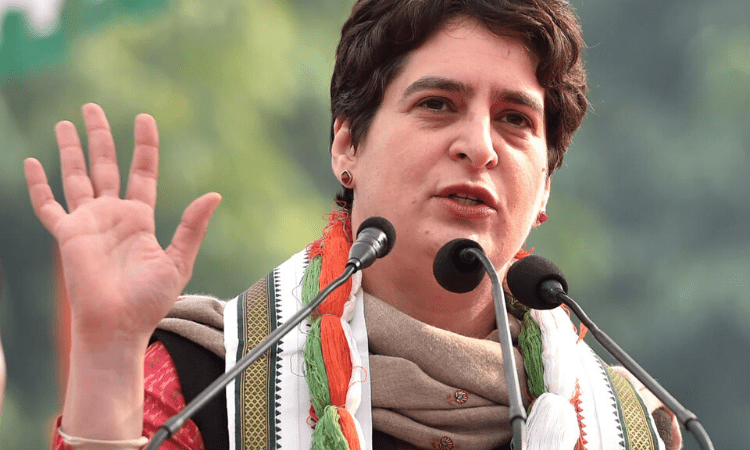
Congress General Secretary Priyanka Gandhi Vadra is likely to shift to a penthouse in Gurugram’s Aralia residential complex. She visited the penthouse and spent the night there.

Sources said that she may shift here after vacating the government bungalow in Lutyens’ Delhi.

Priyanka stayed here in her penthouse located at sector 43 on Golf Course Road on Friday night. The property is owned by her husband and businessman Robert Vadra.

Following her movement, Gurugram police escorted her convoy from the Delhi-Gurugram border to this complex. Her convoy reached the housing complex at 8.55 p.m. on Friday. She went back to Delhi on Saturday morning.

Gurugram police deployed a police team to strengthen the security around this complex.

She has vacated the official bungalow located at Lodhi Road. Now, she has chosen a house in the same area but as repair work is currently underway she may have to live with the family here in Gurugram for some time.

Sources have said that repair work may take two to three months. Hence, she may stay here for that period. Priyanka Gandhi currently has Z+ security. Her security in charge inspected in and around the complex before she arrived.

Bihar floods: NDRF teams rescue over 3,500 people

0

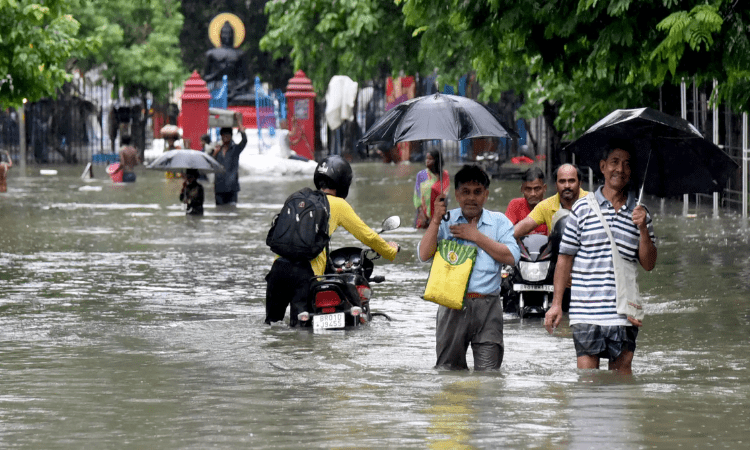
As many as 21 National Disaster Response Force (NDRF) teams have been deployed across 12 flood-affected districts in Bihar, rescuing more than 3,500 people. Following the breach in the embankments in east Champaran and Gopalganj districts, NDRF teams reached there to carry out relief and rescue operations.

The river embankment, near Bhawanipur village in east Champaran, was breached on July 23-24 night due to the surging floodwaters of the Gandak river. As soon as the embankment gave way, Bhawanipur village was inundated, affecting hundreds of people.

The NDRF personnel along with the district administration officials tackled the situation promptly. According to NDRF commandant Vijay Sinha, two 9th Battalion teams deployed in east Champaran reached the flood-affected areas and carried out rescue operations at night.

During the operation, special care was taken of children, women, and senior citizens.

Sinha said that NDRF teams carried out rescue operations on Friday in Sangrampur block of east Champaran district as well as Manjha and Sadar blocks of Gopalganj district and Panapur Diara area of Saran district.

In the Gopalganj district, the deluge followed the breach at the Saran embankment of the Gandak river. A team of NDRF led by Inspector Suresh Billung carried out rescue operations in the flood-affected villages of Gambharia Diara and Kiratpura in Baikunthpur block of Gopalganj district on Friday night and evacuated 102 stranded people.

An NDRF official said NDRF teams have rescued more than 3,500 people in Bihar’s flood-affected East Champaran, West Champaran, Gopalganj, Supaul, and Saran districts. During the operation, NDRF personnel also helped the civil medical teams to reach the flood-affected areas by boats so that the affected people could be provided medical help.

Farhan Akhtar: Getting back to work a relief and joy

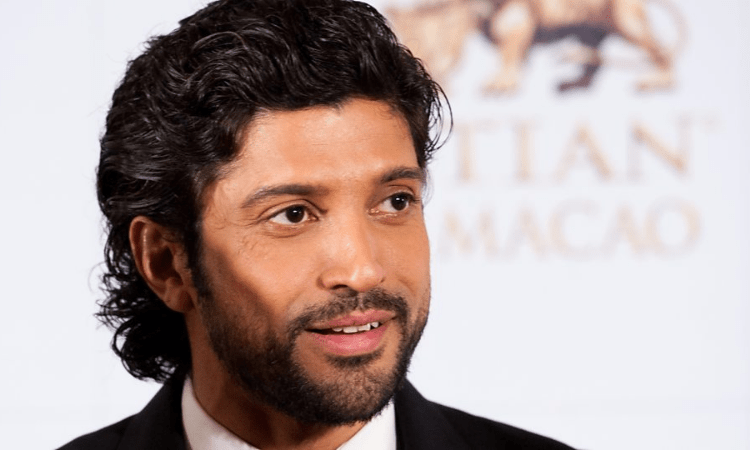
Actor-filmmaker Farhan Akhtar finds getting back to work relief and joy but he also understands the importance of being socially responsible right now.

“Getting back to work is a relief and a joy but given the times we’re in, it’s important to be socially responsible and keep the environment hygienic for the crew and cast. They work to create. We work to keep them safe. #MasksDistanceAction,” Farhan tweeted.

Amid the relaxation in lockdown, Ritesh Sidhwani and Farhan’s production house Excel Entertainment resumed shooting for their next two projects “Hello Charlie” and “Dongri To Dubai” taking all necessary precautions.

The makers shot the films adhering to government guidelines and taking additional precautions as well as ensuring the safety of cast and crew.

They shot with a unit of about 150 members and executed the schedule in accordance with the guidelines for risk protection against the contagion of Covid-19 during filming.

Ritesh posted: “We are back to doing what we love the most – making movies, with the people we love the most- our cast and crew! #MasksDistanceAction.”

The days were divided between both the films and the shoot has been completed.

Too much hand sanitiser can lead to severe hand dermatitis

0

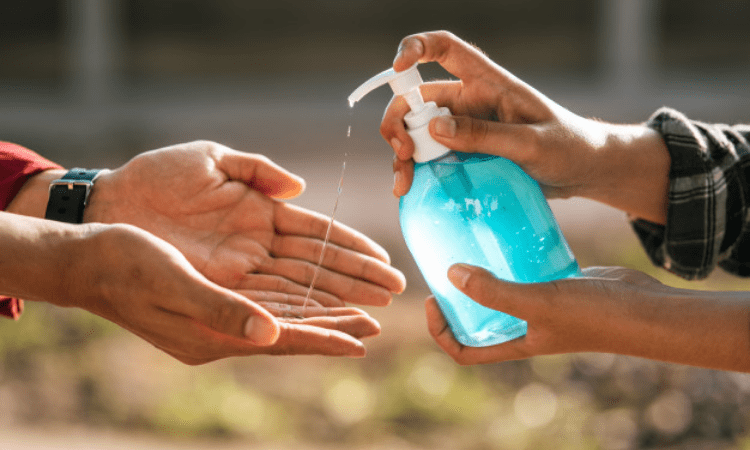
Hand sanitizers have irrefutably become the most important thing in our lives to protect ourselves during the ongoing Covid-19 pandemic; the other things include masks and social distancing. It has been a long time since hand sanitizers became mandatory; while they are effective in dealing with germs and bacteria, excessive usage can result in killing good bacteria as well.

Citing medical reports, alcohol-based sanitizers are considered effective in eliminating the spread of disease. However, there have been claims that excessive usage of the same has led to severe skin problems like hand dermatitis. People have also encountered skin issues like severe dryness, burning, and redness of the skin along with cracked or bleeding skin. However, both alcohol-free and alcohol-based sanitizers are known to provide good results as long as one adds-on these habits to save your skin from any negative effects.

Dr. B.L. Jangid, Dermatologists & Hair Transplant Surgeon, SkinQure Clinic, New Delhi, shares some pointers to be kept in mind while using hand sanitizers:

Limited usage is always the best option

Excess of everything and anything can be disastrous, so is the case of hand sanitizers. If used in a limited amount, it can be really fruitful in dealing with germs and bacteria. But if not, it can easily damage your skin, leading to the occurrence of hand dermatitis.

Unwanted chemical contamination in hand sanitizers

The presence of unwanted chemical contamination available in hand sanitizers can play a dreadful role if used excessively. The texture of skin depends from person to person, which is why the chemical ingredients present in hand sanitizers can accordingly be useful or even dreadful at times. This is why you need to take precautionary steps, avoiding to use excessive hand sanitizers.

Moisturizing creams & healing ointment: Saviours from hand dermatitis

If in case you have used hand sanitizers for a long time now, your hands may start to show symptoms of hand dermatitis. Sometimes it’s best to quit using a sanitizer until it’s absolutely necessary. As a few home remedies, including using good moisturizers along with healing ointments. This could lead to blessing your skin with the right health and texture again. You can also opt for healing moisturizers containing aquaporin at night, wearing gloves overnight to heal the cracks on your skin.

In case you’re suffering from eczema or dry skin, the use of a moisturizer is an essential post-hand sanitization to avoid any sort of major skin-based problems like hand dermatitis. Additionally, the usage of moisturizers eliminates the chance of dry skin that if present can lead to issues like eczema, dermatitis, and even psoriasis.

Soap & Water: An evergreen combination

Reportedly, washing your hands with soap and water preferred to the use of hand sanitizers. This switch can also prove fruitful in preventing allergic reactions depending upon your skin types. Thus, try using hand sanitizers only when there are no other options. Otherwise, antiseptic soap can do the trick along with wet wipes in situations where there’s no running water and soap. Simpler options are known to provide the best result for all ages.

FB, Insta will trap humans: Sci-fi pioneers knew in 1950s

0

Science fiction writers predicted in the 1950s that social networks like Facebook, Instagram, and Twitter will trap millions of people one day, in such a way that they will struggle to break-free, thus becoming perfect examples of modern-day robotic presumption.

Products, where producers and consumers are blurred, are called the “prosumer” so consumers also play a part in a product’s creation, as with social media and Augmented Reality (AR) games.

Science fiction authors like pioneer Frederik Pohl foresaw AR video games, the rise of social media, and trends of hyper-consumption in the 1950s.

“Pohl’s work highlights the ability of science fiction to provide a better understanding of possible futures and the lasting impacts of modern and emerging technologies, allowing people to see what the world may become in a way easily understood by a mass audience,” said Dr. Mike Ryder from Lancaster University Management School.

Social media users are perhaps the best example of modern-day robotic presumption, “mindlessly producing and consuming content, while social media firms sell their data and target them with ads that feedback into the cycle. Users struggle to be break-free through a fear of missing out (FOMO)”.

New research, published in the Journal of Consumer Culture highlights many parallels between the futures created by sci-fi pioneer Pohl in the 1950s and the modern world.

In the worlds imagined in Pohl’s works, advertising firms are in charge, exploiting customers for-profit and priding themselves on their ability to shape human desire, where social status and consumption are intrinsically entwined, and where characters become hyper-consumers, threatening the stability of the local area.

“Science fiction is an important tool for testing ‘what-if’ scenarios, speculating on what the future might bring. Pohl’s worlds of hyper-consumption, robot workers, and ecological disaster are even more relevant today than they were in the 1950s,” said Ryder.

In The Space Merchants (1952, with CM Kornbluth), protagonist Mitchell Courtenay is forced to spend his low wages on goods to help make his work bearable, which creates an ongoing cycle of debt.

His behavior becomes more like that of a machine, a producing-consuming robotic prosumer, unaware he is trapped in a cycle.

This pre-empted the real-world criticism of Vance Packard, who depicted a dystopia where marketers use psychological techniques to influence behavior to the point consumers do not realize they are being influenced.

“Humans become more and more like machines, such that consumption itself becomes a mechanical process, creating a dystopian world where the only freedom is the freedom not to consume, one limited to the very rich,” explained Ryder.

Take Airbnb for example, that acts as a broker for users who are both the producers and consumers of goods, paying to rent rooms, while making money through renting out their own.

Uber drivers and passengers are able to rate each other, making the consumers a sort of product, and AR video games such as Pokemon GO see players become part of the product, appearing in each other’s games and competing for the same objectives.

According to researchers, social theorists and policymakers need to take science fiction far more seriously to help prepare for the world of tomorrow.

“The challenges that arise from new technologies should be considered before they happen”.

Malayalam film industry has illegal money trail: Top film personality

There is close scrutiny after Siyad Koker, a leading film industry personality went on record to say that the Malayalam film industry’s links with the illegal sources of funding do exist.

Kokka, who is the president of the Kerala Film Distributors Association and also doubles up as a producer, on Saturday said that he is not aware of the illegal source of money is through gold smuggling or other means.

“One thing is certain, the film industry here has source to number 2 (a colloquial usage of unaccounted or illegal source of money) funding. This is more so especially when big-budgeted films are produced. This is also known to technicians and actors, who also benefit,” said Koker.

The Malayalam film industry has been shocked after news of possible links were expressed by the probe agency.

The gold smuggling case has had large scale ramifications after it first surfaced when P.S. Sarith, a former employee of the UAE Consulate here, was arrested by the Customs on July 5 for trying to facilitate the smuggling of 30 kg gold in diplomatic baggage to Thiruvananthapuram from Dubai.

Of the four arraigned as accused, three have already been arrested, while the fourth accused is Faizal Fareed is based in the UAE. The Centre has canceled his passport and he is likely to be brought here shortly.

According to the Customs and the NIA, who is probing the case Fareed is the kingpin and coordinates the smuggling activities from his base in the UAE and he has even acted in a film here.

“Their modus operandi is to befriend people in the film industry and then they move forward,” added Koker.

Ever since the gold smuggling gang was busted, reports have surfaced that four recent big-budget films have alleged links with the illegal sources of funding.

Hackers break into CarryMinati’s YouTube channel, ask for Bitcoins

0

Ajey Nagar, who is popularly known as CarryMinati on YouTube, took to his official social media handle on Saturday to inform that his official handle was hacked and he immediately needed assistance to resolve this matter from YouTube India.

“YouTubeIndia My channel Carryislive has been hacked, need immediate assistance,” Nagar said in a tweet.

Nagar usually uses his second channel, CharryisLive with over 6 million subscribers, to post gaming videos.

Two videos were streamed on his channel, asking for Bitcoin donations, in a similar way Twitter was hacked last week involving 130 high-profile users.

According to a Twitter user, the hackers streamed videos asking for Bitcoin and Ethereum. The first video was titled “Ethereum Earning Call” and the second video was titled “CHARITY STREAM: HELP ASSAM & BIHAR”.

“These days hackers are hacking famous people’s social media and out of all the damage they could do .. they are selling/asking or talking about Cryptocurrency. These hackers are probably thinking about long term investments,” a user posted.

Nagar fans held YouTube’s security responsible for the breach.

“YouTube can be hacked so easily, I m not surprised, it’s time to say bye to YouTube,” another user commented.

Recently, high-profile Twitter accounts including those of former President Barack Obama, Amazon CEO Jeff Bezos, Microsoft co-founder Bill Gates, Tesla CEO Elon Musk among others were hacked and the attackers posted tweets soliciting donations via Bitcoin.

Plastic flows into the ocean expected to triple by 2040: Research

0

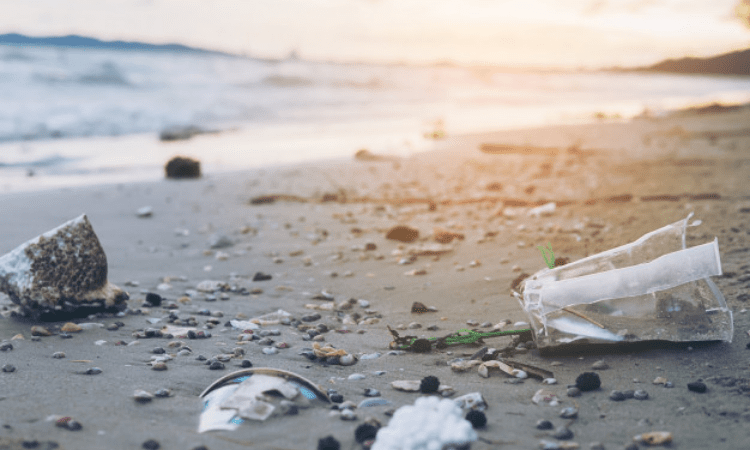
Without immediate and sustained action, the annual flow of plastic into the ocean could nearly triple by 2040, a new analysis by The Pew Charitable Trusts and SYSTEMIQ has found. The study also identified solutions that could cut this volume by more than 80 percent using available resources, if key decision-makers are willing to make system-wide changes.

The findings from the scientific analysis are captured in a report, ‘Breaking the Plastic Wave: A Comprehensive Assessment of Pathways Towards Stopping Ocean Plastic Pollution’. The research found that if no action is taken to address the projected growth in plastic production and consumption, the amount of plastic entering the ocean each year would grow from 11 million metric tons to 29 million metric tons over the next 20 years, equivalent to nearly 50 kilograms (110 pounds) of plastic on each meter of coastline worldwide.

Because plastic remains in the ocean for hundreds of years and may never truly biodegrade, the cumulative amount of plastic in the ocean by 2040 could reach 600 million tons — equivalent in weight to more than 3 million blue whales. And Covid-19 has presented additional challenges in the fight to end ocean-bound plastic pollution, as single-use plastic consumption has increased during the pandemic, according to the International Solid Waste Association.

Although progress has been made in addressing the global plastic challenge, the report finds that current commitments by government and industry will reduce the amount of plastic flowing into the ocean only by 7 percent by 2040.

“There’s no single solution to ocean plastic pollution, but through rapid and concerted action we can break the plastic wave. As this report shows, we can invest in a future of reduced waste, better health outcomes, greater job creation, and a cleaner and more resilient environment for both people and nature,” said Tom Dillon, Pew’s vice president for the environment.

The report identifies eight measures that together could reduce by 2040 about 80 percent of the plastic pollution that flows into the ocean annually, using technology and solutions available today. Among them are reducing growth in plastic production and consumption, substituting some plastics with alternatives such as paper and compostable materials, designing products and packaging for recycling, expanding waste collection rates in middle- and low-income countries, increasing recycling, and reducing plastic waste exports.

While the system change scenario reduces annual ocean plastic pollution rates by more than 80 percent, it will take an unprecedented level of activity and will still leave more than 5 million metric tons leaking into the ocean each year in 2040. Fully eliminating the flow of ocean plastic pollution will require dramatically increasing innovation and investment, with significant technological advances, new business models, and a greater emphasis on research and development.

Results indicate that the plastic crisis is solvable. It took a generation to create this challenge; this report shows we can solve it in one generation, Martin Stuchtey, SYSTEMIQ’s founder and managing partner concluded.

Covid-19 stressing you out? 8 ways you can sleep better

0

No matter who and where you are, your circadian rhythm (the basic sleep-wake cycle or body clock) is the internal process that determines your physical, mental, and behavioral changes throughout the day and night. Sleep is a critical part of this circadian rhythm and any disruption in the sleep cycle can affect your overall health.

While getting sufficient sleep every night is important, many have reported difficulty in achieving it during the pandemic. A study published in ‘Current Biology’ in June 2020 revealed that even though people working from home during the pandemic are likely to be getting more sleep time, their sleep quality is often poor and disrupted.

A more recent study in ‘Chronobiology International’ (published July 2020) observed 203 corporate professionals and 325 undergraduate and postgraduate students in India. The study revealed that disruption of daily life routine, anxiety, isolation, greater family-and work-related stress, and excessive screen time has led to poor sleep quality and excessive daytime sleepiness during the pandemic.

The US National Sleep Foundation had published a statement in its journal ‘Sleep Health’ in May 2020 underlining how Covid-19 has disrupted circadian biology by making sleep more difficult. They also issued a number of guidelines to help everyone sleep better despite the situation.

Here are some tips to help you get better sleep during the pandemic.

Stick to a routine:

A routine can bring a semblance of normalcy even in the most abnormal of times, so set a fixed time to wake up and go to sleep every day. Remember that it is important to bypass the snooze button on your alarm every morning and wind down for sleep at least an hour before bedtime.

Don’t work from your bed:

Working from home during the pandemic might make you think working from the bed is convenient, but it is not conducive to a healthy routine. Reserve the bed only for sleep, and set up a work-station somewhere in your home away from the bed. This will also help you regulate your routine.

Don’t nap:

This is not just another reason why you shouldn’t work from your bed, but also why your proper nighttime sleep might be more difficult to get. Avoid daytime naps and get rid of daytime sleepiness by being more mobile and active around the house.

Be active:

Being active during pre-COVID times might have been easier, and it might not be on the top of your priority list right now, but get in at least half an hour’s exercise every day. If going for a walk is not an option, engage in passive stretching, yoga, skipping, and other exercises at home to get better sleep.

Eat well:

Watching what (and when) you eat can help promote good sleep hygiene. Not only should you have a balanced, nutritious diet, but also avoid alcohol and caffeine consumption at least two hours before bedtime.

Avoid devices:

The blue light emitted by most digital devices can lead to sleep delay and disruption. Switch off the television and keep those smartphones away before getting into bed for the night.

Relax:

Deep breathing, yoga, meditation, listening to calming music or reading a book before bedtime is great relaxation techniques that should be adopted to get a better and undisturbed sleep.

Get light:

Get at least 10 minutes of sunlight every day by sitting next to a window or lounging in your balcony. Light and vitamin D play a huge role in setting your circadian rhythms straight, so this should help you sleep better.

Windies mull hosting part of SA series before IPL

0

Cricket West Indies (CWI) wants to host at least part of their proposed series against South Africa in early September.

The Windies’ players are expected to take part in the Indian Premier League which will be played around September 19 to November 8 window and the same has been communicated to the franchises, as per IPL Chairman Brijesh Patel who confirmed the same to IANS on Friday.

West Indies were originally slated to host the Proteas for two Tests and five T20Is in July-August before that tournament was postponed due to the coronavirus pandemic.

“We hope that South Africa will be able to come here in September for either a T20-only tour or a Test-only tour at the very least,” CWI Chief Executive Johny Grave told the Mason and Guests cricket show.

“It will be dependent on the IPL. South Africa has a number of their Test players who have IPL contracts, whereas in this current Test team we don’t have any IPL players.”

“We won’t be able to play Test cricket against South Africa during the IPL, Cricket South Africa has made that very clear to us. They’ve got a commitment to their players to allow them to go and play in the IPL,” Grave said.

“The plan as we are working on now is that the players would come home, they will have the weekend at home. Those that are in the Caribbean Premier League will head down to Trinidad on probably August 3 so it’s a quick turnaround.

“CPL finishes on September 10. We hope very much that South Africa will follow immediately after that. Whether we can get the full tour in or we’re going to have to look at a split tour between the Tests and the T20s, we don’t know.”

West Indies are currently in England for their three-Test series which marked the resumption of cricket after it was stopped due to the coronavirus pandemic.

Monsoon e-retail: Indian shoppers prioritise safety

0

Rains have spread to most parts of the country; trends reveal that monsoon sales tilt towards safety and protective products.

According to the e-commerce platform Snapdeal, the early trends of monsoon-related products sold online reflect a marginal dip in the demand for outdoor products like raincoats and umbrellas, compared to last year, but the sale of safety-related monsoon products has increased multi-fold. The sale of the bike and car covers for the monsoon is trending and two times higher than last season. Priced at Rs 300-1,500, orders for this have surged especially as many vehicles are not in regular use.

The three highest selling monsoon-linked products on the platform are insect repellent products like mosquito nets, mosquito rackets, and a range of insect repellent sprays and lotions. The sale of these products is more than 3.5X of last year and continues to grow.

Similarly, “clothes drying stands, exhaust fans, RO machines (and accessories), floor wipers are selling in increased quantities as users try and keep their homes dry and well ventilated. Temperature and humidity meters have emerged as the hot sellers this year.

“The sale of other popular products including monsoon essentials like umbrellas, raincoats, zip-lock pouches, mobile covers, and waterproof covers for laptop bags picked up in June, as many users join work again post the unlock phase,” Snapdeal shared with IANSlife.

Coming to fashion and footwear, monsoon footwear especially floater sandals have been a popular pick this season. Most raincoats sold this year have been in adult sizes as children stay indoors due to online classes.

It added: The sale of immunity-boosting products continues to be strong as the monsoon season is traditionally associated with water-borne diseases. Power banks and emergency lights were also picked up as power cuts increase in many parts of India during the season.

Room fresheners, odor-absorbing sachets, and fragrances sachets for home and wardrobe were also widely purchased. Enthusiastic gardeners also searched for monsoon veggie seeds. A majority of the monsoon-centric products were below the rupees 800 range. Umbrellas below rupees 400, raincoats below rupees 700, and bike covers below rupees 500 were most popular.

“While many buyers are avoiding visiting crowded markets, it is a win-win for our sellers and buyers. The increase in demand has led to a direct increase in volumes of our sellers, all of whom are independent third-party sellers. We are happy to be the bridge between online and offline where both buyers and sellers are able to transact from the safety of their homes and establishments,” a Snapdeal spokesperson said adding that most monsoon item orders come from Maharashtra, Arunachal Pradesh, Sikkim, West Bengal, Odisha, Uttarakhand, Karnataka, and Kerala.

‘No test, no corona’ policy is scary: Priyanka to Yogi

0

Congress general secretary Priyanka Gandhi Vadra on Saturday wrote to Uttar Pradesh chief minister Yogi Adityanath, raising the issue of rising coronavirus cases and low testing in the state. She said state government seems to have adopted ‘No test, no corona’ policy which is scary. Priyanka Gandhi said that 2,500 cases of coronavirus were reported in the state on Friday and almost all metro cities have been flooded with new cases.

Even the countryside is not being spared by the coronavirus. Priyanka Gandhi said, “It is clear that your government has adopted the policy of low testing following ‘No test no corona’ as your mantra. Now there is an explosion of corona cases in the hinterland. Until the tests are conducted in a transparent manner, the fight against the virus is incomplete and the situation may become even more frightening.”

She wrote that the condition of quarantine centers and hospitals in UP is pathetic. In many places, the situation is so bad that people are afraid of going to hospitals due to poor arrangements. This is why people are not opting for the test. The letter added, corruption is also rampant and if not curbed on time, the battle against corona will turn into a disaster.

Priyanka Gandhi wrote that the UP government had claimed that 1.5-lakh beds are available but it seems that there is a shortage of beds at only 20,000 active coronavirus patients. She advised the government to set up temporary hospitals on the lines of Mumbai and Delhi. Getting a medical facility is the fundamental right of every citizen, she said.

“The Prime Minister is an MP from Varanasi and Defence Minister Rajnath Singh from Lucknow, and many other Union ministers are from Uttar Pradesh. Why can’t temporary hospitals be opened in Varanasi, Lucknow, and Agra? Sir, the situation is getting serious. I urge you that the battle against coronavirus cannot be fought alone,” Priyanka Gandhi said.

She wrote that the central facilities set up in Delhi can also be used for the border districts. The hospitals there are still not used to full capacity. Home quarantine is the right step, but it should not be implemented halfway.

“Let me once again assure you that we have the greatest feeling in protecting the health and life of the people of Uttar Pradesh. In this war against the pandemic, the Congress party stands with the people of UP and is ready to give full support to your government as well,” Priyanka Gandhi added.

NASA’s Roman Space Telescope ground system clears major review

0

NASA’s Nancy Grace Roman Space Telescope’s ground system, which will make data from the spacecraft available to scientists and the public, has just successfully completed its preliminary design review.

The plan for science operations has met all of the design, schedule, and budget requirements, and will now proceed to the next phase: building the newly designed data system, NASA said on Friday.

“This is an exciting milestone for the mission,” said Ken Carpenter, the Roman ground system project scientist at NASA’s Goddard Space Flight Center in Greenbelt, Maryland.

“We are on track to complete the data system in time for launch, and we look forward to the ground-breaking science it will enable.”

When it launches in 2025, the Roman Space Telescope will create enormous panoramic pictures of space in unprecedented detail.

The mission’s wide field of view will enable scientists to conduct sweeping cosmic surveys, yielding a wealth of new information about the universe.

Roman will have the same resolution as the Hubble Space Telescope but capture a field of view nearly 100 times larger.

Scientists expect the spacecraft to collect more data than any of NASA’s other astrophysics missions.

Hubble has gathered 172 terabytes of data since its launch in 1990.

Roman will gather data about 500 times faster than Hubble, adding up to 20,000 terabytes (20 petabytes) over the course of its five-year primary mission.

If this data were printed, the stack of papers would tower 530 kilometers high after a single day.

By the end of Roman’s primary mission, the stack would extend well beyond the Moon.

Such a vast volume of information will require NASA to rely on new processing and archival techniques.

Scientists will access and analyze Roman’s data using Cloud-based remote services and more sophisticated tools than those used by previous missions.

All of Roman’s data will be publicly available within days of the observations — a first for a NASA astrophysics flagship mission, the US space agency said.

This is significant because Roman’s colossal images will often contain far more than the primary target of observation.

Since scientists everywhere will have rapid access to the data, they will be able to quickly discover short-lived phenomena, such as supernova explosions.

Detecting these phenomena quickly will allow other telescopes to perform follow-up observations, NASA said.