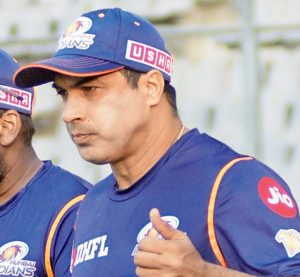

Cricket coach Robin Singh From Trinidad to India and everywhere else

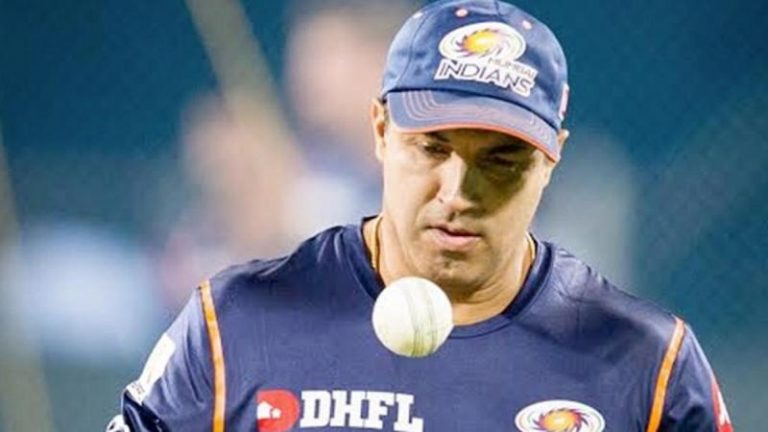
Crick­et coach Robin Singh has moved from Trinidad to In­dia and just about every­where else. And what a jour­ney this has been for the well-known crick­eter-now-coach who was born in Princes Town, and who has been trav­el­ling since de­part­ing these shore many years ago. Af­ter leav­ing Trinidad, he end­ed up stay­ing in In­dia and mak­ing a name for him­self in the crick­et­ing world, rep­re­sent­ing that coun­try at the high­est lev­el both as a play­er and coach.

That he rep­re­sent­ed and cap­tained Trinidad and To­ba­go at the un­der-19 lev­el and played a cou­ple of games for the se­nior T&T team be­fore head­ing off to In­dia is the stuff that dreams are made of.

In his play­ing hey­day, he was an all-rounder, a left-hand­ed bats­man, right-hand­ed bowler, and ex­cit­ing field­s­man. Fol­low­ing his T&T play­ing days, he went on to rep­re­sent In­dia in 136 One Day In­ter­na­tion­al match­es scor­ing over 2,000 runs with one cen­tu­ry and nine half-cen­turies, cap­tured 69 wick­ets with a best of five for 22 and held 33 catch­es. His in­ter­na­tion­al ca­reer spanned from 1989 to 2001 fol­low­ing which he re­tired and then be­came a coach.

Wis­den de­scribed him as an ath­let­ic, tena­cious and com­mit­ted all-rounder. Read­ers can catch a glimpse of him in his hey­day in ac­tion.

As the high­ly re­gard­ed in­ter­na­tion­al­ly-ac­claimed coach of the win­ning Mum­bai In­di­ans in the huge­ly pop­u­lar IPL (In­di­an Pre­mier League) he has al­so been one of the pre­mier coach­es of the Bar­ba­dos Tri­dents fran­chise in the CPL. T&T’s crick­et­ing su­per­star Kieron Pol­lard has been a mem­ber of both the Mum­bai and Bar­ba­dos squads which Singh coach­es.

The 55-year-old glo­be­trot­ting coach will don the colors of the St Kitts Pa­tri­ots in the 2019 CPL edi­tion.

Singh be­gan his coach­ing ca­reer al­most im­me­di­ate­ly af­ter his play­ing days. He was asked by then pres­i­dent of the BC­CI Jag­mo­han Dalmiya to coach In­dia’s A team and un­der-19 teams.

Tours to Pak­istan, Eng­land, Aus­tralia, and a World Cup un­earthed a wealth of In­di­an tal­ent who went on to be­come big names in In­di­an crick­et. Ro­hit Shar­ma, Shikhar Dhawan, Ir­fan Pathan, Am­bati Rayudu, Robin Uthap­pa, Parthiv Pa­tel, and Ravin­dra Jade­ja have all donned In­dia’s se­nior colors un­der his tute­lage.

Hong Kong crick­et ap­proached him to coach their na­tion­al team in 2004 and un­der his tenure qual­i­fied to play in the Asia Cup and gained ODI sta­tus. He was award­ed for Coach­ing Ex­cel­lence by Hong Kong.

Cricket coach Robin Singh From Trinidad to India and everywhere else

Af­ter the In­di­an Na­tion­al Team suf­fered an un­cer­e­mo­ni­ous ex­it in the 2007 World Cup he was an­nounced as the field­ing coach. With­out a head coach and just Singh, a man­ag­er and bowl­ing coach, a young In­di­an team went on to win the first-ever T20 World Cup in 2007.

In 2008, world crick­et saw the in­tro­duc­tion of T20 leagues with the ar­rival of the IPL in In­dia. It has grown in stature every year with al­most every crick­et play­ing na­tion hav­ing their own leagues al­ready or plan­ning to. This is the for­mat in which Singh has be­come syn­ony­mous and has gained im­mense recog­ni­tion and con­sid­ered among the top few in­ter­na­tion­al coach­es.

To­day the cham­pi­on team with the most ti­tles (four) in the IPL is the Mum­bai In­di­ans. He has been with them since 2010 and it has been the turn­ing point of the side’s his­to­ry. They have al­so won two Glob­al league cham­pi­onships called the Cham­pi­ons Tro­phy.

Si­mul­ta­ne­ous­ly, he was ap­point­ed coach in oth­er coun­try leagues name­ly Bangladesh, Sri Lan­ka, and the West In­dies…the first for an In­di­an coach. His team UVA won the on­ly year Sri Lan­ka held a T20 League. He has coached Bar­ba­dos Tri­dents since the in­cep­tion of The CPL. They have won once and made the semis twice. Here his mul­ti-cul­tur­al per­son­al­i­ty and back­ground helped him im­mense­ly. Hav­ing grown up in Trinidad and played for ten years dur­ing the sum­mers in the UK, he is very com­fort­able with play­ers of var­i­ous na­tion­al­i­ties.

Dur­ing the years 2012 -2014 he was ap­proached by the USA Crick­et As­so­ci­a­tion to coach their Un­der 19s in prepa­ra­tion for their World Cup cam­paigns. He went on to coach both their Se­nior Men’s and Women’s teams.

A ten-over for­mat in World crick­et was in­tro­duced in 2017 for the very first time in the UAE. Each year it has at­tract­ed 100 top crick­eters from all over the world for this ever in­creas­ing­ly pop­u­lar ‘crick­et car­ni­val’ called T10 crick­et. In the in­tro­duc­to­ry year 2017, Singh was roped in by the fran­chise, Kerela Kings.

As with all oth­er fran­chis­es where he is the coach he analy­ses play­ers, play­ing con­di­tions, op­po­nents, then strate­gis­es and se­lects the best team in a live tele­cast play­er auc­tion. Kerela Kings won the in­au­gur­al tro­phy. Robin switched to a dif­fer­ent fran­chise for the fol­low­ing year, North­ern War­riors, and guid­ed them to the ti­tle vic­to­ry. Back-to-back ti­tles in the on­ly T10 tour­na­ment ever held, al­beit with dif­fer­ent teams!

He has re­cent­ly opened his own Crick­et Acad­e­my in Dubai…the aim of the acad­e­my is to hone the skills of young as­pi­rants and pro­vide the guid­ance and fa­cil­i­ties to crick­eters dur­ing their off-sea­son or pre-tour­na­ment prepa­ra­tions.

Look out for more of Robin Singh on the crick­et­ing front as he promis­es much more in the years ahead.



Valve Index Review

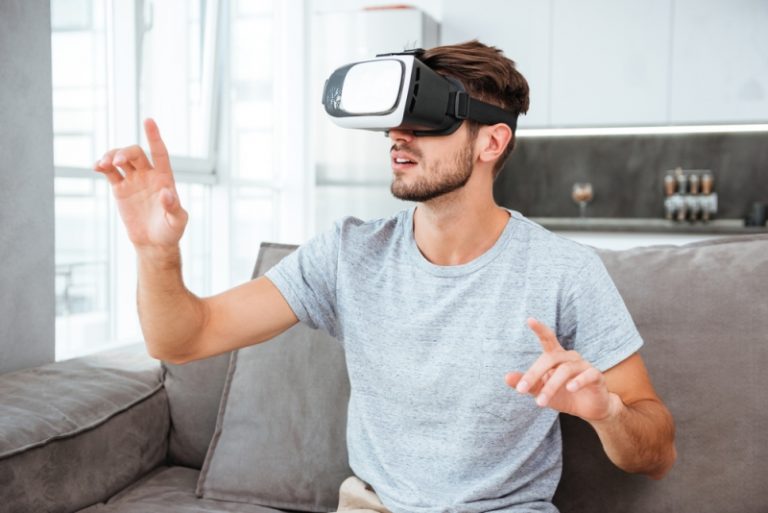
Virtual reality is unique and has to offer much in the form of technological applications. It feature do indicate that it is worth the purchase.

What there is to know about virtual reality, its future, etc.? Right now there seem to be two paths: portable and self-contained headsets such as the Oculus Quest or those connected to computers and consoles such as the Rift and PlayStation VR. The valve is indeed clearly focusing on Index, its first VR hardware. This is what the Valve Index review is all about.
The Index package costs$999, thus being out of reach for most people. Excellent image quality.

Unique features of Valve Index:

• Realistic presence
• Incredibly comfortable headset
• Finger-tracking controllers do add a new level of immersion
• Priced only for pros
• Very stable motion and space tracking
• Inconvenient wired connection
• External sensors are a pain to set up

The Valve Index does consist of a next-generation PC VR headset. It does deliver excellent image quality, believable VR presence and it has indeed a revolutionary pair of motion-tracking controllers. It is very expensive, but its innovations are cheaper. Valve Index review does involve these aspects.

Finger-tracking Valve Index

Know more about controllers the Valve has rather been testing them for years under the code name “Knuckles,” which refers to finger tracking. They do not look anything such as the Oculus Rift or HTC Vive’s motion gamepads: Instead of holding them, one has to slide one’s fingers under a microfiber strap, which does secure the controller to one’s hand. It is better to judge for oneself by valve index review whether the Valve is appropriate for oneself or not.

They do rely on 87 sensors to track one’s finger movements, which does open the door for new types of VR interactions. The mere act of grabbing as well as holding things in VR does feel more real with the Index controllers. There is also much pressure sensitivity, which allows games to detect.

So far, there are nearly 40 games such as Space Pirate Trainer, Arizona SunshineandSuperhot.

Valve Index Review

The refined PC VR headset

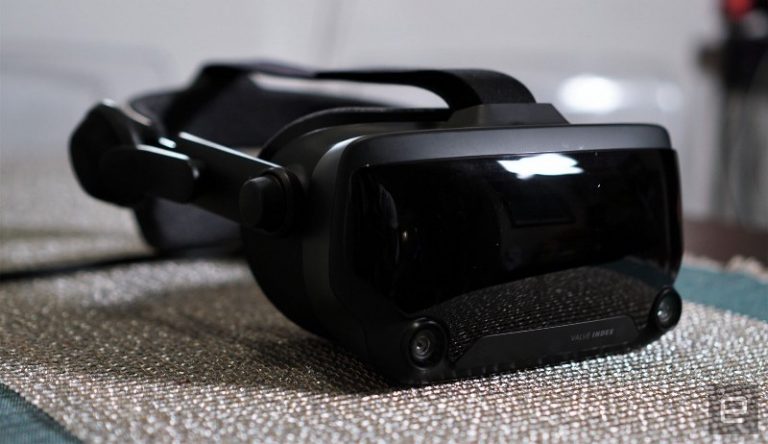
As for the Index headset itself, it does not look much different than the Rift or Vive. But there are indeed some notable upgrades. It is comfortable and one can secure it by turning a dial. There is no awkward velcro to fight with, such as the ones available on the Rift and Vive.

A microfiber cloth does surround the eyepiece and rear head strap. There also happens to be a dial to adjust the distance of the lenses to one’s eyes, which is quite helpful if one is wearing glasses. Rather than headphones, the Index has two near-field speakers, which does produce high-quality sound without even touching one’s ears.

It also does feature two RGB LCDs each running at 1,440 by 1,600 pixels rather than lower-resolution OLED panels on first-gen headsets. Valve does feature LCDs as well as 50 percent more sub-pixels, which will make it sharper than an OLED panel at the same resolution.

The new displays can also run at 120Hz or 144Hz, a huge leap beyond the 90Hz refresh rate. While Oculus focuses on making its tech cheaper and easier to consume, Valve is taking the exact opposite approach.

The Index also does offer far better image persistence than first-gen headsets.
Upfront, the Index consists of two cameras and a notch with a USB 3.0 port hidden underneath the faceplate.

As the Index is a Steam VR headset, the entire setup process happens to be as the Vive’s.

Artificial Intelligence for Counterterrorism

The recent debate between the Associated Press and Facebook about the success of removing content posted by terrorist organizations should be a wake-up call concerning content moderation capabilities on these kinds of platforms. Facebook data indicates the removal of 99% of terrorism content, while AP contends that Facebook’s success is only 38%. The point here is that machine learning adds a limited capability to human content mediation. The current state of the art in machine learning in this area is far from meeting expectation and is a fantasy, created around the magical tool of artificial intelligence (AI).

Terrorist networks will continue to exploit advanced technology in the areas of social network mapping and terrorist recruitment to benefit from the AI arms race. New AI technology in drones, among other things, will result in the production of cheap versions of them and that may easily fall into the hands of terrorists. There is no doubt that terrorist groups like ISIS will attempt to utilize all possible means to pursue terrorist activities. The gaps in content moderation in social media and communication networks will constitute opportunities for ISIS and others as well

Machine learning has a technology aspect, a social context, and an industry dimension. On the one hand, it is a product of high technology and a market for it. The social context is where it impacts the daily lives of people. In this sense, there is a growing AI intervention with an influence on the socio-economic conditions of people. This is an evolving phenomenon, which requires social, political, legal and ethical evaluations, in addition to technology.

Machine learning relies on algorithms that are known as classifiers. The classifier needs to be trained by data and works better if the difference in data, no matter how massive it is, clearly shows it. As it is fed by labeled categories, it is fragile against unforeseen conditions. It does not have a cognitive ability comparable to humans in this sense. That is why one would not expect machine learning to be able to respond to the complexities of societal and cultural value settings. The automated tools in one setting may be fragile in others. However, it is also next to impossible to monitor contents at today’s scale of social media and relevant platforms only with human capability. The need for machine learning is obvious.

The uploaders of content are aware of the deficits of machine learning enhanced tools. They develop measures to bypass the filters of automated tools. They may modify the content until they reach the goal of staying on the platform as much as possible. Human probes would help automated tools to discover blind spots. However, the idea of creating efficient filters may not always be possible. The industry dimension of machine learning does not like to disappoint customers. Providers may be faced with considerable fines/penalties if they cause government dissatisfaction in the case of benign posts. This situation results in over-filtering which puts machine learning to the side of “artificial” rather than the desired component of “intelligence” in content management.

As an example of what content mediation requires is Christchurch’s shooter first provided a manifesto to his supporters through a private communication channel. He used a Facebook live stream to spread violent media. This video was multiplied by his supporters. Facebook removed the content as soon as it was recognized. The copied content of video and manifesto was edited countless times to bypass filters and continuously uploaded to reach out to the widest possible audience. There is a learning process among the transnational terrorist networks and ISIS shares this process too. They improve and innovate to exploit weaknesses as well. What is needed here is to prevent the emergence of such content before it goes viral on these platforms? The problem with preventive measures is the risk of creating an unnecessary bubble in benign content identification.

The deletion of the historical record in this process is also problematic as it may be used for research to develop a better grasp of terrorist structures. Although this problem can be solved through time-limited archives of moderated content, the real problem of removing benign content remains the essence of the problem. There is an expectation for companies to limit content, develop recognition systems and pursue operations within the confines of the legal systems. The public-private and private-private partnerships, and public debate on content mediation will open up space for a necessary socio-political and industry/business environment, and better coordination against various forms of terrorism-related content abuses.

ISIS declares new provinces from Africa to Asia, the Middle East to Central Asia. It sent blessings to allegedly loyal groups after its defeat in Syria. ISIS or any other terrorist network does not have anything close to its own Silicon Valley. However, they benefitted from the weaknesses and deficits of the content sharing platforms and AI produced tools. For example, they may benefit from recommendation engines, which can deliver extremist content to large audiences.

The automated tools are necessary since the control or mediation of the amount of content is beyond the capability of human teams. Machine learning is fragile and human teams are vulnerable against massive data. We have no option but to put all available capabilities into better use, in this case, machine learning for counterterrorism with recognition of deficits and weaknesses. Consequently, machine learning is a necessary component of this struggle with the use of human cognitive capabilities to grasp the dynamics, alternatives and prospective terrorist activities, including those of ISIS and others as well.

AI CUM DATA SCIENCE ACQUISITIONS PLUS MERGERS BY GOOGLE

Google has acquired data science and has got itself involved in mergers off late which have indeed proved a boon to the technology world. Google has evolved itself well.

As one come across vital economic changes, mergers, as well as acquisitions that happen to be basic business tools that embrace several companies, are useful indeed. In the present fast-paced digital transformation, tech-savvy companies are going in for this tool for growth, survival, as well as innovation. Google successfully managed to have successful relations with business firms to attain technology supremacy above all. With the emergence of artificial intelligence and data science across multiple sectors as well as industries, much has been in offing. This is what AI and Data Science Acquisition and Mergers by Google is all about.

AI CUM DATA SCIENCE ACQUISITIONS PLUS MERGERS BY GOOGLE

Kaggle

Google has managed to acquire Kaggle which is a platform that does host data science and ML competitions) which have been officially announced. Google plans to join its cloud utilizing the skills of Kaggle team in ML training and deployment services. This will indeed lead to a collaboration that will help in dataset storage and query technologies. Thus the focus is on AI and Data Science Acquisition and Mergers by Google

Halli Labs

Google has indeed acquired Indian Bengaluru-based startup Halli Labs for an amount which has not been declared. Google also hopes to apply AI/ML technologies to old as well as prevailing problems, Halli Labs does permit Google to process efficiently the real-world language by the virtue of NLP. This indicates a good business strategy.

AIMatter

Google hopes to excel in the field of computer vision and towards this goal it has acquired a Belarus-founded startup AIMatter. This has built a neural network-based AI platform as well as SDK to identify as well as process images rather quickly on mobile phones. Also, efforts have been made to develop a photo cum video editing app known as Fabby.

Onward

Onward, a small startup involved in building tools for businesses seeking automation has also be started by Google. This is indeed focused on business promotion and is also an AI-centered chat solution making use of NLP and ML technology to get customers what they need while making use of the resources of automation.

Alooma

Google has come up with Alooma which did manage to acquire and this helps organizations to be able to combine their entire data sources into services such as Google’s BigQuery, Redshift, Snowflake, and Azure. Alooma helps in migration to the cloud, cleaning up the data and later using it for AI/ML learning use cases.

Looker

In most recent time, Google did acquire BI platform, Looker for $2.6 billion all-cash deal. The reason for this hefty deal is to broaden Google’s portfolio in business intelligence as well as for analytics portfoliohttps://en.wikipedia.org/wiki/Portfolio along with data warehousing capabilities. The acquisition also does aim at boosting up the enterprise-oriented approach and thus being able to get hold of more customers. It is but obvious that AI and Data Science Acquisition and Mergers by Google does entail a lot.

Bigg Boss Telugu Season 3 : Episode 6 Highlights

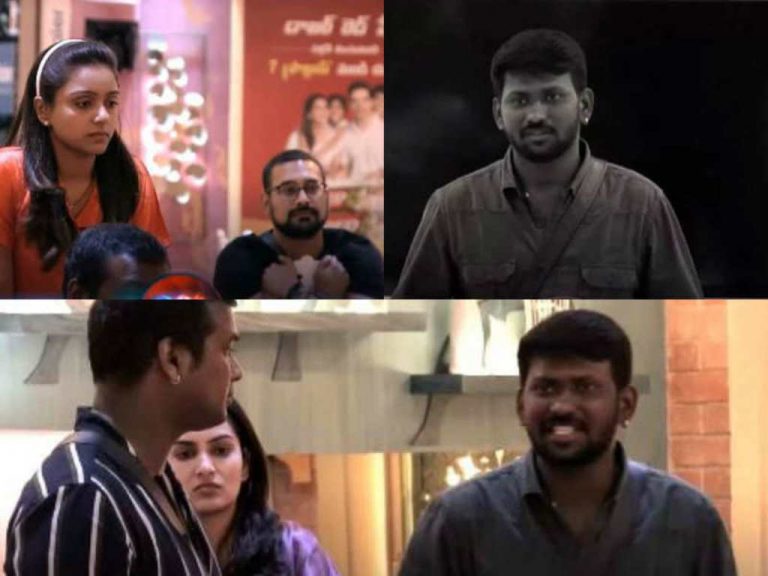
Today’s episode started off with the arguments between Varun Sandesh and Mahesh Vitta. Varun was very angry that Mahesh didn’t give proper respect to his wife Vithika. The housemates tried to pacify the situation between them but things went out of control for some time.

People tried to convince Mahesh to apologize to Vithika but his first apology didn’t go well and Varun got angrier. Somehow, Mahesh finally apologized to both Varun Sandesh and Vithika Sheru.

The next day, at the dining table, a discussion erupted about Baba Bhaskar not having food on time. Sreemukhi went extra-informative regarding the same which irked Rahul Sipligunj. After an argument, Sreemukhi told them that she will stop being extra-informative.

Later, Bigg Boss introduced a task and divided the housemates as the Sreemukhi team and Baba Bhaskar team. Both the teams performed acting skits and impressed everyone. In the end, Rahul Sipligunj apologized Sorry for talking harshly with her.

Vuze XR Dual VR camera is multi-dimensional fun

Vuze XR Dual VR Camera has impacted the technology market in several ways and is useful for customers. They will find the features very useful.

On the whole, the average distance between the pupils of human eyes is about 63mm. This separation happens to be one of several factors that do provide us all stereo vision, or the ability to see in three dimensions. It is not surprising that HumanEyes has positioned cameras like Vuze XR Dual VR camera 55mm being apart. This does provide the camera with a near-human perception of depth when capturing 3D content. This is what Vuze XR Dual VR camera review is all about.

If a person happens to be in the market for a 360-degree camera, then it is likely that a person has heard of Insta360, Ricoh, and GoPro. HumanEyes does compete with these companies and the Vuze XR Dual VR is its flagship consumer product. It does combine the ability to capture both 2D and 3D photos/videos into a single, simple-to-use device. Vuze XR Dual VR camera review comprises of these aspects.

What is the Vuze XR Dual VR camera?

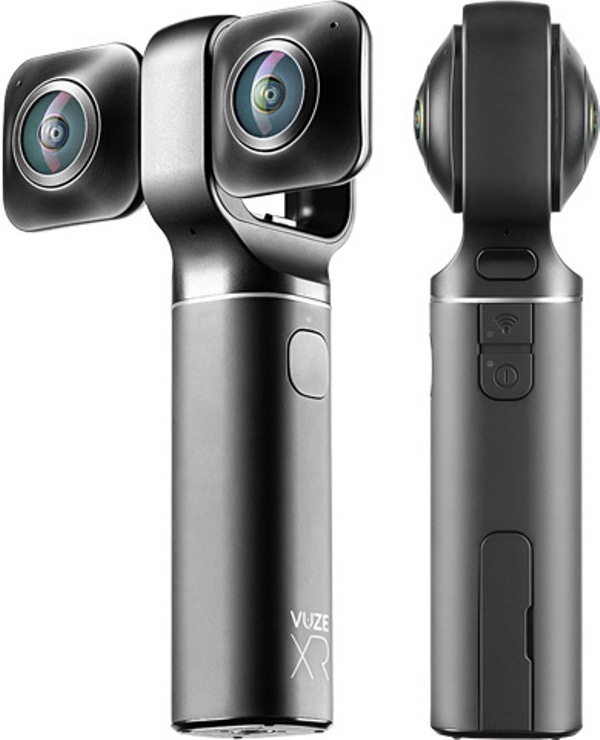
The Vuze XR Dual VR camera is a small as well as a portable device that can capture 360-degree content in 2D or 180-degree content in 3D at resolutions up to 5.7K for video and 18MP for photos. Each sensor is a 12MP Sony IMX378 that is paired with a 210-degree fisheye lens at f/2.4. Vuze XR Dual VR camera review does cover these aspects too.

It comprises of a unique design. Like many 360 cameras, it does rely on a pistol-style grip and the lenses are located above one’s hand when held. The lenses are situated on opposite sides of the camera for shooting 360 photos/videos but flip out to face the same direction thus strongly resembling human eyes to take 3D content. The content is best consumed on a VR headset.

Some basic specs do include a 1,200mAh battery that does last for about 1 hour. It charges of course via USB-C but does connect to one’s phone via Wi-Fi. The camera does support high-speed microSD cards meant for writing all that data rapidly. A tripod mount is rather built into the bottom and it ships with a soft case, cable, and lanyard.

How do you use it?

Although photos can be taken as well as videos without a phone on account of the physical buttons being located on the camera, the Vuze XR is best controlled by the smartphone. The free Android and iOS apps do operate well.

Vuze XR Dual VR camera is multi-dimensional fun

What kinds of pictures does it take?

Still, photos tend to get stuck at 18MP, whether one shoots 3D 180 or 2D 360. They are rather saved as standard JPEGs averaging about 7MB. Video can actually be recorded in 5.7K at 30fps, or in 4K at either 60fps or 30fps. Video is saved as mp4 or H.264 files.
All the stitching does take place on the camera, so when one offloads the photos and video onto one’s phone or PC they are already in their final form.

One has the choice to perform a wide variety of edits in the Vuze XR app on the phone, like tiny planet photos, change lighting, add stickers, and zoom-in effects.

Do the pictures look good?

The images are sharp and quite free of noise for a 360 camera. Colors do look good, particularly when shooting outside.

The 4K 60fps video does look particularly good.

Transfer funds via phone without internet

 It is possible to transfer funds via phone in case one does not have an internet connection or it is rather slow. There is no need to depend upon the internet.

In case one feels that there is no Internet connectivity and prefers to have a better and high priority based banking transactions; will such a situation affect on. In case one wants to book one’s favorite movie tickets via the internet but is bogged down by the internet being slow.

One can go in for a different method by sending money for the bank to bank and also book one’s favorite movie tickets without a data connection. NUUP (National Unified USSD Platform) has a rather partnership arrangement with UPI (Unified Payment Interface) and develops a unique method. One can send money without Internet connectivity y simply dialing a particular USSD code. Open a dialer Pad and then type on *99# and this Phone number must indeed be attached to one’s bank account and then one can access this method. The major service that is being offered is in the form of check account balance, money sending, receiving, request for money. For transferring money it does require that the UPI ID who happened to be linked to the bank, Aadhaar number, Account No. + IFSC and send money very easily. Therefore it is possible to transfer funds without an internet connection.

If one were to consider a situation where there happens to be no internet connectivity and one has to go in for higher priority based banking transaction, whether it be booking tickets for one’s favorite movie, paying electricity bills in order to avoid disconnection, or even helping out a friend in need, lack of a proper internet connection that can cause much frustration. To overcome this, NUUP (National Unified USSD Platform) has rather developed a method in partnership with Unified Payments Interface (UPI) that will rather allow one to perform transactions on the go without the need for a stable internet connection by dialing a particular Ussd Code. This is a comfortable way to transfer funds without an internet connection.

Transfer funds via phone without internet

The way to go about it is to open one’s Dialer and then type in *99# from the number that is associated with one’s bank account. After a few seconds, several service request options will indeed appear on the screen. The major services that have been offered are sending, receiving, as well as requesting money. For sending money, the service does allow various choices such as entering a mobile number, UPI ID, Aadhaar number, Account No. + IFSC. Other services do include checking the account balance, setting UPI PIN, changing UPI PIN, and also getting details of the last 5 transactions.

NPCI(National Payments Corporation of India) states that the service can be availed 24*7 and it even works on holidays. To avoid misuse, RBI has rather set a limit of ₹5,000 per transaction which is quite good in my opinion. There are no extra charges from the bank’s end for performing the transactions via this USSD code but according to the Telecom Regulatory Authority of India (TRAI) guidelines, the network provider may charge a certain amount per transaction.

In case of faces problem of poor internet connectivity, then one can try using *99# to for banking transactions. This is a better way to transfer funds without an internet connection.

Panic Over Russian Company’s FaceApp

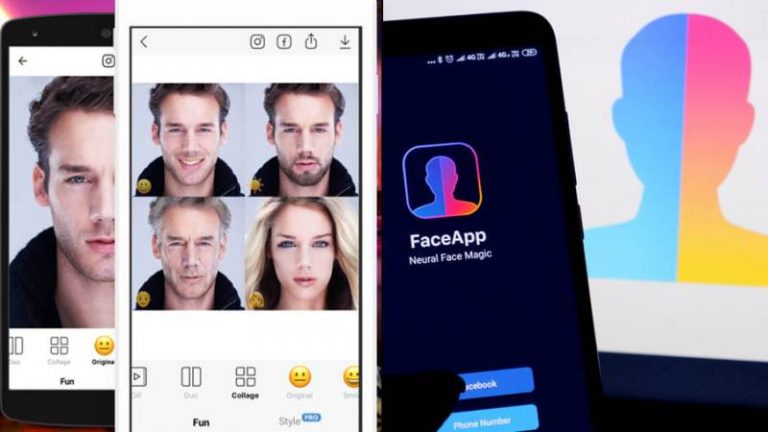
Russian company FaceApp caused much distrust that brought about panic. Investigations were held to find out the reasons and the firm was brought into focus.

As soon as playful photo-transforming FaceApp went viral on Wednesday

as the most downloaded smartphone app in America, a nationwide panic set in Which happens to be this shadowy Russian tech firm everyone had been sending their photos to? And what did it want from millions of people’s faces? There was panic over the Russian company’s FaceApp.

Russian app

The worst fears a Russian connection, researchers and technical experts claimed that it does appear to have been exaggerated. The photos are rather stored on conventional servers run by American companies, and no evidence has indeed surfaced that the company has, of course, ties to the Russian government. Technical analysts also did observe that the app does not, and judging by rumors stated, swipe a person’s entire cache of photos or even open their data to unlimited surveillance. This led to panic over the Russian company’s FaceApp.

Faceapp and social media

FaceApp does indeed allow anyone to morph their face into a vision of their future self, and social media does also feed quickly along with filled with computer-generated portraits marked with wrinkles and graying hair. The app developed by a largely unknown Russian firm, and its widely permissive rules for how people’s photos could be used, triggered alarms in Washington as well as beyond. This caused panic over the Russian company’s FaceApp.

Importance of cybersecurity

Cybersecurity, investing in nationwide education and training programs have been carried out to boost people’s online defenses and also prevent a damaging repeat. A proactive approach has been taken FaceApp’s terms of service grant a company a “perpetual, irrevocable, nonexclusive, royalty-free (and) worldwide” license to make use of people’s photos, names, and likenesses. One can go in for a selfie, and future self, on FaceApp.
Experts hold the view that several other apps, from social media giants such as Facebook to pregnancy-tracking apps, do carve out the same perpetual corporate rights to user data.
There is a general distrust of Russian and Chinese tech companies driven by political turmoil; and also enhanced by concerns over the use of facial data; as well as growing worries over a lack of privacy protections online.

Panic Over Russian Company's FaceApp

People need not rely on fine-print privacy policy to protect them. FaceApp did go viral with age-defying photos.

FaceApp was started by Wireless Lab in early 2014.

The focus is on applying the latest in artificial intelligence and machine-learning techniques to the mass processing of digital photos. That idea is now commonplace in apps such as Snapchat and Instagram, which also make use of AI software to instantly contort images of cats, nature scenes and people’s faces, often with convincing results.
Russia’s educational system has rather gained much prominence for its burgeoning AI sector, and Google and other tech firms employ engineers and other technical positions in Moscow.

Samsung last year opened an “AI Center” in Moscow’s White Square business district.
The viral video-sharing app TikTok is owned by one of China’s most valuable tech firms, Bytedance, and is worth more than $75 billion.

Thus apps are becoming very popular, although one experiences some distrust with their functioning.

Google Claim ‘Internet Saathi’ Programme for Indian Villages

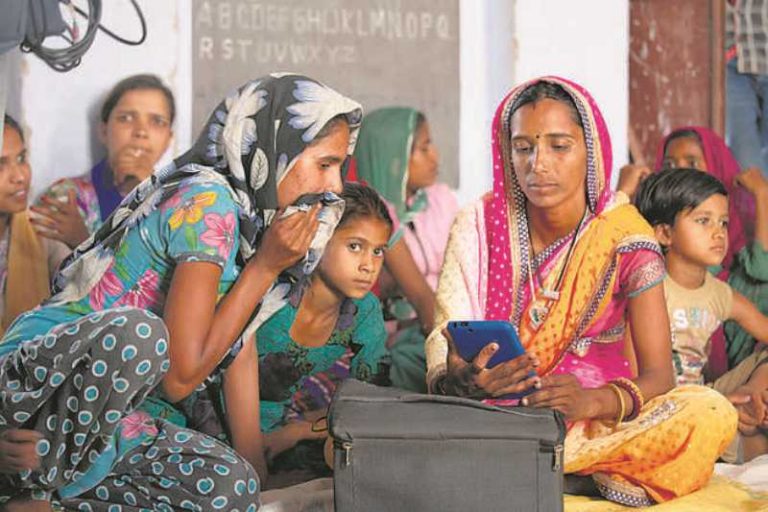
Google India’s ‘Internet Saathi’ program which does aim to empower rural women on how to make use of the Internet has now indeed added two more states — Punjab and Odisha. Thus ‘Internet Saathi’ Programme Covers 2.6 Lakh Indian Villages in 20 states.

It has been launched as a pilot project in 2015 along with Tata Trusts; the ‘Internet Saathi’ program does focus on educating women on how to make use of the Internet, who then can impart such training to other women in their community as well as neighboring villages. Thus such educational programs will be accounted for as ‘Internet Saathi’ Programme Covers 2.6 Lakh Indian Villages

The effort is to bring about positive changes via the Internet within their communities and have already benefited over 2.6 crore fellow women.

Rural women are keen on earning the internet and have to meet their own needs as well as of the families, kids and their respective. Some have gone ahead and also have started their micro-business stitching, honeybee farming, and beauty parlors. Many are empowering their families and communities with new skills to enhance their livelihood.
Awareness is also being generated for issues such as child education, menstrual hygiene and more.

The focus needs to be on societal progress, it is also imperative that women in rural India are indeed provided with adequate opportunities as well as knowledge.

Google Claim 'Internet Saathi' Programme for Indian Villages

About 70 percent of Internet Saathi’s those women are a source of information in their village. People approach them for answers to help children with schoolwork, to learn new cooking recipes, searching jobs, or to run a business.

Nine in 10 women beneficiaries do believe in a woman’s right to express herself and earn a living for her family while seven in 10 women who do attend the training with the Saathi’s do help in improving children’s education.

Saathi’s are sort of business set-ups. They do ensure economic growth and generate much income. From this point as well ‘Internet Saathi’ Programme Covers 2.6 Lakh Indian Villages.

Digital literacy initiative is indeed aimed at empowering women in rural India. Efforts are on to promote Saathi programs in villages.

The program has helped bridge the digital gender divide in rural India.

Internet Saathi program brings forth the right opportunities for women.
Women are very passionate about the internet and are keen to learn. It helps them to meet their needs and also that of their families, kids, and their communities. Many women have started their micro-business stitching, honeybee farming, and beauty parlor, many others are no doubt empowering their respective families as well as communities with new skills to enhance their livelihood. Efforts are on to promote girl-child education, menstrual hygiene as well as much more.

Fully trained Internet Saathi’s are making use of the Internet to drive positive change in their communities and have benefited a lot of women.

For inclusive growth as well as societal progress, it is also imperative that women in rural India are rather provided with adequate opportunities as well as knowledge. The Trusts have increasingly been making use of technology in all its programs across 29 states in India.

Amaravati: An old woman committed suicide at the CM camp office

An elderly woman committed suicide by swallowing sleeping nights at the AP chief minister’s YS Jagan camp office.

Sathyanaga Kumari of Gannavaram filed a petition on 19th of this month demanding justice.

She came to the CM camp office today due to lack of officials attention on her petition so far.
Sathyanaga Kumari came out of the camp office and swallowed sleeping pills.
The police then rushed her to the hospital for treatment.

Apple Shelves Development of AR/ VR Headsets

0

Apple decides for itself and has shelved plans to develop further the AR and VR headsets which will indeed impact the techno-market in several ways. Customers do much from Apple.

It is rather a setback to the tech industry; Apple has indeed shelved plans to develop its Augmented Reality (AR) and Virtual Reality (VR) headsets. Apple is known for its technological innovative ideas and is well received by consumers in the technology market. Naturally, consumers expect these offers from Apple and will be much disappointed that plans are there to defer the development of these technologies. Why Apple Halts Development of Its AR/ VR Headsets one does not know, but they have decided so.

The Apple team working on the AR/VR project has been temporarily disbanded and reassigned to other product lines.

Supply chain-related companies say that Apple is indeed adjusting R&D resources, and the development team for AR/VR headsets has been of course disbanded and transferred to other product lines. It suggests that the discontinuation of the AR project happened after Microsoft HoloLens co-creator Avi Bar-Zeev left discontinued as Apple’s AR headset development team in January.

Several reports emanating in the past have claimed that the iPhone maker is serious about launching AR glasses as early as 2020ects of AR/VR states the report, thus adding that the timing may not be very appropriate as, including the Apple famed analyst Ming-Chi Kuo. Apple Halts Development of Its AR/ VR Headsets has and will have much impact on the technology consumer market.

Apple’s launch of ARkit for iOS developers has been seen as a big step for the company to be able to enter the AR industry.

Apple’s temporary termination of hardware development of AR/VR headsets does not mean that it is not optimistic about the prospect of now. Apple halts the development of Its AR/ VR headsets for its reasons.

AR and ML will be the key to deliver the right information to the right person at the right time. Cook has expanded partnership with SAP.

 Apple Shelves Development of AR/ VR Headsets

In the new update, Apple ARKit, the company’s AR development platform which has been able to recognize horizontal surfaces while placing virtual objects, does get support to identify vertical objects.

ARKit can now indeed recognize and place virtual objects on vertical surfaces. Making use of advanced computer vision techniques to find and recognize the position of 2D images ARKit can indeed integrate these real-world images into AR experiences the Cupertino-based giant claimed.

ARKit 3, RealityKit and the Reality Composer are other advanced tools that have been designed by Apple to make it even easier for developers to create rather compelling AR experiences for consumer and business apps.

Apple has taken a major decision as far its AR/VR headsets are concerned and decided to improve upon them at a later stage. Even if the customers are rather disappointed about but they will continue to adhere to their plans of shelving the improvements to the AR/VR headsets.

Apple has carved a niche for itself in the technology market and is doing well indeed.

Hyderabad Traffic police fined Allu Arjun for violation of norms

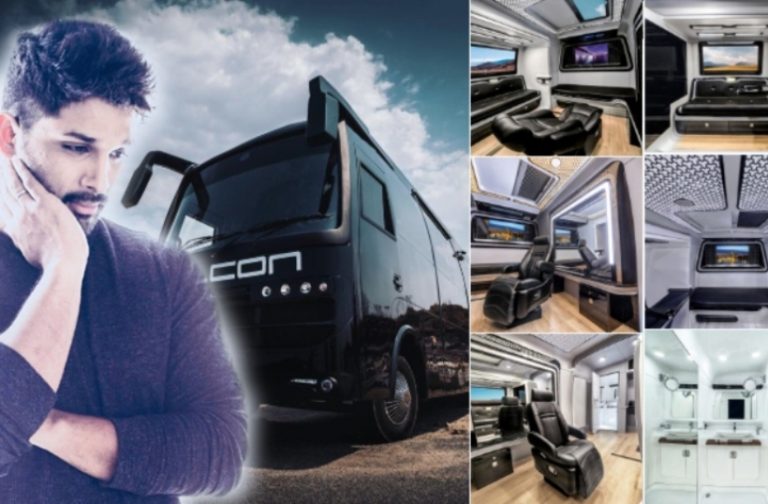
Stylish star Allu Arjun recently purchased a luxurious new caravan priced at 6 Crores named Falcon. Hyderabad traffic police fined 735 INR on Falcon for violation of norms.
Surprisingly it was caught by a common man at Himayathsagar signal.
He captured caravan (Falcon) for fully covering with black coloured glass by violating the norms.
The Supreme Court banned the usage of black tinted glasses on vehicles in 2012.
Hyderabad traffic police fined caravan in response to common man’s Tweet.
The complaint states that while the vehicle mirrors have a ban on the black film, the TS 09 FG0666 vehicle mirrors are the entirely black film.

Redmi smart TV is coming soon, hints company

Redmi makes phones, mobile accessories, among other things. To recall, Redmi separated from Xiaomi to become an independent brand beginning this year. The company has already launched several smartphones and also accessories across the globe. The brand has been very well received in almost every corner of the world including India. The latest product that Redmi launched in the country is the Redmi K20 series. After doing pretty well in the smartphone segment looks like Redmi is now working to bring its first-ever smart TV.

No, this is no rumor. Redmi General Manager Lu Weibing is asking consumers whether the company should launch a smart TV or not. On Wednesday Lu Weibing took to the Chinese microblogging site — Weibo — to congratulated Xiaomi CEO Lei Jun after the company became the No. 1 TV brand in H1 2019. Soon after that Weibing asked his followers on Weibo, “Do you want Redmi to make a TV?”.

This clearly means Redmi is aiming to hit the smart TV segment very soon. As of now there no details about Redmi smart TV or when it will be launched or how much will it cost or whether it will come to India or not.

Redmi smart TV is coming soon, hints company

We believe the Redmi TV whenever it is launched will definitely head to the Indian market. Why? Because Redmi has a very strong user base in the country and that will help Redmi strengthen its TV business. As noted earlier there are no words on when the Redmi smart TV will be launched. It is likely the TV is already in the works and in that case, we can expect the Redmi TV to launch either later this year or early next year.

Xiaomi already sells smart TVs and in India, they are very popular obviously because of the value they offer for the price. The Mi TVs — like the Xiaomi phones – are very aggressively priced in India. We believe Redmi TV will also have pretty aggressive pricing at least that will be the case in India considering Indians associate the brand with terms like “budget” and “affordable”.

It’s not just Redmi. Companies like OnePlus and Honor are also planning to bring their smart TVs to India very soon. Both companies are already working on their respective smart TVs. Right now the market has smart TVs from brands like Xiaomi, Samsung, LG, and a few others.

MS Dhoni fulfils promise, begins training with Parachute Regiment

world Cup-winning former India cricketer MS Dhoni has begun his two-month training with the Indian Army’s Parachute Regiment. On Wednesday, Dhoni joined a battalion, which has its headquarters in Bengaluru.

Speaking to IANS, sources in the know of developments said the plan was in the pipeline for a while.

“Just like Dhoni has been one of the greatest servants of Indian cricket, his love for the armed forces is also well-known. This idea that he would go and spend time with his regiment was in the pipeline for a while but it took a backseat due to his cricketing commitments.

“This will also help increase awareness among the youth about the armed forces and that is what Dhoni wants,” the source said.

The 38-year-old holds the honorary rank of Lieutenant Colonel in the Territorial Army unit of the Parachute Regiment (106 Para TA battalion).

The honor was accorded to him by the Indian Army in 2011. Dhoni was given this honor along with Abhinav Bindra and Deepak Rao.

MS Dhoni fulfils promise, begins training with Parachute Regiment

In 2015, the Ranchi lad became a qualified paratrooper after having completed five parachute training jumps from Indian Army aircraft in the Agra training camp.

Earlier, the veteran wicketkeeper-batsman had made himself unavailable for the West Indies tour where India will be playing three T20Is, three ODIs and two Test matches beginning August 3.

Ever since the culmination of the World Cup in the UK where India reached the semi-finals, speculations have been rife about Dhoni’s retirement, but the team management has asked him to hang around as they groom Rishabh Pant with an eye on the 2020 World T20 in Australia.

Big Bash League introduces 5-team finals series for 2019-20 season

cricket Australia has revamped the structure of the Big Bash League (BBL), bringing in a number of changes to it. On Thursday, it introduced a new-look, five-team finals series in the upcoming BBL season to better reward teams that finish in the top two.

Played over two weekends, the new five-match finals system guarantees a double-chance for teams that finish first and second in the regular season. The finals will start on January 30, 2020, and run across two weekends, culminating in a Saturday night decider on February 8.

The five finals have all been given unique monikers; The Eliminator, The Qualifier, The Knock-Out, The Challenger and The Final.

As per the new format, the teams finishing fourth and fifth will play ‘The Eliminator’ on January 30 while the teams finishing first and second will play ‘The Qualifier’ on the next day.

Big Bash League introduces 5-team finals series for 2019-20 season

On February 1, the Winner of ‘The Eliminator’ will take on the third-placed before the action unfolds on the next weekend. In ‘The Challenger’, the loser of ‘The Qualifier’ will go up against the winner of ‘The Knock-Out’ on February 6 to have a chance to get to ‘The Final’. The Final will be played on February 8 between the winner of ‘The Qualifier’ and the winner of ‘The Challenger’

“The number one element is to give the best chance for the teams finishing first and second to make it through,” said Cricket Australia’s Head of the BBL, Alistair Dobson, at the launch of the 2019-20 BBL fixture.

“We want to reward the teams finishing first and second as well as we can.

“(We want) more fans to be part of the finals and this model also gives us a chance for the team hosting the final to have more preparation,” he added.

In six of the eight previous BBL seasons, the team that has finished top of the table has been knocked out in a cut-throat semi-final and Cricket Australia has moved to make the finals fairer for the teams that dominate the regular season.

The tournament will start on December 17 with Brisbane Heat taking on Sydney Thunder in a home game as the tournament will go on for 42 days this time instead of 54 with 56 games being played.

Best smartphones under Rs 25,000 in India

Smartphones that are reasonably priced are available in the market and customers will love to buy them. One can avail of these quite easily. These are under Rs 25,000.

smartphones under Rs 25,000 are available in India like Redmi K20, Realme X, Samsung Galaxy M40, Motorola One Vision, Vivo Z1 Pro. Xiaomi has brought forth Redmi K20 series much earlier and the series comprises of Redmi K10 and Redmi K20 Pro. The Redmi K20 starts at Rs. 21,999 for the 6GBRAM and 64GB internal storage variant. One of the best Best smartphones under Rs 25,000 in India

On the other hand 6 GB RAM + 18GB ROM model for Rs 23,999 which happens to be a smartphone that will be on sale starting at Rs. 21,999 for the 6GB RAM and 64 GB internal storage variant. Also the higher 6GB RAM+128GB ROM model for Rs 23,999, the smartphone will be going on sale with Redmi K20 Pro went on sale on July 22nd. It is an accepted fact that that Redmi K20 Pro is one of the best smartphones under Rs 25,000 in India.

The K20 happens to be powered by Qualcomm Snapdragon 730 processor and packs a 4,000mAH battery with 18 W fast charging support. It has a 48MP camera with a Sony IMX582 sensor along with a 13 MP ultra-wide-angle lens and 8MP telephoto lens. The smartphone also features a 20MP pop-up selfie camera.

Best smartphones under Rs 25,000 in India

Realme brought forth its smartphone recently and it costs rs.16,000 for 4GB RAM and 12GB internal storage. One comes across 8GB RAM and 128 GB model priced at Rs. 19,999. It will be on sale on Flipkart as well as Realme’s website. The Realme does come with a 6.53-inch FHD+full screen notch-less display and 2340×1080 pixels resolution. The smartphone comes along with a 16 MP pop-up selfie camera which takes about 0.74 seconds to go up and also has a dual rear camera with a primary 48MP camera sensor with an f/1.7 aperture having a sensor of 5 MP with f/2.4 aperture.

Samsung Galaxy M40

This comes along with the company’s Infinity O display, 3 cameras sound technology. It is available at Rs. 19,990 for the 6GB RAM and 128 GB internal storage option. The Galaxy M40 that is powered by Qualcomm Snapdragon 675 processor. The internal storage can be expanded up to 512GB via a micro card slot. This also happens to be the best smartphones under Rs 25,000 in India.

Motorola One Vision

Motorola One Vision has been launched in India at Rs 19,999 for a single storage variant of 4GB RAM and 28 GB.

Vivo Z1 Pro

The Vivo Z1 Pro also has recently launched a smartphone for Rs. 14,990 for 4GB RAM and64 GB internal. There happens to be a 6 GB RAM/64 GB storage variant that does cost Rs. 16,990 and 6GB RAM/128 GB storage variant which costs Rs. 17,990. This is also acknowledged as being one of the best smartphones under Rs 25,000 in India.

Motorola One Vision

This has been recently launched at Rs 19,999 for a single storage variant of 4GB RAM and 12 GB. It has a dual rear camera set-up that does comprise of 48MP+5MP sensors. It also has a 25 MP front camera as well as a 3,500mAH battery with 15W fast charging support. It is

Home Panasonic 14 new 4K Ultra HD TVs in India at Rs 50,400

Panasonic launches 14 new 4K Ultra HD TVs in India and has proved that its new product is indeed very enviable. Customers do need to try it out and see its potentiality.

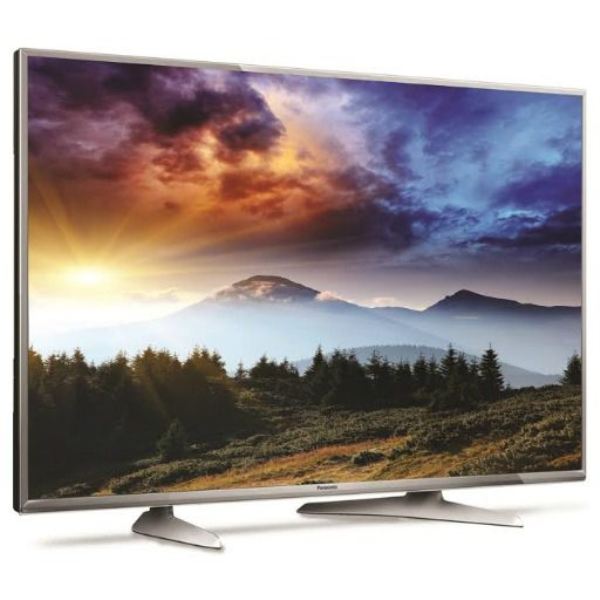
Panasonic has remarkably launched as many as 14 new TV models under the aegis of its 4K Ultra HD TV range with a price range starting from Rs 50,400. The TVs are of Japanese design and do run on My Home 3.0 which let’s allow the users to customize their home screen. Indeed it is noteworthy to take note of that Panasonic launches 14 new 4K Ultra HD TVs in India.

The 4K Ultra HD TVs do also allow the users to design their home screen with Live TV, apps, internet bookmarks that are frequently made use of devices. The new Panasonic TVs also do come with Dolly vision support for a superior picture as well as sound quality. They can indeed be integrated with Google Assistant and Amazon Alexa and with video content platforms like Netflix and YouTube. The new TVs are powered by Panasonic’s HCX processor which is indeed capable of running vivid HDR colors as well as tones.

Home Panasonic 14 new 4K Ultra HD TVs in India at Rs 50,400

The company has stated that it has rather expanded HDR formats with a new range, thus extending the required support for HDR video. Panasonic does claim that the new TVs offer life colors making use of color-processing technology along with the augmented offering of HDR 10, HDR 10 +, Dolby Vision, HLG in picture quality and Hexa Chroma Drive Pro. Also, there is the latest Panasonic’s $K Ultra HD TVs that are available within the price range of Rs. 50,400 and Rs 276,900 with the screen size ranging from 43 inches to 75 inches. The TVs are available at Panasonic brand shops and other major outlets all across the country. Thus Panasonic launches 14 new 4K Ultra HD TVs in India with much fanfare.

The latest range of Panasonic’s 4K Ultra HD TV is available in the price range of Rs. 50,400 as well as Rs 276,900. It has a screen size of 43 inches to 75 inches. The TVs are available at Panasonic brand shops as well as other leading outlets all over the country. The company also offers an OLED TV range with a 55-inch FZ950 and 65-inch FZ1000 series that cost around Rs. 299,900 and Rs. 449,900 respectively.

Panasonic’s new 4K TVs are indeed powered by the HCX processor for the optimized presentation of HDR colors as well as tones. The TV support happens to be a suite of HDR formats including HDR 10, HDR 10+, Dolby Vision as well as HLG in picture quality. The TVs run on My Home 3.0 interface which does allow users to design their TV home screen.
Panasonic has indeed expanded its television catalog with new 4K Ultra HD TVs in India under the GX600 and GS 595 series.

The new TV range includes 14 models ranging from 32-inch to around 75 inches and will be available for a starting price of Rs. 50, 400. The new range of TVs is available for a starting price of Rs. 50,400. The new range of TVs does come after the announcement of the Panasonic GZ 2000 Professional Edition 4K OLED TV earlier this year at the CES 2019 event in Las Vegas.

Panasonic’s new arrival 4K TVs happen to be powered by the HCX processor for the optimized presentation of HDR colors as well as tones. It is worth observing that Panasonic launches 14 new 4K Ultra HD TVs in India.
Advertisement

Apple’s 2020 iPhones with 3D ToF sensor on the back

iPhones will have a 3D ToF sensor that will make its foray into the technology market. Consumers will have access to a viable and useful product. It is worth trying the 3D ToF sensor iPhone.

Some of the 2019 iPhones will be having a triple camera, but not a 3D ToF sensor. Iphones will have a 3D ToF sensor. The change next year as Apple is expected to contact manufacturers of key components for such sensors.

Insiders are rather speculating that the 3D ToF sensor will indeed be added to the back of the phone, to enhance the AR functionality on iPhone 12 models, thus continuing the work started with ARKit 2 on iOS 12 (iOS 13 is bringing ARKit 3).

It will improve depth-based effects such as bokeh and lighting effects in the camera app.
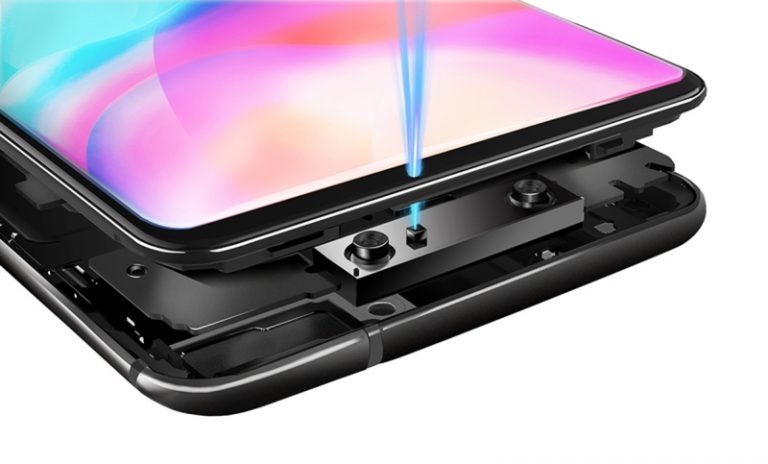
This sensor will indeed be able to measure distances up to 4.5m away (15ft), longer than what current sensors on Android phones can manage. Apple has been specifically looking for VCSEL components, which do provide the pulses of light that are used by ToF sensors. iPhones will have a 3D ToF sensor no doubt it.

One needs to take note of the fact that the current 3D sensor on iPhones – the TrueDepth system – happens to be based on structured light rather than the time of flight (“ToF”). Time of flight modules does offer greater accuracy and longer range, plus they handle sunlight better.

  Apple's 2020 iPhones with 3D ToF sensor on the back

Apple is indeed reportedly planning to incorporate the Time of Flight (ToF) 3D sensing rear camera system in next year’s iPhone models. Earlier there were several rumors that a ToF sensor might rather be introduced as part of the 2019 line-up of iPhones but the sensor would just not be ready in time this year, news portal GSMArena has stated so.

Also, the Cupertino-based company has plans of using Vertical-Cavity Surface-Emitting Laser (VCSEL) in the cameras of the 2020 iPhones. VCSEL is a key component of Apple’s TrueDepth camera that does also power features like Face ID, Animoji and Portrait mode selfies.

Last year, famed Apple analyst Ming-Chi Kuo stated that the ToF 3D rear cameras would be making their debut with the 2020 iPads before making their way to the 2020 iPhones. Next year, Apple is expected to launch four iPhone models with significant specification upgrades, media reports suggest. iPhones will have a 3D ToF sensor indeed.

Three iPhones will consist of OLED screens and display sizes of 5.4-inch, 6.1-inch, and 6.7-inch, the devices would also have 5G connectivity. The fourth iPhone is indeed expected to feature an iPhone 8-like design and come without 5G connectivity or OLED panel.

In September of this year, Apple is expected to join the iPhone XI – iPhone XIR, iPhone XI, and iPhone XI Max. Though the square-shaped camera bump is indeed expected to be the fan of iPhone lovers, it is the 2020’s iPhone which is expected to make Buzz with the Major Specs upgrade. While there have been rumors about the 2020 iPhones that have been running for a long time, the latest report discusses rear camera setup, which could be called iPhone 12 or iPhone XII.

Apple will be adding a 3D ToF sensor (flight time) behind its 2020 iPhones or iPhone 12. Adding 3D ToF sensor to iPhone 12’s rear camera will indeed add enhanced reality capabilities. In iOS 12, the company does take the device that started work with ARKit 3 with its ARKit 2 and the upcoming iOS 13.

By adding a 3D ToF sensor to the rear camera setup, the iPhone 12 can measure up to an area of 15 feet or 4.5 meters, which is longer than the sensor on the current Android phone. Apple has made use of VCSEL components earlier in its iPhones – iPhone XR, iPhone XS, and iPhone XS Max – but they have been used for front-facing features such as face recognition and an emoji.

Redmi 64 MP camera smartphone will launch soon with four rear cameras

Xiaomi just launched the Redmi K20 series that includes the Redmi K20 and the Redmi K20 Pro in India. 2019 has been a great year for Xiaomi, at least till now. This year Xiaomi sub-brand Redmi became an independent brand and has launched several smartphones starting with the Redmi Note 7 series beginning this year. Now, the company is planning to bring more smartphones in the days to come. Earlier this week, Redmi’s General Manager Lu Weibing confirmed that the company is working on a 64MP camera phone. Redmi has now revealed more camera details of this 64MP phone.

Earlier this week Weibing confirmed the 64MP camera Redmi phone. Now the company has confirmed that the 64MP camera phone from Redmi will launch very soon. Redmi hasn’t yet revealed the launch timeline of the smartphone but considering the company is teasing the smartphone heavily now the launch is sort of nearing. Expect the launch of the Redmi 64MP camera phone to happen in a few months from now.

Ahead of the launch, Xiaomi Redmi has officially revealed that the 64MP camera phone will be able to shoot pictures with up to 20MB size. Now that’s a great deal, right? This means that unlike pictures shot in 48MP mode the photos clicked with the 64MP camera will show more details when zoomed in and there will be no loss of details at any given point.

Redmi 64MP camera smartphone will launch soon with four rear cameras

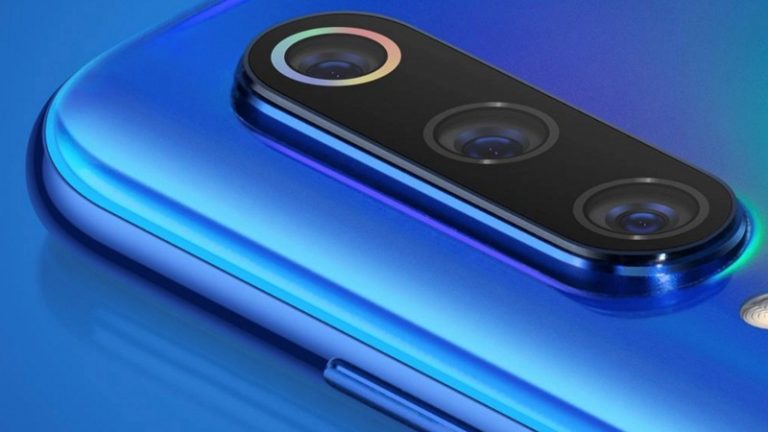
For this 64MP camera phone, Redmi is expected to use Samsung’s ISOCELL Bright GW1 sensor that the company introduced only some months ago. Past rumors and leaks also suggested the same but Xiaomi is yet to reveal the sensor the company will be using for the 64MP camera phone. Xiaomi has also officially revealed that the 64MP camera phone will be able to pictures that produce resolution superior to an 8K TV.

Xiaomi has also revealed that the 64MP camera phone from Redmi will come with quad cameras on the rear panel where the primary camera will include a 64MP sensor. The details of the other three cameras are yet to be revealed by the company.

Besides some camera details, Redmi hasn’t revealed too many details about its upcoming 64MP camera phone. We still don’t know the name of the phone. Rumors suggest that it could be the Redmi Note 8 Pro. Yet again, as the company is yet to reveal the name officially take this with a pinch of salt for now.

With the 64MP camera phone, Redmi is clearly aiming to compete with Realme and Samsung who are also planning to launch a 64MP camera phone by later this year. Realme has officially announced the coming of the 64MP camera phone and posted some pictures shot with the smartphone. Redmi also did the same earlier this week.

Realme X to go on sale today on Flipkart at 12pm

Realme X will go on sale in India for the first time today at 12 pm. The sale will take place on Flipkart and Realme.com until stocks last. The company held a ‘Hate-to-Wait’ sale for the Realme X last week for die-hard fans who were eager to purchase the smartphone before everyone else. The Realme X is a premium mid-range device that touts a notchless Super AMOLED display, pop-up selfie camera, Snapdragon 710 chipset, and 48MP dual rear cameras, among other things.

Realme’s newest premium smartphone is priced at Rs 16,999 for the base variant with 4GB of RAM and 128GB of internal storage. The 8GB + 128GB option will be available for Rs 19,999. The mobile comes in two colors in India – Polar White and Space Blue.

The Realme X sale today on Flipkart and Realme.com will also come with exclusive launch offers. Flipkart is offering 5 percent cash back on Flipkart Axis Bank Credit card and on HDFC Bank debit cards. Customers can also avail 5 percent off with Axis Bank Buzz Credit card as well as No Cost EMI options on select cards. Customers purchasing the Realme X from Realme’s online store can avail Mobikwik cashback offer, Jio benefits worth Rs 7,000 and Paytm First subscription-based rewards program.

Realme X specifications

The Realme X features a 6.5-inch FHD+ Super AMOLED display with a 19.5:9 aspect ratio and over 91 percent screen-to-body ratio. The display comes with thin bezels all around and without a notch or hole-punch to offer an immersive viewing experience. The selfie camera is housed in a pop-up mechanism and the smartphone also comes with an in-display fingerprint sensor.

Realme X to go on sale today on Flipkart at 12pm

The 3D classic rear panel offers a clean look with just a vertical dual camera setup and Realme’s branding. The Realme X comes in Polar White and gradient Space Blue colors.
The Realme X is powered by a 2.2Ghz octa-core Snapdragon 710 chipset paired with up to 8GB of RAM and 128GB of internal storage. The chipset is equipped with Adreno 616 GPU to offer a smooth gaming experience. The dual SIM Realme X does not support storage expansion. It houses a 3,765mAh battery and supports VOOC 3.0 fast charging. The smartphone also ships with ColorOS 6 based on Android 9 Pie.

The other major highlight of the mobile is its 48MP dual camera setup. The company is using a 48-megapixel Sony IMX 586 f/1.7 sensor coupled with a 5-megapixel depth sensor. The pop-up camera houses a 16-megapixel selfie sensor. The main camera supports Nightscape and Chroma Boost while the front camera gets Portrait mode support.

You can read an abridged version of our mobile review if you’re looking to buy the smartphone in today’s sale on Flipkart and Realme.com at 12 pm.